
Your Stress-Free Manifestation Tools Made Easy With Unusual Items
Four Simple and Uncommon Items for Manifestation🙏💸
There is no one way to manifest. Living in Japan had me think about how different cultures handle manifestation. Today, we’re are going to touch the surface level of some of these less often used forms of manifestation. That is unless you are very familiar with the countries of origin of these items. Regardless, there is something in this for everyone.
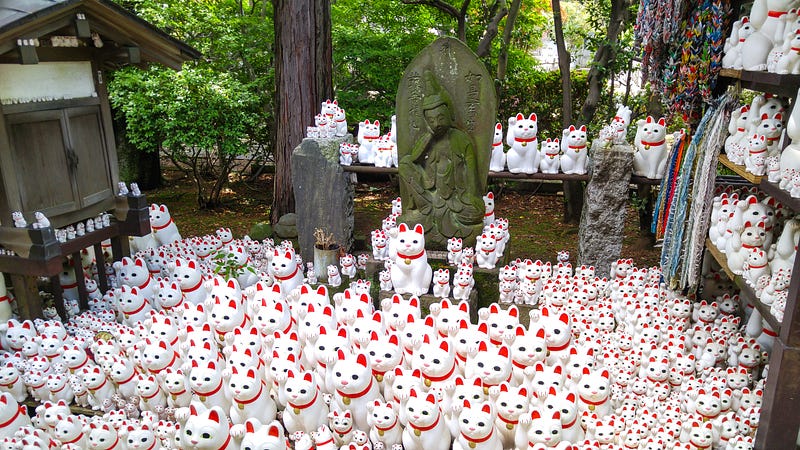
1. Lucky Cat/Maneki Neko
These waving cats you often see in shop or restaurant windows are useful at home. They come in many different colors. Each color has a different use for manifestation. Some will even say what they are for on them.
The Color Meanings:
- Pink is for romance and relationships.
- Green is for academic success.
- Blue isn’t a common or traditional color for maneki neko. But blue ones can mean wisdom. Blue is the color for the knowledge Bagua in Fung Shui.
- Black is for keeping away evil and protection.
- White is for health or general luck.
- Red is for career success.
- Yellow is for wealth.
- Gold is also for wealth.
If you’re into Fung Shui, you can put them in a corresponding Bagua. But you don’t have to be to receive the benefits from a maneki neko. Keeping in mind the right paw-up is for letting good spirits in. The left paw-up is for keeping bad spirits out. Maneki neko are easy to buy online at affordable prices.
2. Pucara bulls
Pucara bulls are like maneki neko. Each color represents what you want to manifest. They are usually kept in pairs. It is tradition for you to keep a small ladder and a cross between them. I don’t have these for my Pucara bulls yet. I used to live in Japan, not Peru. So I can’t vouch for Pucara bulls like I can a maneki neko.
Some of the colors have different meanings than that of the maneki neko. Pucara bulls also aren’t as easy to come by as maneki neko. But they are still available for a reasonable price online. I bought mine on Novica — a fair trade website.
The Color Meanings:
- Black to keep away evil and protection.
- Red is for romance and relationships.
- Green is for abundance and fertility.
- Purple is for prosperity.
- Blue is for harmony.
- White is for peace at home.
- Yellow is for good luck.
- Orange is for joy.
- Natural/Unpainted is for the protection of your family.
3. Omamori
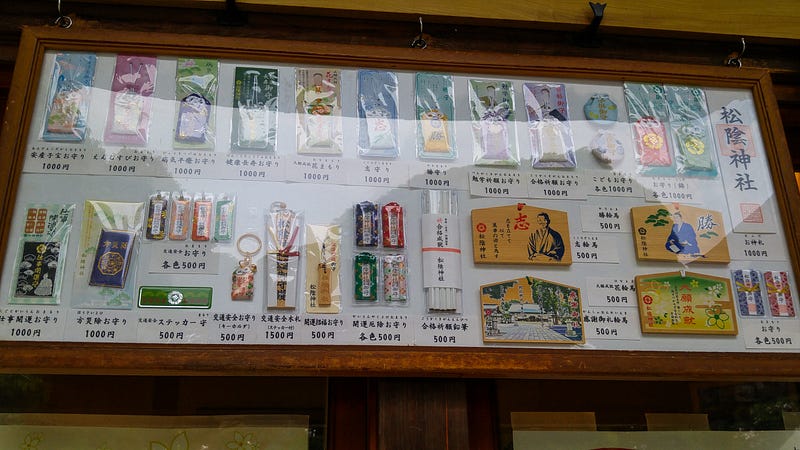
Omamori are small lucky charms blessed by Buddhist or Shinto priests. You can buy or request specific blessings on them. You also don’t have to be a practitioner of Shinto or Buddhism to enjoy their luck.
Omamori are easy and affordable to get in Japan. They are possible to get outside of Japan. But they usually aren’t as cheap. Make sure your omamori is blessed and authentic. Buying cheap ones from Amazon isn’t going to do anything for you.
There are some Shinto shrines or Japanese Buddhist temples outside of Japan. These places most likely sell omamori. Since I am back in the United States, the temple I buy my omamori from is Gasshodo. They also offer many custom blessings for their omamori.
Omamori have a reputation of expiring a year after you get them. But you don’t have to freat. I have the Archangels give them a new blessing when this happens. For me, this works just as well. Be sure to ask one of them to do this for you.
4. Ema
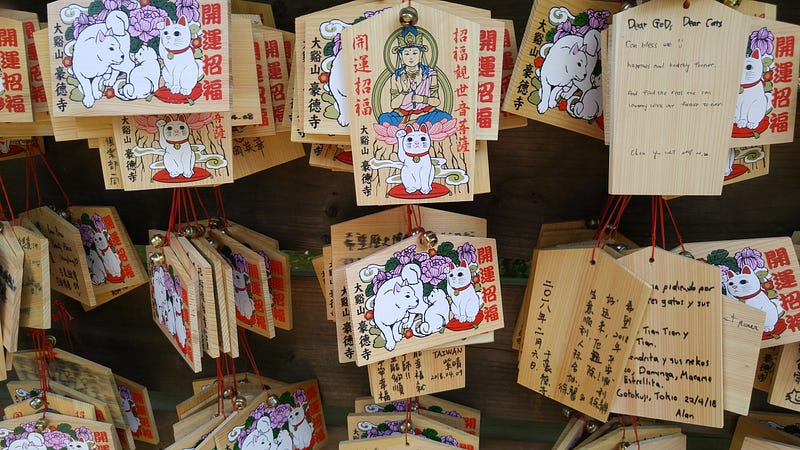
Ema are for manifesting a wish. You should only write one wish on your ema. When I lived in Japan, this was a common mistake I saw tourists making. Unfortunately, ema are not as easy as omamori to get a hold of outside of Japan. But it’s still doable at a reasonable cost.
Much like omamori, they are also good for a year. Once again, the Archangels can refresh this blessing for you with their own blessing. Just ask them to. I buy my ema from Gasshodo. Most people hang their ema at a shrine or temple. But it’s optional. I display my ema in my bedroom.
The world is rich in different forms of manifestation. Research what works for you. I find these items are easy to use. And they look great while they’re helping you manifest.

If you would like to enjoy unlimited articles like my own or write articles to your heart’s content, you can join Medium for just $5 a month. 🖊️Please use my referral link. It’s no additional cost to your membership fee to use and I get a small kickback. I have student loan debt and every bit helps.🙏
Pucara Bulls Tradition: Peru: Setours handcrafted journeys. Setours. (2021, May 26). Retrieved March 31, 2022, from https://www.setours.com/pucara-bulls-perus-hidden-cultural-treasures/
Waechter, H. (2017, April 19). Once upon a time… the pukará bull. Latitudes Décor. Retrieved March 31, 2022, from https://www.latitudesdecor.com/blogs/news/once-upon-a-time-the-pucara-bull#:~:text=The%20yellow%20Pucar%C3%A1%20bull%20represents,family%20and%20couple%20well%2Dbeing


