
Your Social Status: A Reflection from the Stance of Sincere Irony
To “stand up straight with your shoulders back” is even one of Jordan Peterson’s rules of life, indeed, his Rule 1. That’s a good suggestion, I suppose. But the question is how one does that. [From upcoming book, Jan 1st, 2023.]
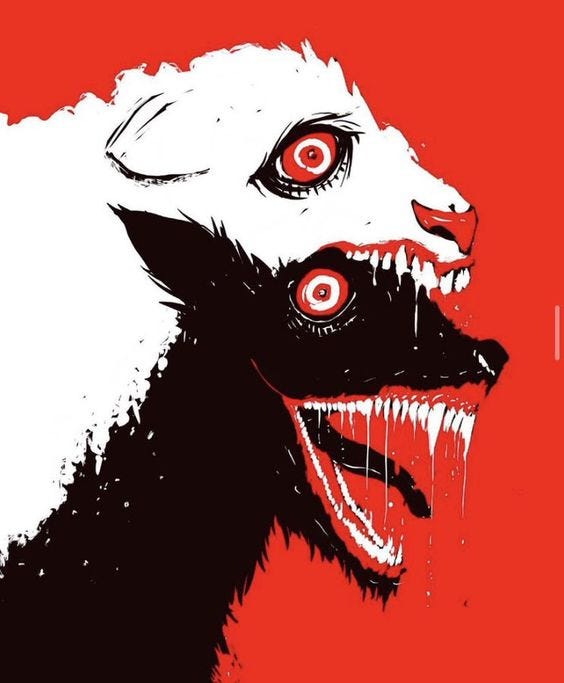
It’s easier to stand up straight, shoulders down and relaxed, body language open, in situations where we feel at ease, or even dominant or superior. When we’re nervous, inhibited, subjugated (in manners subtle or apparent) or otherwise feel inferior, our bodies tense up, our breath shortens, our voices become less resonant (and higher pitch and our claims begin to sound more like questions), and our body language becomes stale. And that stuff accumulates, “the body keeps score” as they like to say; social hierarchies stick in the body, even affecting things like stress levels and thus the immune system and thus of course energy levels and our sense of motivation and resilience in the face of adversity.
Size-Up Mania
In turn, people spontaneously size one another up via bodily cues of self-worth and confidence and treat them accordingly. It’s closely linked to issues of social status, and high social status basically means that people apply a positive filter of interpretation when they hear you speak and see you act, whereas low status is the opposite: your actions get interpreted negatively. The very same actions and gestures acquire dramatically different meanings: When taking up space in the room, the person perceived as high status comes off as confident, the low status person as arrogant and insensitive. The transgressive joke is edgy when made by a high status person, but tasteless if made by a low-status person. On it goes, and so we all unconsciously punish the already punished and reward the already rewarded, further molding their body-minds into positions that appear to us as cemented. And then we wonder why the worlds of mice and men seem so unfair.
The Unidimensionality of the Despised
Interestingly, the lower status you ascribe to someone, the more unidimensionally you tend to view them: a smart person becomes “only a nerd”, a pretty person “only a bimbo” or only a sexualized object, a loyal person “only a side-kick”, a member of a disdained ethnic minority only an exotified, shallow cliché, and so forth. High status people are viewed more as the protagonists of the story of life, as the main characters of the world, as whole human beings with multiple dimensions. They can be perceived as a thinker with their own opinions, a skilled professional, and an emotional or sexual being with a rich life story — all at once. When we perceive someone as having high status, we somehow find the patience for viewing them with nuance, for actually getting to know them. The same can not be said of the people we look down upon.
It’s not exactly fair, but it is what it is.
The Most Immutable Thing in the World… that Changes Radically from Moment to Moment
Now, there’s a nice paradox to all of this: On the one hand, nothing is perceived as more static and inherent to a person than their social status and level of attractiveness (which is why it’s so hard to change someone’s mind once they’ve pegged someone else; all they see is now interpreted through the filter of how they have rated the other person). It appears to the perceiver as “just a hard fact”.
On the other hand, few things are actually as fluid and context-dependent as social status and attractiveness — not seldom being shaped by biases that have to do with class, race, gender, and the like, all of which rely upon fairly superficial displays of group belonging or status. So changed conditions in mood, situation, and body language or style can have massive effects in one direction or the other of how person A interprets the status of person B. It’s hard not to laugh at us here: We’ll walk past a world-leading violin player on the street without a blink, just to cough up a ridiculous amount to listen to them the day after in the main concert hall (true story, that one).
You might argue that this is not exactly a paradox — just a difference between appearances and the reality of the matter. Fair enough. But it remains true that our social reality, and the roles and rankings we inhabit within that universe, is the strongest force in our lives, one that determines matters of life and death, happiness and misery with all the tenacity of a concrete wall — but that this same concrete wall is actually made of fluid and can change shape with the stroke of the lightest brush. That’s paradoxical, if you ask me.
Given that the status we perceive someone to have appears so real, and that it affects how we are treated and how we feel so much, it’s easy to get caught in obsessing about it. Sociologists like Erving Goffman have shown that pretty much everyone engages in at least some “impression maintenance” and “presentation of the everyday self”. At the very least, we all hide our unhygienic sides in all public settings — if we need to pick our nose for a bit, we’re discreet about it; we’re all hygienic hypocrites. Each of us always deliberately contructs images for others to see, or at least in part deliberately, and our status largely depends upon how others perceive and interpret those images, on whether or not they “buy into” our presentation: Is this actually a competent person, or an incompetent one just pretending to avoid being embarrassed, judged, and rejected? and so on.
Morality Playing Second Violin to Status
One of the most scathing ironies of status-perception is that we even ascribe moral meaning to it. We habitually tend to think high-status people are morally superior to others. It’s even the case that moral evaluation of an act and processing how pretty a face is activates the same parts of the brain. And if you stop and think about it, it’s easy to understand why. First of all, there is the unfortunate little habit that we all have as humans to suck up to the powerful, for our own benefit. A dominant, or attractive, or powerful, or popular person just seems a little more… relevant. If we’re trying to win someone powerful over to our side, it makes more sense to interpret them in a positive light already at an unconscious level, no? And another mechanism which is perhaps as important is that we naturally feel that we can trust whatever kindness is shown from the powerful: Wait a minute, this person could have treated me worse and gotten away with it, but they didn’t! Compare that to whenever we meet the kindness of a person we perceive to be less powerful than ourselves: Ah, they’re nice now, but who knows what they would have done to me if they had more power — best make sure they remain in a subordinate position to be sure! If we stop and think about it, our unfair interpretations of one another make sense in a perverse kind of way. Rather sad somehow, isn’t it?
Sincere Irony Brings Lightness and Redemption
However, once we realize how transient, context-bound, and socially constructed social status truly is, the whole matter reappears to us as a kind of cosmic joke, where fools become kings and vice versa by the spell of new settings and little details. As such, it makes sense to “see through” the games of social status — but still to put in the effort to affect how others perceive us. Might as well work a bit on our posture and aim at a relaxed, self-controlled body language, and practice a bit of assertiveness in social interactions if needed. Otherwise, people will interpret us negatively, even in terms of our moral virtues and intentions. And that’s a bummer, especially since our moral convictions will seem much less genuine and persuasive to others. So we can take social status into account, even for ethical causes — we just don’t need to take it as seriously, now that we know it’s all one big joke at the expense of the human spirit.
This stance — to see through the sheer idiocy of social status games, but still engage in trying to create good impressions of ourselves when appropriate — mirrors the “game change” concept I briefly mentioned in the previous chapter: so we cannot deny that there are games of dominance, social status, and attractiveness, but we can work to change those games to make them more fair, relaxed, and transparent. With sincere irony, we can become useful idiots, but of the good sort. We’re playing the game, like any other idiot out there, but we’re playing for the betterment of the game itself.
Maybe It’s Just about Kindness
And that’s where social justice comes in (as we shall return to in later chapters). A very important insight here is that people fundamentally tend to wish for status because it increases the likelihood that one is treated with greater kindness and respect. If there would be much more kindness and respect to go around in society in the first place, we’d likely also become less obsessed with status games, because we would not have a million experiences of belittlements and indifference towards our feelings. And thus, we would compete less rapaciously, and thus… be able to treat one another with a little more kindness and respect. We can thus advance society, indeed, advance the nature of civilization itself, by finding self-reinforcing spirals that carry us out of status competition and towards kindness. Status competition never goes away, but it can always be refined; it can always become less cruel, always become more fair. If we can figure out how to make it happen, kindness really is the cure.
Besides, the better you get at taking this sincerely ironic stance, the less you care about social status to begin with. The farther a person progresses in their own personal development, the less “authoritarian” they tend to get; that is to say, the more they will have tamed the primitive impulse to size everyone up and relate to them hierarchically and with little appreciation for nuance, uniqueness, and context. As we develop into more complex modes of sensing and being, we naturally begin to circumvent the eternal question of whether a person is “above or below us”. We can always learn from everyone, and everyone has some advantages over us, non-human animals and small children included — it really is about context. As we mature in our personalities, we begin to see “sublime mediocrity” everywhere: seeing the sublime in our seemingly mediocre fellow creatures, and spotting the quite ordinary in the seemingly exceptional ones. Flowers everywhere, for those who deign to see them. There’s a deep equality to that.
A Game that Cannot Be Denied — But Can Be Hacked, Changed, and Transcended
Hopefully, following sincere irony combined with soberly knowing which buttons to push to appear impressive or cool, we can begin to obsess less about the whole thing: the whole status charade is stupid. But, again, that doesn’t make status hierarchies go away. For instance, it is well established in behavioral science that “ambiguous status hierarchies” tend to trigger feelings of anxiety. It has been shown with psychology experiments that if people take part in a competitive game and the game is rigged so that they’ll get wildly varying results, they start getting anxious pretty quickly — and thus get much more envious and competitive towards the other players. In other words, if you appear impressive in some regards and less worthy of respect in others, people likely won’t be able to help themselves but to feel uneasy and they will thus want to test you by trying to put you down a notch, so as to lessen their own anxiety. It’s not nice, but it’s the games we have to live by as social animals. The status games will be there, but we can relate more or less productively to those games, see through them more or less, and go for more win-win ways to play them. We can evolve towards better games, thus also changing the players who play them.
So we can still allow ourselves to feel good by being recognized and respected, which of course feeds right back into breath and body language, and vice versa. The point here is that we can actually increase our social status by simple things like breath and posture, and this changes not only how others perceive and treat us, but also how we can recognize the inherent silliness and absurdity of social hierarchies altogether. And right there’s the sound of both-ands clapping.
Again: by noticing how simple and silly things can change the perception of status, not only do we become better at playing status games: we begin to care less about them, because we see how arbitrary they are. We take them less personally.
Anyway — standing up straight is a part of those games, like it or not. Much more could be said about tweaking all those dumb and simple status-game dials, of course, but it falls outside the scope of this book.
Our stubborn habit to focus on social status has to do not with the better angels of our nature, but with our “monkey minds” that always, all said and done, stay with us. Because body language and posture are so strongly shaped by these primitive social processes, we cannot simply tell ourselves to “stand up straight!” all day, every day. It just goes deeper than that. The habits we have developed over time shape our muscles and the tightness of all of our interconnected systems of tendons and tissues to such an extent that our bodies will naturally reproduce a certain posture. So Peterson’s rule “to stand up straight” can, without further instructions, actually add harm to injury: We begin to be neurotic about our posture, and blame ourselves for not standing up straight, busting ourselves every time we pass a mirror or the reflection of a storefront window. And that self-blame and sense of defeat can likely add to bad posture in the first place.
[This is all from Rule 5 of 12, “Turn Workout Into Prayer”. In the book, we get pretty pragmatic about standing up straight and how to break deep patterns of not doing so.]