
Your Sexual Self is Like a Car
The accelerator and the brakes both matter
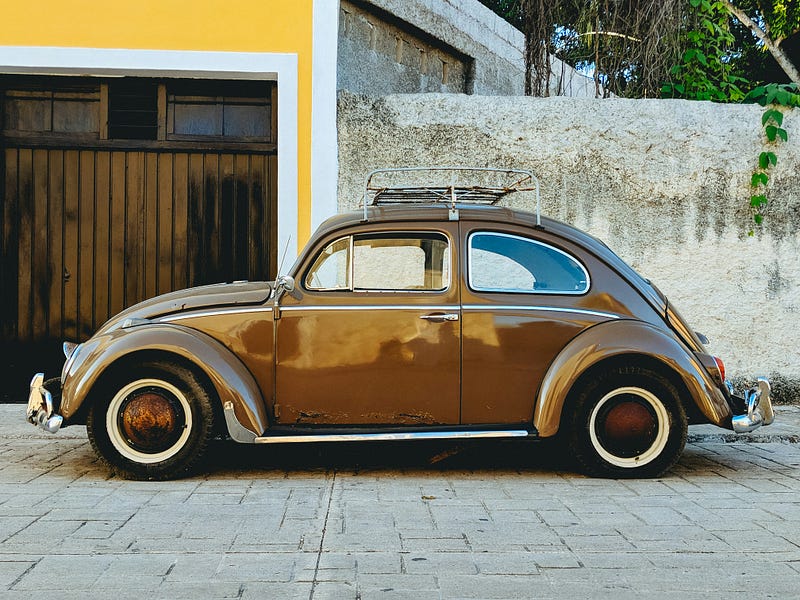
Most people understand the concept of turn-ons and turn-offs, but your sexual self is actually a lot more complex and nuanced than that. And just as with cars, some have more sensitive acceleration systems and some have more sticky brakes, particularly if you are a woman. Sexual selves even come with handbrakes as well as the kind you activate with your feet. Better understanding how to effectively drive your sexual self can be very helpful, and give you some tools for improving your sexual experiences.
As Emily Nagoski says in Come As You Are, the accelerator is anything that your brain has learned to associate with sex-related stimulation. This could be sights, sounds, smells, or certain kinds of touch — really anything that your brain pairs with sexual arousal. While many people have similar accelerators, they can be quite specific and individualized.
In research studies, rats were allowed to have their first sexual experience only while wearing a vest, or while smelling lemons, and then forever after associated sexual arousal with those things. Humans aren’t rats, and most of the things the average person associates with sex aren’t quite that unusual, but we do still often have a lot of things going on for us that stimulate arousal, many of which may be largely subconscious.
If you’re having trouble with any phase of sexual response, is it because there’s not enough stimulation to the accelerator? Or is there too much stimulation to the brakes? Indeed, a common mistake made by people who are struggling with orgasm or desire is assuming that the problem is a lack of accelerator; it’s more likely that the problem is too much brakes.
Nagoski Ph.D., Emily. Come As You Are: Revised and Updated: The Surprising New Science That Will Transform Your Sex Life (p. 50). Simon & Schuster. Kindle Edition.
The brakes are the things that distract you from feeling aroused or that make you feel like sex isn’t a good idea. It might be worrying about somebody walking in on you, or about somebody gossiping about you afterward, or thinking about a project at work that isn’t going well, but it also could be more direct, such as fear of unintended pregnancy or that your partner won’t respect your boundaries.
Nagoski says that the Sexual Inhibition System (SI) — your brakes — aren’t just things like being inhibited by shyness. It’s an actual neurological “off’ signal. In some ways, the SI system is important and necessary for keeping us from being too aroused in inappropriate situations, like at dinner with the kids, or at a funeral. But, it can also be working against arousal that you want, keeping the accelerator from revving the engine even when you’d like it to.
Some people are high on both brakes and accelerator, others are low on both, some have high brakes but low accelerator, and some have high accelerator but low brakes. And most of us are average. The variation is distributed on a nice bell curve; the majority of people are heaped up in the middle and a few people are at the extreme ends.
Nagoski Ph.D., Emily. Come As You Are: Revised and Updated: The Surprising New Science That Will Transform Your Sex Life (p. 52). Simon & Schuster. Kindle Edition.
While population-wide, men are a bit more likely to have sensitive accelerators and women are more likely to have sensitive brakes, there’s a complete gamut and no really meaningful way to say “men are like this and women are like that” because that’s much too simplistic. How these two systems relate to each other in the brain is very individualized, and well-documented across the sexual spectrum and it’s all some version of normal.
While you are unlikely to be able to change the sensitivity of either your sexual accelerator or your brakes, you can learn to change what your accelerator considers to be sex-related and what your brakes consider to be a threat. Context also matters. You could have a very average braking system that is simply being overwhelmed by stressful events. Mood and relationship factors provide a context for arousal that affects more women than men.
Nagoski says that context is comprised of two things: the circumstances that are taking place right now, such as whom you’re with, where you are, whether the situation is novel or familiar, risky or safe, etc., as well as your current brain state. Are you feeling relaxed or stressed, do you trust your partner or not, are you feeling connected to or annoyed with him?
All of these things have an effect on arousal at a specific moment that may well be different under a different blend of circumstances and internal state of mind. Besides experiencing a wider range of societal mores that might apply the brakes, women also tend to be more sensitive to all the things that provide context for arousal or not.
Nagoski points out that when researchers ask them, “What gets you in the mood?” women say:
- Having an attractive partner who respects them and accepts them as they are
- Feeling trusting and affectionate in their relationship
- Being confident and healthy — both emotionally and physically
- Feeling desired by their partner, being approached in a way that makes them feel special
- Explicit erotic cues, like erotica or porn, or hearing or seeing other people having sex
But what these answers tell us, too, is it depends. A woman who feels confident in herself, and who is in a great relationship with a partner she loves, trusts, and feels attracted to, still may not want sex if she has the flu, worked seventy hours that week, or prefers that both she and her partner be freshly showered before sex and they’ve just come in from doing yard work together.
Nagoski Ph.D., Emily. Come As You Are: Revised and Updated: The Surprising New Science That Will Transform Your Sex Life (p. 72). Simon & Schuster. Kindle Edition.
I’ll go further into the nuances of context and more specifics about how to influence what your accelerator and your brakes respond to in a future essay. In the meantime, it’s good to realize that sexual arousal is a lot more complex than just turn-ons and turn-offs and that all sorts of subconscious factors are probably in play as well.
We may not be quite as programmable as rats, but we’re still heavily influenced by culture, religion, media, and things that made an impression on our sexual selves even before we ever acted on them. Looking at arousal through the lens of the Dual Control Model of an accelerator and a braking system can provide a way to work with those things to create a happier and more satisfying sex life.
© Copyright, Elle Beau 2023


