

Your Quick Reference Guide to ESG Rating Agencies
Have you ever wondered which ESG rating agencies are reshaping the landscape of corporate responsibility and influencing investment decisions in the pursuit of a more sustainable and ethical business world?
In an era where environmental, social, and governance (ESG) considerations are at the forefront of corporate decision-making, the role of ESG rating agencies has become increasingly influential according to the Financial Times. These agencies play a key role in evaluating and scoring companies based on their commitment to sustainable and responsible business practices.
In this article, we will dive into the world of ESG rating agencies, exploring their functions, methodologies, and the impact they have on the corporate landscape.
Table of Contents:
- MSCI
- Sustainalytics, a Morningstar Company
- Bloomberg ESG Ratings
- FTSE Russell ESG Ratings
- ISS ESG
- S&P Global
- TrueValue Labs, a FactSet Company
- HIP: Aligning Investments with Human Impact
- Refinitiv, a Subsidiary of the London Stock Exchange (LSEG)
- CDP: Global Disclosure System for Environmental Impact
- Vigeo Eiris, part of Moody’s
- Fitch ESG Ratings
MSCI: Global Insights into ESG Performance
MSCI is a global leader in providing investment decision support tools, including ESG ratings. MSCI rates over 10,000 companies (15,000 issuers, including subsidiaries) and more than 680,000 equity and fixed income securities globally. MSCI’s ESG ratings offer investors a comprehensive analysis of a company’s exposure to ESG risks and opportunities. The agency’s global perspective allows investors to compare ESG performance across industries and regions.
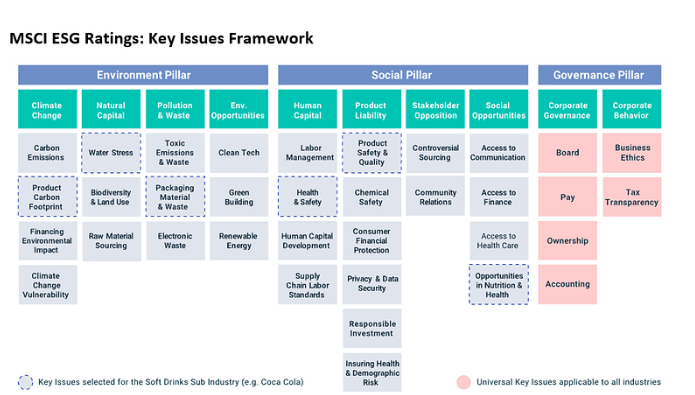
MSCI ESG Ratings measure a company’s management of financially relevant ESG risks and opportunities. MSCI uses a rules-based methodology to identify industry leaders and laggards according to their exposure to ESG risks and how well they manage those risks relative to peers. ESG Ratings range from leader (AAA, AA), average (A, BBB, BB) to laggard (B, CCC). MSCI also rates equity and fixed income securities, loans, mutual funds, ETFs and countries.
Sustainalytics, a Morningstar Company, is A Pioneer in Sustainable Investing
Sustainalytics, a Morningstar Company, is a pioneer in sustainable investing, providing comprehensive ESG research and ratings. Known for its rigorous analysis, Sustainalytics assesses companies based on a wide range of ESG criteria, offering investors valuable insights into a company’s environmental impact, social responsibility, and governance practices.
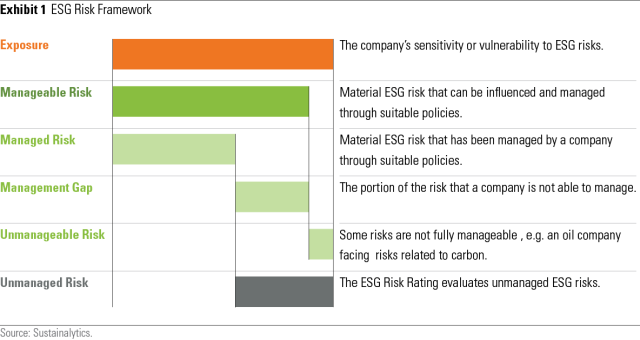
Sustainalytics rates more than 14,000 companies, from negligible to severe risk. The rating is comprised of three central building blocks: corporate governance, MEIs, and idiosyncratic issues (black swans).

Bloomberg ESG Ratings: Leveraging the Power of Data
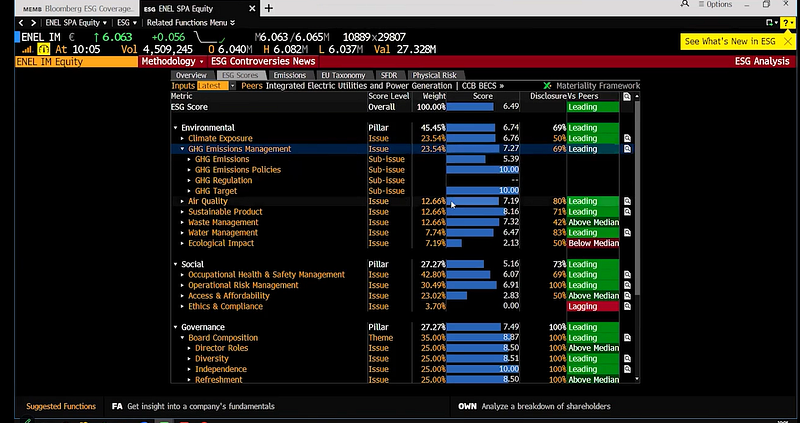
Bloomberg ESG Solutions leverages the power of data analytics to evaluate companies on various ESG metrics. The platform provides investors with a holistic view of a company’s sustainability performance, enabling them to make informed investment decisions. Bloomberg’s ESG ratings are widely used by financial professionals seeking to integrate ESG factors into their investment strategies.
Bloomberg’s ESG datasets span more than 15,000 companies that cover nearly 93% of the global equity market capitalization.
FTSE Russell ESG Ratings
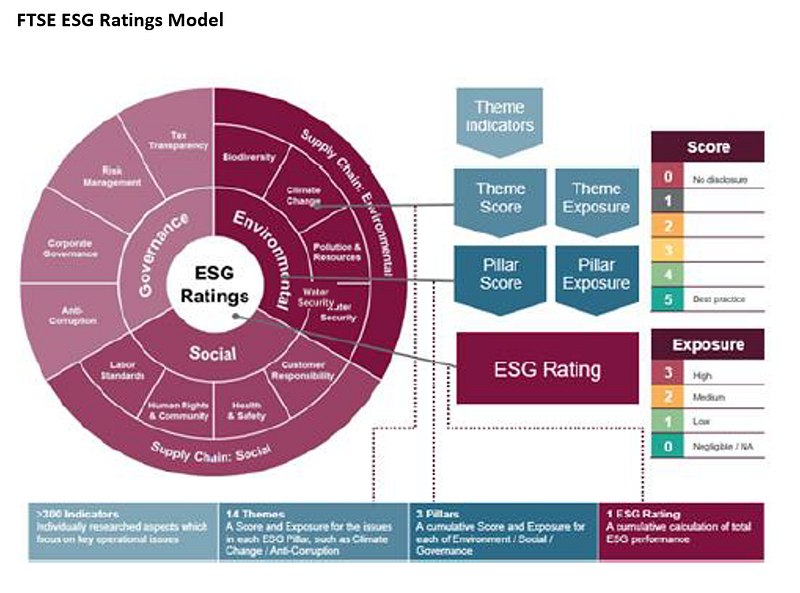
FTSE Russell’s ESG Scores and data model allows investors to understand a company’s exposure to, and management of, ESG issues in multiple dimensions. The ESG Scores are comprised of an overall Rating that breaks down into underlying Pillar and Theme Exposures and Scores. The Pillars and Themes are built on over 300 individual indicator assessments that are applied to each company’s unique circumstances.
FTSE Russell pioneered the FTSE4Good Index Series that includes more than 15 benchmarks, based on the ESG Ratings of over 7,200 securities in 47 Developed and Emerging markets.
ISS ESG: Advocating for Responsible Corporate Behavior
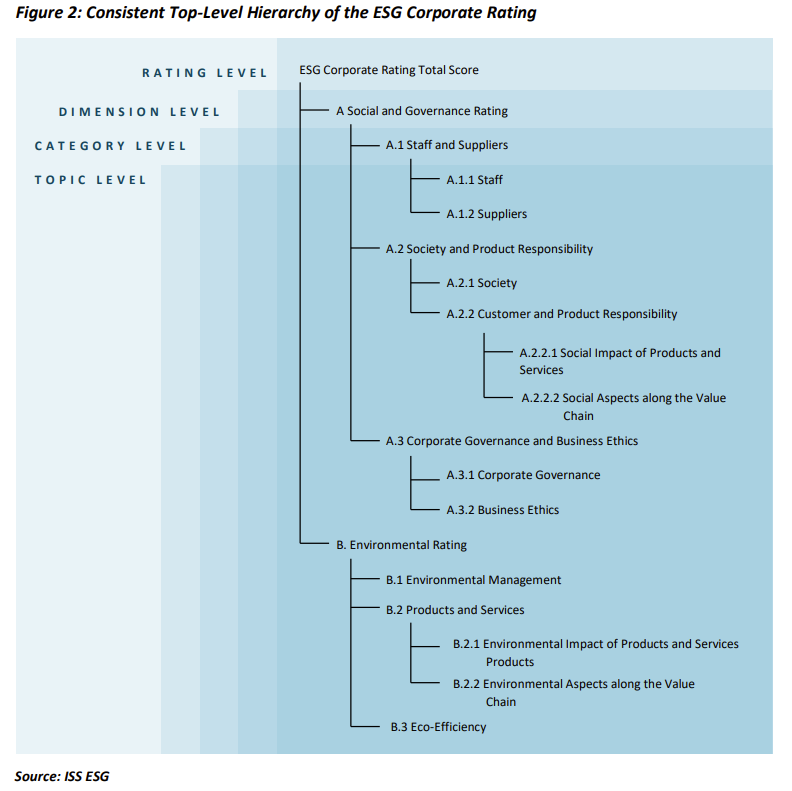
ISS ESG, a division of Institutional Shareholder Services (ISS), focuses on empowering investors with ESG insights. The agency evaluates companies based on a broad set of ESG criteria, emphasizing the importance of corporate responsibility. ISS ESG’s assessments are instrumental in shaping shareholder engagement and advocacy for responsible corporate behavior.
The ISS ESG Corporate Rating covers 12,500 corporate issuers globally, including constituents of the most relevant global and national indices.
S&P Global: Setting Standards for ESG Excellence
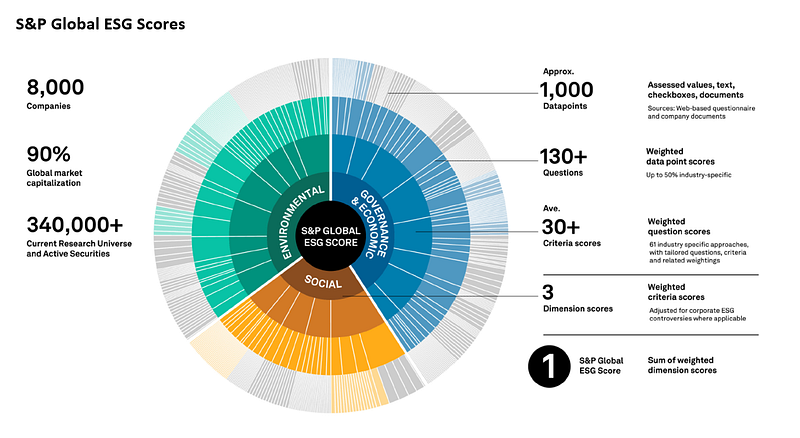
S&P Global is renowned for its credit ratings, and it has extended its expertise to the realm of ESG with the introduction of ESG scores. These scores reflect a company’s preparedness for ESG risks and opportunities. S&P Global’s influence extends to financial markets, where its ESG assessments impact investment decisions and corporate strategies.
Each year, S&P Global conducts the Corporate Sustainability Assessment, an ESG analysis of over 10,000 companies.
TrueValue Labs, a FactSet Company: Harnessing Artificial Intelligence for ESG Insights
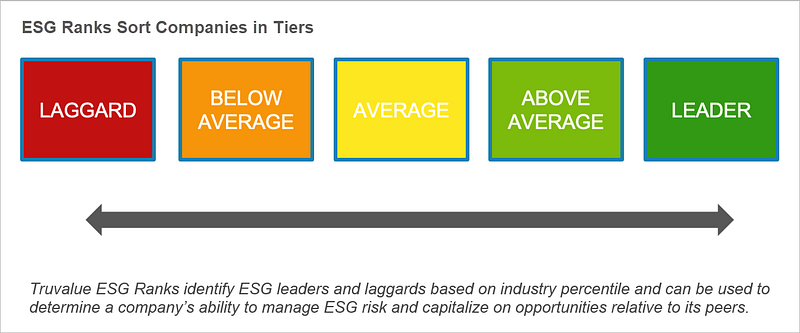
TrueValue Labs, a FactSet Company, distinguishes itself by employing artificial intelligence to analyze vast amounts of data for ESG insights. By leveraging cutting-edge technology, TrueValue Labs aims to provide investors with real-time assessments of a company’s ESG performance. This innovative approach reflects the evolving landscape of ESG analysis in the digital age.
HIP: Aligning Investments with Human Impact
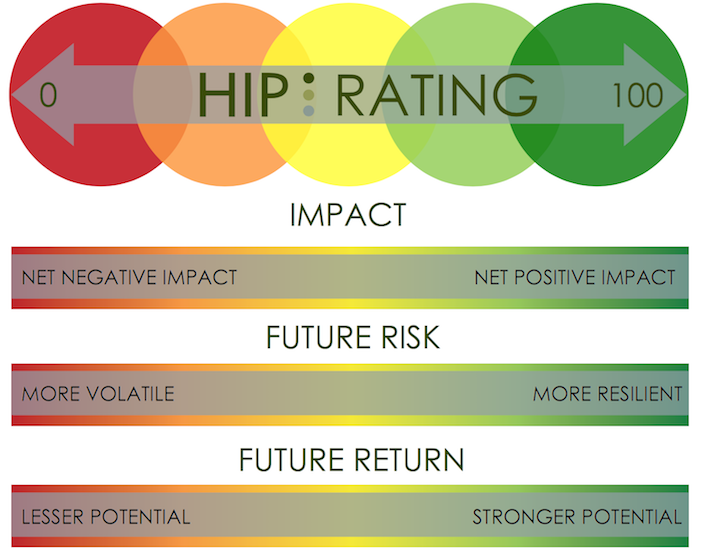
Human Impact + Profit (HIP) evaluates companies based on their positive contributions to society. HIP’s ESG assessments go beyond traditional metrics, emphasizing the human impact of corporate activities. Investors seeking to align their portfolios with socially responsible companies turn to HIP for a nuanced understanding of a company’s broader societal implications.
Refinitiv, a subsidiary of the London Stock Exchange (LSEG), Offers One of the Most Comprehensive ESG Ratings Databases
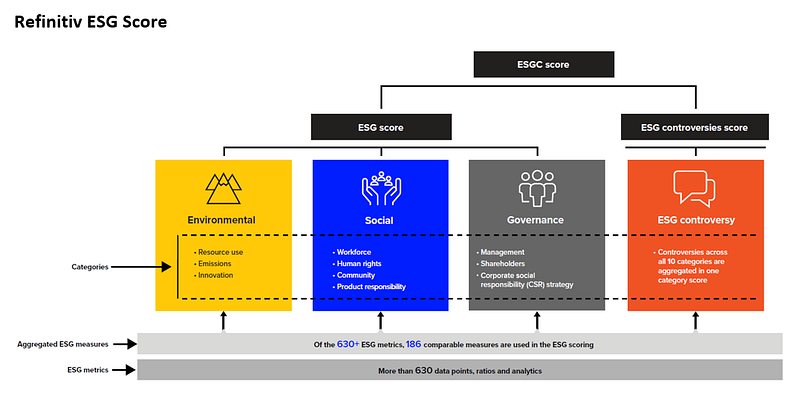
LSEG ESG scores are designed to transparently and objectively measure a company’s relative ESG performance, commitment and effectiveness, based on company-reported data. This covers 10 main themes including emissions, environmental product innovation, human rights, shareholders and so on. LSEG also provide an overall ESG combined (ESGC) score, which is discounted for significant ESG controversies impacting the corporations we cover. The percentile rank scores are simple to understand (available in both percentages and letter grades from D- to A+). They are benchmarked against The LSEG Business Classifications (TRBC — Industry Group) for all environmental and social categories, as well as the controversies score. They are also measured against the country of incorporation for all governance categories.
Refinitiv has a comprehensive ESG database of more than 12,500 companies.
CDP: Global Disclosure System for Environmental Impact
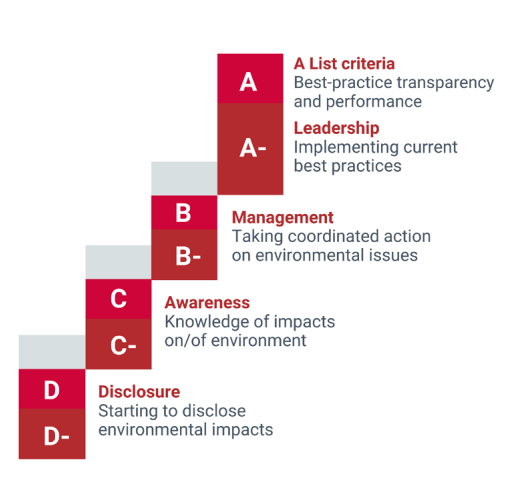
A CDP score is a snapshot of a company’s environmental disclosure and performance. By scoring companies from A to D-, we take them on a journey through disclosure to awareness, management, and finally to leadership. Our scoring measures the comprehensiveness of disclosure, awareness and management of environmental risks and best practices associated with environmental leadership, such as setting ambitious and meaningful targets. CDP’s disclosure cycle and its role as a ‘critical friend’ to corporations and cities, will be essential to enable a safe, just transition to a net-zero, nature positive future.
In 2021, more than 13,000 companies reported on their environmental impact through CDP.
Vigeo Eiris, part of Moody’s: A Global Perspective on Responsible Business
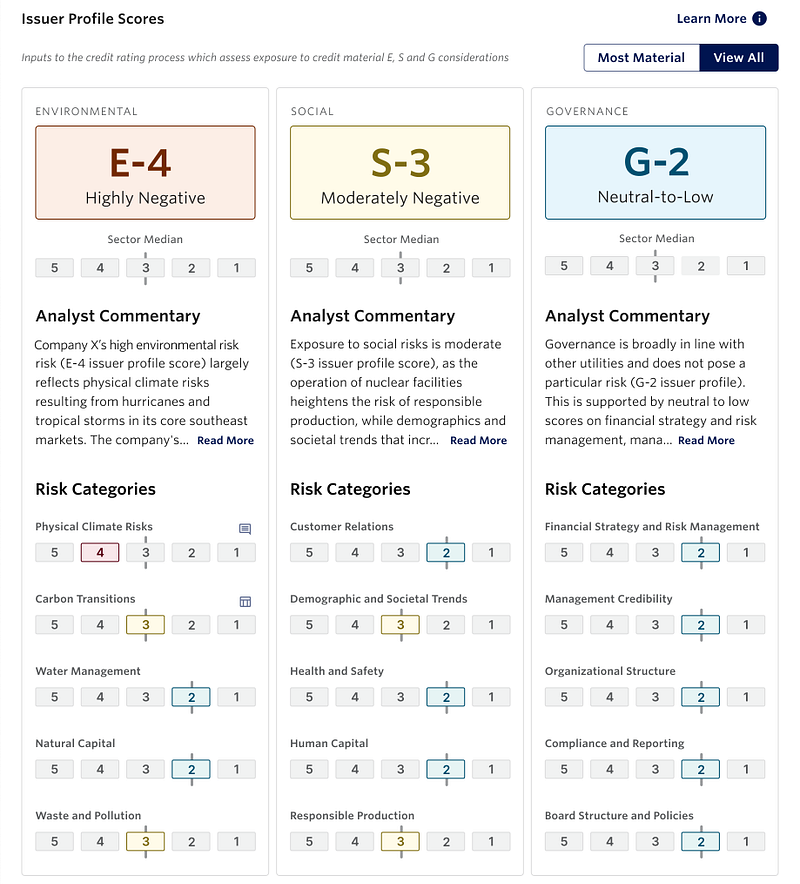
Vigeo Eiris, part of Moody’s ESG Solutions, operates on a global scale, assessing companies’ ESG performance and providing insights to investors and stakeholders. The firm rates thousands of companies. The agency places a strong emphasis on sustainability and corporate responsibility, offering a comprehensive evaluation of a company’s impact on the environment, society, and governance structures.
Fitch ESG Ratings: A Unique Perspective
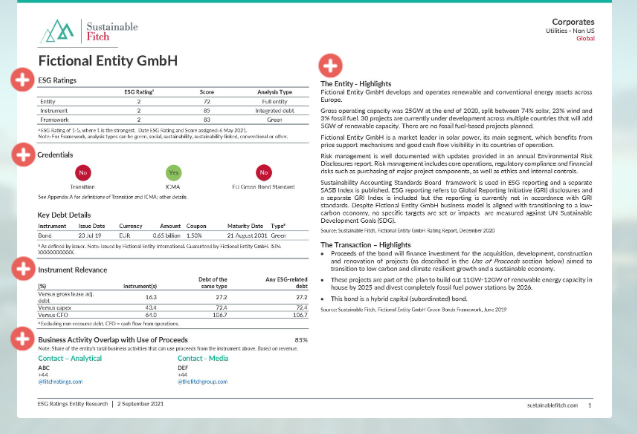
Fitch, a FitchSolutions Company, provides ESG Ratings that are among the first ESG analysis products to provide a qualitative and quantitative assessment of an entity or transaction’s impact on environmental, social, and governance matters, according to third-party published principles and guidelines. Fitch assigns ESG Ratings to individual entities, to Green, Social and Sustainable (GSS) and Sustainability-Linked debt instruments, (collectively referred to as “labelled instruments”) and also to non-labelled instruments.
ESG rating agencies have become instrumental in shaping the investment landscape by providing investors with valuable insights into companies’ sustainability and responsible business practices.
As the demand for ethical and sustainable investing continues to rise, these agencies play a crucial role in guiding investors toward companies that prioritize environmental stewardship, social responsibility, and robust governance structures. The collective impact of ESG rating agencies extends beyond financial markets, influencing corporate behavior and contributing to a more sustainable and responsible business ecosystem.
If you like this article, please clap for it.
Follow me on Medium to stay updated with my latest content.
If you enjoy reading stories like these and want to support me as a writer, consider joining Medium. It’s $5 a month, giving you unlimited access to stories on Medium. For $15 per month, you can become a Friend of Medium where writers earn 4x when you read our stories.


