
Your Organization Must Focus on Three Things

You just have to figure out what they are.
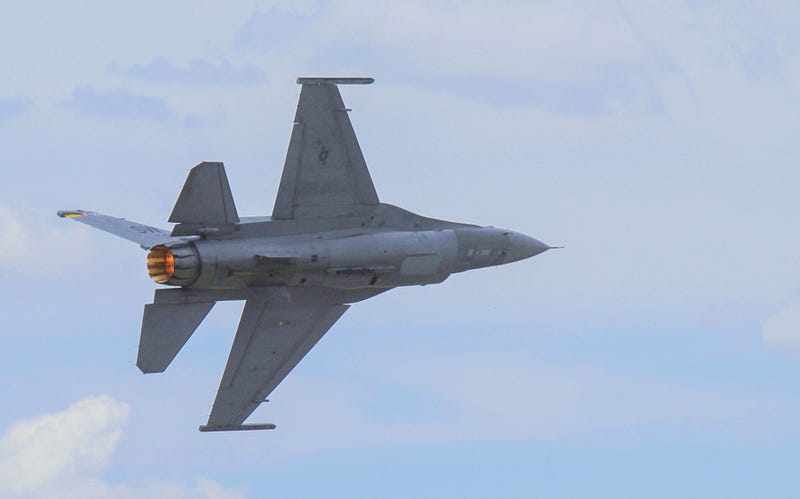
In 1995, after twenty hours in the air and a six hour bus ride, I was sitting in a tight packed meeting room with 100 other new arrivals. Tired, smelly, and groggy, we were welcomed to Kunsan Air Force Base. Here I probably first heard the mission to which I would dedicate my life for the next year: “Defend the base, Receive Forces, Take the Fight North.”
It was a little surreal. After receiving instruction on what to do if we were attacked that night, we stumbled to our dorms for some sleep. In my case a friend came by to take me downtown to hit the bars, but that’s a story for another day.
The three objectives that ruled our lives were well thought out. If we didn’t defend the base, if we weren’t prepared to survive the first night of combat, we were not going to be able to do anything else. Getting forces into theater would provide a lot more combat power than our jets alone. Finally, if we were defending the base and receiving forces, any remaining attention would go towards dropping bombs on bad guys.
[These ideas were so powerful that thirteen years later I saw them again on the other side of the world, in Iraq in 2008. Watching our base’s mission brief for the first time in all its PowerPoint glory, there it was, with some details slightly changed…”Defend the Installation, Receive Forces, Support Operations.”]
Honing the concept
Months later after arriving in Korea, I was leading a small section in charge of preparing for mission #1. This was my dream job as a young Security Forces officer. At the time, it was the realest place to learn and do air base defense. Being young, though, I’d had a few misadventures, and my leaders weren’t sure about me.
One day my boss, the operations officer, told me that he and our commander were going to come by my section’s building. They wanted a briefing on what we were doing. I looked at our projects and divided them into three buckets: procedures, training, and facilities.
This was at the very dawn of PowerPoint, so I simply typed everything up on one sheet of paper, brochure-style. I used my three priorities as headings and put a bullet list below each. I stepped through the status of each project in detail, each rolling up to one of my objectives that supported our primary mission.
I didn’t know it at the time, but my leaders hadn’t been sure that we were doing any real work. If I hadn’t communicated a clear and effective strategy, I would have been fired.
Repeating the pattern
Once I became aware of the pattern, I saw it repeated endlessly. IBM’s core values are Dedication, Innovation, and Trust.
Erie Insurance Group’s founding purpose is “To provide our policyholders with as near perfect protection, as near perfect service as is humanly possible and to do so at the lowest possible cost.”
I was looking for Dallas, Texas, but clicked on the City of Dallas, Oregon first. They have a long list of values no one will remember, but look at their mission:
The mission of the City of Dallas is to maintain a safe, livable environment by providing open government with effective, efficient and accountable service delivery.
Organizations don’t always even need exactly three. At one company I worked at, I was able to boil the quality policy down into Quality, Delivery, Service, and Value. Our company-level metrics were arranged to support each.
You can also define yourself with a mere two powerful concepts, like how “Less filling, tastes great” defined a brand.
Putting into practice
Missions or values don’t write themselves.
- Decide. Get the leadership team together and come up with your strategy. Even if you are an entrepreneur owner/operator who makes all the decisions, give your people a voice. They will then take ownership because it’s their product.
- Communicate. Flow down your three priorities to every level of the organization. If everyone can repeat your three key points, they will be aligned with your organization’s goals.
- Flow. Take your principles and flow them down to other levels for deliberate execution. Maybe each sub-level comes up with three priorities of its own to support the top level goal, as I did as a young officer in Korea. Or, perhaps each department sets a few objectives within each of the top level ideas to support the overall company plan.
Decide, Communicate, and Flow. See what I did there?
If you liked this, you might also like:
Brian E. Wish works as a quality engineer in the aerospace industry. He has spent 29 years active and reserve in the US Air Force, where he holds the rank of Colonel. He has a bachelor’s from the US Air Force Academy, a master’s from Bowie State, and a Ph.D. in Public and Urban Administration from UT Arlington.


