
Your Oops Moments: A Crash Course in Workplace Liability
The thin line between personal pleasure and professional duty
In the busy hallways of modern business lives the concept of vicarious liability. As we discussed in our previous story, “Swap the Blame: Is Your Boss on the Hook?” (see the link below), this principle holds employers responsible for the actions of their employees. But when exactly does this responsibility arise? Is every misstep by Mr. Joe Gawky, the eager data & marketing intern, a potential liability for his employer — Mr. Kevin Tough-Break? Or is there a line somewhere in the sand that absolves employers like Kevin’s Tech Solutions Inc. from misadventures of their employees?
Imagine our Joe, fresh out of college, working at Kevin’s Tech Solutions Inc. He’s enthusiastic, a bit clumsy, but always ready to contribute. One day, in a rush to complete an assignment, Joe accidentally mixes up customer data, resulting in a significant data breach involving millions of emails and nice photos. A critical question arises: Is Kevin’s Tech Solutions Inc. vicariously liable for Joe’s mistake? This concept is the cornerstone of whether Joe should reach for his company’s cheque-book or be relieved that Joe’s mistake is not on the company’s bill…
So, let’s find out when an employee’s actions can make their employer liable, and when they can’t, leaving the employee to deal with the consequences on their own.

Acting Within the Scope of Employment
Basically, a clear and thorough understanding by Joe his employment duties and responsibilities is the first step in determining whether his employer can be held responsible in this accident.
The Second Restatement of Agency breaks it down into three elements:
- Nature of the conduct: Is Joe’s action — the one causing the problem — what he was hired to do?
- Time and space: Did Joe’s misstep occur during working hours and in the workplace?
- Employer’s interest: Was Joe trying to benefit Kevin’s Tech Solutions Inc., even partially, when things went wrong?
The Third Restatement of Agency takes a more straightforward route. It asks: “Was Joe doing something Kevin assigned him, or something within the company’s management guidelines?” If yes, then the employer is liable. But if Joe was on a personal mission, unrelated to his job, Joe can breathe easy.
Some legal eagles prefer to look at this through the lens of foreseeability. They consider whether Joe’s action, even if unfortunate, was a foreseeable consequence of his work for Kevin. This approach seeks to establish a direct link or nexus between Joe’s actions and Kevin’s business.
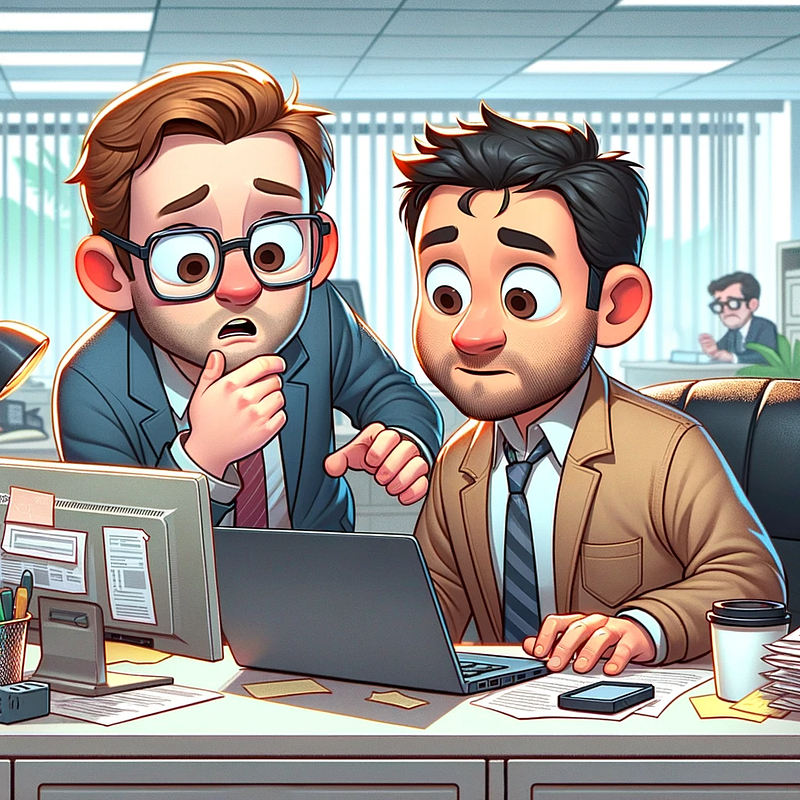
Let’s put this into context of our example. Here we analyze:
- Nature of the conduct: Joe was tasked with handling customer data, which is part of his job description. The action that led to the breach — mixing data — falls within the nature of the work he was hired to do.
- Time and space: Assuming that Joe’s mistake occurred during his regular working hours and while he was at his workplace (or working remotely in an authorized manner), this element is consistent with the scope of employment.
- Employer’s interest: Joe’s intention, albeit poorly executed, was to complete a task for the benefit of Kevin’s Tech Solutions Inc. There was no personal motive; his actions, although negligent, were in the service of his employer.
In terms of foreseeability, it could be argued that in the technology industry, particularly in roles involving the handling of sensitive data, a data breach, while undesirable, may be a foreseeable risk. Therefore, the incident, although unintentional, could be seen as a risk inherent in the business of a technology company.
So, is Kevin’s Tech Solutions Inc. vicariously liable?
Under the Second Restatement, Kevin’s Tech Solutions Inc. appears to be vicariously liable for Joe’s actions as it ticks all three boxes — nature of the conduct, time and place, and employer’s interest. The Third Restatement perspective also leans towards liability as Joe was performing work assigned by the company. From a foreseeability perspective, while a data breach isn’t a standard business outcome, it’s a risk associated with handling customer data, especially in a technology company. This again points to potential vicarious liability for Kevin’s Tech Solutions Inc.
So, applying the doctrine of vicarious liability to Joe’s situation at Kevin’s Tech Solutions Inc., it appears that the company may indeed be responsible for the data breach. Joe performed his duties within the scope of his employment with the intention of benefiting his employer, and the risk of a data breach is unfortunately part of the landscape of the technology industry. Therefore, Kevin’s Tech Solutions Inc. may need to prepare for the potential liability implications of Joe’s well-intentioned but misguided actions.

Prohibited Conduct and the Going and Coming Rule
There are two main points to learn here:
- Even if an employer expressly prohibits certain behavior, this does not automatically take it outside the scope of employment. This concept can be counterintuitive, but it is critical to the legal assessment of vicarious liability.
- The “going and coming rule” holds that employers are generally not liable for actions taken by employees during their commute to and from work. The rationale is simple: while commuting, employees are not engaged in the performance of their duties or acting within the authorized time and place of their employment.
However, it is important to distinguish regular commuting from work-related travel. If an employee travels as part of his or her job duties — for example, traveling between different work locations or traveling from the main office to another location for work purposes — such travel is considered to be in the course of employment. In these scenarios, the employer may be liable for the employee’s actions while traveling.
If Joe is involved in an incident while commuting to work, under the going and coming rule, Kevin’s Tech Solutions Inc. would not normally be liable. However, if Joe is traveling from the main office to a client site for a meeting and is involved in an incident, this travel is within the scope of his employment. In this case, the company could be liable for his actions.
The Dual-Purpose Exception to the Going and Coming Rule
This exception applies where an employee’s commute provides some benefit to the employer or is undertaken partly for the employer’s purposes. In such cases, the standard commute rule, which normally exempts the employer from liability during the commute, may not apply.
Imagine that Joe of Kevin’s Tech Solutions Inc. was asked to pick up some hardware for a company project on his way to work. This errand directly benefits his employer, Kevin. In this case, if Joe were to be involved in an incident during this part of his journey, the dual purpose exception could apply, placing potential liability on Kevin’s Tech Solutions Inc. Joe’s journey serves more than his purpose of getting to work; it contributes directly to a business operation.
Frolics & Detours
A frolic occurs when an employee goes off on a tangent and engages in activities unrelated to his or her job and solely for personal reasons. In these cases, the employer is usually not liable.

On the other hand, a detour is a minor deviation from the employee’s duties, but the overall activity still serves the employer’s purpose. Here the employer could still be held liable.
Imagine a typical Tuesday at Kevin’s Tech Solutions Inc. Suddenly, Joe gets a message about a rare comic book exhibit happening nearby. Being a comic book lover, Joe can’t resist. He tells his team he’s going out for a quick lunch, but instead he embarks on a two-hour adventure into the world of superheroes and vintage comic books. This escapade of Joe’s, while exciting, is a classic romp. It’s a personal side quest that has nothing to do with his role as a data analyst at Kevin’s company. For example, if Joe accidentally knocks over a priceless comic book booth at the convention, Kevin’s Tech Solutions Inc. would probably not be responsible for Joe’s superhero-sized mishap.
On another day, Joe is on his way to an important client meeting to present a new software solution. He’s prepared and on time, but decides to stop by his favorite coffee shop for a quick caffeine boost, just a block away from the client’s office. This quick coffee detour is a minor deviation from his work task, but still in the spirit of doing his job-to ace this client presentation. However, if in his haste, Joe accidentally spills coffee on a passerby’s laptop, this incident falls into the scope of a detour. Since Joe’s primary goal was work-related, Kevin’s Tech Solutions Inc. could be facing potential liability for the laptop debacle.

Your Today Takeaway
Here’s a brief summary of what we learned from Joe’s escapades at Kevin’s Tech Solutions Inc:
- Understand the difference. (i) Frolic is a personal adventure, like Joe’s comic book escapade, unrelated to work; (ii) Detour is a minor work-related stuff, like Joe’s quick coffee stop before a meeting.
- Know the implications. An employer like Kevin is generally not liable for incidents that occur during an employee’s frolic adventures. However, they could be liable for accidents during a detour because it’s part of the work trip.
- Be aware of your choices. If you’re an employee, be aware that your personal deviations could be your sole responsibility. Work-related detours still carry a thread of your employer’s involvement.
Remember, in the workplace, your journey not only determines how good your day will be, but it can also affect your employer’s liability and the business they have spent years building.
Enjoy your weekend and choose your paths wisely!
Disclaimer
The information provided in this article is for informational and educational purposes only and is not intended to serve as legal advice or as a substitute for legal counsel. While efforts have been made to ensure the accuracy and completeness of the content herein, it is important to note that legal principles and regulations can vary significantly based on jurisdiction and specific circumstances. Therefore, this article should not be used as a definitive legal resource or as a basis for making legal decisions. Readers are strongly advised to consult with a qualified attorney for advice on legal issues or matters, as each individual case may require detailed and personalized legal analysis.
Reliance solely on the information provided in this article without seeking professional advice from an attorney may lead to unintended legal consequences or misinterpretation. The author or publisher of this article do not accept responsibility for any potential errors or omissions, nor will they be responsible for any losses, injuries, or damages arising from its display or use. The information provided here does not create an attorney-client relationship between the reader and the author or publisher.


