
Your Only Escape is What You Create
When the world gets too scary, just make something.
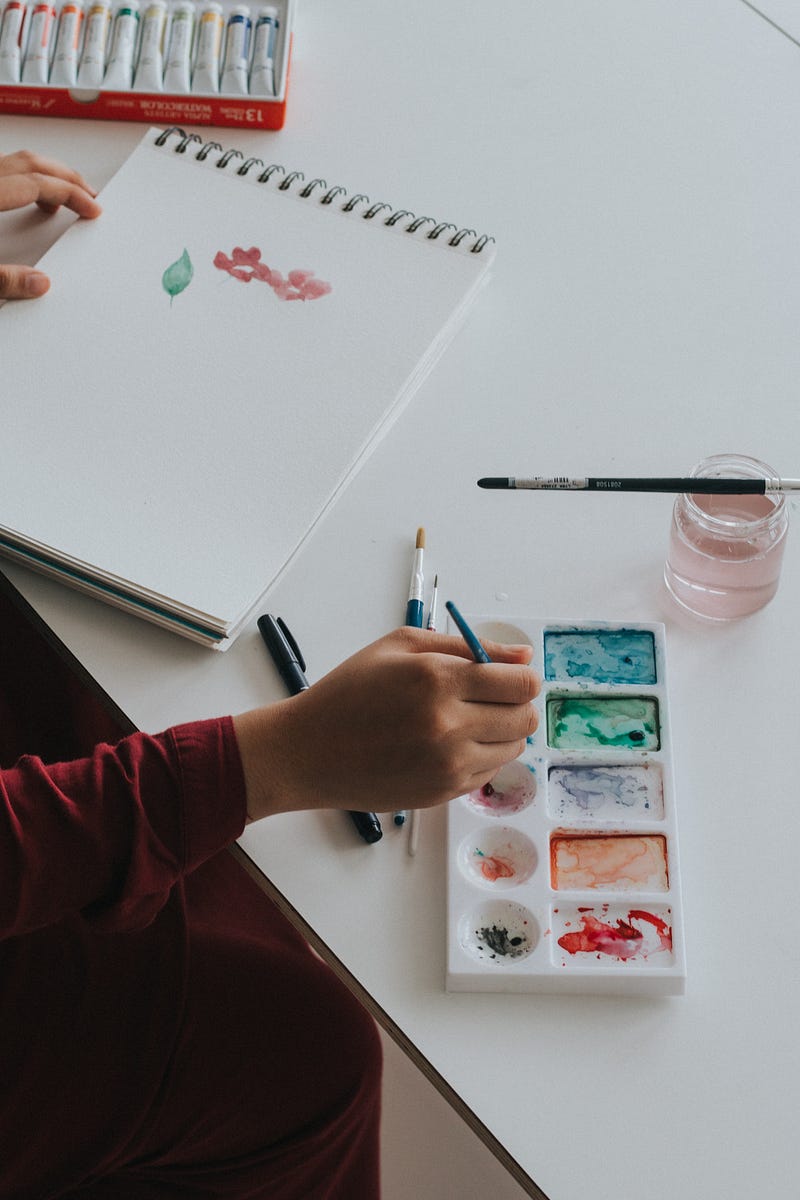
You need an area of your life where you have complete control. No bosses. No opinions. No spouse. Only you. Total dominion. Without this, it is all too easy to be pushed around by the whims of the world.
Poet Mary Oliver, who grew up with a terribly sad, depressed childhood, discovered this at an early age.
In an interview with Brain Pickings, she said this:
“The world of literature — offered me, besides the pleasures of form, the sustentation of empathy and I ran for it… I relaxed in it. I stood willingly and gladly in the characters of everything — other people, trees, clouds. And this is what I learned: that the world’s otherness is antidote to confusion.”
Spoken like a true poet. Which is to say, almost impossible to understand. What is Mary really getting at?
Oliver is talking about a world where she has complete control. It is separate entirely from the madness of what you see in front of you. You know this “world’s otherness.” It’s the space inside your head, the one with all the hopes and dreams and ideas. It’s the naive, foolish side of you that never grew up. This other world, the safe place, can comfort you and keep you warm.
There is a temptation, especially in dark times, to shut out that side of your mind and soul.
Don’t do it. Instead, fall into wonderland.
I have said this before, and I will continue to say it until the day I die: people do not create great things in spite of tragedy. They create great things because of tragedy.
Picasso watched his 12-year-old sister die. Emily Dickinson never left her oppressive home. Sylvia Plath had a tumultuous marriage. Vincent van Gogh was tormented and teased constantly, causing him to utter on his deathbed — “the sadness will last forever.” All of these people created great work in the middle of despair, not after it.
This “because of tragedy” principle does not only exist in the world of art, of course. Elon Musk went through a nightmarish childhood at school, filled with bullies who would “literally hunt him down.” These events drove him to begin the work that will put us on Mars.
Please don’t misunderstand, this is not a call to action. Don’t escape into this other world because you hope to find some glamorous result. Most people don’t. Stardom and fame are fickle beasts.
No, escape to your world because the process will heal you.
Neil Gaiman, the lifelong creator and author, echoes Mary Oliver’s sentiments of art being an antidote to confusion:
“When things get tough, this is what you should do: Make good art. I’m serious. Husband runs off with a politician — make good art. Leg crushed and then eaten by a mutated boa constrictor — make good art. IRS on your trail — make good art. Cat exploded — make good art. Someone on the Internet thinks what you’re doing is stupid or evil or it’s all been done before — make good art. Probably things will work out somehow, eventually time will take the sting away, and that doesn’t even matter. Do what only you can do best: Make good art. Make it on the bad days, make it on the good days, too.”
Inspiring. But there’s a little chink in that argument’s armor. I don’t feel as talented as Neil Gaiman some days. I don’t feel as talented as anyone some days. Even when I sat down to write this post, there were hints of hesitation and doubt. Maybe you can understand.
What happens when the goings-on of the world feels too great to conquer and what you create doesn’t feel up to scratch?
The words of Austin Kleon might help:
“Don’t listen to people who remind you that Shakespeare wrote King Lear during a plague — we’re living in King Lear!
“Good” can be a stifling word, a word that makes you hesitate and stare at a blank page and second-guess yourself and throw stuff in the trash. What’s important is to get your hands moving and let the images come. Whether it’s good or bad is beside the point. Just make something.
Just make something.
If I were to give any piece of advice, on any given day, no matter the circumstances, it would be that: just make something.
When you just make something, you exit the suffocating darkness of reality and move toward Mary Oliver’s other world. What will happen here, in this other world? Nobody can say but you. This is your space. You have complete dominion. Hope is found here. Peace is found here. Silence, too.
Acts of creation cannot heal a broken past. They cannot repair a world of despair. They cannot guarantee future hope.
However, they can provide shelter in a storm.
That’s enough.