
Your Fridge Might Be Spying On You
Why Cybersecurity Is More Critical Than Ever? Have you ever thought that your fridge, your smart TV, or even your thermostat could be a potential threat to your privacy?
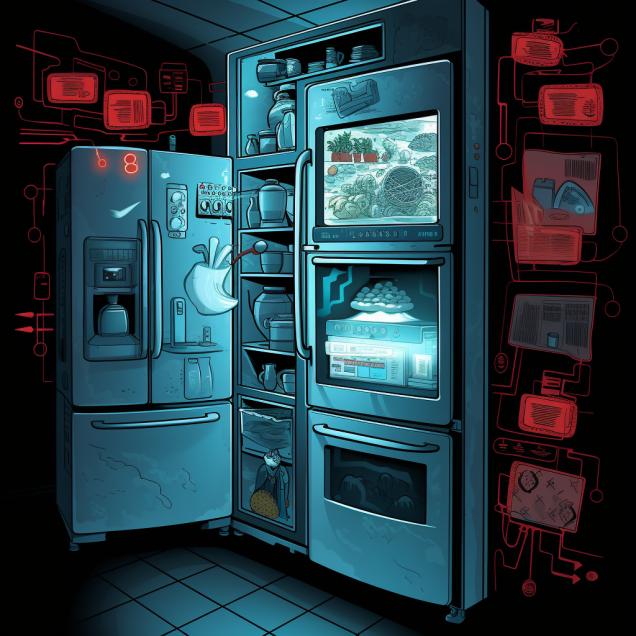
It may sound like a spy movie script, but in the age of Internet of Things (IoT), it’s an everyday reality. In our rapidly evolving digital landscape, cybersecurity has become a matter of critical importance.
Today, I’ll shed light on the reasons why it’s so crucial and provide you with some best practices to safeguard your connected devices.
Unraveling IoT: A Web of Connections
To better understand this topic, let’s first dissect what IoT is.
Picture a giant spider web, where each strand represents a connection. Now, imagine this web is our world, with each connection linking various devices and systems together.
From your car to your coffee maker, if it’s connected to the internet, it’s part of this web.
That’s the essence of the Internet of Things — a complex network of internet-connected devices exchanging data seamlessly.
The Cybersecurity Factor: Guarding the Gates of Our Digital Kingdom
Cybersecurity helps to secure our personal information, financial data, and even our conversations from potential threats and breaches.
You may wonder why anyone would want to hack your smart washing machine or your connected garage door opener.
It’s not about your laundry habits or when you leave home; it’s about exploiting these devices as gateways into your home network.
Once breached, these seemingly innocent devices can be used to access sensitive data, like banking information or personal identification.
Think of it as a neighborhood thief. He might not initially be interested in your garden gnome, but if it gives him access to your house keys, he’ll certainly take advantage of it.
Best Practices for Securing Your IoT Devices
Alright, let’s move away from the problem and focus on the solutions.
Here are some best practices to enhance the cybersecurity of your IoT devices:
1. Change Default Passwords: Manufacturers often use standard passwords for their devices, making them easy targets for hackers. Be sure to change these default passwords to something more complex and unique.
2. Regularly Update Your Devices: Manufacturers regularly release software updates that fix known security vulnerabilities. Keeping your devices updated ensures that they have the latest security patches.
3. Use a Secure Network: Whenever possible, connect your IoT devices to a secure network. Using a Virtual Private Network (VPN) can further enhance your device security by encrypting your data.
4. Disable Unnecessary Features: Many IoT devices come with features that you might never use but could present additional security risks. It’s best to disable any functionality you don’t need.
5. Be Wary of Public Wi-Fi: Public Wi-Fi networks are notoriously insecure. Avoid connecting your IoT devices to these networks to prevent potential security breaches.
Case Studies: When IoT Security Goes Wrong
In understanding the importance of IoT security, it can be enlightening to look at cases where things didn’t go quite as planned. Let’s delve into a few infamous cases:
1. The Mirai Botnet Attack
In 2016, the Mirai botnet attack resulted in a substantial portion of the internet going down, affecting sites like Twitter, Netflix, Reddit, and CNN.
The hackers exploited weak default usernames and passwords of IoT devices such as digital cameras and DVR players to create a botnet — a network of private computers infected with malicious software and controlled as a group.
This botnet was then used to flood servers with traffic (a DDoS attack), causing widespread outages.
2. The Jeep Cherokee Hack
In 2015, cybersecurity researchers demonstrated the ability to remotely hack into a Jeep Cherokee’s infotainment system.
The researchers could control everything from the car’s radio and windshield wipers to its brakes. This potentially life-threatening vulnerability prompted a recall of 1.4 million vehicles by Fiat Chrysler.
3. The Ring Doorbell Leaks
The smart doorbell and camera company Ring had multiple privacy incidents in 2019.
Hackers were able to hijack these devices and spy on or even interact with people in their homes. In some cases, they shouted obscenities, spooked pets, or talked to young children.
The reason for these incidents? Often it was due to reused passwords from other data breaches, emphasizing the importance of unique, strong passwords for each of your devices.
4. Tesla’s Intimate Car Camera Images Shared
In a striking incident this year, Tesla, the renowned electric vehicle manufacturer, faced a major privacy scandal.
The company was found to be sharing intimate images captured by in-car cameras without the knowledge or consent of the car’s owners or passengers.
The built-in cameras, originally designed for driver safety and autopilot functionality, inadvertently collected and shared sensitive data.
This massive breach resulted in severe backlash, questioning the privacy policies and data handling practices of Tesla and other IoT-equipped car manufacturers.
These cases underscore that even though IoT has a multitude of benefits, it can also introduce vulnerabilities that hackers are more than willing to exploit. It’s crucial to prioritize security when using these devices to keep your data, and yourself, safe.
Conclusion
In the age of IoT, our world is more interconnected than ever. Our homes are smarter, our devices are more efficient, and our lives are more convenient.
However, with this innovation comes responsibility.
The same technology that allows your coffee maker to brew your coffee just as you wake up could, without proper cybersecurity measures, become a backdoor for cyber thieves to access your personal data.
Remember, cybersecurity is not an optional add-on but a necessity in this interconnected digital era. By embracing best practices and investing in robust cybersecurity measures, we can enjoy the benefits of IoT without compromising our safety and privacy. As with any other aspect of our lives, prevention is always better than cure.
Stay smart, stay safe, and keep your devices secure. Because in the digital world, even your fridge could be more than just a fridge.
- National Institute of Standards and Technology (NIST) Guidelines for IoT Security
- FTC Advice for Securing Your Smart Home
- Understanding the Internet of Things (IoT)
- Securing The Internet of Things: A Proposed Framework
- IoT For All: A community dedicated to providing high-quality, educational content on the Internet of Things
- Tesla workers shared ‘intimate’ car camera images, ex-employees allege: ‘Massive invasion of privacy’
- What Is the Mirai Botnet?
- Black Hat USA 2015: The full story of how that Jeep was hacked
- Vulnerability discovered in Ring doorbells that leaked network credentials
Enjoyed the read? For more on Web Development, JavaScript, Next.js, Cybersecurity, and Blockchain, check out my other articles here:
If you have questions or feedback, don’t hesitate to reach out at [email protected] or in the comments section.
[Disclosure: Every article I pen is a fusion of my ideas and the supportive capabilities of artificial intelligence. While AI assists in refining and elaborating, the core thoughts and concepts stem from my perspective and knowledge. To know more about my creative process, read this article.]