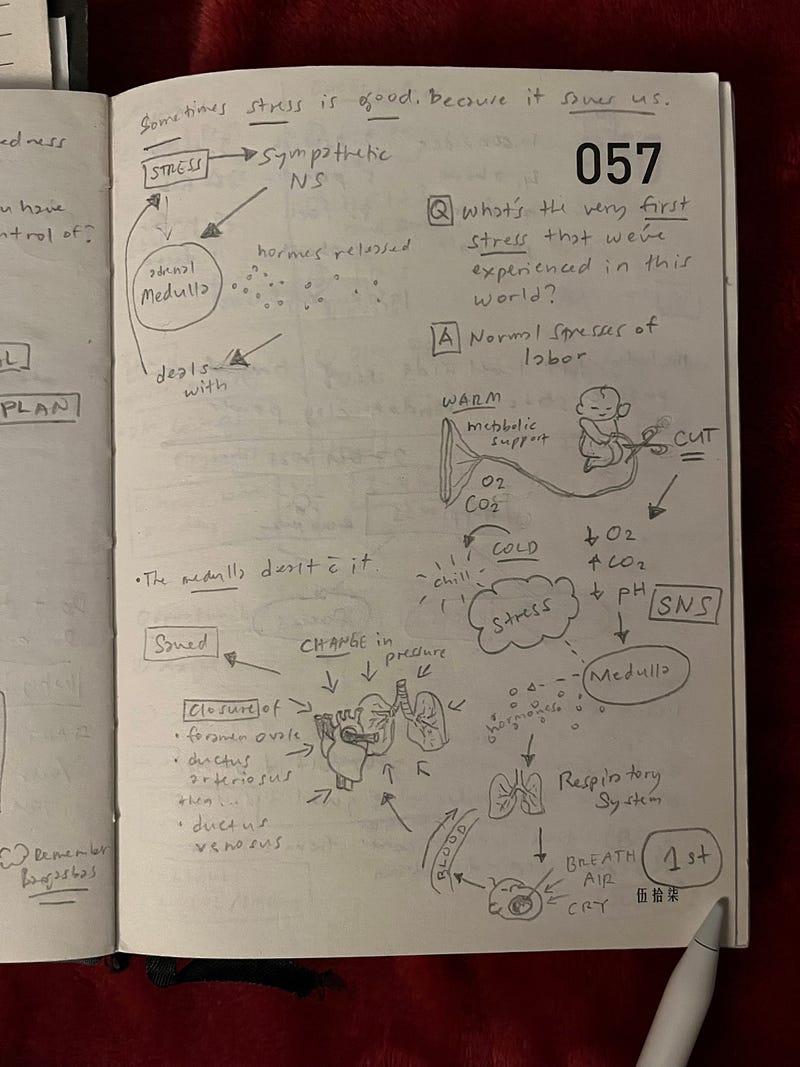
Your First Stress Experience in This Life Saved You and Here’s How
This quick read with illustrations will tell you how.
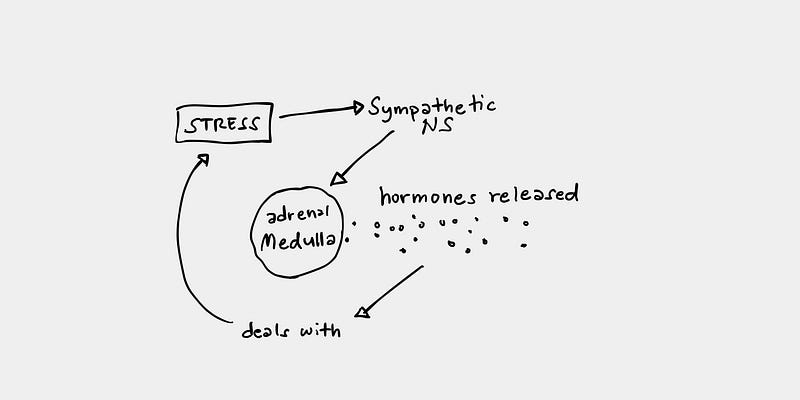
Sometimes, stress is good because it can save you.
That seems so hard for me to believe at first, ever since I learned that 99% of illnesses come from stress.
From another perspective, though, stress could initially save you.
Examples of stresses that could benefit you are the following:
- Shocks given by an AED to revive your unconscious body.
- All types of exertion during gym time help prevent cardiovascular disease and reverse diabetes if you include a proper diet.
With that in mind, did you know that the first stress you experienced in this world saved you?
What was that first stress, you say?
It is the normal stress of labor.
Here’s how it happened.
Remember that whenever stress happens, the SNS or Sympathetic Nervous System triggers the medulla in your adrenal gland to produce hormones that deal with stress.
That’s responsible for increasing your heart rate.
So, what happens during labor?
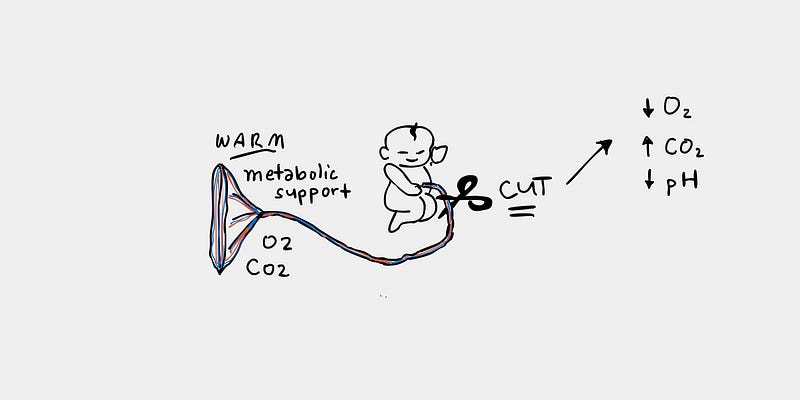
Once you come out of the womb, the first thing that the doctor does is cut your metabolic support, which is also responsible for your oxygen and carbon dioxide exchanges for however many months you stay in your initial home — the placenta.
The doctor cuts your umbilical cord, and since you no longer have access to the placenta, you have less oxygen, more carbon dioxide, and less pH, aside from suddenly getting exposed to a cold environment that you’re not used to.
You’re not just out of your comfort zone. It’s like the doctor stripped you of everything that was keeping you alive.
That is stressful.
What happens next is miraculous.
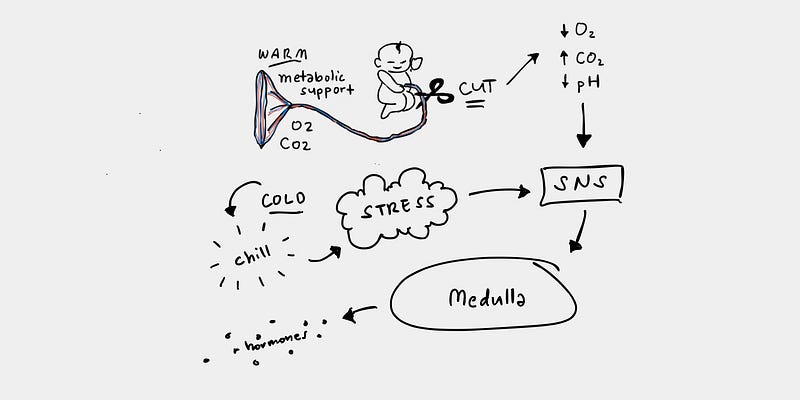
Because of the stress trigger, your SNS triggers the medulla to produce hormones to get it dealt with.
What does it trigger? The respiratory system.
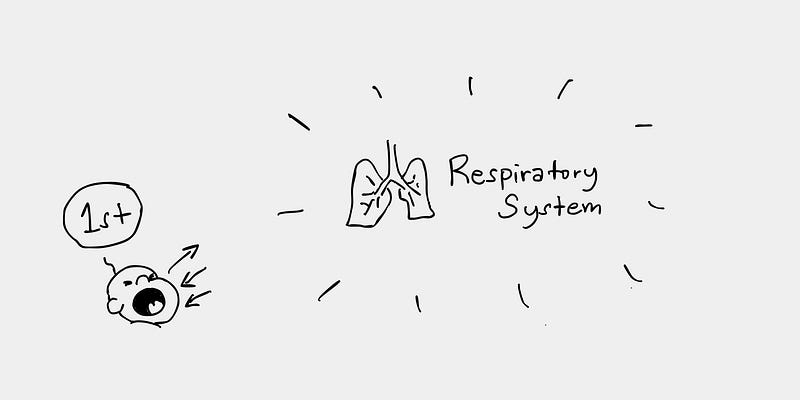
That initial breath of air is the most important goal at this point and the very reason why doctors and nurses sometimes give you more stimulation, more stress, to make you cry. They do all that so you can breathe.
That first breath of air expands your lungs, bringing oxygenated blood to your heart and changing its pressure.
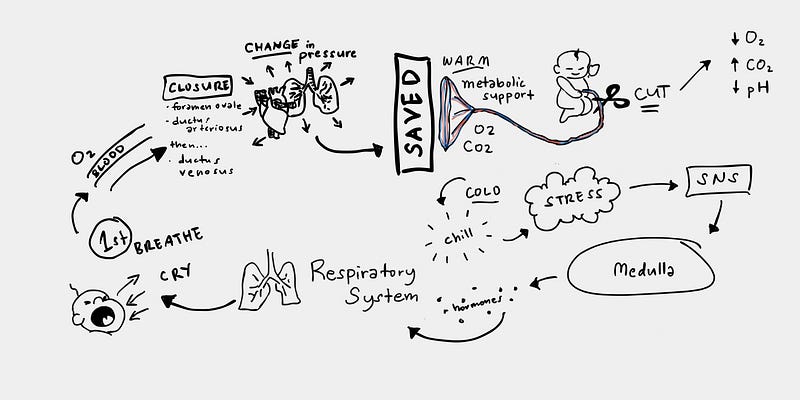
With that sudden gush of oxygenated blood, your heart changes. Parts of your heart close, the foramen ovale, ductus arteriosus, and then ductus venosus, all keep your heart beating in a new environment.
You are saved.
And now that you’re here on earth, doing everything you can to pursue your goals, if you’re that type of person. I have a reminder for you.
Repeated stress over a long period could do more harm than good. So, make sure that you know your limits.
Keep the balance.
Your neighbor,
Wam
Resources