
Your First Race Can Be A Marathon; You Can Start Now
After having my third child, I trained and ran alone.
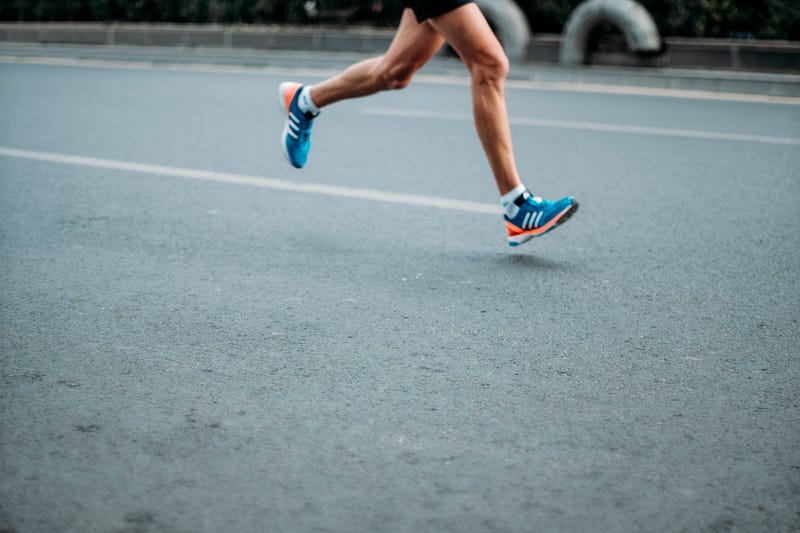
I was running from problems in my life I couldn’t face emotionally. A marathon was the easy way out.
A couple of months after giving birth to my third child, I saw a commercial for the Los Angeles Marathon. An inspirational song played in the background. The marketing team had done a fabulous job with the advertising. They pulled me in with the music, the words, the images.
I’d never run in an official race before, but I was a professional at running from myself. I’ve always been clumsy and am clueless about how to play any kind of team sport. My knees are decorated with scars from the number of falls I’ve taken over the years.
How an idea to run a marathon became a possibility
Because I can remain upright more often than not, I decided a marathon seemed like something I could do. I drove to my favorite hangout spot, the bookstore, the next major town over, and perused the fitness section. I purchased a book for marathon runners by Hal Higdon, who’s run marathons for over half a century, and competed in Olympic Trials.
Hal’s book explained that it’s essential to train for 16 weeks before running a marathon. I looked up the L.A. Marathon and was discouraged when I learned it was less than 16 weeks away. However, the San Diego Suzuki Rock ‘N Roll Marathon was on June 6th, giving me more than enough time to train. From there, I followed his tips and tricks for a beginner to a tee. I used his book like a sacred document, and soon the pages were worn, marked, and tagged similarly. I ate when and how his book instructed. I carefully entered into my calendar how many miles I needed to run each day for the 16 weeks before the big day.
Some days were more challenging than others. Living in the high desert, I’d try to get my daily run in before the sun was beating down. If a babysitter wasn’t available to watch my kids, my run had to wait until later in the day. I was excited to witness my transformation as I added more miles to my training regimen.
I only appeared to be running alone
As my runs became more difficult, I’d calm myself with thoughts that an untold number had gone before me and many others would go after me. It excited me to think about all the strangers who must be training somewhere at the same time I was, who I would get the opportunity to run alongside on race day. Tens of thousands of people I’d not yet met were in my heart, and sometimes, when my runs were the toughest, they carried me. I imagined them next to me, cheering me on to the finish line, along with supportive crowds.
A month before the marathon, I was out for an 18-mile run. Similar to previous days, that was the furthest I’d ever run. At about 14 miles, I realized I hadn’t brought enough water. My camelback was empty. I felt dehydrated and reached a point where my legs barely functioned. My lungs burned, and my legs were shaking. I was beginning to wonder whether I would have to lie down on the side of the road for the night.
A fire was burning nearby, so I couldn’t help but wonder if that had contributed to my throwing up. Devastated, I felt like I might not be able to run a marathon after all. Without a cell phone, I limped to the house closest to me, asking for a glass of water and if I could use their phone. Grateful for their kindness, I gulped down the water they gave me, sat on their front porch, and called my house. My babysitter ran across the street, and her mom drove to where I was. I voiced my thanks as I climbed into her car, although I was humiliated.
By nightfall, I had replenished my thirst, and I’d banished any thoughts of quitting.
How running felt
Throughout my training, my toenails fell off, and I’d wake up with restless leg syndrome during the night and wonder how that was possible; certainly, I was running enough. I read about chafing, shitting, and puking, and I was both prepared for when these things happened and grateful on the days when they didn’t.
I heeded Hal Higdon’s recommendation the night before race day and ate pasta. I even treated myself to a soda as some runners do before race day, although I rarely drink sodas.
On the morning of the race, I got up very early, headed downstairs at my hotel, and joined dozens of strangers on a shuttle ride to the race entrance. The energy in the shuttle was palpable. Everyone moved at a snail’s pace for the first mile or two due to the sheer number of people moving along the route. Eventually, the crowd opened up, and I felt more freedom to move at my own pace. Due to no creativity on my part, the tag pinned to my shirt said nothing other than my name. This trick worked out in my favor, as strangers standing along the sides and on bridges during the entire race called out to me.
“Go, Joy,” they called.
“You can do this, Joy,” they yelled as though they believed in me fully.
A strong finish
I floated on the support and belief of people I’d never met. Because of everything I’d read about marathons, I expected to hit the dreaded “wall” somewhere between miles 20 and 22. This place is where the stored energy within a runner’s muscles is depleted, and the runner generally feels worn out. I felt that expecting it had prepared me well for hitting the wall. Shockingly, I ran through those miles and kept going until the finish line. I never hit a wall or came anywhere near it.
A volunteer wrapped a foil blanket around me at the finish line like a hug. I joined other participants for bananas, water, and other snacks and enjoyed music nearby.
I was surprised to have finished my first race, having trained and run it independently. But the more I thought about it, the more I realized I was never entirely alone. Maybe it was the encouragement from day one from that motivational television commercial I’d seen, complete with inspirational music. Perhaps it was following all the recommendations in Hal Higdon’s book that made it happen. Maybe the crowd of strangers who had cheered me on carried me to the finish line.
I knew that moving forward, we can all do what we put our minds to, and even if we think we’re alone, we’re not.
Thank you for the inspiration on Health and Fitness for this competition, Robert.
Three members who I admire are: Judy Walker, Riley McLynn and DM Miller. Check out their articles!