
Your Content Is Not Art
The Problem With Content Creation No One Is Talking About

As a photographer and writer, everything I now produce is brushed with one broad stroke called ‘content’.
Imagine this scenario:
You’re a writer. You love spending hours thinking about headlines, obsessing over hooks, and writing free-flowing prose.
One day, you create a fantastic piece of writing. You’re proud of it. So proud of it, you want to print it on the finest paper and frame it.
You congratulate yourself on your masterpiece and publish it online.
And…
*crickets chirping*
Meanwhile, you see another writer go viral because they’ve jumped on Twitter, writing threads on “How Twitter is a free university, but 99.123456789% are using it wrong.”
You take note and decide to do the same thing.
And it works.
First, a little blue notification pops up, then another and another. Your heart rate elevates and you become excited. Your brain starts overdosing on dopamine from the blue notification bells that come pouring in from your tweets.
You repeat the process and churn out more threads, packaging the same idea differently.
More likes. More retweets. More dopamine.
You feel good. Your ego whispers, “you’ve made it.”
You start building up a following, and now you’ve earned the right to call yourself a writer and content creator because you measure the success of your writing by the number of followers you have.
Having an online following on Twitter means that people are seeing your writing, and you can tell your mom you’ve finally made it as a writer.
You wake up and want to write another masterpiece, but you feel like you have to make another thread instead to keep up with the algorithm.
So you decide to do both.
But as you go to write, because you’re splitting your time, it sucks. You can’t seem to write anything more than 280 characters because all you do is strip out the nuance and context of everything.
And the tweet thread, which at this point you had no real heart to write, flops.
Instead of blaming the system, you blame yourself. You enter a vicious cycle. The spiral begins.
You try to resurrect your Tweet threads because you feel like it’s the only way people will read your content.
Meanwhile, your writing suffers because you’ve optimised for writing to go viral instead of writing that is good.
At some point, you’ve become a full-time content creator. And you didn’t even mean to.
The Problem With Content Creation
As soon as you start posting your content online, you’re officially dubbed a content creator. Every form of human expression, creativity, dissent and complaint made public (including this post) online is a piece of content.
A playlist of instrumental songs is content.
A fourteen-tweet-long Twitter thread about entrepreneurship is content.
A reaction video reacting to a reaction video in which a vocal coach listens flabbergasted to some Finnish death metal song is content.
I would argue that art is the opposite of content. Content is a transaction presented as a value exchange. Whereas art is an emanation of the spirit presented as a gift. The two are fundamentally different modes of being and lead to two fundamentally different kinds of end products.
Labeling things as “content”, though, limits creativity.
But by calling writing or photos “content”, art is given a specific purpose: to serve the parameters of an algorithm set by a handful of engineers.
Instead of creative exploration, these algorithms reward art that seeks and holds attention. These algorithms are optimized for behavioral addiction and gamification.
Attention is on how these tech companies make money. Over time, by intentional design, the art becomes formulaic. Resulting in a flood of posts that isn’t content itself but a procedure of transactions.
The content becomes transactional (including this post). Content wants something from you. There’s nothing inherently wrong with that. The issue is content masquerading as art whilst seeking a transaction to take place.
The platforms originally designed to facilitate and bring more visibility to art are now like poison.
How did we even get here?
The History
The Greatest Hits
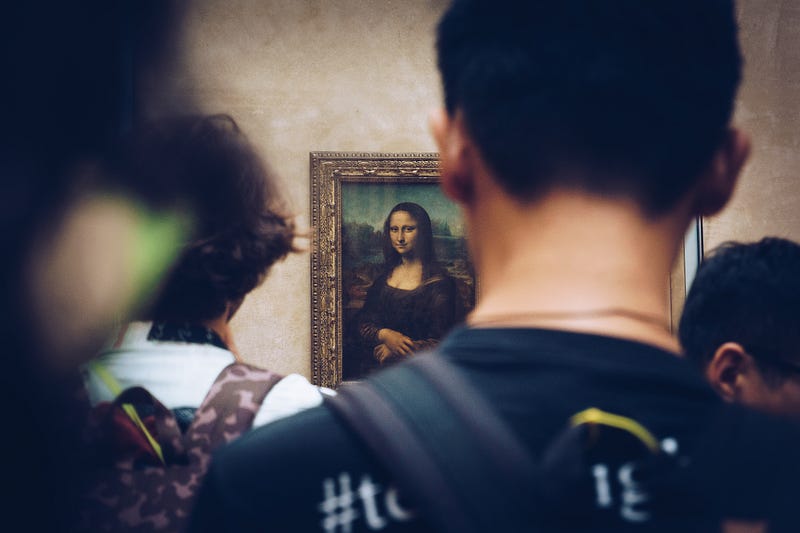
In the 16th century, there was an explosion of creativity called The Renaissance. The era produced the likes of William Shakespeare, Michelangelo, and Leonardo Da Vinci (albeit much later).
These artists flourished in their craft thanks to patrons.
A patron was a wealthy person who invested money into art. They would fund an artist’s life, allowing them to produce more of their craft. In exchange for the money, patrons would often appear in these artworks, and own them, adding to their large art collection.
It was in the patron’s best interest to make their art collection as valuable as possible. They hoarded renowned artists work and deployed the scarcity tactic. By driving up art’s perceived value, patrons could increase their wealth.
An Opportunity In The Market
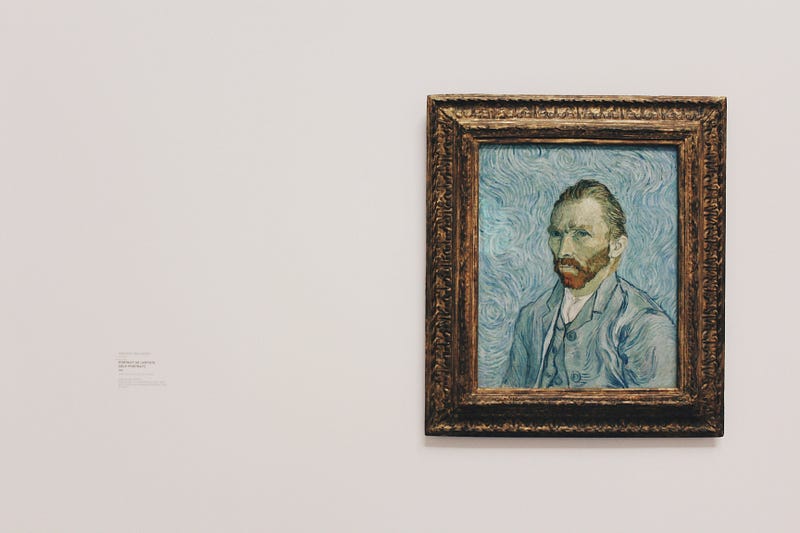
Skip forward two centuries later, and we have Paul Durand-Ruel.
The backing of artists had shifted. Patrons and government funded Art Academies were now backing artists.
Durand-Ruel noticed there were a lot of underground artists who were brilliant, but they were not getting any attention. In 19th century France, this was a problem for artists because they had to be a part of the French Art Academy for their work to be seen. So Durand-Ruel has the clever idea to invent a new system — decentralised exhibitions, aka art galleries.
Instead of getting patrons or academies backing for your art, you could now place your art in a gallery. If somebody liked it, they could buy it. Part of the money would go to the artist, and the rest would go to the gallery.
The impacts of this were that promotion and private selling began to power the art world. But this led to a peculiar unintended consequence that would dominate the 20th and 21st centuries: People would value an artwork by the artist who made it and not the artwork’s composition.
Many people could paint like Picasso, but only Picasso could sign it with ‘Picasso’. The artist drove up the value of a piece as much as their art did, thus placing an emphasis on branding.
The Master Of Personal Branding
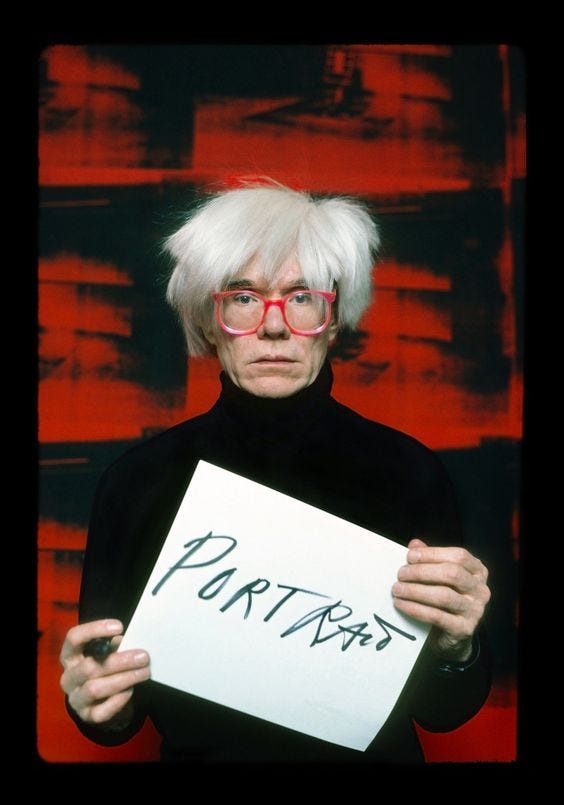
Andy Warhol saw this a mile off and took it to its extreme. Warhol’s thesis was that artists no longer needed years of training; they just needed to be popular.
If the artist was famous enough, then art that was cheap, easy and fast to create could potentially sell for more than art that had taken years and years of dedicated practice.
Since Warhol, artists have invested more time into their branding and story than their work.
At the same time, technology had a growth spurt.
We went from broadcast media to the internet. The difference between the two is paid distribution. Broadcast media was owned by a company: for example, a television network. And you had to pay money to the network to be distributed.
However, distribution is relatively free on the internet. If you make something good enough, it can potentially be distributed to millions of people worldwide, otherwise known as ‘going viral’.
This wasn’t the case early on and didn’t often happen for creative work. It was more so reserved for funny cat and dog videos.
Until an indie band went viral with next to no money.
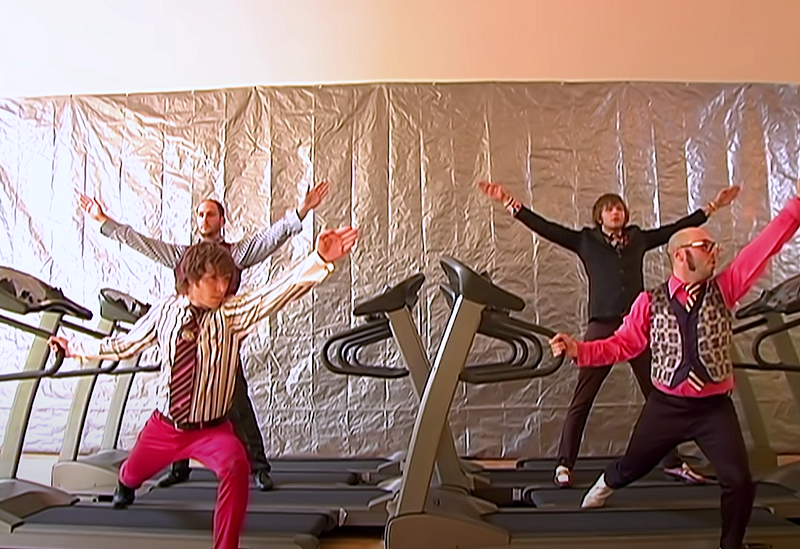
All they needed was an okay song, an okay camera and a brilliant idea. Okay Go was a hit.
This kickstarted a wave of indie bands, filmmakers, artists and writers, all trying to go viral.
The tech companies hosting these pieces of art caught on to what artists were doing and started adjusting the algorithm to suit the market. The more artists go viral, the more users flock to these platforms. More engagement meant people stayed on the platforms for longer, meaning more money from advertisers.
Everyone was winning except the record companies and broadcast media. Despite them not winning, they did have cash. They could pay to get those views.
While indie creators needed to have a brilliant idea to go viral, a record company just needed a lot of money to get their exposure on the internet. This inflated the price of exposure and infiltrated feeds with sponsored content.
While all this is going on, the modern-day influencer was born.
The Modern-Day Influencer
An influencer is a person who makes their money from being online and… influencing.
The rise of influencers sent a loud and clear message: You don’t need a “real” job, you can make content and earn a living.
Being an influencer looked a lot more fun than having a desk job, and for a lot of people, it seemed like it would make a lot more money.
This ignited an explosion of people actively making content instead of consuming it.
Now, there’s a new generation of people chasing the influencer holy grail. With so many categories to create content, everybody had more competition than ever before.
The economy is starting to change, as well. Advertisers, networks and record companies have started tapping into people with many social media followers who don’t look like a one-hit-wonder.
The result? Personal branding.
Personal Branding
Branding and audience size has become more important than the work you actually produce. It seems like too much attention has gone to the artist and not the art itself.
A lot of people are chasing branding and audience size. They’re making content and publishing it on social media in order to grow their audience numbers.
Optimising for this leads to two problems.
The first is experimentation now becomes a risk to your core asset. You fear writing in a new style may cause your audience to leave.
The second problem is your creativity becomes trained to suit the algorithm. Your writing starts to look the same as all the other people.
The end result is that all creativity now looks like content.
An Inch Wide and a Mile Deep
The current system places an emphasis on width: going viral, funnelling those fans off to an email list and then monetising them later. For what it’s worth, this does work, but there are two problems.
The first problem is width often leads to nothing more than fifteen minutes of fame. Viral attention is unsustainable, and mass attention is hard to keep.
The second problem is width is often seen as the only method that will work in the internet age. It may seem like a viral breakout is necessary for a creative online career.
So the big question is: What else works?
Depth.
Depth focuses on creating brilliant work for a small group of people for a longer period of time. Instead of focusing on going viral or serving an algorithm.
It might hit fewer people, but it will be far more memorable for the people it does hit. Instead of jumping on trends, depth focuses on creating an actual community.
Why is this better? Because going for depth caters to the desire for a deeper connection. As humans, we still want to connect to deep and resonant art.
But with 99.123456789% of people trying to go viral, a big chunk of that market is now left starving for something good.
1000 True Fans
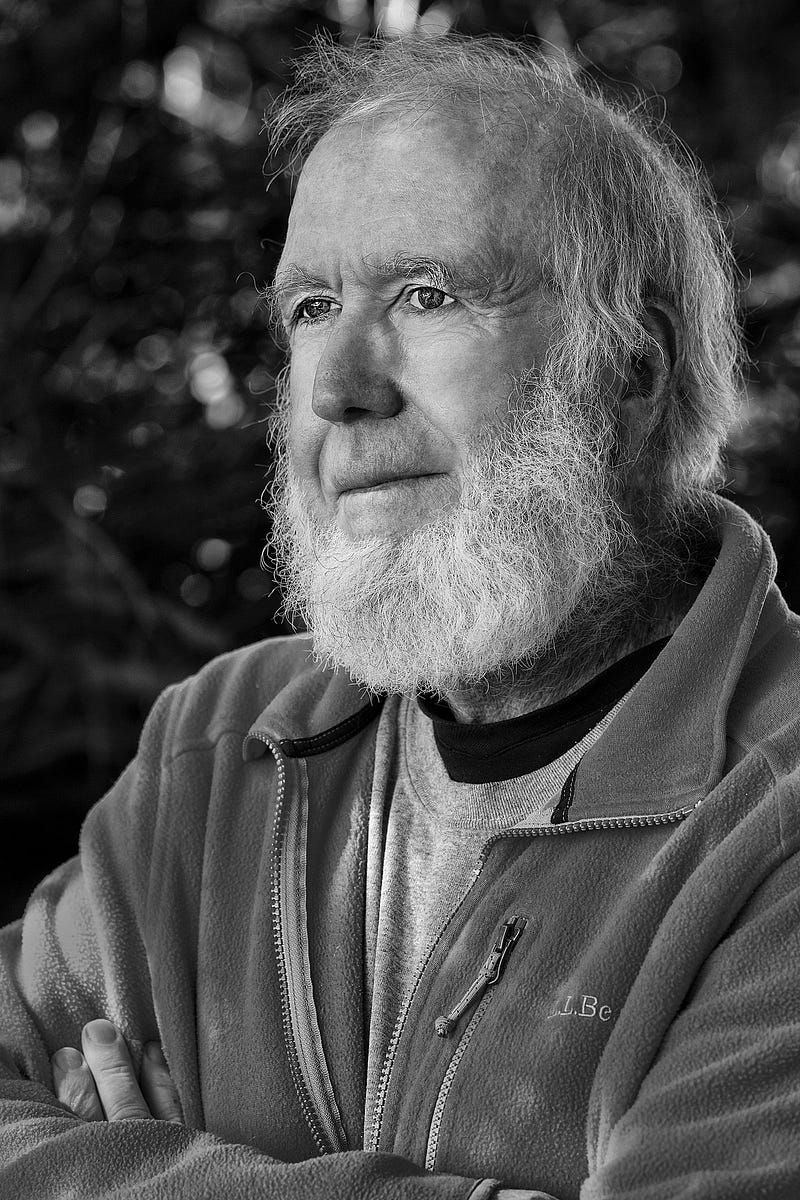
Kevin Kelly was the editor of Wired Magazine and a multi-talented badass.
In 2007 he said:
“With so much scattered attention on the internet, your best bet is to not try to chase all that scattered attention, but to just build 1000 true fans.”
So, what is a true fan?
A true fan is somebody who will appreciate everything you create, whether it’s your best or your worst work. They will buy all the products that you launch. They will migrate with you from platform to platform. They are always there to support you.
Kevin Kelly’s thesis is that, with 1000 true fans, you can have a sustainable career. If 1000 people buy the things you make, you are financially self-sufficient. These 1000 true fans also work as your marketing team, spreading your work through word of mouth.
So How Do You Get 1000 True Fans?
Strategy 1: One For Me, One For You
A journalist once asked John Mayer how he crafts an album: “How many songs are for you, and how many are for your audience?”
Mayer replied, “I make one for me and one for them.”
Your strategy can be similar: half the time creating work aimed at getting new people to follow and the other half for creative expression.
Strategy 2: Serve The People Who Serve You
Instead of trying to chase new people, cultivate a community around the people who have already displayed an interest in you. It’s making memorable one on one interactions with people, like answering DMs and comments.
Strategy 3: Make Something Big
It’s pretty tempting to optimise for short term rewards, such as Twitter thread virality.
But writing a book, making an album or shooting a film has a far higher chance of converting somebody for life, as opposed to just converting somebody for the day.


