
Your Body Tells Your Truth
Emotional anatomy is undervalued in Western culture.

Have you ever decided on a course of action and tried to move forward but felt physically blocked in your impetus? That’s emotional anatomy working for you, not against. It’s a warning you’re not headed in the right direction.
We’re taught to search our minds for guidance from a very young age. The pre frontal cortex in our brain is divided between a linear left brain and non linear right brain. Mental learning requires more referencing of our left brain, which stores past data and can hopefully produce a logical choice based on past experience. If we’re in a creative mode, then we’re operating in our non linear, right brain and in search of unknown, expansive data.
Researchers and scientists have now discovered a second, ‘enteric’ brain, located in our gut. Our gut brain sends out and receives many more messages than the brain we have in our heads. Emotional anatomy is a big part of that relay and it can even determine how you move through the world.
I discovered this second gut brain at a young age. Paying heed to it literally saved my life on several occasions. Under dire circumstances I hear my voice of intuition as well as feeling it in my body. In one incident, I began to enter a room to grab my toiletry bag for a shower during a stay in El Salvador. Crossing the thresh hold I felt a push backward in my abdomen and heard this internal voice.
“There’s a scorpion in your bag.”
I had enough experience with this sensation to automatically pay attention to it. I turned around and asked the construction crew next door to help me out. They brought a rebar and probed my bag from afar. A licorice black, enormous scorpion over a foot in length, scrambled out onto the floor. The workers immediately killed and measured it, exclaiming how deadly it would’ve been if I was stung. That was a gut knowing, bypassing any left brain reasoning. Paying homage to the second brain in my abdomen had been essential to survival.
To further emphasize the value of body listening, I was served up another dramatic episode while living in the bush in Kenya. A local was helping my friend and I get settled into a hut she had abandoned a few years earlier. I stepped into the shelter only to receive the same backward pushing hand, this time on my chest and very forcefully. Again, an internal voice.
“There’s a snake under the mats in the corner.”
I went in search of our helper Obo, who found a long stick and poked the pile of mats. A massive red spitting cobra, over 7 ft. in length, slithered out of the pile, up a supportive post and down the other side, disappearing into the vegetation. Obo grabbed my arm, adamantly assuring me how good it was I had sensed this. Red cobras can spit venom, with a high degree of accuracy, straight into your eyes and blind you if you can’t get to anti venom soon enough. I was on an island in the middle of nowhere. I was also in Africa and my intuition was enough to enlist help without question. Certain cultures embrace a deeper respect for the power of emotional anatomy.
Honoring your gut brain develops an expanded intuition.

Kids are masters of intuitional knowing before adults drum it out of them. Maybe you didn’t like sitting on the lap of your ‘friendly, so close to the family’, relative. If you had the courage to tell your parents it made you feel yucky, it could’ve easily been dismissed with a ‘you know how kids are’ eyeball roll. Until that same person began molesting you and you endured it, sure no one would believe what your own body had been signaling.
Your body also lets you know what food won’t serve you. Although I wasn’t allergic, peanut butter and jelly sandwiches gagged me, but my mother of 11 children had zero tolerance for dietary preferences. When I complained about PB&J’s making me want to barf, she told me to stop whining and start eating. I nibbled at the bread, waiting for a moment of distraction, then dashed off to deposit my latest contribution to the steadily growing pile under her red sweater in the cedar chest. She knew the culprit after discovering the perfectly preserved, dehydrated sandwiches a year later. I was surprised she didn’t make me eat them.
Bodies don’t lie and they don’t forget.
Students and clients often had spontaneous emotional healings when re- connecting with their bodies in the classes and private sessions I held during the 33 years I practiced in the healing arts.
A particular stretch can resurrect stored trauma you had no idea was there. One student burst into tears in the middle of a class while carefully beginning a hip opening asana. She had broken her pelvis in a car accident years prior but never permitted herself to feel the pain and terror of the wreck. Everyone kept telling her she needed to stay upbeat. She was young and expected to overcome her ‘temporary’ incapacitation with forward thinking, rather than integrating how she almost died. She lay on the yoga mat sobbing, emotionally supported by every student in the class and was able to breathe deeper and differently afterward. She described her physical shift as a new lease on life, due to the release of her ever present anxiety.
We all build anatomical armors to hide our wounds, plastering over scars and vulnerabilities. Somewhere along the line, we begin to realize this emotional constriction no longer protects, but rather inhibits us from moving freely.
Our bodies are living libraries.
Our connective tissue stores the memories of everything our bodies have experienced. It’s both as simple and complex as that. The simple part of it is that we are naturally wired to retain this relevant information. It’s crucial to our survival that we pay attention to it. The complex part of it involves our mental over ride, naysaying our bodies messaging by choosing the ‘safety’ of logic and linear reasoning. Continual deference to mind over body eventually plays out with a physical price tag.
“That can’t be true or where in the world did that thought come from?”
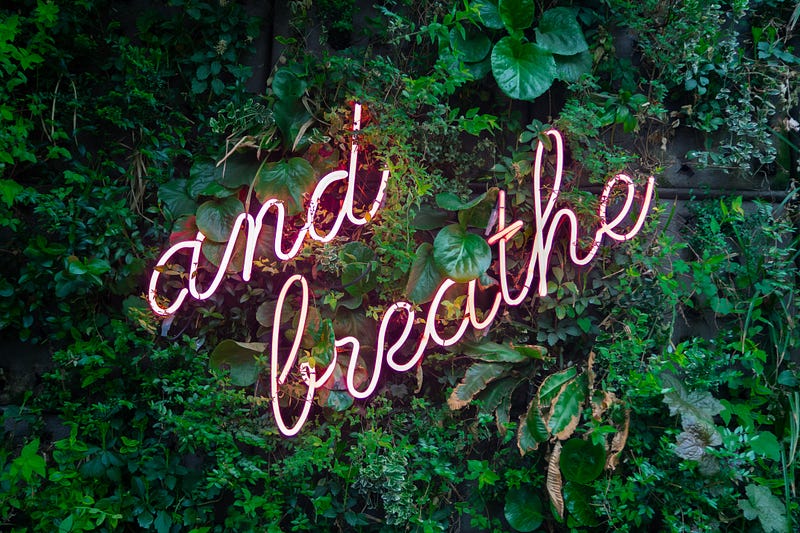
It’s easy to cultivate greater awareness of your emotional anatomy. Begin with tracking your breathing patterns. Our breath is the key to opening our locks and facilitates recognizing a lack of ease, otherwise known as dis- ease. Where do you hold stress? Gentle inquiry can stimulate a dialogue between your gut and mind. Better yet, bypass your mind and allow yourself to wander where led. Try being still, patient and most of all, listening to what arises. Once your body believes you’re wholeheartedly paying attention to what it has to say, it can unload an overwhelming amount of information. It’s so thrilled it’s no longer being ignored.
Activating and plugging into the guidance our physicality offers can have a positive affect on how you view yourself, as well as others. We’re in danger of losing this internal compass as more of us tune into our devices instead of our bodies.
Holistic recognition of body- mind equality can become a direct route into your heart as well. Our hearts thrive on our inward gaze, glimmering brightly after receiving a dose of your own good medicine.


