
Your Body Can Produce ‘Hope Molecules’
Learn how to activate them more often, and increase your happiness.

“Every time we move our muscles, we are giving ourselves an intravenous dose of hope.”
— Kelly McGonigal, PhD
The power of hope molecules
Lots of us are experiencing an unsettling absence of hope right now, on some level. It’s more important than ever to become guardians of our mental health.
I bring good news…
Scientists have found that whenever we move a muscle (anywhere in our body), we produce ‘hope molecules’.
How cute!
During movement, proteins called myokines are released into our bloodstream. These pass through the blood-brain barrier to change the structure of the brain and have an antidepressant effect, which makes us more resilient to stress and trauma.
The good news is that all muscles can produce myokines. Whether you go for a gentle stroll, lift weights or run a marathon, regardless of your age, gender and level of fitness, it’s never too late to start moving.
Stanford psychologist, Kelly McGonigal, recently found a 2016 research paper online and noticed scientists casually throw out this term hope molecules. She became fascinated with the concept and further studying led to her writing her book ‘The Joy of Movement’.
My movement revelation
A few years ago, I could barely run for ten minutes without wondering if I should call an ambulance. This Sunday, I ran for two and a half hours without stopping, and actually enjoyed it!

Previously, if anyone started preaching about the benefits of exercise or, even worse, described it as enjoyable, I was convinced they were a different species. My immediate reaction was that they should probably lighten up, get drunk, and eat a kebab.
But I’ve come to value the protective effect of exercise on my depression. I’m not just using exercise to make myself feel better when I’m down, I’m using it so I don’t feel so low in the first place. If you’re struggling to find the motivation to move your body, or are experiencing persistent sadness, anxiety, or low mood, I have faith that this can change for you.

“Our muscles are like an endocrine organ. When you contract your muscles in any type of movement, they are secreting chemicals into your bloodstream that are really good for every system of your body; they’re great for your heart health, your immune function, and some of them can kill cancer cells. All the stuff we know exercise is good for. But a big part of these proteins and chemicals that are being released by your muscles, which are called myokines, has profound effects on the brain.
You go for a walk, or a run, or you lift weights, your muscles contract, and they secrete these proteins into your bloodstream. They travel to your brain, they cross the blood-brain barrier, and in your brain they can act as an antidepressant, like niacin can. They can make your brain more resilient to stress, they increase motivation, they help you learn from experience, and the only way you get these chemicals is by using your muscles. It’s part of how we become our best selves. We have to use our muscles. The scientists call them hope molecules.”
- Kelly McGonigal, PhD.
Increasing the intensity of the movement will increase the number of hope molecules released into the bloodstream. Aerobic workouts (higher-intensity such as power walking or running) are most associated with positive results in treating depression (aerobic exercise elevates your heart rate, which improves circulation in your brain).
Is it really worth the effort?
You’ve probably heard of the ‘runner’s high’ and chemicals such as endorphins, serotonin and dopamine, which all contribute to that yummy post-workout bliss. Likely, you’re already aware that exercise is good for overall health and contributes to better sleep, and now you’ve also learnt about the power of hope molecules. But maybe you need some more convincing.
Research shows that the positive benefits of exercise extend beyond the initial rush of feel-good chemicals. Studies reveal that exercise can have more of a long-term impact on depression than medication.
“This isn’t just a small temporary boost to your mood we’re talking about. Studies indicate that specific levels of exercise can alleviate depression as much as — or more than — antidepressant medication.”
Lisa Smusz, MS, LPCC
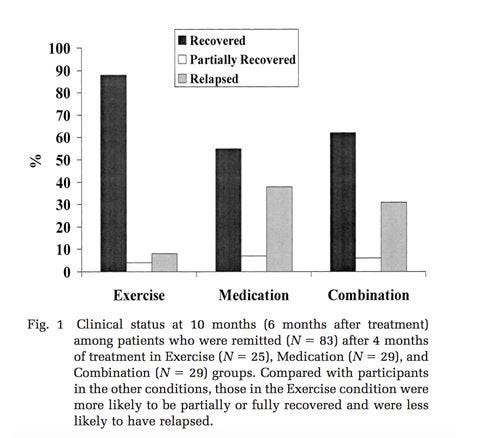
Whilst I support the use of medication to treat some mental health problems, I have personally found that lifestyle changes can have a significant effect, as this report shows.
Find an activity you enjoy
If the idea of enjoying anything physical is too much to fathom right now, is there something you might be able to tolerate?! Chances are, once you get started, you’ll start to associate good feelings with this activity, and it might become something you enjoy.
The NHS recommends 150-minutes of moderate-intensity exercise a week, and the Mental Health Foundation suggests 20–30 minutes of movement five times a week for the most positive impact on our mental wellbeing.
Extroverted people sometimes prefer classes and group activities (still possible via apps like Zoom and Fiit during lockdown), or walking with a friend, whilst introverts might prefer solo pursuits.
According to scientists, even mowing the lawn will make you happier!
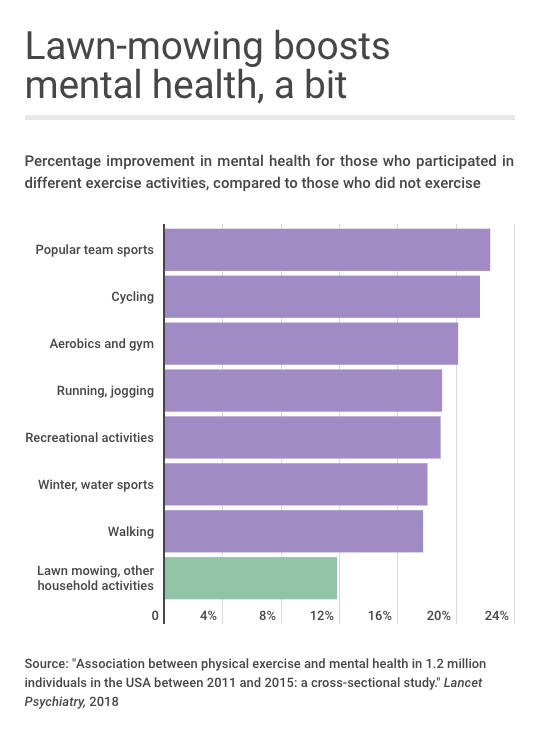
So, are you feeling more motivated now? If not, you aren’t alone…
The myth of motivation
I love running, but I don’t jump out of bed desperate to put on my running gear! I’ve learnt to tell the difference between knowing how something is going to make me feel, compared to how I currently feel. Motivation ebbs and flows. If I gave up on my run every time I didn’t feel like it, my fitness and mental health wouldn’t have improved as they have over the last few years.
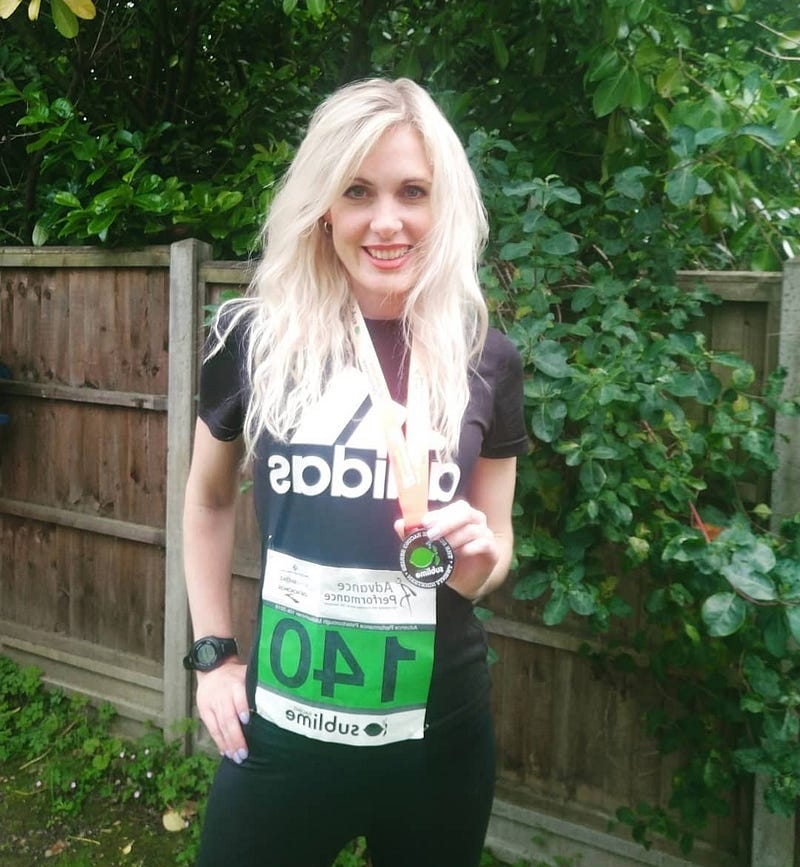
I have friends who believe it’s easier for me to maintain a running habit than it is for them, but I think I disagree. It isn’t easy for me. Maybe I just have a stronger ‘why’. I know that I cope much better with life when I do some sort of exercise compared to when I don’t. That’s motivating in itself, and I’m not willing to give up on something so valuable.
It’s about focusing on your future self: “Will I feel better if I go on this walk, or if I spend the rest of the day ruminating over the fact that I didn’t go?”
I know it’s easier said than done. I’ve made excuses for not exercising my whole life…
How to reframe exercise as a choice, not a chore
There are many times in life when we know what’s good for us, yet there’s a knowledge-action barrier that we just can’t seem to conquer. I’ve found a few ways to break this frustrating cycle, to make the choices that serve me best in the long run (no pun intended…).
10 Mindset Tricks
1. Just start, worry about being perfect later.
Don’t procrastinate about having the right gear, or get stuck researching the perfect trainers, that’s just fear preventing action. Put on your comfiest clothes and move.
2. Motivation ebbs and flows.
Our moods fluctuate as do our emotions. Be prepared for this and learn to talk to yourself rather than listen to yourself. Mood follows action, not the other way round (actions change thoughts, which change feelings). Remember that everyone feels unmotivated at times, athlete or amateur. You won’t always feel like doing the things which will actually lead to you feeling better. Are you listening to your body or are you making excuses? Learn to tell the difference, and remember your ‘why’.
You can’t control how motivated you are, but you can set up your environment to limit decision making at the time you intend to workout. Maybe plan your exercise schedule a week in advance, choose a training plan so you have a clear goal, make a commitment to a friend and hold each other accountable, lay out your workout gear the night before, or if you plan to go to the gym or a class after work, put your gym bag on the front seat of the car so it’s in your sightline. Experiment with what works for you.
3. “I get to, not I have to.”
We take our health and ability to move for granted, but just imagine it was taken away from you tomorrow. Say this phrase whenever you need an extra push and then move in gratitude for your healthy body.
4. The 5,4,3,2,1 Countdown.
Stop rumination by taking a practical step. This one is surprisingly effective. If you’re struggling to take action, simply count down from 5, then move. This interrupts and awakens your prefrontal cortex, and is a technique used in the armed services and schools. When you hit 1 it’s a prompt to move — stand up and walk into the next room, or swap your pyjama bottoms for your gym leggings (a favourite of mine!). Try not to think beyond that first action and don’t let yourself quit until you’ve taken it. Chances are, you will probably decide to do the exercise after all.
“When we feel low we become fruitlessly preoccupied with the fact that we are unhappy and with the causes and meanings. We ruminate when we feel low because we believe that it will reveal a way to solve our problems. But research shows that rumination does exactly the opposite: our ability to solve problems actually deteriorates markedly during rumination.”
- Dayana Sabatin
5. Start small.
One of the most difficult things is simply getting started. Setting goals too high increases the likelihood of us feeling like we’re failing. Ask yourself, “what’s the next best action?” Think small for now. Walking is a good place to start because it doesn’t require a big leap, and has the added benefit of being outdoors in nature.
You can exhaust yourself before you’ve even started by envisioning how far away the finish line is. Just take one stride, then another.
“Small steps have no competition in personal development — their unflinching effectiveness embarrasses every other strategy.”
Stephen Guise
6. Reward yourself.
If I don’t feel like running, I often focus on something I’ll reward myself with later, like a trip to the coffee shop, a slice of cake, or a bubble bath to warm up. Those things are much more enjoyable when you feel like you’ve earnt them.
7. “I don’t need a permission slip.”
It’s your job to carve out the time and say no to whatever you need to say no to. Prioritise your mental and physical health, for the sake of yourself and those you love. Treat yourself like someone you’re responsible for helping. You might not get in trouble with the PE teacher for skipping workouts anymore, but this isn’t something you should be trying to get out of, it should be something you are choosing to do for your future.
8. History is proof to me that I have never once regretted a workout.
If I’m struggling, I try to fast forward my thoughts to the happy feelings I can guarantee I will get post-workout.
9. “Do I really want to deal with the guilt?”
Think about the time you will inevitably spend feeling disappointed in yourself if you give up. Is it really worth it, versus revelling in post-workout euphoria?!
10. It’s never too late to start.
Today is the start of the rest of your life. Can you commit to one small step? If you break the habit or have a period of time when you can’t exercise, simply begin again.
Right, that’s enough from me, it’s time to get moving!
Wishing you hope molecules galore,
Emily x
If you’d like to read my personal story, click here.


