
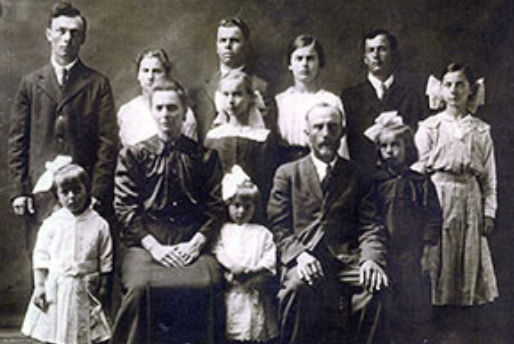
Your ancestors were robust, learn to embrace the genes they gave you.
Spend enough time sitting in your doctor’s office, and you may hear that your suffering is genetic. In case you missed it, this little gem hints that you are somehow to blame for your illness. This way of thinking presents a much bigger problem for you than it does to the doctor treating you.
When a patient is told they have “bad genes” it suggests that they are powerless to control their own destiny. This type of thinking instills a negative mindset which is not only unhelpful, it’s also deeply flawed. Here’s why …
The human body is a highly complex marvel with the ability to repair itself. How we perceive this remarkable phenomenon is essential for longevity and recovery. In this post, we’ll be looking at disease from a totally different angle. Ready?
Recently, I visited my elderly aunt in a nursing home. This once dignified woman was now trapped inside a sickly body. It soon became clear that she had no clue who I was, or even where she was. Her days now spent relying on others to prevent her from sitting in cold, damp underwear.
As I looked around the nursing home I could see that my aunt’s situation was being replicated. Withered bodies sitting in front of mind-numbing television sets. Seeing people like this weighed heavy on my soul.
On the opposite end of this spectrum meet 102-year-old Edie Simms of Missouri. Edie should be an inspiration to us all. In her long life she’s had many experiences, but getting arrested was not one of them.
For her 102nd birthday, Edie decided to turn herself into the local police department — evidently, it was on her bucket list. As she walked to the waiting squad car, Edie also requested that she be handcuffed.

Prior to her arrest, Edie had spent much of her time offering support to the “younger” residents at the senior home. Helping others has been Edie’s formula for living a long and productive life. After more than a hundred years, Edie’s mind remains as sharp as a tack.
Is this a question of simple genetics or is there something else going on here?
It’s fair to say that minds like Edie’s are now becoming few and far between. While there are lots of theories for this, it’s important to recognize that our brains are hard-wired to be of service to others. No really, it’s true!
Science is now able to demonstrate how a part of the brain known as the subgenual anterior cingulate cortex, lights up whenever we help others. Although after 102 years, I suspect Edie already knew this. On the flip side of Edie’s story sits senile dementia.
Alzheimer’s Disease International estimates that the number of people living with dementia will double every 20 years. That’s 74.7 million lives devastated by 2030 and whopping 131 million by 2050.

But as most already know, health problems aren’t confined to the older generation. Some estimates suggest that a child born in the U.S. today will have a lower life expectancy than those born a generation before.
BAD GENES
The presumption by some is that our ancestors must have somehow given us bad genes. Personally, I take issue with this argument more than any other.
Why?
The belief that we are predisposed to illness through our ancestors’ genes doesn’t take into account the toxic world we have made for ourselves. Today, most of the water we drink comes to us from a plastic bottle. And the food we eat is highly processed/loaded with excess sugars.
Let’s look at it this way. If your mom ate junk food for breakfast, lunch, and dinner then as a kid so did you. When both become diabetic does anyone stop to ask if this predisposition a result of bad genes or simply a bad diet?

The short answer to that question is probably going to be no, in part because doctors receive so little training in the field of nutrition. Now we start to see a very different picture and one that challenges the concept that our cause is lost to bad genes.
The “bad” genes hypothesis glosses over a vast array of toxic environmental factors. If you grew up in cramped squalor and suffered from head lice, then so did your siblings. If you grew up in a home full of mold, there is a pretty good chance you developed chest problems and so did your siblings. If you grew up in a house next to a toxic waste dump, then so did your siblings. When elevated rates of cancer show up in these tight family units, does anyone ever stop to ask why?
When we apply a little lateral thinking, the problem begins to look a lot less like genetics and more like common sense. Let’s not forget that our ancestors’ genes must have been pretty robust to survive. Perhaps those medical pundits are referring to our ancestors from a hundred years ago? Let’s take a look.
WORLD WAR ONE
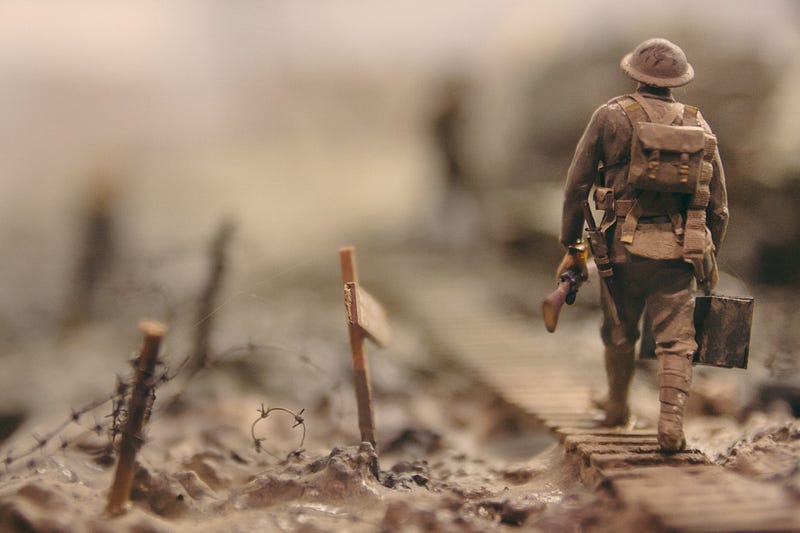
We owe our a debt of gratitude to those souls who bravely gave up their lives to the First World War. It’s well documented that during that time more good men lost their lives to poor sanitation than to enemy machine-gun fire!
Wait a second … are you catching this?
Am I saying that between 1914 and 1918 a plumber’s wrench could have saved more lives the surgeon’s scalpel?
Yes, if you run the numbers, absolutely so.
Today we know that the spread of harmful bacteria can be slowed down with effective hand washing. Hence we have all become overly obsessed with doing it. If only more of those men in the trenches had been given access to hot water and soap, fewer deaths would have resulted.
NO SHIT
Before we allow science to poke a finger at our ancestors’ genes, let us remind ourselves that poor waste management and disease have ALWAYS gone hand in hand.

When we look at communicable diseases, it’s worth noting that indoor toilets were once considered a luxury. Right up to the late nineteenth century, “soil-men” were being employed to remove human waste from our homes and businesses.
Typically, this was done at night and by hand by a four-man team consisting of a hole man, a rope man, and two tubmen. The hole man crawled into the cesspool and filled the buckets. The ropeman hauled up the buckets full of human waste and passed them to the two tubmen who put them on the truck. These poor unfortunate souls carried these buckets of slopping waste all night long — now that’s what you call a shitty job. As for the spills? They were often left in the yard where young children played during the day.
In pre-sewer America, open sewage carts were being pushed along with human excrement dripping over the sides. On a hot summer’s day, it’s often said that the stench would hang in the air making people gag as they scurried away.
When we look back at disease let’s not be in a rush to discount the obvious advantages of the modern flushing toilet. Polio is often spread via the stool of an infected person. If we put our reality goggles on, it could be argued that plumbers are once again saving lives. As sanitation continued to improve your ancestors’ genes not only went on to survive, they positively thrived. Hoorah, for indoor plumbing and hot showers!
So where does this all fit in?
Today we face a new threat from pesticides, pollution, parabens, plastics, and petroleum-based products, (and that’s just the letter P). I guess we could also add to this list people who now think it’s okay to open and lick cream tubs before putting them back on the supermarket shelf (yes it’s a now a thing).
To blame our toxic world on our ancestors’ genes is not only incorrect, but it’s also actually a little insulting to them.
No?
Okay, let’s try this.
Regardless of your ethnicity, your DNA stretches countless generations. Perhaps even back to the Roman empire.

From the intense heat of North Africa to the cold and damp of Northern England, Roman soldiers marched around in full body armor. After weeks of marching, these formidable warriors then had to contend with a ferocious fight to the death. No, last bus home, no cough drops from the pharmacy.
If our ancestors’ genes were so predisposed to weakness, how did they manage to survive any of this?
Imagine if right now, you and I found ourselves on a battlefield standing toe-to-toe with a fully kitted-out Roman soldier. As we struggle to lift the 65 pounds of body armor, how do you think we would fair?
I think we are about to get our toxic butts kicked by our ancestors.
THOSE STUFFY VICTORIANS
Maybe the blame for all of our problems lies with those stuffy, oh-so-proper Victorians. But compare those trim Victorian body shapes to our high obesity rates of today, perhaps once again, our ancestors got a lot of things right.

But it’s not only the physical. Our modern-day stressed out ADD brains struggle to compare to those of our Victorian ancestors. It’s easy to see how their minds worked from the things that they built. To this day, Victorian architecture is a testament to the meticulous craftsmen involved in building them.
Today, we are quick to build soul-less metal boxes. Although metal boxes are a good fit for industrial units, they have a distinct emphasis on cheapness rather than quality.
Which begs the question. How far has our current standard fallen, if the generation we once considered to be the “unwashed masses” is still outperforming us today?
Rest assured, whatever is going is wrong here hasn’t got a whole lot to do with your great-grandparents. Seems to me our ancestors handed us some pretty good genes. Maybe if we embraced our ancestral genes rather than blame them for our modern diseases we could begin to create a better world for ourselves.
What did we learn from this?
Squalid living conditions and a lack of personal hygiene have always played a pivotal role in disease. These are well-documented historical facts. To accomplish what they did, our early ancestors must have been a pretty hearty bunch. By comparison, we now seem hell-bent on making ourselves extinct.
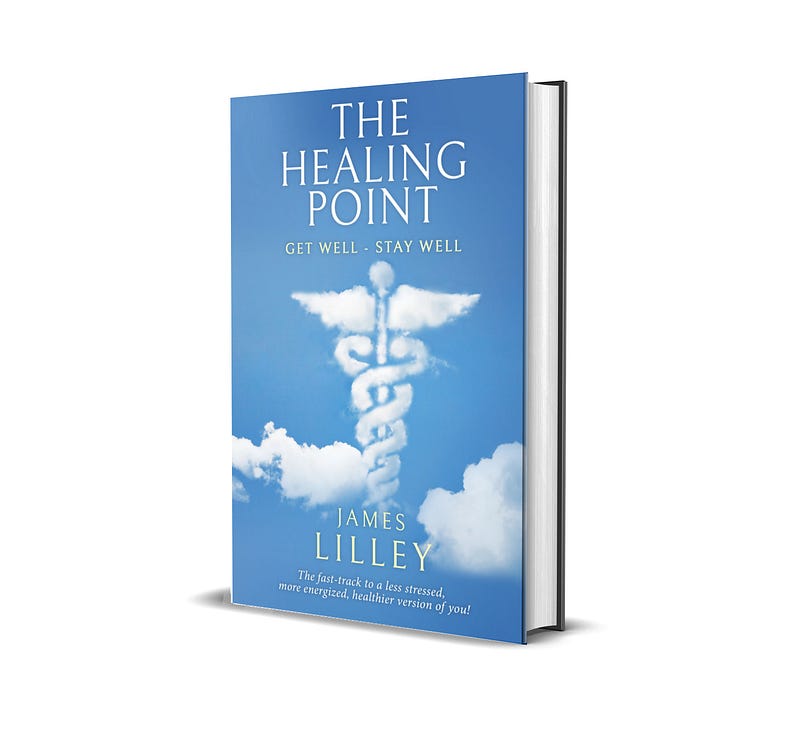
Homework: Check out this book