
Your 10 US-China Questions — Answered
And no, we aren’t using nukes yet.
These are a series of questions I’ve been asked by friends, family, associates, and my Twitter followers. In this article, I’ve selected the top 10 questions, and tried to gather the facts and answer them as truthfully as possible. Some of them may be wacky, but this is what people are asking.
Oh. I also voice my own thoughts on the matter.
1. When did the tensions start?
ANS: When the US supported the Nationalists instead of the Communists
According to the Council on Foreign Relations, the conflicts between the United States and China began when the Chinese Communist Party came to power, exiling the US-supported Kuomintang Party(Chinese Nationalist Party) to Taiwan.
Relations between the two countries have declined in decades following the formation of the People’s Republic of China, with the CCP as the only legally recognized political party.
My Notes: The US is notoriously anti-Communist, so it’s no big surprise that the two countries don’t have good relations. It also happens that both countries are vying to become the largest economy in the world, and as contests go, they aren’t friends.
2. What does Russia think about US-China tensions?
ANS: Unsurprisingly, Russia maintains its neutral stance with both countries, and watches from the sidelines.
According to The Wall Street Journal, Russia-China relations have also deteriorated, though not to the extent of those with the US. But Russia is not known to side with the United States, and so remains neutral on the issue.
However, Russia’s stance is subject to change, as US-China talks progress.
My Notes: Russia has nothing to gain from siding with any superpower. I suspect it’ll just watch the fight, and side with the winner.
3. Did Trump do something that upset China?
ANS: Not particularly.
In 2017, Donald Trump visited China and its president, Xi Jinping. The leaders committed to improving the relationship between the two countries, and communications continue on matters of major interest.
My Notes: Despite Trump’s sometimes irritating frankness, China doesn’t hate him. In fact, The Atlantic even proposed the contrary here.
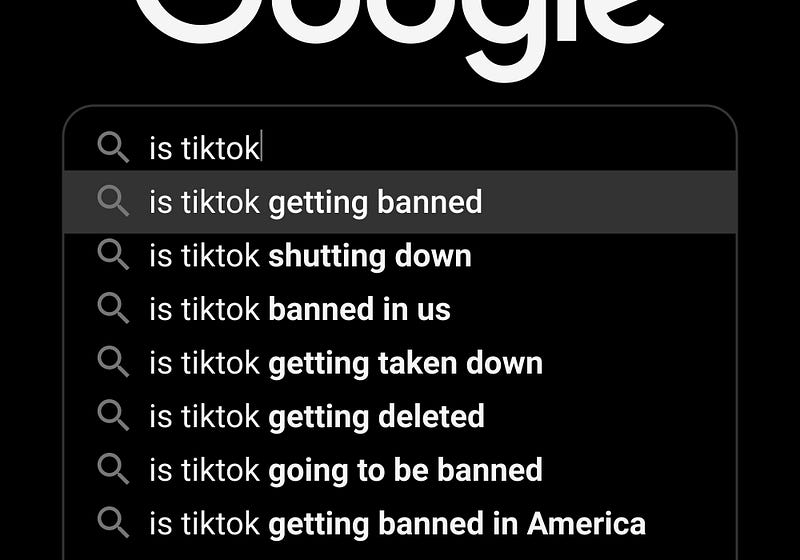
4. Why is the government banning TikTok?
ANS: The US government (in particular the Department of Commerce) is banning Chinese apps TikTok and WeChat due to national security concerns.
TikTok is a video-sharing site owned by a Chinese company named ByteDance. According to The Guardian, the government of China exerts considerable influence on private companies. It’s not a stretch to say that it could use TikTok to spy on US citizens. Hence, Trump says it has to go.
India had actually banned the app earlier in the year, along with apps made by China-based tech giant Tencent.
The app will be banned unless a US company successfully concludes negotiations to acquire TikTok. Of the tech giants, Microsoft’s offer failed, and Oracle’s is still in progress.
My Notes: TikTok could actually be a security risk, but I don’t think that’s what’s going on. I think, like China, America is trying to protect its tech companies from foreign competition. Especially not from China.
5. Will Joe Biden fix this?
ANS: Not likely.
If Biden is elected President, he’ll have to deal with a country recovering from COVID-19, and increased pressure to improve the US’s stance in foreign affairs. It’s safe to say that, US-China relations will not get better, even with Joe in power, according to the Asian Times.
Biden himself has voiced strong opinions regarding China’s internal security laws, stating that they “undermine freedom and democracy”.
My Notes: Joe’s a favourite with my friends. But even we don’t think he’ll be able to do much about China. There’s just too much at stake.
6. Why do Microsoft (and Oracle) want TikTok?
ANS: Because it’s a huge potential money-maker
Microsoft lacks a strong social media entry, and so its attempts at buying TikTok could remedy this. According to Forbes, TikTok has substantial amounts of untapped revenue in its huge user base, which could also be a factor in the negotiations.
Oracle is a database company with strong security roots; a deal with TikTok would satisfy the US’s security concerns. According to the BBC, the Oracle-ByteDance deal would not be an outright sale, but a partnership. ByteDance will not disclose TikTok’s source code.
My Notes: Wouldn’t you buy TikTok if you could?
7. Does Google Search work in China?
ANS: No, and neither does Facebook, Instagram, YouTube, and Twitter.
Several high-ranking American websites are blocked completely or heavily censored in mainland China. The Chinese government’s control over the Internet in the country is known in popular culture as The Great Firewall of China.
My Notes: There’s a reason we have Amazon, and they have Alibaba. Or we have Google and they have Baidu. Or Facebook and WeChat. China is so big and so populated that companies with only a strong presence in China can thrive. The majority of mainland China is cut off from the rest of the world, without free Internet access.
8. Why don’t they just nuke each other?
ANS: Countries don’t (and can’t) just launch nuclear weapons at each other
According to the Council on Foreign Relations, most nuclear-weapon states are always ready to utilize their arsenal, but will only do so in times of necessity. Apart from the mutually assured destruction doctrine, the use of nuclear weapons poses a serious threat to humanity.
Hence, most states, including the US and China, will refrain from using deadly force.
My Notes: Ha!. Nukes? Impossible. The worst outcome of US-China tensions is an increase in the cost of manufacturing, globally. Or, in layman’s terms, your next iPhone could cost over $2000. Save the apocalyptic weaponry for space invaders.
9. Did China cause the coronavirus?
ANS: NO. No one is responsible for the coronavirus; it is believed to originate in animals.
My Notes: I’m surprised that people still ask this question. Over 85K people caught the virus. No infected country benefited from the pandemic. Get real, people.
10. Why is manufacturing so much cheaper in China?
ANS: Availability of raw materials and cheap labour
China is home to over one billion people, the majority of which are in the lower class. Hence, labour is cheap and widely available, according to Investopedia.
Also, China has weaker labour regulations as against the rest of the world. Hence, labourers work longer hours in poorer conditions, for smaller wages. This drives down the cost of production.
My Notes: Almost everything in the world is made in China, including your iPhone. Because there are so many people, it’s cheaper to manufacture in China. Also, Chinese workers tend to be less selective about where they work than US workers.