
Young Women Are Leading the Iranian Revolt
All hail the heroic protestors in Iran
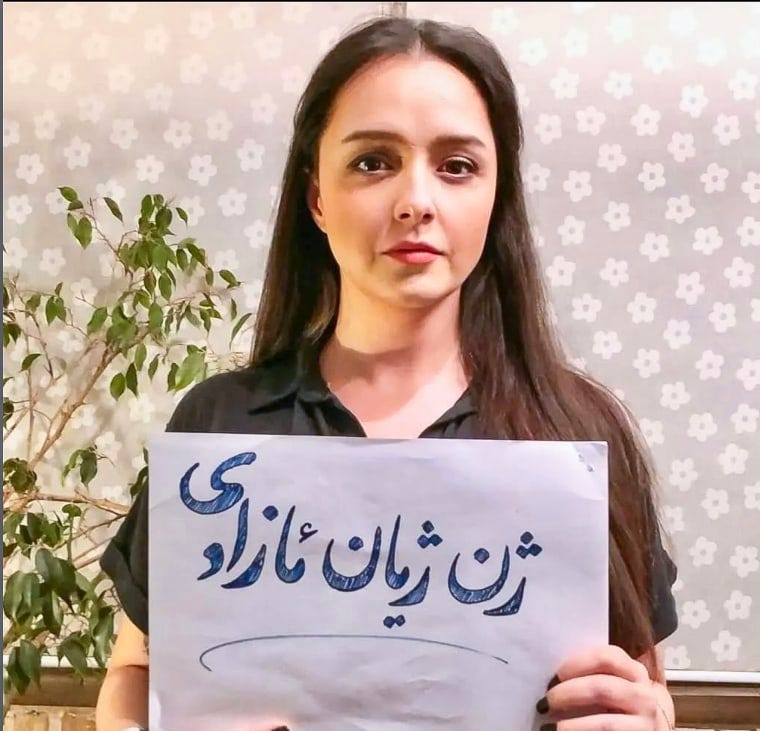
We’re in the third month of protests in Iran against the repressive regime that allows “morality police” to beat women to death for not fully covering their hair. As a Western woman living half way across the world, I’m in awe of the young women who are leading the protests.
I want more for them: more press coverage, more public support, more safety, more change. I want them to be acknowledged worldwide as the heroes they are. I want the world to burst open in praise.
How much courage did it take for movie star Taraneh Alidoosti to post a picture on Instagram without her headscarf? She held a sign with a slogan that has proliferated at the protests: Women. Life. Freedom.
Protests continue three or more times a week, despite reports that more than 18,000 protestors have been arrested, some charged with crimes like “waging war against God” or “spreading corruption on earth” that carry the death penalty; despite the fact that more than 400 people including 50 children have been killed by government security forces, including 10-year-old Kian Pirfalak, sometimes symbolized by a rainbow on protest signs after a home video circulated of him with a school project which he dedicated to “the God of Rainbows.”
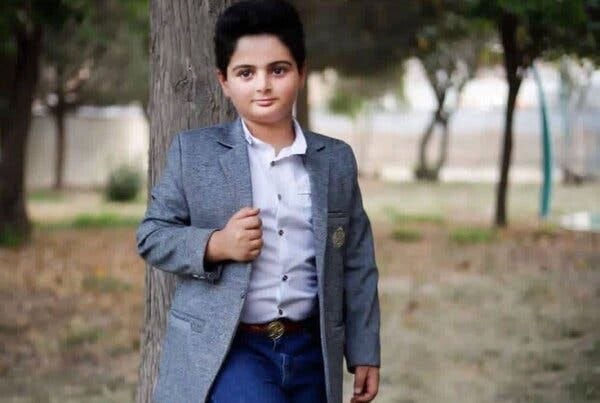
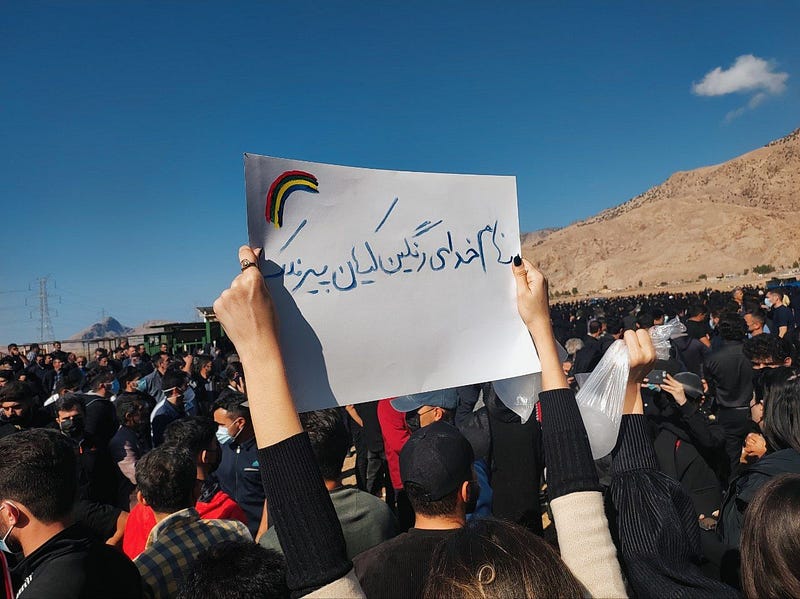
The government claims the boy was shot by “terrorists.”
How much courage did it take for his mother to dispute that claim, telling the huge crowd at his funeral that their car had been fired on by security forces — despite the fact that they had turned it around as instructed — killing her son and putting her husband in the hospital where he remains to this day?
“‘Khamenei the Zahhak! We’ll Take You Down into Grave,’ the people attending Kian’s funeral chanted, comparing Iran’s Supreme Leader to Zahhak, an evil figure in Persian mythology who’s known for executing people and using their brains to feed the snakes on his shoulders.” ~Iran International
How much courage did it take another bereft mother to cry “death to the child-killing regime!” at the funeral of 14-year-old Artin Rahmani, which was attended by tens of thousands?
While Iranians have risen up against their repressive government in the past, including widespread protests in 2009, political analysts say these protests are different, involving the rich as well as poor and middle class; a range of ethnicities including Kurds, Turks, and the majority Fars; and people living in the country as well as big cities like Tehran.
The anger against the theocratic government is deep. Protestors have burned the childhood home of the Islamic revolution’s founder Ayatollah Ruhollah Khomeini to the ground.
“Protesters set ablaze the museum of childhood home of Mr. Khomeini, who died in 1989, in his hometown, Khomein, on Thursday night [Nov. 15], videos showed. Crowds of men smashed and stomped on a street sign bearing his name in the town of Khash, according to a video posted online. And parts of the Shia theology center where Mr. Khomeini nurtured the seeds of the revolution, in the city of Qom, were shown to be attacked and set on fire.” ~New York Times
The protests aren’t only about women’s rights, although that is a very visible element. Most people in Iran suffer under its repressive regime, having “grievances over state control of people’s lives, the precarious state of the sanctions-throttled economy and Iran’s continued international isolation,” according to the LA Times.
Many protestors feel they have nothing to lose, the LA Times said. A 36-year-old teacher interviewed for that story shared a few details of her life.
“A university graduate with a degree in biochemistry, she has little to show for it other than a job as a teacher and administrator in various schools around south Tehran. She makes $350 a month, nowhere near enough to rent a small apartment, let alone buy one. Notions of marriage, kids and the basic touchstones of a stable middle-class existence seem far-fetched.
“‘Ten years ago I could take trips inside and outside the country. I can’t do that anymore,’ she said. ‘I can’t afford to buy a cheap car. I should’ve had my own small apartment by now, with some simple furniture. Instead, I live with my parents. If my cellphone breaks, I’ll have to wait a few months before I can buy one.’”
Rather than respond to protestors’ complaints about social control and economic conditions, the regime is doubling down on violent suppression. When the Iranian football team refused to sing the national anthem in solidarity with protestors before it’s first match in the World Cup, the government threatened to torture their families.
The protests were sparked by the Sept. 16 death of Mahsa Amini, a 22-year-old woman who was taken into custody for not fully covering her hair with her hijab. Since then, women have been taking off their hijabs in protest, both in public and on social media.
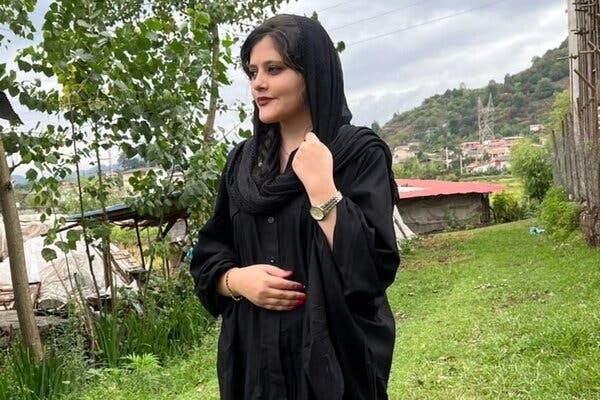
Iranian actress Hengameh Ghaziani was arrested after posting a picture of herself without a hijab on Instagram. “This might be my last post,” she wrote. “From this moment on, whatever happens to me, know that as always, I am with Iranian people until my last breath.”
What kind of courage does it take to risk your life in pursuit of basic human rights — like the right to decide what to wear?
From my apartment in the United States, I feel powerless to stop the Iranian regime from brutalizing its citizens or support the young women leading the fight against it. But am I really powerless? Are we?
At least I can acknowledge them. I can praise them. I can honor and thank them, and I can recognize that if enough people across the world did the same, it could create a tipping point and bring about a change.
My stories are free from links on social media, but if you want to read more, click here to join Medium for $5 a month and support Fourth Wave at the same time. For an email whenever I publish, click here. Find more stories about women and feminism on this List. And for more of the good stuff, follow Fourth Wave. Got a story of your own? Submit to the Wave.