“You’d Be Perfect if You Were More Like Me”
And a word about those so-called “ambiverts”
When it comes to getting along with each other, especially when it comes to our personalities and style preferences (more on that in a New York minute), one of my favorites is how a partner, who is inexorably drawn naturally to an opposite, later on is full of complaint and criticism about how the very thing that drew them in (now Major Problem #1 in Our Relationship. In other words, you. Put simply.)
You may be familiar with Myers-Briggs (MBTI) Social Styles, DiSC and all the other colorful variations on Jungian archetypes. If so, likely I don’t have to tell you that we are often magnetically drawn to those whose skills, style and preferences complement, rather than compete, with our own. This is not to say that likes don’t attract and aren’t successful. Rather, we are often intrigued by the difference, as though some part of us yearns for that balance. This may be obvious or completely hidden.
This morning I read, as I often do, a piece by one of my favorite Medium writers Sean Kernan, about how he isn’t going to date an extrovert again.
While I don’t in any way argue his why, for that’s not mine to discuss, since the style stuff is squarely in my wheelhouse I will comment on a few things. First, the extroverted ex he discusses doesn’t sound like someone I’d like to hang out with either, for reasons having little to do with romance and everything to do with a lack of emotional maturity. Therein lies part of the discussion.
The other part is how we might make decisions about people based on profile photos. That one cranked me a bit, gently, but still. Look, I’m already cranky, just ask my knees. But I digress.
Finally, a recent word that some wags have slipped under the door into the discussion around Jungian archetypes. Let me explain.
Here’s what his piece brought up for me:
- People’s overly simplistic use of the two opposites: extrovert\introvert disallows for the vast shadings of same in each of us. It also disallows the fact that some folks are extroverted or introverted only in response to certain stimuli. On the model that describes the DiSC profile, the Ask-Tell dimension is a very broad scale from very, very subtle to extremes. So saying extroverted or introverted isn’t black or white. When it comes to humanity, there is no black and white whether we’re discussion epidermis or enthusiasm, or lack thereof. For example, in a room full of scientists and engineers, the person who finally sticks their hand up to ask a speaker a tentative question is the extreme extrovert. What are we comparing ourselves and our preferences to? What’s the sliding scale? This isn’t a criticism, it is just a question. (There’s a joke in engineering; the extrovert is the one who looks at the other engineer’s shoes)
- When a partner begins to bitch about your preferences- such as leaving the party before the 5 am last call, or inviting the 350 people to leave your lawn so that you can begin the cleanup, or to allow you to get your writing done in private, that has less to do with their preferences than it does than their inability to respect and accommodate yours. That doesn’t damn an extrovert or an introvert per se. That says to me that the partner is intolerant of what you need, and unable to allow you the room to be who you are. Compromise is inevitable, as Sean rightly points out. Shaming you for not being a party person- as though being around him or her is going to change you by osmosis- makes them a jerk. Not because they’re extroverted. Because they’re jerks. Big difference. (Pity that “jerk” isn’t a Jungian profile, but I digress)
- Each of us, no matter where we land on the MBTI scale, is a great mass of shadings. I’m an ENFP, but my E lands right on the line between E and I, which means that sometimes I am energetic and extroverted and sometimes Leave. Me. The. Fuck. Alone. Most of us can relate. It’s not just that it depends, as it does with all things, but the quick and dirty definitions of extrovert or introvert don’t allow for the rich complexities of personality. Not only that, we shift over time, particularly if we engage in Deep Work. Over the years, my ability to be more assertive has shifted my test scores. What I was at 27 is a very different roadmap from what I am at 67. You probably shifted too. With each of us, it’s very different, which is why I would advise against making snap judgments about profile photos. You and I cannot know the whole story, and we may well lose out on just the right partner based on a prejudice. Your uninformed judgment of my leaping off a Croatian bridge is just that: grossly uninformed. I went on that trip solo, got pressed into a bunch of strangers. That bungee jump was for me. Not for an Instagram shot. Being stupid and foolhardy are another discussion entirely.
- The other and very important aspect of this, which I touched on early, is the notion of versatility. Some Social Styles trainings call this the fifth profile. It isn’t really, but what it does mean is that empathy, compassion, awareness and genuine interest all allow us to tone down, speed up, do what it takes to slightly adapt to another person’s preferences. Many in my classes say that this is becoming another style and it’s inauthentic. Well, no. Not only can you not do that, at least most of us can’t, the point is to not become another style. We make subtle adjustments which allow our partner or work fellows to relax a bit. That’s an art form. It has nothing to do with selling ourselves down the river. It shows care and respect. As in: if your partner insists on a party, maybe that weekend you get a hotel room. I dunno. The point is how can you make gentle accommodations without making each other wrong. Key word: gentle.
- Those actions are indicative of emotional maturity. When we’re young, we want what we want, and we also want others to accommodate us. As Sean points out in his article, there are folks who live for music festivals (NOPE) bars (NOPE) huge parties (NOPE) and all the other so-called trappings of an extrovert. I like none of those things. None of them. Yet most would consider me an extrovert. That’s the point. It depends. The fact that I do adventure travel, bungee jump and other extreme adventure has far less to do with bragging rights than learning to push my boundaries. There is no Instagram account in my world. I am quite sure that many men make the same wrong assumptions looking at my profile. They are not privy to my why, and they filter what they see through their internal lenses (she’s a showoff, who does she think she is, she needs attention). None of those has anything to do with me, but rather whatever the viewer is carrying in his personal issues accounts. As do we all.
Just because we like to skydive or hike or whatever does not an extrovert make. Human makeup is far too complex for that. To wit: a slew of my fellow skydivers at SkyDive Colorado were accountants, lawyers, military folks and scientists. Not party people. Not in the slightest. We’d all buy the requisite beer to celebrate first jumps, tenth jumps etc, but we didn’t party. So while I understand the stereotyping, I would be wary of making such broad assumptions. That kind of assuming is precisely what keeps good people from crossing our paths.
If you only want a partner who is precisely like you, I recommend daily masturbation. You can’t disappoint yourself unless you get a hand cramp.
If, however, you want lively company, it’s a good thing to learn to adapt a little. Learn what works for you. That’s a lot of trying and failing.
Sean uses the term “ambivert.” Ambivert effectively describes the entire human population, because you and I may demonstrate either extrovert or introvert behaviors as required. We ALL contain a little of each, not only depending on the situation, but also depending on what we’re being compared to, like that room full of engineers. The problem is that this shiny new word doesn’t address the other important dimension of preferences, such as people vs. task. It only addresses the ask-tell dimension, and because of that is too simplistic.
But it sure is appealing, as you can tell from the giddy comments of those who read the material and found themselves. Well of course you did, Sparky. Anyone would. Everybody will. You get to feel special when you aren’t, at least not in this particular regard. Sure sells a lot of stupid pseudo-scientific pap. Each of us deserves a lot more consideration and exploration than a quick label.
I can give myself an orgasm with either hand. Does that make me ambisexual? Not if I get a hand cramp, I guess.
With all due respect to those folks who cannot help but make up new words for what is already out there and has been for decades, ambivert is, frankly, not helpful. The description on the website encompasses every single person I have ever met. Everyone is an ambivert because by definition we have to respond differently to stimuli and circumstances.
Nobody is special when everyone is special.
What I don’t much care about the need to be (more, or extra-)special is that it utterly disregards the fact that you and I already are special. At least to my mind we don’t need to be special at someone else’s expense. What might really take the cake (and so far I have had crumbs) is when that one Particular Person finds US extra special. The whole world doesn’t owe us that. Most of us would be pretty chuffed to have just the right person completely besotted.
As someone who really, really, knows and works with this styles stuff, I would respectfully ask that we not use words which over-simplify, and in doing so effectively insult, the extraordinary diversity that makes up every single personality. We are, every single one of us, a little bit of all four archetypes. Every single one of us can dip a spoon into the different and opposite aspects of our complex natures to deal with what is in front of us.
Doing that well comes with time. Doing it masterfully takes a hell of a lot of work. That ability does indeed make us stand out 'cuz it’s hard.
Labeling is easy, cheap and disrespectful.
Learning how to live with, attend to, accommodate, like, love, respect and value those wonderfully complex things in each other is what the journey is all about. Again. That’s hard.
That’s also referred to as life.
The trick in love, and I have largely given up on this, is finding someone with enough emotional wherewithal to not make you or me feel guilty or inadequate for the preferences with which we were born.
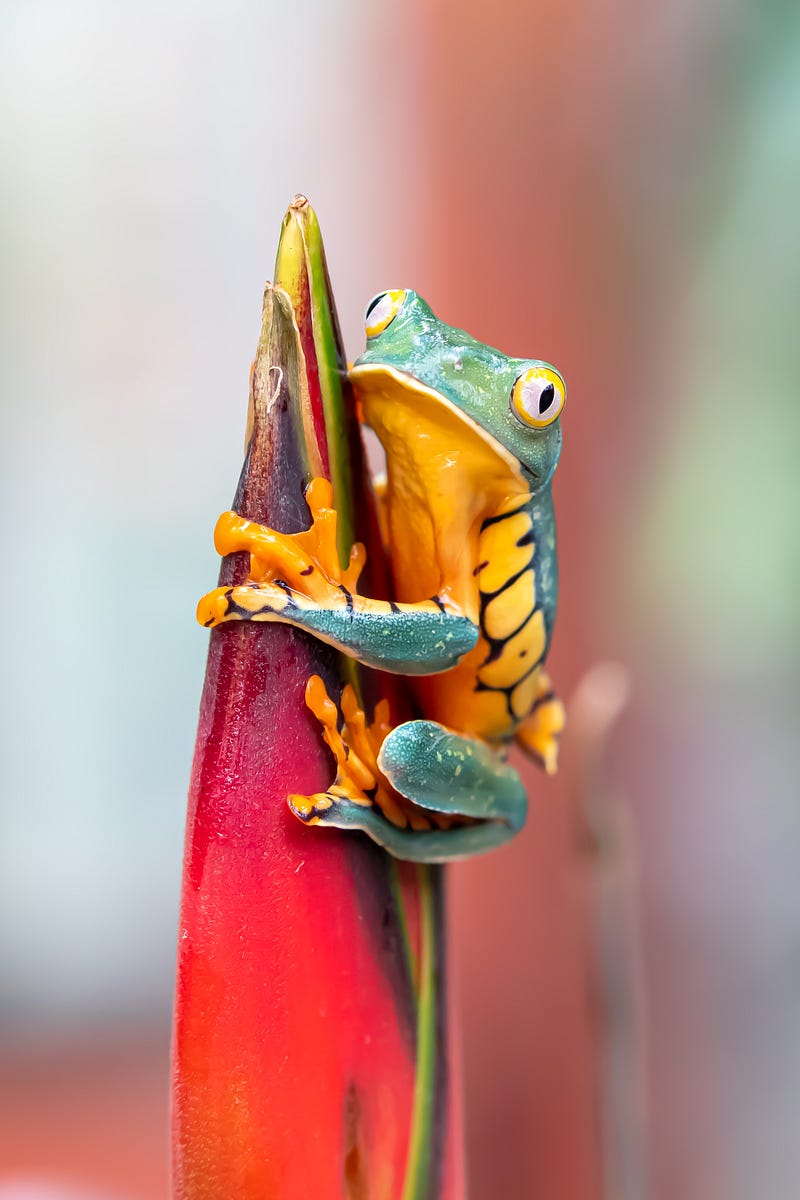
Takes kissing a lot of frogs. Just ask me. These days I eat flies for dinner.
But at least I also eat dragonflies.
Which makes me an ambiveat.