
You won’t know what works unless you share your WIP
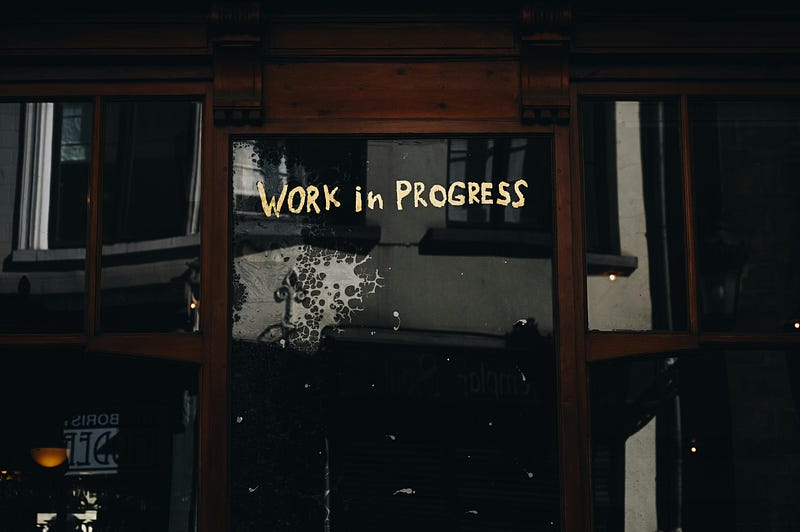
Show your work.
Share the sawdust.
Being a work in progress (WIP) is no longer an excuse or bad thing.
It’s part of a collaborative journey.
A work in progress (WIP) is no longer just a phase in the creative process, it’s actually the way you see what works and what doesn’t.
Veering off the solitary path to the shared journey
In the past, writers and artists often kept their works in progress hidden until they were deemed “perfect” or complete.
You probably know someone like this — a guy (it’s always a guy!) is working on a novel or screenplay and therefore can’t do anything, yet no one knows anything about it.
This doesn’t work, if it ever did.
The modern creative journey is a shift from the solitary path to a shared journey
Even in most creative writing programs, you have the workshop — the place where the students bring in pieces of writing to be critiqued and shared with the group.
These can go sideways, but the general idea is solid — share your work as it’s in development.
However, the modern creative landscape encourages a shift from the solitary path to a shared journey. Platforms like social media, blogs, and collaborative spaces provide an opportunity to invite others into your creative process, turning your WIP into a collective experience.
Your accountability builds
One of the key benefits of sharing your works in progress is the built-in accountability it creates. When you open up about your creative journey, whether through blog posts, social media updates, or collaborative platforms, you invite others to take part in your progress.
This becomes a powerful external motivator.
It pushes you to stay committed to your creative goals.
Your reputation grows
“Hey, Josh is working on something similar…”
Once you start sharing your work in progress, people notice. They offer to help, and they also make connections for you.
I don’t necessarily mean networking like meeting new people (though that happens) but people start offering their own ideas and resources because they know you’re interested in that.
Your reputation not only grows as an expert, but it becomes one of the things you’re known for.
I placed that Jack Butcher tweet up at the top.
If you’re not familiar, Jack was a graphic designer who began sharing his work.
He created a community — Visualize Value — but has now moved more into the art world.
He became known for creating great work which then gave him leverage to pursue more of the things he was interested in.
His reputation and authority grew as he shared his WIP more and more.
The flywheel starts…
Sharing your creative process is not just about accountability — it’s about creating a positive feedback loop.
As your audience engages with your WIP updates, they become invested in your journey.
The flywheel effect kicks in. The more you share, the more interest you gain, the more support you receive.
Your audience becomes part of the process.
Your curiosity turns to collaboration
Curiosity is a driving force behind creativity. When you share your works in progress, you turn curiosity into collaboration. Others who share similar interests or skills might join you in your creative venture. Collaborative efforts can lead to new perspectives, ideas, and innovations that may not have emerged in a solo endeavor.
And then you fight through the obstacles together
By sharing your work in progress, you not only celebrate successes but also can navigate obstacles openly.
Your audience becomes a source of encouragement and problem-solving, offering insights and solutions that can help you overcome creative roadblocks.
This isn’t a call to share every single thing that you’re working on, but think about sharing more than you usually do.
Your WIP is a stepping stone. It builds your authority and reputation.
Don’t overlook it.
Did you like the article? Clap for it, because it helps other people find it.
If you read this far, you deserve something free. Here’s my quick note-taking cheat sheet and template.
Keep going.