avatarFourth Wave Editors

Summary

The poem "You Will Not Know Until She Tells You" by Stephen Emmanuel Ogboh depicts the grueling daily life of a Nigerian woman balancing her roles as a mother, wife, and vendor, amidst physical and emotional hardships.

Abstract

The narrative poem captures the relentless routine of a woman who rises before dawn to prepare food for her family and her business. She endures a physically demanding commute to Onitsha with her child, maintaining a cheerful facade for her customers despite the challenges she faces. Her day is filled with the constant care of her baby, managing her business, and completing domestic chores. The poem hints at marital discord when she is met with her husband's sexual demands despite her exhaustion, leading to physical abuse and a plea for divine intervention. The woman's resilience is palpable, yet the poem also underscores the societal expectations and personal sacrifices that define her existence.

Opinions

  • The poem conveys a deep empathy for the struggles of women, particularly mothers, who juggle multiple responsibilities.
  • It criticizes the societal norms that expect women to perform their duties without complaint, regardless of their physical and emotional well-being.
  • The author highlights the stark contrast between the woman's internal turmoil and the external persona she must maintain for the sake of her livelihood.
  • There is an implied critique of the husband's insensitivity and the lack of support and understanding for the woman's plight.
  • The poem suggests that the woman's identity and worth are primarily seen through her roles as a mother and wife, rather than as an individual with her own needs.
  • The repeated refrain of the baby's crying underscores the relentless nature of the woman's duties and the emotional toll it takes on both her and her child.

You Will Not Know Until She Tells You

A poem by Stephen Emmanuel Ogboh
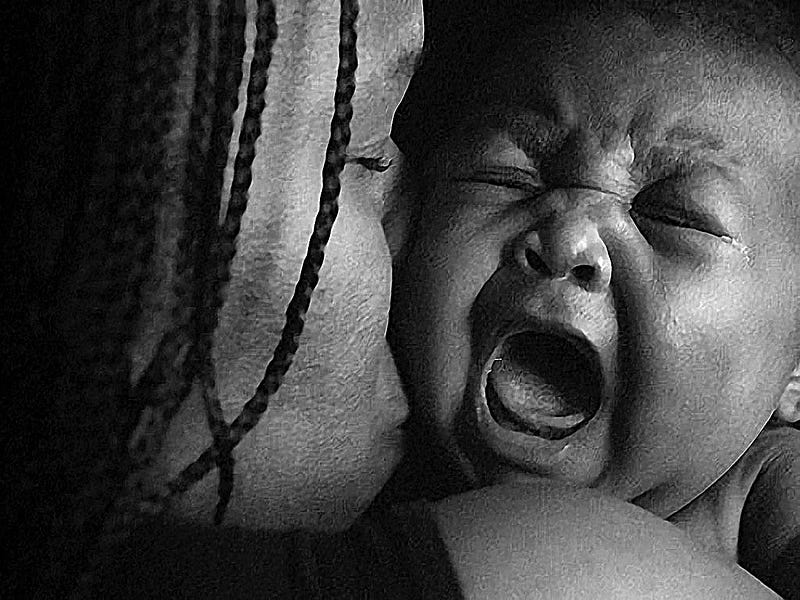
Image from motherhoodinstyle.net

She wakes by 4, cooks the Okpa* And her husband’s lunch She leaves the house by 6 Takes the first bus to Onitsha Bus arrives 7:30, rush hour She walks from Head Bridge to Tarzan The Okpa on her head, her baby on her back Baby cries, she feeds him He wants to play, she ignores him The sun is angry, sweat soaks her and Baby He cries and cries and cries A black guilt spreads sadness into every corner Of her heavy heart But it must not reach her face — her mask The smile she wears for her customers He falls into a tired, troubled sleep, wakes Cries again, they rest under a Neem tree And play, and laugh — a real laugh.

4pm, she runs for the bus to her village Vehicles horn, large carts push, people shove a The Baby’s howls are bangs on her eardrum And knives on her heartstrings In the bus they sleep out the long journey.

Home at last Baby baths, feeds, surrenders to a lullaby She carries the Bambara nuts to the mill Cooks supper, baths, eats, sleeps.

Midnight, husband says “give it to me” She says “not tonight please, am tired”

Next morning, she’d miss the first bus Whip-marks on her arms, neck and back She’d ask God to remind her who a woman is And Baby would cry and cry and cry.

*Bambara Groundnut Cake, a popular Nigerian snack

For more of the good stuff, follow Fourth Wave, where we’re changing the world for the better, one story at a time. Got one of your own? Submit to the Wave!

For more by this author, try:

Poetry
Poetry On Medium
Feminism
Women
World
Recommended from ReadMedium