
The melding of analog and biological to digital
You Will Be A Dinosaur If You Don’t Adapt To The “Transformation”
How you will be affected by the transformation from analog to digital and from biological to digital
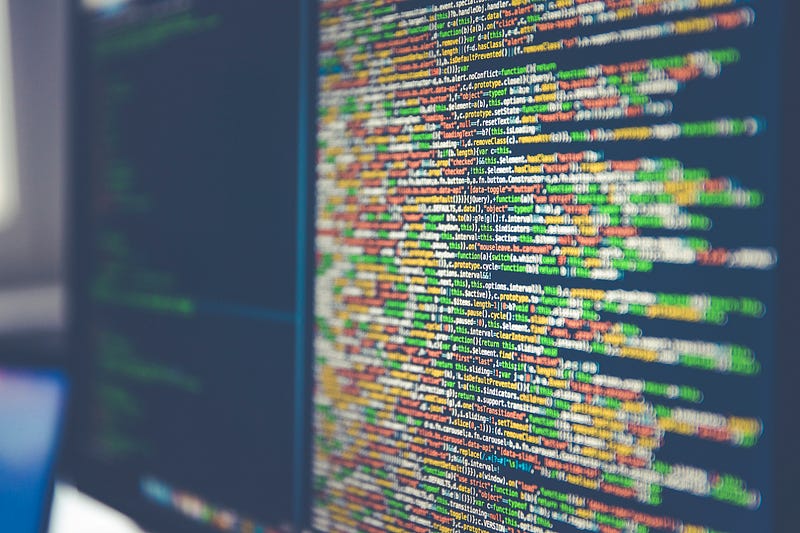
Changing the structure of and management of manufacturing processes and their products
The complete physical integration of biological and digital objects means that digital technologies can be incorporated into organisms and that biological components can exist as part of digital technologies. Thus, the combination of digital and biological transformation has serious consequences for companies, as it changes the structure and management of manufacturing processes and their products. Working with the physical world as digital means that many companies now have to become tech companies in order to survive. [Sources: 7, 9]
The far-reaching consequences of technological innovation
Technological innovation unites our physical, digital, and biological worlds, transforming labor-intensive analog processes into efficient technology-based equivalents. The growth in industry-leading platforms, fueled by the exponential increase in the volume and depth of data available, is accelerating and amplifying the impact of digital technology.
For IBM, understanding digital savvy is a sine qua non for competing and doing business in a world where those at the forefront of technological innovation tend to outweigh the laggards in terms of revenue generation and profitability. [Sources: 1, 10]
The implementation of digital transformation
Either way, digital transformation success will help employers lead their organizations in an ever-changing business landscape. To be successful, any digital transformation must also take into account the broader organizational changes required to implement this technology in the workplace. [Source: 10]
The benefits of digital transformation
Digital transformation has allowed technology to constantly adapt, resulting in economic growth and increased productivity. The first digital computers began to dramatically increase human capabilities, helping to manage knowledge in military and engineering contexts, as well as in government, economics, resource exploration, industry, and, by extension, the natural and social sciences.
Also important was the development of transmission technologies, including computer networks, the Internet, and digital transmission. [Sources: 3, 9]
Information — the basic unit of the global economy

Digital tools and media also deeply influence the real world of agricultural and industrial production, the global circulation of goods, people, and biomass, and help inform macroeconomic planning and policymaking. But with the introduction of digital technologies and the ubiquitous status they have achieved, information has become the basic unit of the global economy.
Due to the interweaving of the digital sphere with the physical world and real energy and material cycles, digital communication has become closely related to the current dynamics of the wear and tear of the earth’s resources. [Sources: 9]
Blurring the difference between the physical world and the digital world
In the future, our digital world will interact seamlessly with our physical world, so our physical actions can have semantics and vice versa. Our digital interactions do not organize information in the form of URLs, applications, and websites, but are interactive, tactile, and embedded in the world we live in (or even to some extent, embedded in ourselves). As a result, the difference between the physical world and the digital world will be greatly reduced. [Sources: 5]
The integration of biology with digital technology
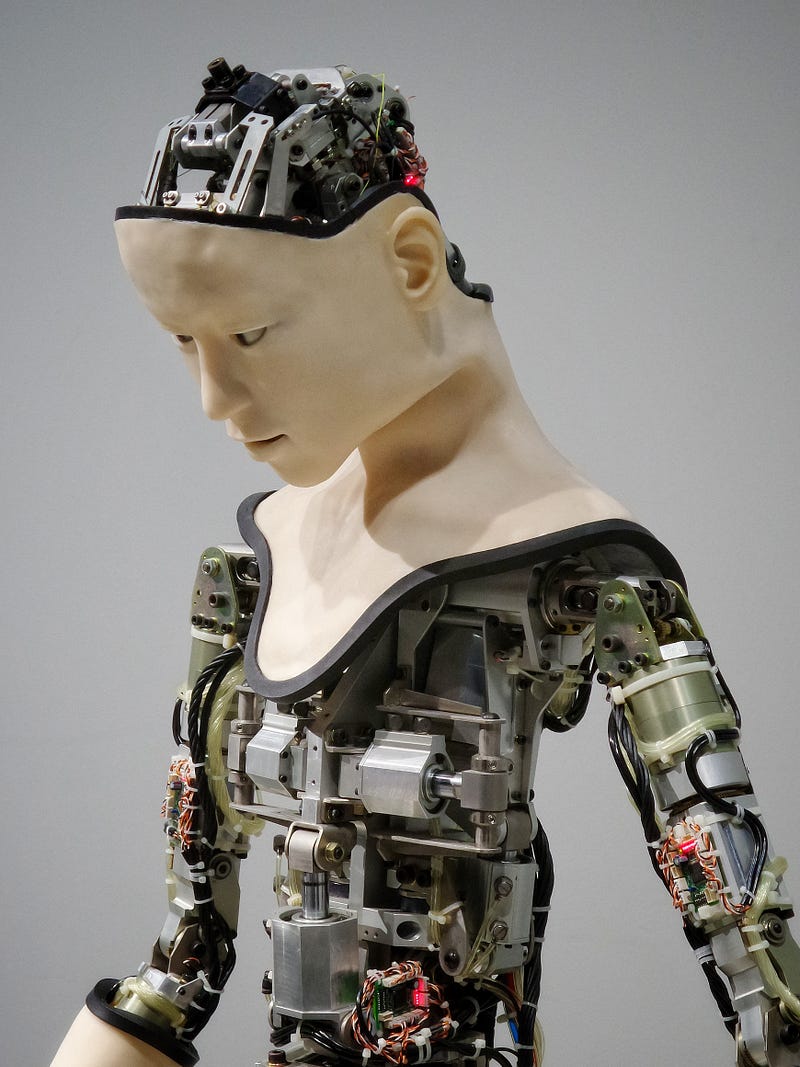
The physical infrastructure will be completely ubiquitous and wireless (perhaps not electronic), and digital elements will be directly connected to the human brain. The Director of the Internet Registry replied: “There will be a radical development that will integrate biology at the physical and molecular genetic scale with digital technology”.
We can assume this will be widespread throughout society, but both the applications and the costs and conditions they can access are unpredictable. Jennifer Jarratt, the owner of Leading Futurists, a consulting firm, commented: “We need new rules now that can protect users and the digital world from ourselves”. [Sources: 11]
The promise of digitalization benefits all of humanity
The World Economic Forum aims to help leaders understand the implications of digitization and help shape better opportunities for our future. It is also at the heart of the industrial digital transformation project work cited in source 1, which is an ongoing initiative that serves as a focal point for new opportunities and challenges arising from recent developments and trends in the digitalization of business and society. [Source: 1]
The digitalization of business and society gives world leaders a unique opportunity to shape our future. At the same time, they have an important responsibility to ensure that these transformations have a positive impact on business and society.
William Uricchio, media researcher and professor of comparative media research at MIT, commented: “Human-made change in digital life — technology only reinforces the social structures that created it. [Sources: 1, 5]
The upside of digital life — a better life for all

Both optimistic and pessimistic respondents agree that human actions will influence the trajectory of digital life. Most experts say that by the 50th anniversary of the first network connection, humanity will largely change for the better thanks to digital life.
Sources 5 and 11 provide a compilation of commentary by technology experts and futurists who detail how the use of the Internet has impacted humanity over the past 50 years. This compilation also looks at the future potential of digital life.[Sources: 5, 11]
The year that digital transformation became dominant
Hilbert and Lopez looked at 60 categories of analog and digital technologies between 1986 and 2007, and the results reflect our almost complete transition from the analog to the digital age. By their estimates, the year that digital information became dominant was 2002.
The tipping point came in 2002 when the world began storing more information digitally than analog, at least according to researchers who recently completed an inventory of the world’s technological capabilities. As humankind strives to complete the transition from analog to digital transmission and storage, scientists can look back at how fast that transition has been. [Sources: 2]
The transition of mechanical and analog to digital
The digital revolution (also known as the Third Industrial Revolution) is the transition from mechanical and analog electronic technologies to digital electronics that began in the second half of the 20th century, with the adoption and spread of digital computers and digital recordings that continue to this day.
A deeper understanding and manipulation of biology is made possible by digital technologies that were not possible just a few years ago. On the contrary, biology also provides new approaches to computation. Ultimately, the digital turnaround affects the way we do science in many ways. [Sources: 3, 7, 9]
Digital insight can enable people to understand and question the choices and motivations behind existing digital structures and create new structures. We argue that through understanding the digital world, an ethical and aesthetic attachment to society can be created. However, it also creates an environment in which the biological aspects of life are subject to the norms of digital sociality. [Sources: 7, 8]
Digital insight — the process of converting information from physical to digital, and more
In general, however, digital insight is a generic term that describes the process of converting information from physical to digital format and then using this transformation to improve business processes. But when it comes to successful digital transformation, technology is just the tip of the iceberg, says Alex Cravero, who leads the Herbert Smith Freehills digital law team in the UK (along with Charlie Morgan), the US, and EMEA.
Also, the co-evolution of biological and digital technologies occurs when advances in one area lead to significant advances in another, in order to ensure progress that would otherwise be impossible. [Sources: 7, 10]
My heartfelt thanks to #DrMehmetYildiz for permitting me to share my technical articles on Technology Hits. If you feel this article has made you aware of the benefits of digital transformation and digital insight, please share your sentiments in the comments section. Thank you for taking the time to read my post!
Thanks for reading! If you liked my article, subscribe to Medium to get more articles that I publish regularly!
Free or $5/month: Check out Medium — a social media platform venue for freelance writers like me
If you want to support me as a writer, consider signing up to become a Medium member. It’s $5/month, giving you unlimited access to stories on Medium. If you sign up using my link, I’ll earn a small commission.
Join Medium with my referral link:
If you like my article, do remember to clap for me and check my other stories on my Medium Profile page at:
You can find me on LinkedIn (ID: azpat0) I am a freelance writer- available to write YOUR blog posts or articles! Samples of my work are on my website(Full Disclosure: This link will take you offsite outside of Medium):
I also publish a weekly newsletter on Substack: The Market Algo Newsletter — forecasts the direction of the S&P 500 index for the upcoming week
Full Disclosure: This link will take you offsite outside of Medium:
Sources
[0]: https://www.ncbi.nlm.nih.gov/pmc/articles/PMC3928905/
[1]: https://www.weforum.org/agenda/2015/11/what-will-digitalization-do-to-the-future/
[2]: https://www.nbcnews.com/id/wbna41516959
[3]: https://en.wikipedia.org/wiki/Digital_Revolution
[4]: https://www.wired.com/insights/2014/04/future-digital-will-change-world/
[5]: https://www.elon.edu/u/imagining/surveys/x-2-internet-50th-2019/
[6]: https://www.thelancet.com/journals/lancet/article/PIIS0140-6736(21)01824-9/fulltext
[7]: https://link.springer.com/article/10.1007/s42438-020-00211-7
[8]: https://www.sciencedirect.com/science/article/pii/S0016328717302252
[9]: https://www.nature.com/articles/d42473-018-00286-8
[11]: https://www.pewresearch.org/internet/2019/10/28/3-humanity-is-at-a-precipice-its-future-is-at-stake/