
You Should Really Know Grammar — Not For The Reasons You Think
Understanding grammar gives people an edge in thinking critically about the world around them
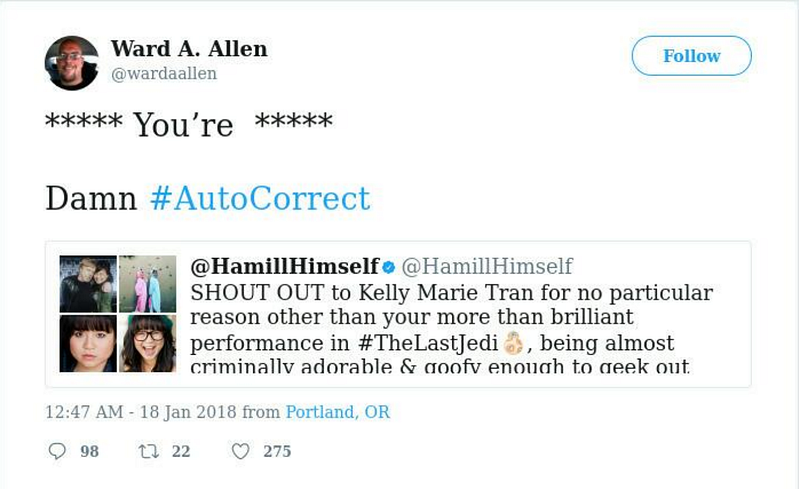
If you scroll on Twitter as much as I do, you would soon find a special bunch of people on a personal mission:
SAVING GRAMMAR FROM DESTRUCTION!
Just like Ward A. Allen in the tweet above, these people scour the Internet for grammar mistakes and make it their point to highlight them. Unfortunately, one too many of these self-proclaimed Grammar-Nazis don’t always get it right and give advocates for having a thorough understanding of grammar a bad name.
What is grammar?
Before we dive into the benefits of knowing grammar even at the foundational level, it is important to know what it means in the first place. I particularly like this definition by The Oxford Dictionary:
While we all seem to function on a seemingly universal understanding of what grammar is (i.e. correct vs. wrong use of language), most of us do not recognise it as a system and structure. Every language and language variety has a system and a structure. We can think of them as rules for accurate communication of its meaning.
A favourite example of mine when teaching my students about how grammar is a system is to look at different English Language varieties. In Standard British English, the verb “be” has eight different forms: be/been/was/were/is/are/am/being. There are clear rules on how these forms should look like when used in a sentence. The principles of use will depend on plurality, tense and aspect. “I am tired of Grammar Nazis” would be deemed grammatically correct. However, if the verb were changed to “I been tired of Grammar Nazis,” I surely would have attracted thousands of them to rain on my post.
Some like to scoff at other language varieties asserting that they have no grammar. However, this is a highly popular misconception! If we look at African American Vernacular English (AAVE), the use of “be” also has rules. “People be tired of Grammar Nazis” works in AAVE, because “be” communicates habitualness (McWhorter, 2018). People are not just tired of Grammar Nazis, they are tired of them on a habitual basis.
Grammar presents a guiding system for language users to understand how to communicate properly in their language. Like morality (as opposed to ethics, which are universal and immutable), such rules will adapt and change as society evolves and develops.
Were you taught grammar in school?
Interestingly, though many of us may have gone through English Language classes (whether we are native speakers or not), quite a sizeable group would not have been taught grammar. In Singapore, the English Syllabus shifted its focus to arming students with good communication skills. Students were trained to “express themselves well” and to maintain an edge on the global front where oral and written competencies are equal to that of native speakers from the “US, UK and Australia” (Ministry of Education, Singapore). This was an excellent move, but it also meant that many students functioned on an intuitive understanding of what is grammatical and were not always explicitly taught what word forms (a.k.a. parts of speech) and their functions are (i.e. what are nouns, verbs, adverbs, adjectives, etc.).
This seems to also be the case for other countries. I particularly enjoyed this piece from Karen DeGroot Carter where she explored subordinate clauses. In her article, she also mentioned that “parts of speech aren’t covered as thoroughly as they probably should be in U.S. schools.”
As an English Language and Linguistics teacher, I found that giving my students a good foundation in grammar did not just help them to be better writers but also equipped them with an edge in critically examining all forms of discourse they come into contact with. With so much misinformation and a whole lot of texts that our students received so regularly on their Instagram feeds (and on all other platforms), aren’t these the skills we want for them as educators and parents?
Case Study: Anti-Vax Campaigns

The most dangerous form of misinformation in our world now in the midst of this pandemic is probably about the harmful effects of vaccines. The overwhelming amount of scientific data and authority establishes that vaccination is safe and effective. Yet, many articles have been written about how anti-vax movements are gaining traction utilizing highly specialised networks across all Internet platforms. This tactic works because:
- Medical jargon is inaccessible for most laypeople and uncertainty and lack of understanding can cause a lot of fear.
- Anti-vax messages are easy to remember and latch on to a person’s fear and hesitancy.
With some knowledge of grammar, one can critically examine the statements made by anti-vax campaigns before believing in such messages wholesale. Let’s take a look at the first one.
“Your body, my choice. #SAYNOTOBILLGATES”.
- The author chooses to use pronouns that have an effect on creating distance and othering.
The second person pronoun, “your”, is synthetically personalised (Fairclough, 2001) to make the reader believe that Bill Gates is addressing this to every single individual. By putting it in the same sentence with the first person pronoun “my” in a parallel structure, we immediately see the tension created between the reader and Bill Gates. Both are not of the same mind, and the use of these pronouns creates distance between the reader and “Bill Gates.” In doing so, the author insinuates that Bill Gates has a warped sense of power and control, and seeks to have power over the individual. It is completely persuasive because no one wants to be controlled. A reader’s first instinct would be to get defensive, agreeing that no one, especially not Bill Gates, should have any say in how they decide to treat their body.
2. The author borrows a well-known idiomatic phrase and twists it around.
The phrase, “your body, my choice” is a disrupted collocation that borrows from the feminist movement surrounding issues of bodily anatomy and abortion. In Linguistics, this is also known as homophora (a technique of using a word that makes external reference to a cultural context). In borrowing the ideas behind the feminist movement, the author of this poster is drawing comparisons between the feminist movements and vaccination in a pandemic. If we take a closer look at the two, these are totally different and not comparable! In a pandemic, getting ill with Covid-19 WILL cause harm to those around you. Getting vaccinated is not just about your individual freedom, but your community’s as well.
3. The author chooses to use the proper noun, Bill Gates, to give a face to those who are advocating for the movement.
This is a rather clever move. When people have no context, they will accept such a belief readily. Everyone knows Bill Gates. Everyone also knows that Bill Gates has a) no medical background, b) is a rich White man and c) is a businessman. If people believe that vaccines are being pushed forward because of Bill Gates, it is not surprising for people to be suspicious. Would a rich White man, a businessman with no medical background, really care for the everyday man who is struggling? If he is, there definitely must be something suspicious about the vaccines in the first place. That is the intentionally distorted message delivered through this grammatical chicanery.
MISINFORMATION — “Vaccines can cause injury and death”

This phrase taps into the fears of those who are on tenterhooks with regard to their lives.
- In using the words, “injury” and “death,” both of which belong to the semantic field of harm, the reader is already primed to fear vaccines. Covid-19 causes injury and death. I can imagine that readers would wonder, “if you can be vaccinated, and the result is the same, what is the point of vaccines then?”
Next, the modal verb expressing ability, “can,” fuels the false belief that vaccines have the ability to cause injury and death. Is this really true? As vaccines are quite technical things in themselves, and there is way too much medical jargon to plow through, one would be easily convinced by such a statement. It is so much easier to believe this than to do proper research. (Misinformation campaigns take advantage of the scourge of confirmation bias).
Fighting misinformation through Critical Discourse Analysis
This sort of linguistic analysis is often known to belong to the field of Critical Discourse Analysis (CDA). However, CDA is more often focused on examining language being used by those in power. Such linguistic practices can be very helpful to the everyday person.
After examining the language use of the anti-vaxxers poster, did you have similar questions to me?
a) Is Bill Gates really the face of the vaccination movement?
b) Are vaccination movements the same thing as feminist movements?
c) Do vaccines really cause injury and death?
d) What else do vaccines cause? [saves lives? saves communities?]
At the very least, these linguistic tools can help you to pause and take a step to look very critically at the messages we receive daily before we readily believe take them to heart and treat them as Gospel truth.
Final Thoughts: Language Shapes Our Beliefs
Language is a vehicle of communication, and it is also a powerful tool that shapes our thoughts, beliefs and subsequently our behaviour. Knowing the ins and outs of grammar would make us more critical thinkers in a world where misinformation is rife. If we can pause to critically analyse the language used around us, especially for pertinent issues like vaccines, racism, bigoted speech etc., we would be then able to think through the messages we receive and have a truly informed opinion about them.
Of course, knowing your grammar well would also make you a better writer and give you all the other benefits that come with being associated with having “perfect grammar.” With that, I hope more education systems will teach grammar with this perspective of giving students another tool to think about things critically.
P.S. Sending love to all Grammar-Nazis. This is not about you. Also, would you accept my challenge of evolving your mission to one that helps people to see the effect of language use on their audience? ❤