
Writing
You Probably Need To Learn How To Trim The Fat
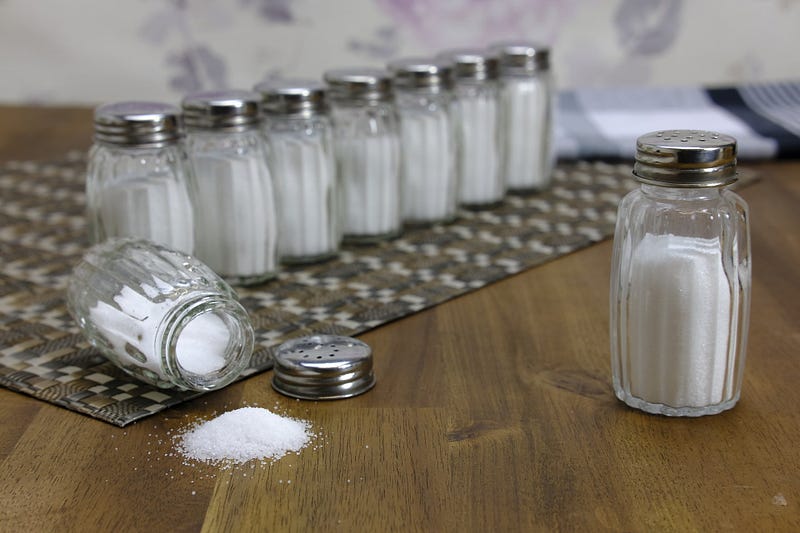
It’s Definitely Not Like Adding Too Much Salt
Let’s say you want to provide your reader with a visual image of a character with dark hair and a ruggedly handsome face.
It’s safe to say, your readers have seen at least one person with dark hair and rugged looks (except maybe in a Tibetan monastery. Most of them don’t have hair), so your reader already has a picture forming in their heads. Some of the more astute readers will probably make a correct assumption about the gender of the character as well.
But then as you get caught up in a tumble of words pouring out of your head, you decide to go out of your way describing the character, all the way down to the buttons on his shirt.
All the while, you were failing to make buttons a crucial aspect of the story. Think of it this way. You can go on and on, and on, about the d*mned buttons on the dude’s shirt all you want to.
You can even take great care to ensure the reader knows they’re made of pearl.
But unless there’s a reason for all the prose, the reader is thinking yeah, so what? They’re just buttons. Why should I care what the buttons are made of? None of them are button cameras, so this character can film an illegal drug transaction or something exciting like that. How in the heck did we manage to go down this buttonhole?
Ahem. Pardon the pun.
Of course, you, the writer, are just trying to lay down some marvelous passages inspired by the imagery running around in your head. But you never stopped to ask yourself if the imagery has any real potential to move your story forward.
As far as the reader is concerned, this gorge of writing you just assaulted them with is something cute and pretty and… Just not so freaking important.
By now, the reader is probably thinking, “Oh, for the love of God, just get on with it already.” When you continue prattling on about how soft and smooth and perfectly round the buttons on your character’s shirt are…Boom.
You’ve just lost your reader.
Full transparency here. A lot of times, I kind of preach to the choir when it comes to my own writing. It’s like my brain wants to spit out a ton of words to get the message across when it doesn’t need to.
When it happens, and it happens often, I end up forced to play, writing cop. Yeap, I’m forced to pull my thoughts over to the curb and write myself a mental citation.
In my head, it goes something like this.
“So P.G. do you know why I pulled you over this morning?” “Uh, no I don’t officer.” “You were writing a thousand words of crap in a fifty-word zone.” “Oh.” “I’m going to have to write you a citation.” “Do you have any idea what the fine is going to be sir?” “Well, you were writing a ton of stuff back there. So much crap a reader isn’t going to want to read it. My guess is you’ll have to cut about two-thirds of your story and work with what’s left.” “Oh, hell no. That’s not very fair officer. I mean, I was in a hurry to get to the end. I wasn’t really paying attention. Besides, I haven’t written a story like this for a long time. I’m kinda trying to find my way. Can’t you cut me some slack?” “According to your previous traffic offenses, this isn’t the first time you’ve been pulled over for writing superfluous crap.” “Uh.” “Have you checked your reviews lately? Does the term — a bit long-winded — sound familiar?” “Uh, well, yeah.” “Sign here, please. And remember Mr. Barnett. You don’t have to spew out every word in the dictionary to show the reader something. Stop writing thousands of words to tell a hundred-word event. If I have to pull you over again it’s going to be a very expensive lesson.” “Right, thanks, officer. Try and have yourself the very best and most glorious…” “What did I just say Mr. Barnett?” “Oh. Yeah. Thanks. See you around.”
Okay, it’s terrifying being inside my head as the scenario above proves. But the point is, I’ve been forced to give me and my writing a lot of citations over the years. Along with being crotchety, I’m a stubborn old coot. It sometimes takes several raps of a ball-peen hammer between the eyes for me to figure things out.
When I do, each time it’s like I’m seeing the problem for the first time. It’s me having a Yogi Berra déjà vu moment, all over again. To the rest of the writing community, it’s like…yawn…you’re just now figuring that out?
Why yes, yes, I am.
Creative writing, hell any writing, is undoubtedly an art form. Sometimes your brush strokes need to be purposely long, luxurious blends of nuance and mystery. Sometimes they need to be choppy and short.
It’s a real balancing act of timing and tempo — musical chops written with words.
It’s how you mix the prose together that makes the perfect read, the ideal concoction which reads so good and resonates even better. Having too many words in your story is like adding too much salt to that new recipe you’ve been dying to try with one humongous difference.
You can always take some of the words out to make your story better. Almost every time it will probably improve your story.
Too much salt in that new recipe? Uh, not so much.
So, practice with it. Learn to write less and say more. See where it takes you and whether or not it improves your writing. I’d love to hear your thoughts. Drop me a line, and I’ll try to respond. Of course, I’ll try not to get wordy on you.
I still have to pay off the last writing ticket I got.
Damned writing cops.
Thank You So Much For Reading
Let’s keep in touch: [email protected]
© P.G. Barnett, 2020. All Rights Reserved.