
Here’s How Being Smart is Costing You Money.
Sometimes, the key to becoming a millionaire isn’t about being smart.

Usually, when you read about someone making a fortune it’s due to their company specializing in some kind of scientific innovation. However, there are many ways obscene wealth is generated with ideas that are, for lack of a better word, dumb.
“It all starts with a tiny, stupid idea, then one thing leads to another, and suddenly, you find something amazing: yourself.” — Richie Norton, The Power of Starting Something Stupid
I. Diving into overcrowded fields
To begin, let’s use dropshipping as an example. If you already know what dropshipping is, move on to the next paragraph, if not, read on. Dropshipping is a multi-step process where a customer buys an item from your website, then you buy that same item from a cheaper (usually international) website and have it sent to the customer. Your profit is the spread between what the customer paid and what you paid.
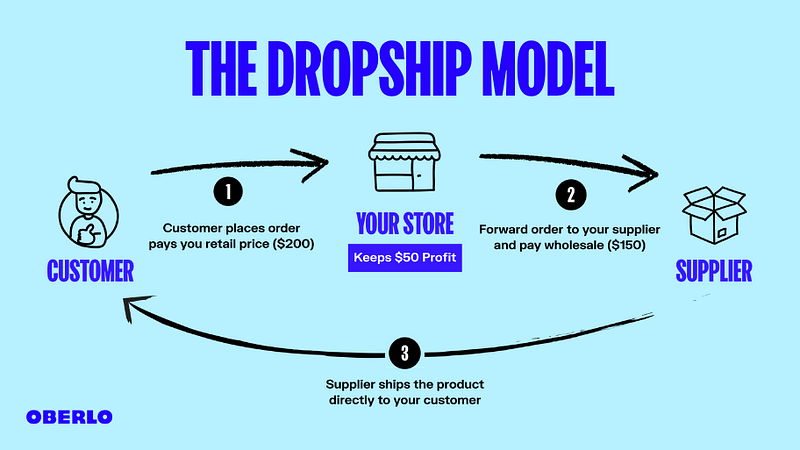
As you may know, dropshipping is an incredibly crowded niche. While there are not many formal studies around the topic, it has been seen that the conservative success rate is around 5–10%. Surely, going into this already crowded field is a fool's endeavor, right? Well, no. You see, going into an already crowded and high barrier to entry field is actually what is responsible for the success of many entrepreneurs. To highlight this, I’d like to do a case study.
Case Study: Jannick Malling, Public.com

Public is a hybrid mix of social media and brokerage trading. Their business model is lending out securities that their users hold, collecting interest on uninvested cash, and charging subscription fees. However, this business model is far from novel. It is the bread and butter of every brokerage that exists. Brokerages are a massive industry consisting of over 23,000 companies and around $185 billion of revenue every year! So, why was Public able to succeed?
Public was able to succeed in this already overcrowded and expensive field by adding a slight touch of innovation to the existing business model. Public’s main differentiating factor is that they integrated a twitter-like feed into their app. Users can scroll on the app and see what other users have bought, what they think about a price’s direction, etc.
So yes, it would appear foolish to try starting a brokerage firm considering the immense competition. However, by going in with just a touch of innovation, as seen with Public, you still have great odds of finding success. It is important to think about why these fields are overcrowded. It’s usually because all the other market participants, like you and I, are able to see the potential. So, instead of following the public and shying away from crowded niches/hustles, it may actually be beneficial to dive into them!
II. Gambles

Gambling. All of us gamble, you gambled that clicking this article would be worth your time (hopefully, it is 🙂). Gambling is one of our many innate traits as humans. It is used in our decisions from the moment we wake up, to the moment we close our eyes for slumber. It is also one of the largest factors in generating wealth.
Taking the safe, smart route and seeking stability is a natural tendency. It’s what we were raised to do! However, our rewards are proportional to our risk. Put differently, the more you have to lose, the more you have to gain. In order to demonstrate this, let’s dive into a case study.
Case Study: Jakub Krawczyk

Jakub Krawczyk is not a name that rings many bells. However, Jakub’s story is one that can resonate with us all. During the 2008 financial crisis, investment portfolios were wiped out globally. Everyone felt the sting of the financial blowback, however, Jakub felt it especially hard. Being a victim of predatory lending and subprime mortgages, Jakub faced the risk of being homeless and broke. He knew that if his financial situation didn’t change drastically, he would surely face financial ruin.
With his back to the wall and options fading away, Jakub went against the odds and decided to start a business. He had seen the rise of AliExpress, which had just launched 2 years prior, and had an idea. He wanted to sell goods from the USA, but instead of making them, he would buy them overseas and send them directly to the customer. Jakub was one of the pioneers in what is known as dropshipping today. He put his entire $5,000 net worth into the idea and after only a few months, the idea came to fruition.
In 2008, anyone who wanted to start a business seemed like an utter fool. Global markets had collapsed, trade halted, and the general public was at an unprecedented level of fear. But by taking that gamble with the last of his savings, the seemingly foolish decision turned out to be the greatest of his life. Jakub now resides in Greenwich, where his employees now run the business.
Final Thoughts
As an entrepreneur, you find that there is never a shortage of people telling you what not to do. There is always going to be a surplus of people who will say that an idea is dumb, overcrowded, or bound to fail. But as seen in our case studies, the only way to truly succeed in business is to put in earplugs and trod your own path.
If this article piqued your interest, you’d be glad to know that there are more like it on The Financial Journal, a new publication home to stories on side hustles, markets, and all things money!
Thank you for reading :)