The web content provides a detailed historical account of the expansion, competition, and challenges faced by the Reading Railroad from 1873 to 1893, including its leasing strategies, the impact of the Great Railroad Strike of 1877, and the construction of the Reading Terminal.
Abstract
The article is the third in a seven-part series, chronicling
You Need to See this Startling, Strong, Spectacular Railroad
This Is What Happens When Amazing Railroading Empowers People Article Three of a Seven-Article Series
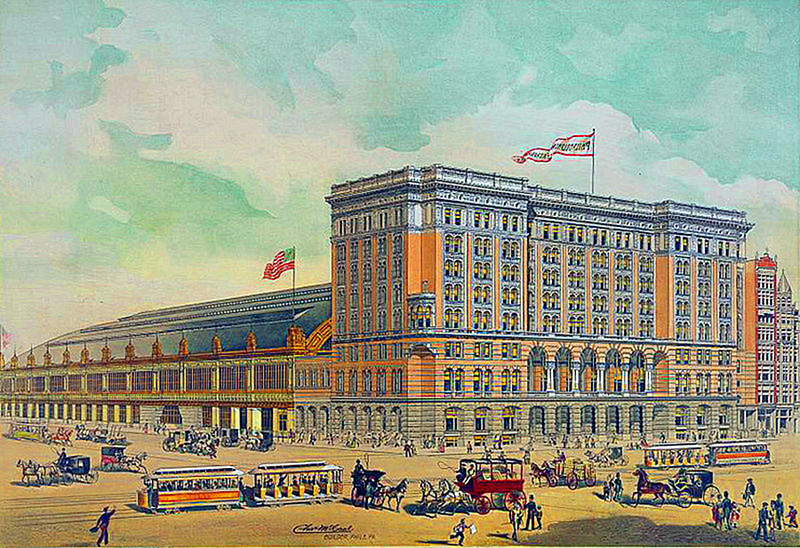
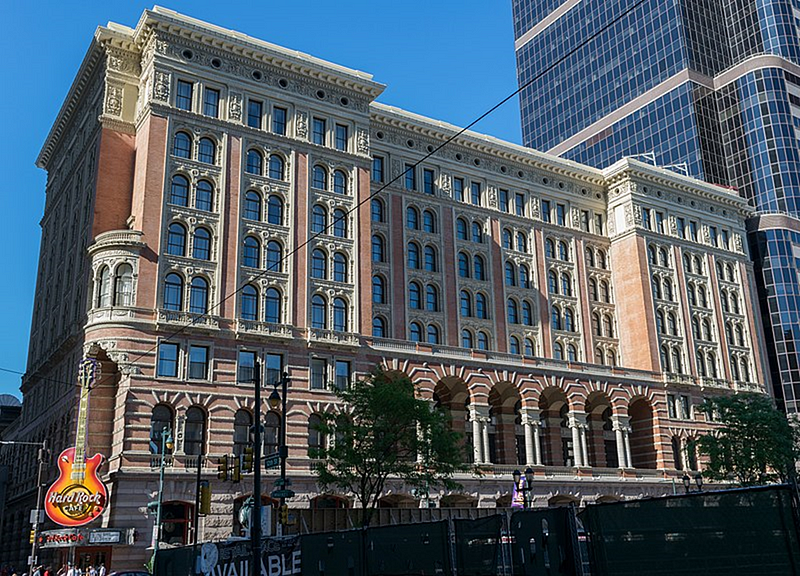
ile: Philadelphia & Reading Railroad Terminal, Philadelphia, PA 1893.jpg Description English: The Philadelphia & Reading Railroad Terminal, 12th & Market Streets, Philadelphia, PA. (Color engraving of opening in 1893) The Cooper Collection of American Railroadiana (uploader’s private collection) Source Private collection Author Unknown author This media file is in the public domain in the United States. This applies to U.S. works where the copyright has expired, often because its first publication occurred before January 1, 1928, and if not, due to lack of notice or renewal. Public domain — WikipediaFile: Philadelphia & Reading Railroad Terminal, Philadelphia, PA 1893.jpg — Wikimedia Commons I made no changes to this picture.
Introduction
Here we are in article three of a seven-article series. We hope you are enjoying it so far. In this article, we will examine 1873: Chester Branch, Philadelphia, Wilmington, and Baltimore Railroad (PW&B),1875–1893: Competition, Philadelphia and Atlantic City Railway (P&AC), Reading Leases North Pennsylvania Railroad, Reading Terminal, Consolidation of Railroads/Railways, Reading Leases Lehigh Valley Railroad, Reading Relinquishes Control of Railroads, 1877: Reading Railroad Massacre, Great Railroad Strike of 1877, and the conclusion.
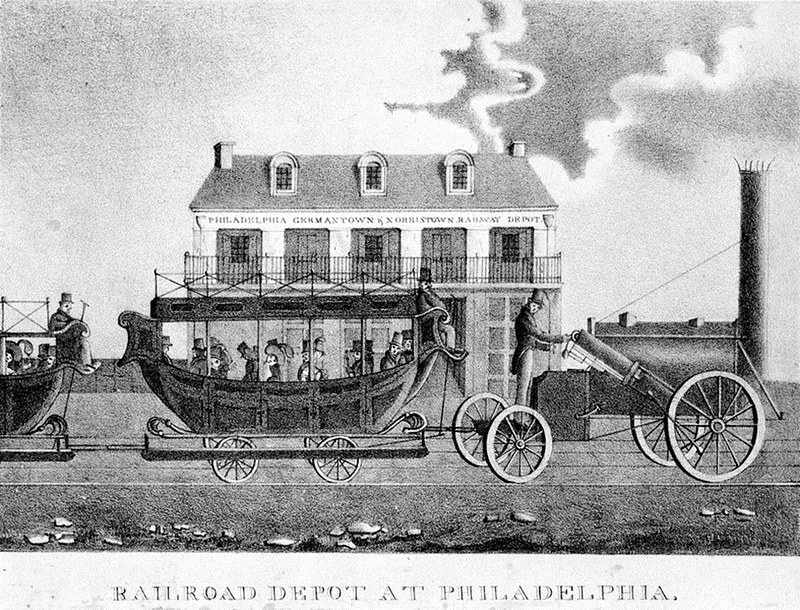
In December 1870, Reading leased the Philadelphia, Germantown, and Norristown Railroad. This gave Reading that company’s route along the east bank of the Schuylkill from Philadelphia to Norristown and its branch to Chestnut Hill. Reading Company — Wikipedia
File: Breton Railroad Depot at Philadelphia 1832.png Description English: “Railroad Depot at Philadelphia” (circa 1832), lithograph drawn by William L. Breton, published by Kennedy & Lucas. The Philadelphia, Germantown & Norristown Railroad depot was located at 9th & Green Streets in Philadelphia. The steam locomotive depicted, Old Ironsides, debuted on November 23, 1832. Source Townsend Ward, “The Germantown Road and Its Association,” Pennsylvania Magazine of History and Biography, vol. 6 (1882), p. 387. Author William L. Breton, artist; Kennedy & Lucas, publisher public domain This work is in the public domain in its country of origin and other countries and areas where the copyright term is the author’s life plus 70 years or fewer. This work is in the public domain in the United States because it was published (or registered with the U.S. Copyright Office) before January 1, 1928. Public domain — WikipediaFile: Breton Railroad Depot at Philadelphia 1832.png — Wikimedia Commons I made no changes to this picture.
1873: Chester Branch
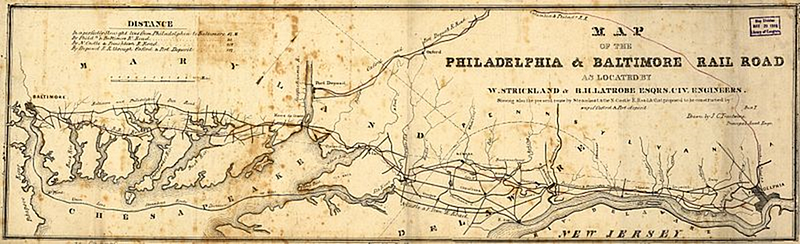
In 1873, the P&R decided to extend its reach southward. It leased 10.2 miles of track from the Philadelphia, Wilmington, and Baltimore Railroad. P&R called this trackage the Philadelphia & Chester Branch.
The line extended from the Gray’s Ferry Bridge across the Schuylkill River in West Philadelphia to Ridley Creek in Ridley Park in Delaware County. The segment included 4.9 miles of double track and 16.7 miles of single track, including sidings and turnouts. Reading Company — Wikipedia
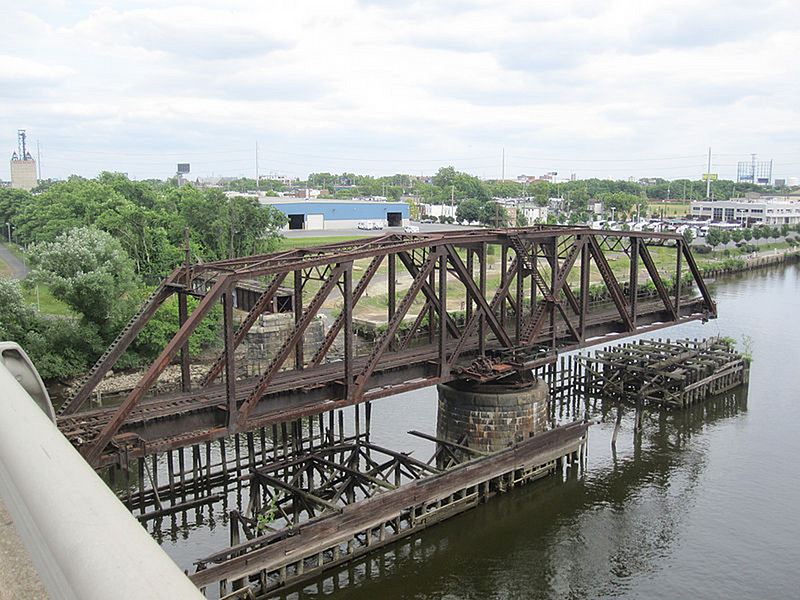
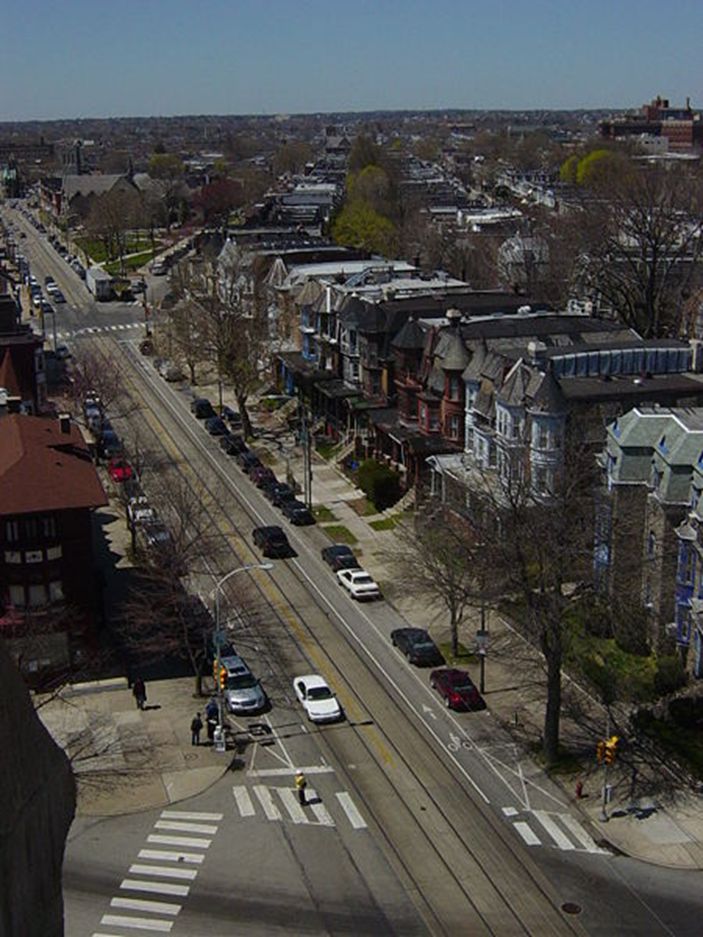
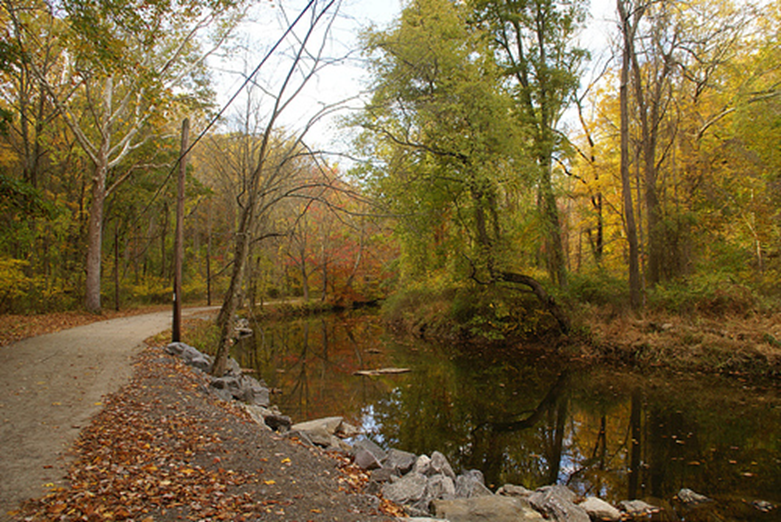
File:1850s PW&B map.jpg Description English: “Map of the Philadelphia, Wilmington, & Baltimore Railroad shewing [sic] its connections.” Sketch map showing the area between Philadelphia and Baltimore indicating drainage, cities and towns, roads, and railroads. Published in the 1850s. Source Library of Congress Source URL: https://www.loc.gov/item/98688775 Author Larkin, J.E. Public domain This media file is in the public domain in the United States. This applies to U.S. works where the copyright has expired, often because its first publication occurred before January 1, 1928, and if not, due to lack of notice or renewal. Public domain — WikipediaFile:1850s PW&B map.jpg — Wikimedia Commons I made no changes to this picture.File: Grays Ferry Crescent.jpg Description Photos taken on June 14, 2011, at Grays Ferry Crescent, part of the Schuylkill River Trail (Schuylkill). Source Grays Ferry Crescent Author Mercado Italiano from Philadelphia, United States This file is licensed under the Creative Commons Attribution 2.0 Generic license.CC BY 2.0 Deed | Attribution 2.0 Generic | Creative CommonsFile: Grays Ferry Crescent.jpg — Wikimedia Commons I made no changes to this picture.File: West Philadelphia Vista.jpg Description View to the west, including Baltimore Avenue, from atop Calvary United Methodist Church at 48th and Baltimore in West Philadelphia. Author Axcordion This file is licensed under the Creative Commons Attribution-Share Alike 3.0 Unported license.CC BY-SA 3.0 Deed | Attribution-Share Alike 3.0 Unported | Creative CommonsFile: West Philly Vista.jpg — Wikimedia Commons I made no changes to this picture.File: Ridley Creek at Ridley Creek State Park.jpg Description Ridley Creek, in Ridley Creek State Park. (I was involved in a stream study of Ridley Creek in a biology class in high school.) (dsc03100) Source Ridley Creek Author David Baron from Palo Alto, California, USA. This file is licensed under the Creative Commons Attribution-Share Alike 2.0 Generic license.CC BY-SA 2.0 Deed | Attribution-Share Alike 2.0 Generic | Creative CommonsFile: Ridley Creek at Ridley Creek State Park.jpg — Wikimedia Commons I made no changes to this picture.
Philadelphia, Wilmington, and Baltimore Railroad (PW&B)
The PW&B owned this railroad segment, part of the original 1838 line. PW&B opened a new stretch of track further inland in 1872. That line was intended to serve more populated areas and reduce flooding.
PW&B agreed to lease the freight rights to P&R for “$350,000 payable upon lease and $1 a year after that” for 999 years. A stipulation was that no passenger trains would use it. The Reading called this line and some connecting tracks, the Philadelphia and Chester Branch.
Southbound trains reached this branch by traveling on the Junction Railroad. This railroad was controlled by PW&B, Reading, and PRR and continued to the connecting Chester and Delaware River Railroad. Reading Company — Wikipedia
1875–1893: Competition
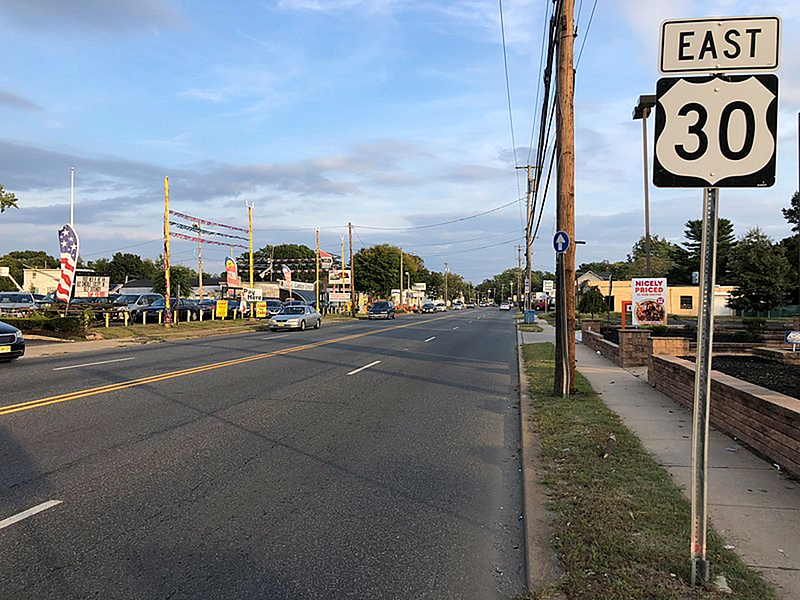
Four members of the Camden and Atlantic Railroad board of directors resigned in 1875 with the intent to build a second railroad. This railroad would run from Camden, New Jersey, to Atlantic City through Clementon. They were led by Samuel Richards, an officer of the C&A for 24 years.
The Philadelphia and Atlantic City Railway (P&AC) was established in March 1876. The P&AC selected a 3-foot-6-inch narrow gauge track that lowered track laying and operating costs. Work began in April 1877, and the track work was completed in 90 days. Reading Company — Wikipedia
On July 7, 1877, the final spike was driven. The 54.67-mile line was opened in time for the summer tourism season. P&AC went bankrupt about a year later; in July 1878, The Central Railroad of New Jersey (CNJ) and the Philadelphia and Reading Railway became joint owners of the P&AC, paying about $1 million. Reading Company — Wikipedia
In 1883, the P&AC was renamed the Philadelphia and Atlantic City Railroad. Because narrow gauge rail was used when the P&AC owned the track, the first thing needed was to convert the tracks to standard gauge. The railroad completed that task in October 1884. The entire 54.67-mile track was acquired by the Philadelphia and Reading Railway in December 1885. Reading Company — Wikipedia
Reading Leases North Pennsylvania Railroad
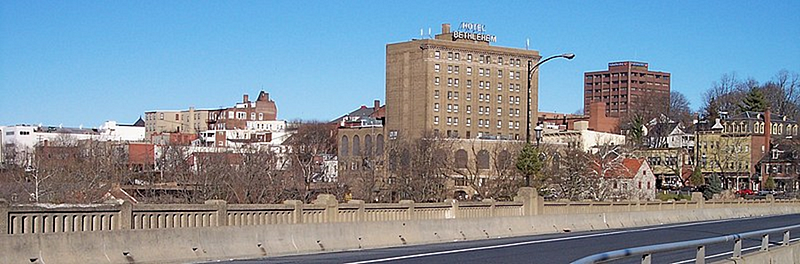
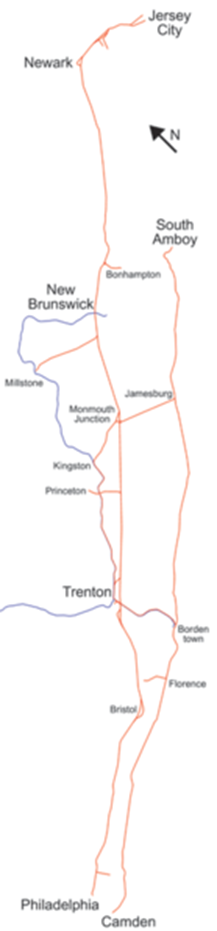
Reading leased the North Pennsylvania Railroad in 1879. Reading now had a line from Philadelphia north to Bethlehem. Also, the valuable Delaware and Bound Brook Railroad, the descendant of the National Railway project (a planned railroad between New York City and Washington D.C. around 1870), provided a route to New York City in direct competition with the Pennsylvania Railroad’s United New Jersey Railroad and Canal Company.
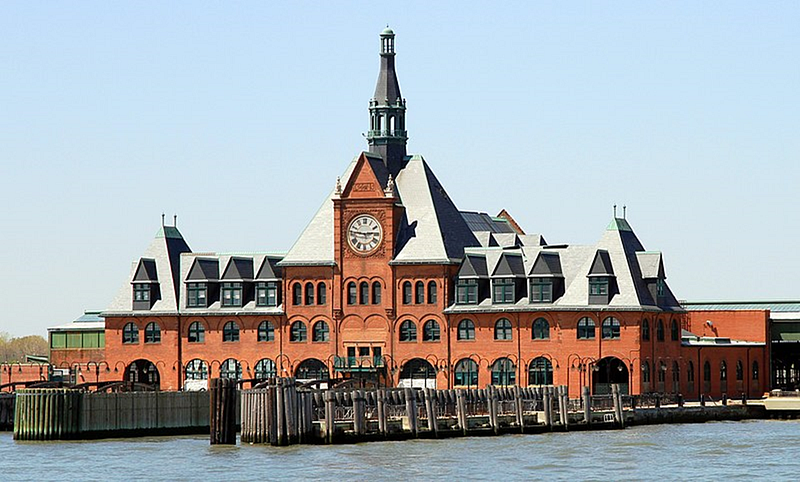
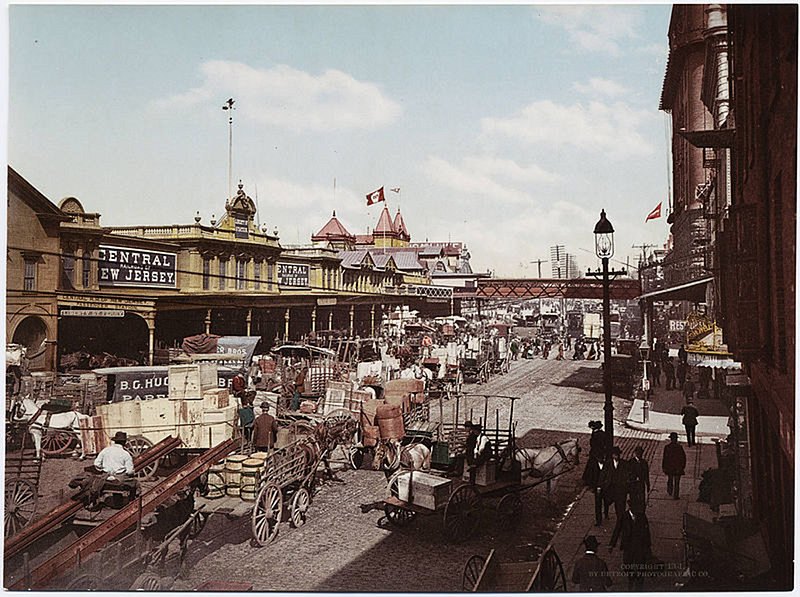
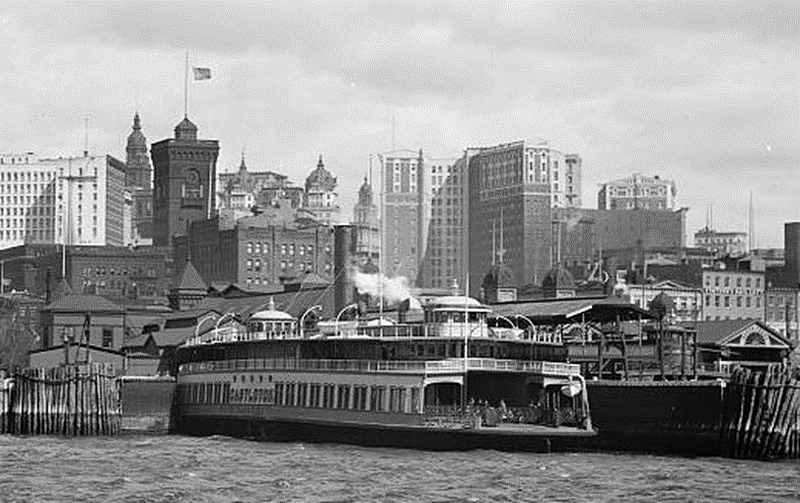
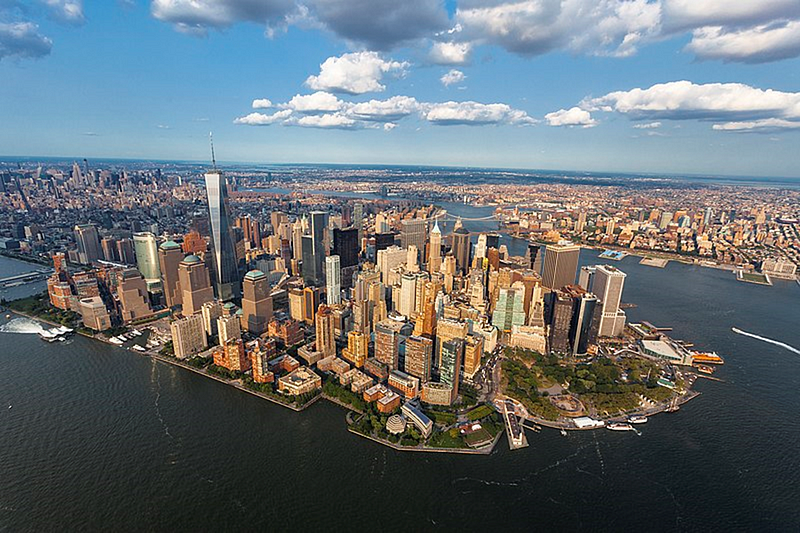
At the New York end, it used the Central Railroad of New Jersey’s Jersey City Terminal from which passengers could board ferries to Liberty Street Ferry Terminal, Staten Island Ferry Whitehall Terminal, and West 23rd Street in Lower Manhattan. Reading Company — Wikipedia
The Reading Terminal opened in Philadelphia in 1893. Reading leased the Central Railroad of New Jersey. Reading bought a majority of CNJ’s stock in 1901. Reading Company — Wikipedia
P&R consolidated five railway/railroads into the Atlantic City Railroad in April 1889. Port Reading Railroad was chartered in 1890 and opened in 1892, running east from a junction from the New York main line near Bound Brook to the Port Reading on the Arthur Kill near Perth Amboy. Reading Company — Wikipedia
Reading Leases Lehigh Valley Railroad
In December 1891, Reading leased the Lehigh Valley Railroad. Archibald A. McLeod was president of Reading at that time. The lease was canceled in August 1893 because Reading went into receivership. This was an event associated with the Panic of 1893.
Reading Relinquishes Control of Railroads
Reading also relinquished control of the Central New England and the Boston and Maine railroads. During the turmoil of the Panic of 1893, a new president, Joseph Smith Harris, was elected. Reading Company — Wikipedia
P&R built its most famous structure, the Reading Terminal in Philadelphia. It served as the terminus for most Philadelphia-bound trains and the company’s headquarters. Reading Company — Wikipedia
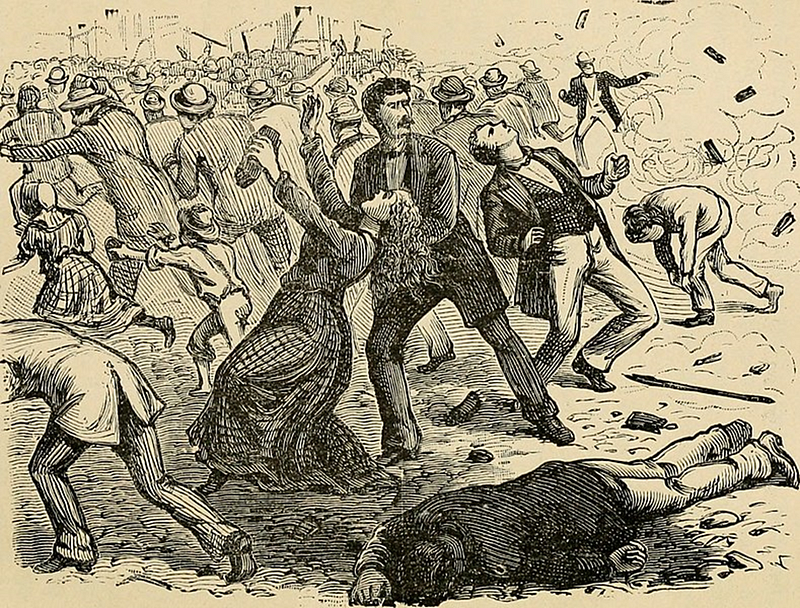
The Great Railroad Strike of 1877 began on July 14 in Martinsburg, West Virginia. The Baltimore and Ohio Railroad had cut employee wages three times that year. This strike was the first to spread across multiple states in the United States.
It lasted 52 days and was put down by unofficial militias, the National Guard, and federal troops. Workers in other cities and states struck at the same time because of economic pressure and problems with wages by the railroads. Reading Company — Wikipedia
Conclusion
This is the end of Article Three of a Seven-Article. In this article we examined 1873: Chester Branch, Philadelphia, Wilmington, and Baltimore Railroad (PW&B),1875–1893: Competition, Philadelphia and Atlantic City Railway (P&AC), Reading Leases North Pennsylvania Railroad, Reading Terminal, Consolidation of Railroads/Railways, Reading Leases Lehigh Valley Railroad, Reading Relinquishes Control of Railroads, 1877: Reading Railroad Massacre, Great Railroad Strike of 1877, and the conclusion.
Thank you for reading three of the articles in the seven-article series. We hope you are gaining some understanding of how things have gone thus far for Reading Railroad. We ask that you continue reading as we now turn to article four.



_just_east_of_Camden_County_Route_686_(Gibbsboro_Road)_in_Clementon,_Camden_County,_New_Jersey.jpg)


.jpg)


_(14781235923).jpg)