
You Need to See — Strong Locomotive Networks Staggering Success
With Revolutionary Focus — Railroad Network One of the Best Article Four of a Five-Article Series
Introduction
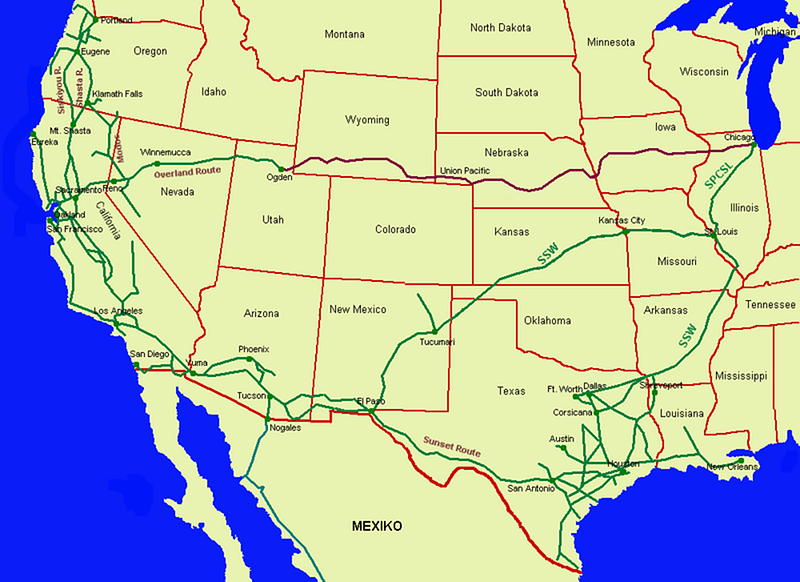
This is Article Four of a Five-Article Series. This article will cover passenger train service that was provided by Southern Pacific. If the service was provided by Amtrak after that railroad took over the passenger service it is so indicated.
We also look at notable accidents that occurred involving Southern Pacific Railroads personnel and equipment. We found this information to be both interesting and informative and hope you will as well.
Passenger train service
Amtrak took over all long-distance passenger operations in the United States on May 1, 1971. Up until then, Southern Pacific operated with named passenger trains. Some of these trains are now operating under Amtrak.
The following list provides the names of those locomotives used by Southern Pacific and where Amtrak is now operating the locomotive we have indicated as Amtrak operated. Southern Pacific Transportation Company — Wikipedia
Cascade
Operates under Amtrak today as part of the Coast Starlight train.
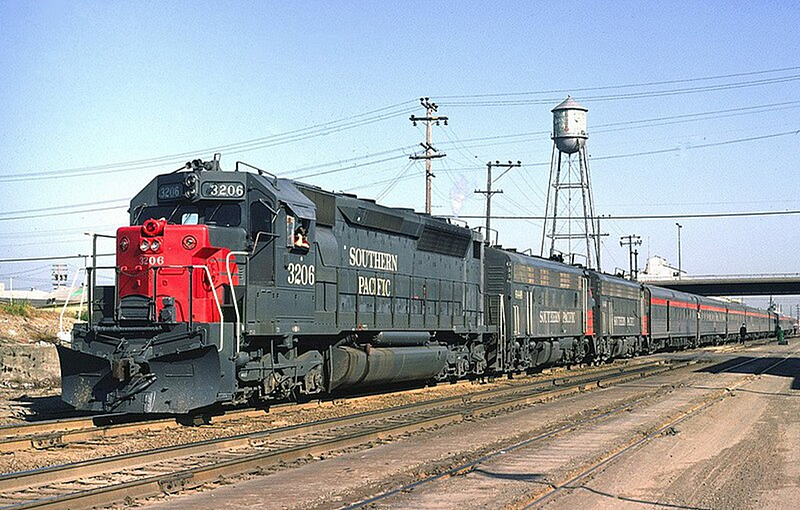
Coast Daylight
First known as the Daylight Limited — Operated under Amtrak, it operates today as part of the Coast Starlight train. Southern Pacific Transportation Company — Wikipedia
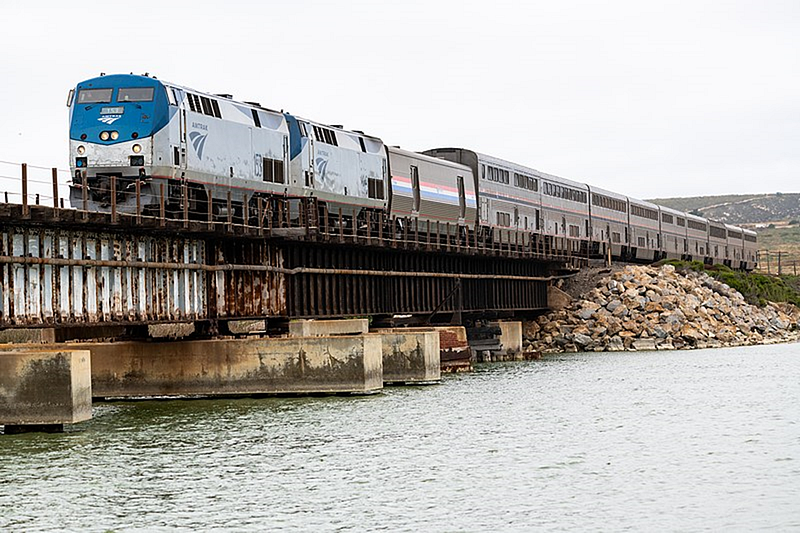
Peninsula Commute
— It operated under Amtrak until 1985 and is now Caltrain.
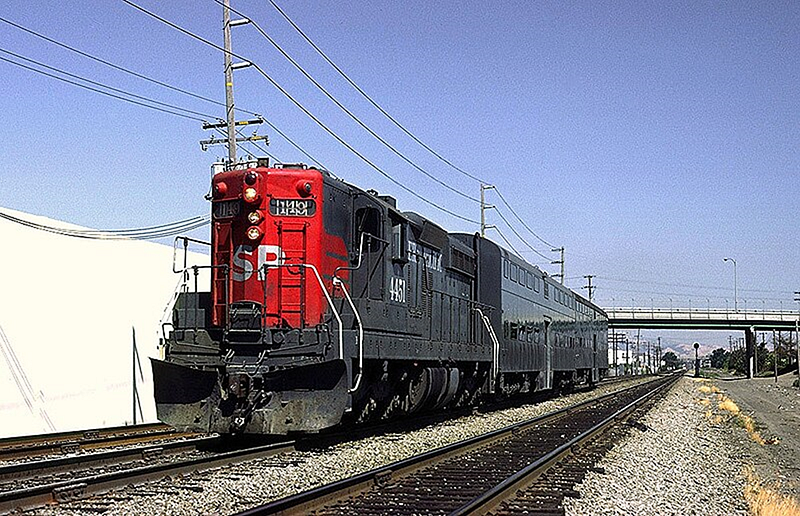
Sunset Limited
Operated under Amtrak.
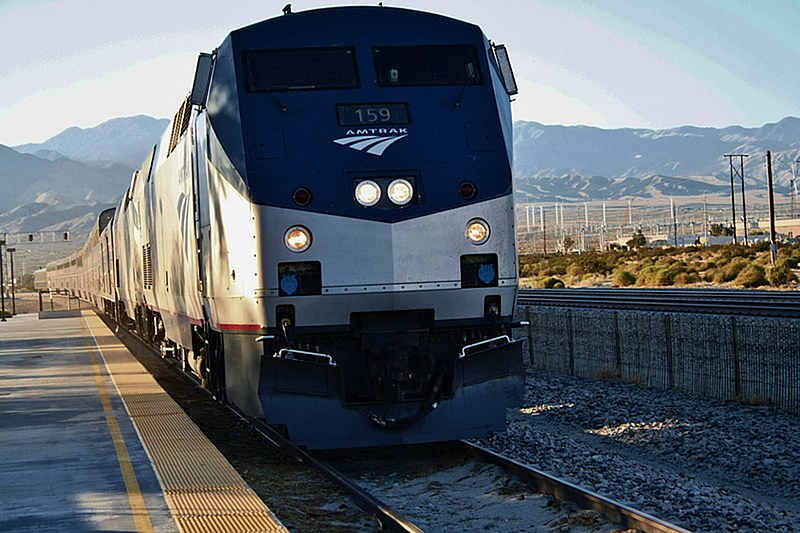
Other named locomotives included: 49er, Acadia, Apache, Argonaut, Arizona Limited, Beaver, Californian, City of San Francisco, Coast Mail, Coaster, Del Monte, Fast Mail, Golden Rocket, Golden State, Grand Canyon, Hustler, Imperial, Klamath, Lark, Oregonian, Overland, Owl Limited, Pacific Limited, Rogue River, Sacramento Daylight, San Francisco Challenger, San Joaquin Daylight, Senator, Shasta Daylight, Shasta Express, Shasta Limited, Shasta Limited De Luxe, Starlight, Sunbeam, Suntan Special, Tehachapi, West Coast, El Costeñ, and El Yaqui. Southern Pacific Transportation Company — Wikipedia
Notable accidents
Accidents, no major railroad or railway is without them. The information below shows that Southern Pacific was not. These incidents run the gamut from injury to death. From minor damage to equipment to major catastrophe. From no hazard to the environment to a major impact.
- In 1888, a Southern Pacific employee named John Sontag was injured while coupling cars in the railroad yard in Fresno. He accused Southern Pacific of not providing him with medical care while recuperating from an injury sustained while working. He further stated that the company would not rehire him when he healed.
- His next move was to take up robbing trains; he died of gunshot wounds and tetanus in jail at the ripe young age of 32. Chris Evans, a partner of Sontag’s, also hated the Southern Pacific. He accused the railroad of forcing farmers to sell their lands to the company at reduced rates. Southern Pacific Transportation Company — Wikipedia
- On 28 March 1907, the Southern Pacific Sunset Express had descended the grade out of the San Timoteo Canyon and had entered the Colton rail yard, traveling about 60 miles per hour when it hit an open switch and careened off the track. This caused 24 fatalities while 9 of the train’s 14 cars disintegrated as they piled on top of one another. This left the dead and injured in “a heap of kindling and crumpled metal.” Eighteen of the people killed were Italian immigrants traveling to jobs in San Francisco from Genoa, Italy. Southern Pacific Transportation Company — Wikipedia
- On 22 May 1907, the Coast Line Limited was heading for Los Angeles when it derailed just west of Glendale, California. Passenger cars tumbled down the embankment. At least two people were killed, and others were injured.
- “The horrible deed was planned with devilish accuracy,” the Pasadena Star News reported. The newspaper said spikes were removed from the track, and a hook was placed under the end of the rail. The Star’s coverage was extensive, as an editorial blasted the criminal elements behind the wreck:
The man or men who committed this horrible deed near Glendale may not be anarchists, technically speaking. But if they are sane men, moved by motive, they are such stuff as anarchists are made of. If the typical anarchist conceived that a railroad corporation should be terrorized, he would not scruple to wreck a passenger train and send scores and hundreds to instant death. Southern Pacific Transportation Company — Wikipedia
- In the “Who could be so callus and stupid” column, On 1 June 1907, an attempt to derail a Southern Pacific train near Santa Clara, California, was foiled when a pile of railway ties was discovered on the tracks. A work train crew found that someone had driven a steel plate into a switch near Burbank, California, intending to derail the Santa Barbara local. Nobody ever admitted to having done this act, nor was anyone ever charged. Southern Pacific Transportation Company — Wikipedia
- On 12 August 1939, the City of San Francisco derailed from a bridge in Palisade Canyon. The location was between Battle Mountain and Carlin in the Nevada desert. Twenty-four people were killed, many more were injured, and five cars were destroyed. An act of sabotage was determined to be the most possible cause; however, no suspect(s) were) ever identified. Southern Pacific Transportation Company — Wikipedia
- On 17 January 1947, the Southern Pacific Nightflier wrecked 12 miles outside of Bakersfield; 7 people were killed, and over 50 were injured. Four coaches and a tourist sleeper overturned, landing far off the tracks; the other seven cars remained upright. The locomotive stayed on the tracks, and its crew was uninjured.
- A 29-year-old passenger, Robert Crowley from Miami, Florida, had been conversing with a man across the aisle who was killed in an instant. Crowley, a combat war veteran, said, “I never saw such a mess,” even on a battlefield. Southern Pacific Transportation Company — Wikipedia
- On 8 May 1948, a Southern Pacific passenger train, the Del Monte Express, struck a car in Monterey, California. The vehicle’s driver was an influential marine biologist named Ed Ricketts. This happened at the Drake Avenue railroad crossing (now defunct). Ricketts died after having been hauled to the hospital after three days of struggling for his life. Southern Pacific Transportation Company — Wikipedia
- On 17 September 1963, a Southern Pacific freight train crashed into a converted bus at a grade crossing in Chualar, California, killing 32 bracero (manual laborer) workers. It would later be a factor in the decision by Congress in 1964 to terminate the bracero program despite its strong support among farmers. It also helped spur the Chicano civil rights movement. As of 2014, it was the deadliest automobile accident in United States history, according to the National Safety Council Southern Pacific Transportation Company — Wikipedia.
- On 28 April 1973, a Southern Pacific freight train carrying munitions exploded in Roseville Yard, injuring 52 people; the cause of this was a hot box on a railcar setting the floor ablaze andheating a bomb until it detonated. Southern Pacific Transportation Company — Wikipedia
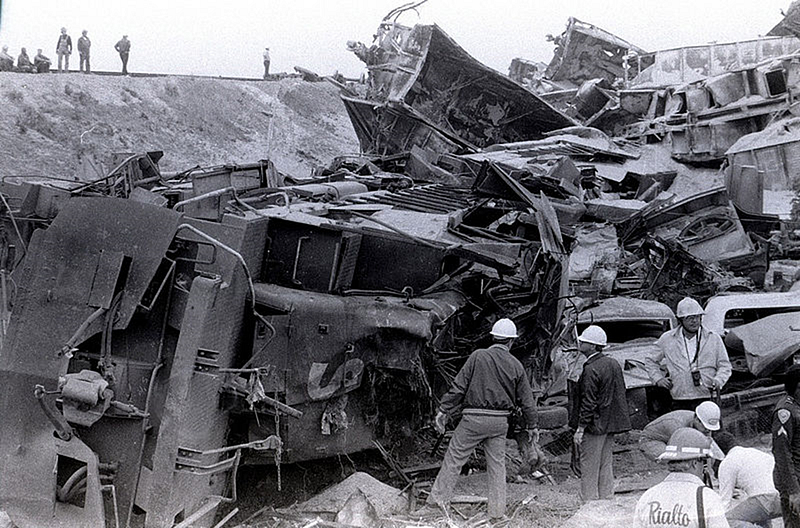
- On 12 May 1989, a Southern Pacific train carrying trona derailed in San Bernardino, California. Trona is a primary source of sodium carbonate in the United States. It is a common source of soda ash used to manufacture glass, chemicals, paper, detergents, and textiles.
- Used to condition water, remove sulfur from flue gases and lignite coals, used in sequestration of flue gases, and used as a food additive. The train failed to slow while descending a nearby slope and sped up to about 110 miles per hour before derailing, causing the San Bernardino train disaster. Southern Pacific Transportation Company — Wikipedia
Seven homes along Duffy Street were destroyed, and two train workers and two residents were killed. Thirteen days later, an underground pipeline along the right-of-way ruptured and caught fire. The cause of this fire was determined to be damage done to the pipeline during clean-up from the derailment or the derailment itself. This fire destroyed another eleven homes and killed two more people. Southern Pacific Transportation Company — Wikipedia
- On the night of 14 July 1991, an SP train derailed into the upper Sacramento River at a sharp bend of a track called “the Cantara Loop.” Several cars contacted the water, including a tank car. On the morning of 15 July, it was discovered that the tank car had ruptured and spilled about 19,000 US gallons of metam sodium, a soil fumigant, pesticide, herbicide, and fungicide into the water.
- This killed all fish in a 41-mile stretch of the river. It took 20 years for the rainbow trout population to recover. Over a million fish and tens of thousands of amphibians and crayfish were killed. Millions of aquatic invertebrates were destroyed, including insects and mollusks, which form the basis of the river’s ecosystem.
- Thousands of willows, alders, and cottonwoods died; many more were injured. The accident still ranks as the largest hazardous chemical spill in California history. At the time of the incident, metam sodium was not classified as hazardous. Southern Pacific Transportation Company — Wikipedia
Conclusion
This is the end of Article Four of a Five-Article Series. This article covered passenger train service that was provided by Southern Pacific. If the service was provided by Amtrak after that railroad took over the passenger service, it is so indicated. We also looked at notable accidents that occurred involving Southern Pacific Railroads personnel and equipment.
We enjoyed writing this article and having you along for the trip. Please provide any positive, constructive comments. We would also love to have you sign up for our email group, so you don’t miss future articles. Please take your seat as we head further down the track in Article Five of a Five-Article series.


