avatarTerry Day

Free AI web copilot to create summaries, insights and extended knowledge, download it at here

7086

Abstract

pg">File: AMTRAK P42 ADU with ACSES.jpg — Wikimedia Commons</a> No changes made.</figcaption></figure><p id="1180">Even today, portions of the railroad lack automatic signals and cab signals. In those areas, train and track car movements are governed by timetables and verbal/written train orders. These areas are receiving modern signals.</p><p id="cc3b">Many other signals and switching systems on the LIRR are being modernized and upgraded as part of the Main Line’s Third Track Project. In Mineola, the system is being redone and updated.</p><figure id="b802"><img src="https://cdn-images-1.readmedium.com/v2/resize:fit:800/1*bW_NVYZvX5X8XnlTSeS8Lg.png"><figcaption>Description English: Isleta, New Mexico. Conductor of a passing freight train on the Atchison, Topeka, and Santa Fe Railroad picking up a train order. Author Jack Delano (1914–1997). This image is the work of an employee of the United States Farm Security Administration or Office of War Information domestic photographic units, taken as part of that person’s official duties. As a work of the U.S. federal government, the image is in the public domain in the United States. This image is available from the United States <a href="https://commons.wikimedia.org/wiki/Library_of_Congress">Library of Congress</a>’s <a href="https://www.loc.gov/rr/print/">Prints and Photographs division</a> under the digital ID <a href="http://hdl.loc.gov/loc.pnp/fsa.8d27114">fsa.8d27114</a> <a href="https://commons.wikimedia.org/wiki/File:Isleta_order_hoops.jpg">File: Isleta order hoops.jpg — Wikimedia Commons</a> No changes made.</figcaption></figure><p id="86ac">On portions of the railroad equipped with Automatic Speed Control (ASC), Engineers consult the speed display unit, which can display 7-speed indications. A train derailment in 2013 in the Bronx on the Metro-North Railroad led to mandatory systems modifications to enforce specific speed limit changes. It resulted in lower average speeds and actual speed limits across the LIRR.</p><h2 id="f215">Power transmission</h2><p id="81b2">LIRR uses electrical lines powered by a third rail at 750 volts DC with the contact shoe running along the top of the rail, like the New York City Subway and PATH systems. This system is incompatible with Metro-North’s third rail, which is under-running, though the M8 and M9 fleets are using both types of third rails because they have their locomotives equipped with both types of contact shoes.</p><figure id="fa39"><img src="https://cdn-images-1.readmedium.com/v2/resize:fit:800/1*3FzIIFQjT1eCp9hdDcn5xQ.png"><figcaption>English: Third rail contact shoe of Chicago ‘L’ car. Author Daniel Schwen. This file is licensed under the Creative Commons Attribution-Share Alike 3.0 Unported license.<a href="https://creativecommons.org/licenses/by-sa/3.0/deed.en">CC BY-SA 3.0 Deed | Attribution-Share Alike 3.0 Unported | Creative Commons</a> <a href="https://commons.wikimedia.org/wiki/File:CTA_third_rail_contact_shoe.jpg">File: CTA third rail contact shoe.jpg — Wikimedia Commons</a> no changes made.</figcaption></figure><figure id="127c"><img src="https://cdn-images-1.readmedium.com/v2/resize:fit:800/1*o8o5FFwBOMITIUmHmYsD0Q.png"><figcaption>File: M8 EMUs at Stamford.jpg. Description English: An eastbound Metro-North train on the New Haven Line enters Stamford station. Author Btian P. Dorsam. This file is licensed under the Creative Commons Attribution-Share Alike 4.0 International license.<a href="https://creativecommons.org/licenses/by-sa/4.0/deed.en">CC BY-SA 4.0 Deed | Attribution-Share Alike 4.0 International | Creative Commons</a> <a href="https://commons.wikimedia.org/wiki/File:M8_EMUs_at_Stamford.jpg">File:M8 EMUs at Stamford.jpg — Wikimedia Commons</a> No changes made.</figcaption></figure><figure id="5a04"><img src="https://cdn-images-1.readmedium.com/v2/resize:fit:800/1*OG0__Y_C35YunrEawPx1Ew.png"><figcaption>File: MTA LIRR train leaving Woodside.jpg. Description English: Penn Station-bound MTA LIRR train of Kawasaki Heavy Industries M9 cars leaving Woodside. Author Mtattrain. This file is licensed under the Creative Commons Attribution-Share Alike 4.0 International license. <a href="https://creativecommons.org/licenses/by-sa/4.0/deed.en">CC BY-SA 4.0 Deed | Attribution-Share Alike 4.0 International | Creative Commons</a> <a href="https://commons.wikimedia.org/wiki/File:MTA_LIRR_train_leaving_Woodside.jpg">File: MTA LIRR train leaving Woodside.jpg — Wikimedia Commons</a> No changes made.</figcaption></figure><h2 id="0ce4">Electric fleet</h2><p id="5e98">The LIRR’s electric fleet consists of 836 M7 and 170 M3 electric multiple-unit cars in married pairs, meaning each car needs the other one to operate, each containing its own engineer’s cab. The trainsets range from 6 to 12 cars long.</p><figure id="8827"><img src="https://cdn-images-1.readmedium.com/v2/resize:fit:800/1*YvjG_Rp_hv8o15HmPOruKA.png"><figcaption>Description English: LIRR Port Washington Branch train, led by M7 #7799, enters the Flushing station. Author Adam E. Moreira. This file is licensed under the Creative Commons Attribution-Share Alike 3.0 Unported license. <a href="https://creativecommons.org/licenses/by-sa/3.0/deed.en">CC BY-SA 3.0 Deed | Attribution-Share Alike 3.0 Unported | Creative Commons</a> <a href="https://commons.wikimedia.org/wiki/File:Bombardier_M7_7799_enters_Flushing.jpg">File: Bombardier M7 7799 enters Flushing.jpg — Wikimedia Commons</a> No changes made.</figcaption></figure><figure id="371b"><img src="https://cdn-images-1.readmedium.com/v2/resize:fit:800/1*poA0wHI8lIQDDdmWOlPEIw.png"><figcaption>Description English: Long Island Rail Road train #2820, an eight-car train on the Far Rockaway Branch, departs the Cedarhurst Station en route to Far Rockaway. Author AEMoreira042281. This file is licensed under the Creative Commons Attribution-Share Alike 3.0 Unported license.<a href="https://creativecommons.org/licenses/by-sa/3.0/deed.en">CC BY-SA 3.0 Deed | Attribution-Share Alike 3.0 Unported | Creative Commons</a> <a href="https://commons.wikimedia.org/wiki/File:LIRR_Train_2820_leaves_Cedarhurst.jpg">File: LIRR Train 2820 leaves Cedarhurst.jpg — Wikimedia Commons</a> No changes made.</figcaption></figure><p id="69e2">LIRR bought new M9 railcars from Kawasaki in 2013. A 2014 MTA forecast indicated that the LIRR would need 416 M9 railcars, 180 to replace the outdated M3 railcars, and 236 railcars for the additional passengers expected once the East Side Access project is complete. The first M9s entered revenue service on September 11, 2019.</p><h2 id="af90">Diesel and Dual-Mode Fleets</h2><p id="faee">The LIRR uses 134 C3 bilevel coaches powered by 24 DE30AC diesel-electric and 20 DM30AC dual-mode locomotives. Most are used on non-electrified branches, including the Port Jefferson, Oyster Bay, Montauk, Central, and Greenport Branches. There are also 23 MP15AC locomotives, such as work trains and yard switchers.</p><figure id="d361"><img src="https://cdn-images-1.readmedium.com/v2/resize:fit:800/1*1SP1AtkcQ9TIGrGG32Jn8g.png"><figcaption>DE30AC Description English:

Options

A Port Jefferson-bound train leaving Hunterspoint Avenue station in September 2018. Author Pi.1415926535. This file is licensed under the Creative Commons Attribution-Share Alike 3.0 Unported license.<a href="https://creativecommons.org/licenses/by-sa/3.0/deed.en">CC BY-SA 3.0 Deed | Attribution-Share Alike 3.0 Unported | Creative Commons</a> <a href="https://commons.wikimedia.org/wiki/File:Eastbound_train_leaving_Hunterspoint_Avenue_station,_September_2018.JPG">File: Eastbound train leaving Hunterspoint Avenue station, September 2018.JPG — Wikimedia Commons</a> No changes made.</figcaption></figure><figure id="f7a5"><img src="https://cdn-images-1.readmedium.com/v2/resize:fit:800/1*2Hcj-FqlV_Ac8IKfTzlX6A.png"><figcaption>File: LIRR EMD DM30AC 515 pushing Train 8054. jpg. Description English: Long Island Rail Road #515 pushing Train 8054, a Ronkonkoma Branch train rerouted via Babylon and Central Branches due to construction at Queens Interlocking. Author AEMoreira042281. This file is licensed under the Creative Commons Attribution-Share Alike 3.0 Unported license.<a href="https://creativecommons.org/licenses/by-sa/3.0/deed.en">CC BY-SA 3.0 Deed | Attribution-Share Alike 3.0 Unported | Creative Commons</a> <a href="https://commons.wikimedia.org/wiki/File:LIRR_EMD_DM30AC_515_pushing_Train_8054.jpg">File:LIRR EMD DM30AC 515 pushing Train 8054.jpg — Wikimedia Commons</a> No changes made.</figcaption></figure><figure id="df17"><img src="https://cdn-images-1.readmedium.com/v2/resize:fit:800/1*RIvUriRHR3VBQ329dOoLCA.png"><figcaption>File: LIRR C3 5019 on Train 6506.jpg, Author AEMoreira042281. This file is licensed under the Creative Commons Attribution-Share Alike 3.0 Unported license.<a href="https://creativecommons.org/licenses/by-sa/3.0/deed.en">CC BY-SA 3.0 Deed | Attribution-Share Alike 3.0 Unported | Creative Commons</a> <a href="https://commons.wikimedia.org/wiki/File:LIRR_C3_5019_on_Train_6506.jpg">File:LIRR C3 5019 on Train 6506.jpg — Wikimedia Commons</a> No changes made.</figcaption></figure><figure id="3a2c"><img src="https://cdn-images-1.readmedium.com/v2/resize:fit:800/1*BhvrMhcUufeG9o7xzSQS-Q.png"><figcaption>File: Cp1422Mp15AcMilw2007.jpg. Description CP 1422 (nee Milw Road 486, Soo 1552) at Cutoff yard lead for CP’s Muskego yard in Milwaukee. Author Rrshooter. This file is licensed under the Creative Commons Attribution-Share Alike 4.0 International, 3.0 Unported, 2.5 Generic, 2.0 Generic, and 1.0 Generic license. <a href="https://creativecommons.org/licenses/by-sa/4.0/">CC BY-SA 4.0 Deed | Attribution-Share Alike 4.0 International | Creative Commons</a> <a href="https://commons.wikimedia.org/wiki/File:Cp1422Mp15AcMilw2007.jpg">File: Cp1422Mp15AcMilw2007.jpg — Wikimedia Commons</a>. No changes made.</figcaption></figure><h2 id="2c84">Named Trains.</h2><p id="ff50">LIRR has served commuters for most of its existence. It has had numerous named trains. Some of its trains had seating that was all first-class seating.</p><p id="28e9">They also have had parlor cars and full bar service. After World War II, there were few of those trains that existed. LIRR reused some of the train names during the 1950s and 1960s because the railroad expanded its east-end parlor car service with luxury coaches and Pullman cars from railroads that were discontinuing their passenger trains.</p><h2 id="dbb7">Current Named Train</h2><ul><li><a href="https://en.wikipedia.org/wiki/Cannonball_(LIRR_train)"><b><i>Cannonball</i></b></a> is a Friday-12-car train to Montauk running May through October, with two all-reserved parlor cars with full bar service. Since May 24, 2013, it has originated at Penn Station with a Sunday evening return from Montauk; the westward train stops at Jamaica. The two rear cars (“Hamptons Reserve Service”) have reserved seating and exclusive bar service.</li><li>The name is a nod to the <i>Cannon Ball</i>, the all-year train to Montauk from the 1890s until the 1970s. It carried parlor cars and standard-fare coaches and ran weekday afternoons from Long Island City, then from Penn Station until 1951, when DD1 (boxcab electric locomotive) operation and changing engines at Jamaica ceased.</li></ul><figure id="7eab"><img src="https://cdn-images-1.readmedium.com/v2/resize:fit:800/1*ZlJe6zkEkJprqK5qurlbBQ.png"><figcaption>File: PRR DD1.jpg. Pennsylvania Railroad electric locomotive, class DD1. Photo at the Library of Congress’ Prints and Photographs collection. Public domain by age; LoC classification card states, “No known restrictions on publication.” This media file is in the public domain in the United States. This applies to U.S. works where the copyright has expired, often because its first publication occurred before January 1, 1928, and if not, due to lack of notice or renewal. <a href="https://commons.wikimedia.org/wiki/File:PRR_DD1.jpg">File: PRR DD1.jpg — Wikimedia Commons</a> <a href="https://en.wikipedia.org/wiki/Wikipedia:Public_domain">Wikipedia:Public domain — Wikipedia</a> No changes made.</figcaption></figure><h2 id="283e">Former Named Trains of LIRR</h2><ul><li><b><i>Fisherman’s Special </i></b>(1932–1950s) from Long Island City to Canoe Place Station and Montauk via Jamaica, April through October, terminating at Canoe Place in April, extended to Montauk in May. She has served the Long Island fishing trade.</li><li><b><i>Peconic Bay Express/ Shinnecock Bay Express </i></b>(1926–1950) from Long Island City to Greenport and Montauk, Saturday express to Greenport and Montauk. It was discontinued during World War II, though revived for a few seasons afterward.</li><li><b><i>Shelter Island Express </i></b>(1901–1903, 1923–1942) from Long Island City to Greenport, a Friday-summer express connected to Shelter Island ferries.</li><li><b><i>Sunrise Special </i></b>(1922–1942) ran during the summer, NY Penn to Montauk on Fridays and westbound Mondays. In the summer of 1926, it ran day-to-day — all parlor cars (no coaches) from 1932 to 1937.</li></ul><p id="dcf9">This is the end of article six of an eight-article series on Long Island Rail Road. In this article, we looked at train crew responsibilities, control towers and centers, signals and safety systems, power transmission, electric fleet, diesel and dual-mode fleets, named trains, current named trains, and former named trains of LIRR.</p><p id="1ee4">All articles in the series will have the same title. The subtitles will also be similar, except each article will be numbered in its unique number. For example, this article is article six of an eight-article series; you will find the article number at the end of the subtitle. We hope that you enjoy reading this series of articles.</p><p id="18da">If you enjoyed reading it and are inclined to comment, we welcome you; providing your comment is constructive and helpful. Please consider joining Medium, and please join my email list. When I write something new, the system will notify you. My writing success depends on readers like you who appreciate and support my writing. Thanks so much for taking the time to read and help me.</p></article></body>

You Need to See Fascinating Epic Pioneering Mind-Blowing Railroad

189 Years — Same Charter — Remarkable Results Getting Better Article Six of an Eight-article series.
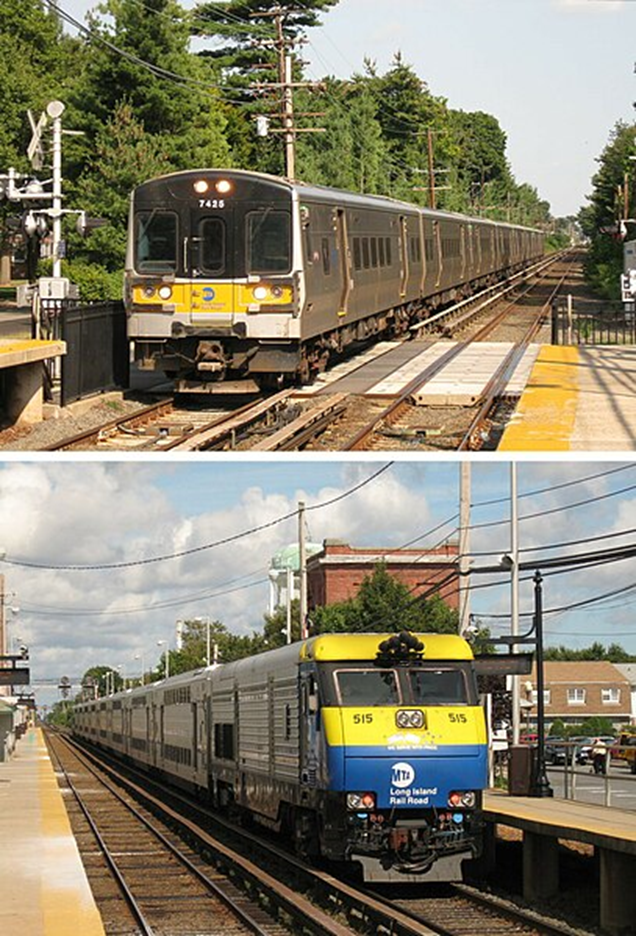
File: LIRR sampler electric and diesel services.jpg. Description English: Long Island Rail Road provides services using electric trains and diesel (and dual mode) trains. The top picture is in Garden City, and the bottom is in Farmingdale. Author Adam E. Moreira042281. This file is licensed under the Creative Commons Attribution-Share Alike 3.0 Unported license. CC BY-SA 3.0 Deed | Attribution-Share Alike 3.0 Unported | Creative Commons File: LIRR sampler electric and diesel services.jpg — Wikimedia Commons No changes made.

Introduction

This is article six of an eight-article series. In this article, we will look at train crew responsibilities, control towers and centers, signals and safety systems, power transmission, electric fleet, diesel and dual-mode fleets, named trains, current named trains, and former named trains of LIRR. We hope you enjoy reading and learning some new information in this article.
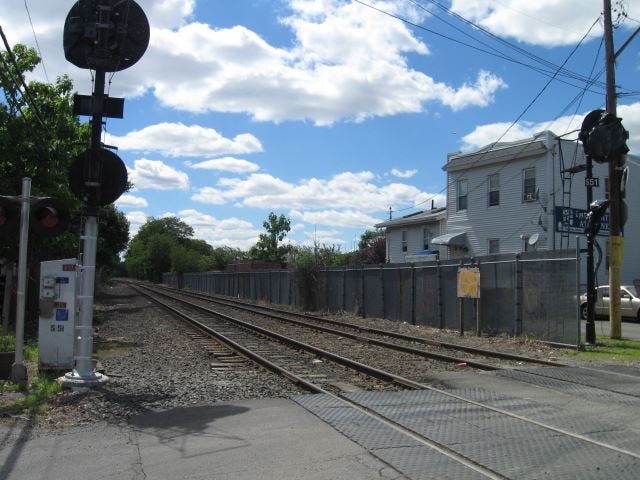
Description English: The former Long Island Rail Road Glendale station in June 2014, 16 years after closing. Author: The Legendary Ranger. This file is licensed under the Creative Commons Attribution-Share Alike 4.0 International license.CC BY-SA 4.0 Deed | Attribution-Share Alike 4.0 International | Creative Commons . File: Glendale LIRR station.jpg — Wikimedia Commons No changes made.

Train Crew Responsibilities

All LIRR trains have an engineer (also known as a driver) who operates the train and a conductor who is responsible for the safe movement of the train, fare collection, and on-board customer service. In addition, trains may have one or more assistant conductors to assist with fare collection and other duties.
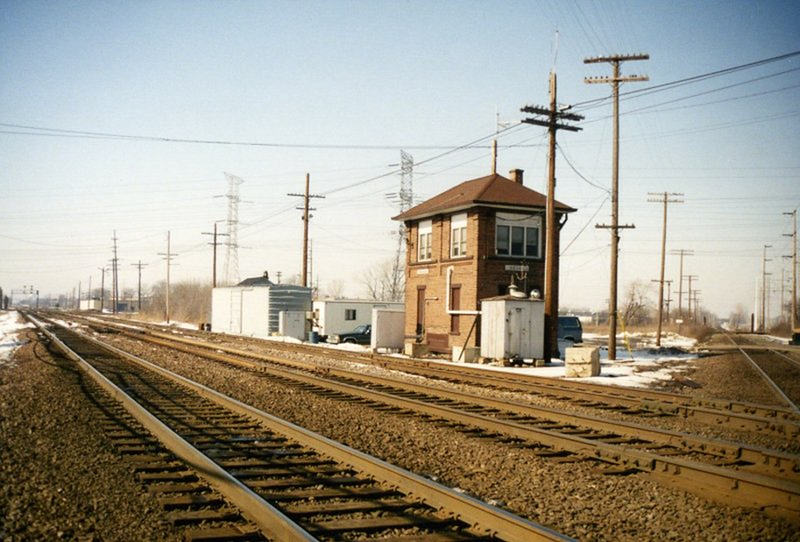
Description English: Interlocking tower and tracks at Deval Interlocking in Des Plaines, Illinois. Chicago and North Western RR built this tower, and Union Pacific RR later controlled it. The tower was closed in 2005 and razed in 2012. Author Slambo. This file is licensed under the Creative Commons Attribution-Share Alike 2.5 Generic license. CC BY-SA 2.5 Deed | Attribution-Share Alike 2.5 Generic | Creative Commons. File: Des Plaines interlocking tower.jpg — Wikimedia Commons. No changes made.

Control Towers and Centers

The LIRR is one of the last railroads in the United States to use mechanical interlocking control towers to regulate rail traffic. As of 2016, the LIRR has eight active control towers. The Movement Bureau in Jamaica, New York, controls all movements on the LIRR. The Bureau gives orders to the towers that govern a specific portion of the railroad.

The Penn Station Central Center (PSCC) controls all movements in Amtrak territory. The LIRR and Amtrak run the PSCC. The PSCC heads as far east as Harold Interlocking in Sunnyside, Queens. The PSCC replaced several towers.

The Jamaica Control Center, operational since the third quarter of 2010, controls the area around the Jamaica terminal by directly controlling interlockings. The interlockings replaced several towers in Jamaica, including Jay and Hall towers at the west and east ends of Jamaica Station. At additional locations, line side towers control the various switches and signals following the timetable and under the direction of the Movement Bureau in Jamaica.

Signals and Safety Systems

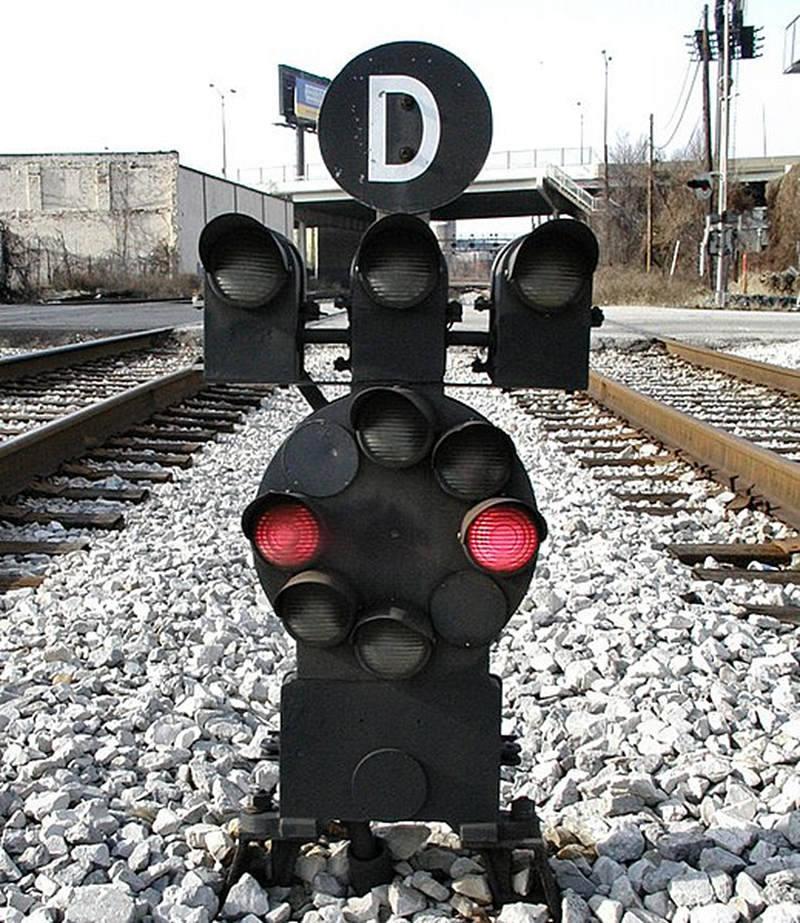
LIRR began operations with the Pennsylvania Railroad (PRR) based signal system. Today, LIRR uses various wayside railroad signals, including position light, color light, and dwarf signals.
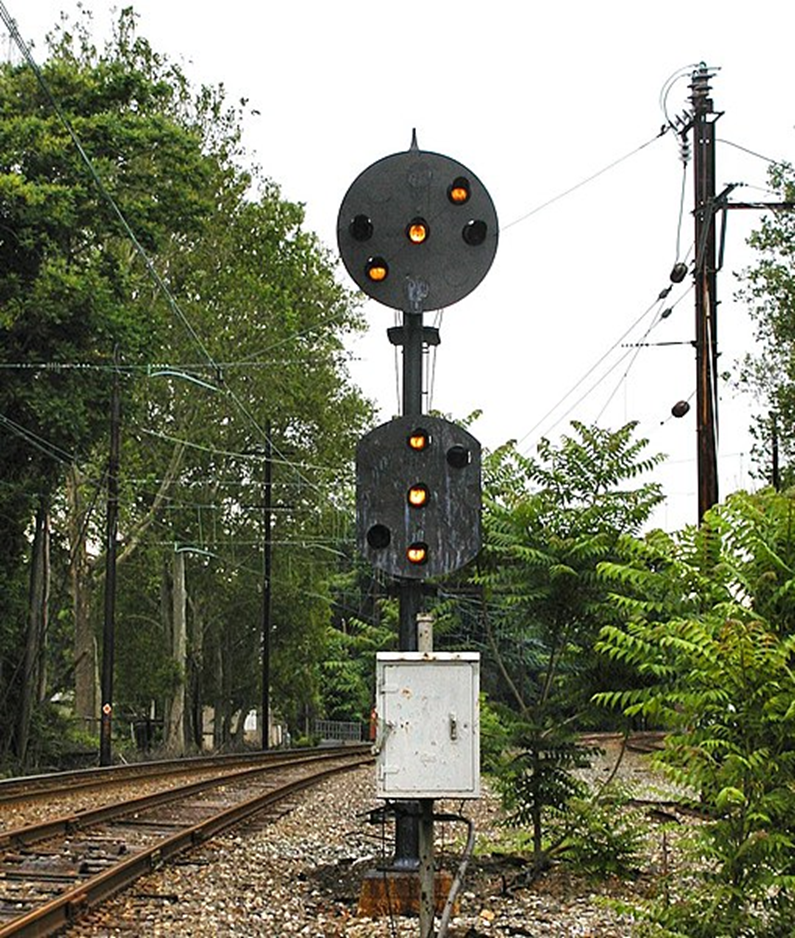
Description English: Signal 18R at OVERBROOK interlocking displaying Approach Medium for a movement west on #2 track. Author Sturmovik. This file is licensed under the Creative Commons Attribution-Share Alike 3.0 Unported license.CC BY-SA 3.0 Deed | Attribution-Share Alike 3.0 Unported | Creative Commons File: OVERBROOK 18R-Approach-Medium.jpg — Wikimedia Commons No changes made.
Description English: B&O CPL dwarf signal at BAILEY interlocking, Baltimore, MD. Governs one of the two MARC tracks used to exit Camden station. Had a full set of upper orbitals. Author Sturmovik. This file is licensed under the Creative Commons Attribution-Share Alike 3.0 Unported license.CC BY-SA 3.0 Deed | Attribution-Share Alike 3.0 Unported | Creative Commons File: CSX BAILEY-Marc-1-CPL-Dwarf-STOP.jpg — Wikimedia Commons No changes made.

Much of LIRR has its locomotives equipped with a bi-directional Pulse Code Cab signaling called Automatic Speed Control (ASC). However, portions of the railway still retain single-direction, wayside-signaling. Unlike other railroads, which began using color-light signals in the 20th century, the LIRR did not start using signals with color lights on its above-ground sections until 2006.
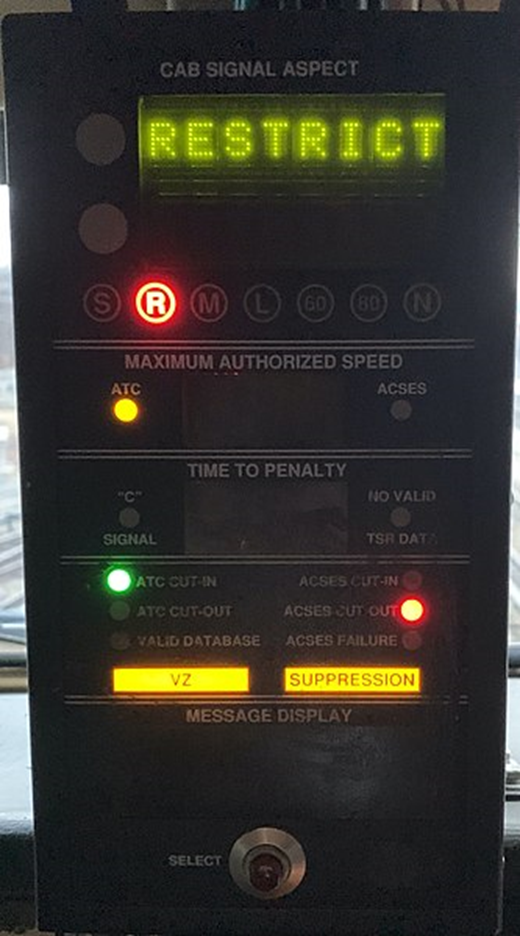
Description English: Amtrak P42DC Cab Signal ADU with ACSES. Author arkNinja813. This file is licensed under the Creative Commons Attribution-Share Alike 4.0 International license.CC BY-SA 4.0 Deed | Attribution-Share Alike 4.0 International | Creative Commons File: AMTRAK P42 ADU with ACSES.jpg — Wikimedia Commons No changes made.

Even today, portions of the railroad lack automatic signals and cab signals. In those areas, train and track car movements are governed by timetables and verbal/written train orders. These areas are receiving modern signals.

Many other signals and switching systems on the LIRR are being modernized and upgraded as part of the Main Line’s Third Track Project. In Mineola, the system is being redone and updated.
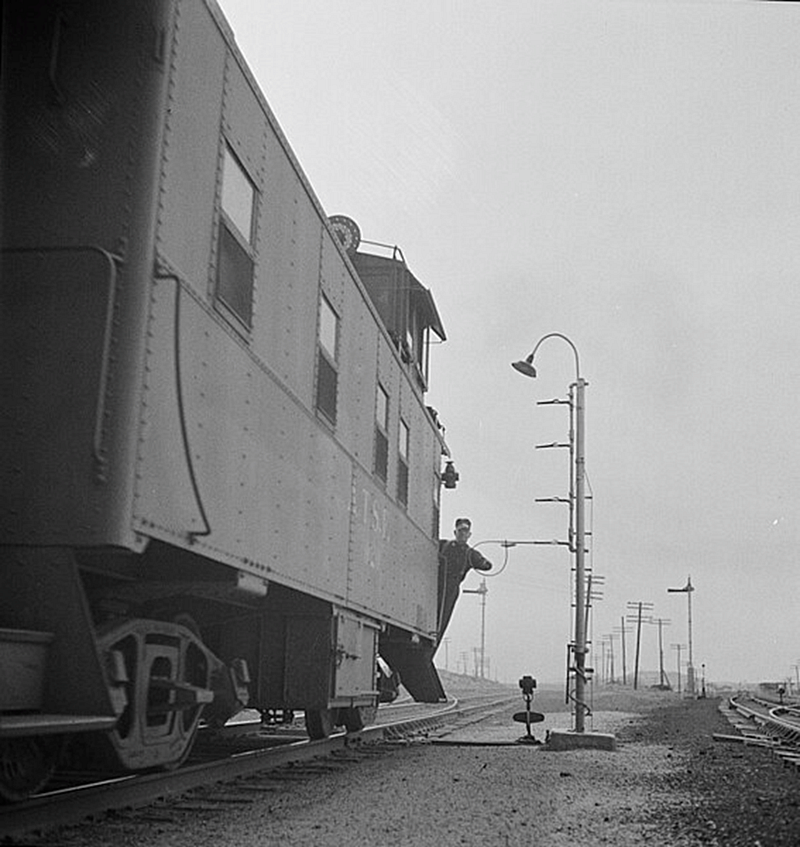
Description English: Isleta, New Mexico. Conductor of a passing freight train on the Atchison, Topeka, and Santa Fe Railroad picking up a train order. Author Jack Delano (1914–1997). This image is the work of an employee of the United States Farm Security Administration or Office of War Information domestic photographic units, taken as part of that person’s official duties. As a work of the U.S. federal government, the image is in the public domain in the United States. This image is available from the United States Library of Congress’s Prints and Photographs division under the digital ID fsa.8d27114 File: Isleta order hoops.jpg — Wikimedia Commons No changes made.

On portions of the railroad equipped with Automatic Speed Control (ASC), Engineers consult the speed display unit, which can display 7-speed indications. A train derailment in 2013 in the Bronx on the Metro-North Railroad led to mandatory systems modifications to enforce specific speed limit changes. It resulted in lower average speeds and actual speed limits across the LIRR.

Power transmission

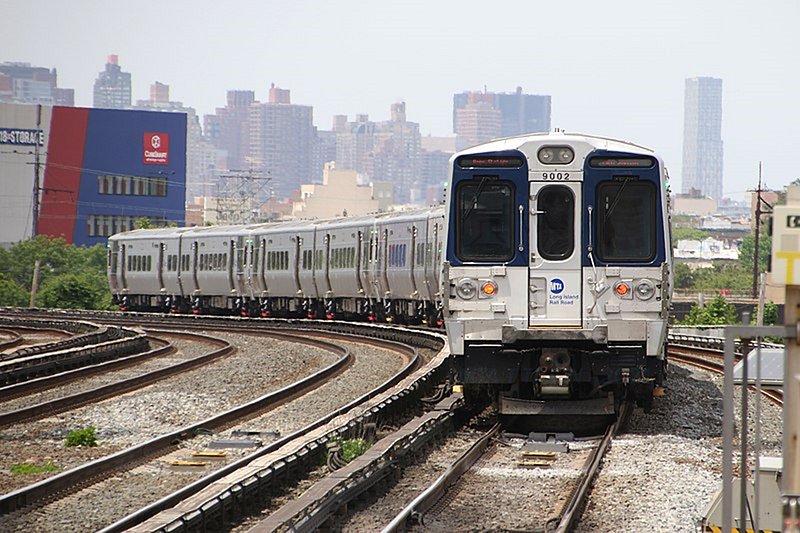
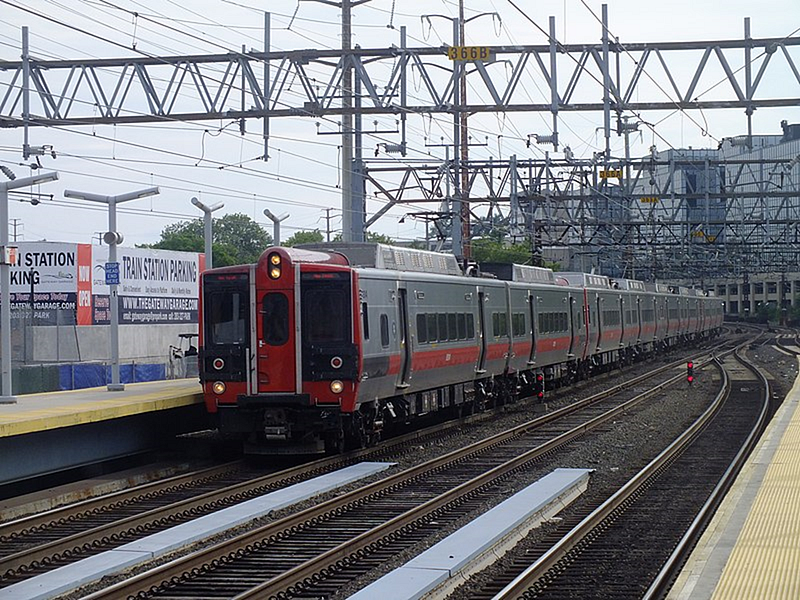
LIRR uses electrical lines powered by a third rail at 750 volts DC with the contact shoe running along the top of the rail, like the New York City Subway and PATH systems. This system is incompatible with Metro-North’s third rail, which is under-running, though the M8 and M9 fleets are using both types of third rails because they have their locomotives equipped with both types of contact shoes.
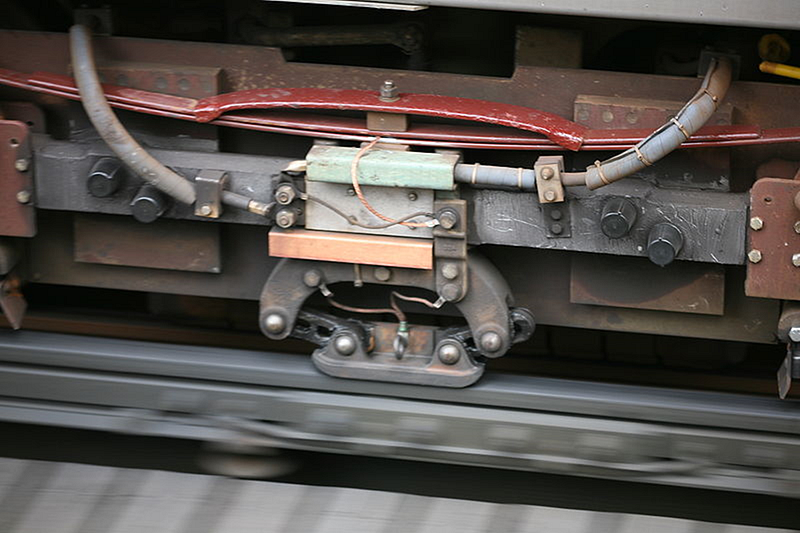
English: Third rail contact shoe of Chicago ‘L’ car. Author Daniel Schwen. This file is licensed under the Creative Commons Attribution-Share Alike 3.0 Unported license.CC BY-SA 3.0 Deed | Attribution-Share Alike 3.0 Unported | Creative Commons File: CTA third rail contact shoe.jpg — Wikimedia Commons no changes made.
File: M8 EMUs at Stamford.jpg. Description English: An eastbound Metro-North train on the New Haven Line enters Stamford station. Author Btian P. Dorsam. This file is licensed under the Creative Commons Attribution-Share Alike 4.0 International license.CC BY-SA 4.0 Deed | Attribution-Share Alike 4.0 International | Creative Commons File:M8 EMUs at Stamford.jpg — Wikimedia Commons No changes made.
File: MTA LIRR train leaving Woodside.jpg. Description English: Penn Station-bound MTA LIRR train of Kawasaki Heavy Industries M9 cars leaving Woodside. Author Mtattrain. This file is licensed under the Creative Commons Attribution-Share Alike 4.0 International license. CC BY-SA 4.0 Deed | Attribution-Share Alike 4.0 International | Creative Commons File: MTA LIRR train leaving Woodside.jpg — Wikimedia Commons No changes made.

Electric fleet

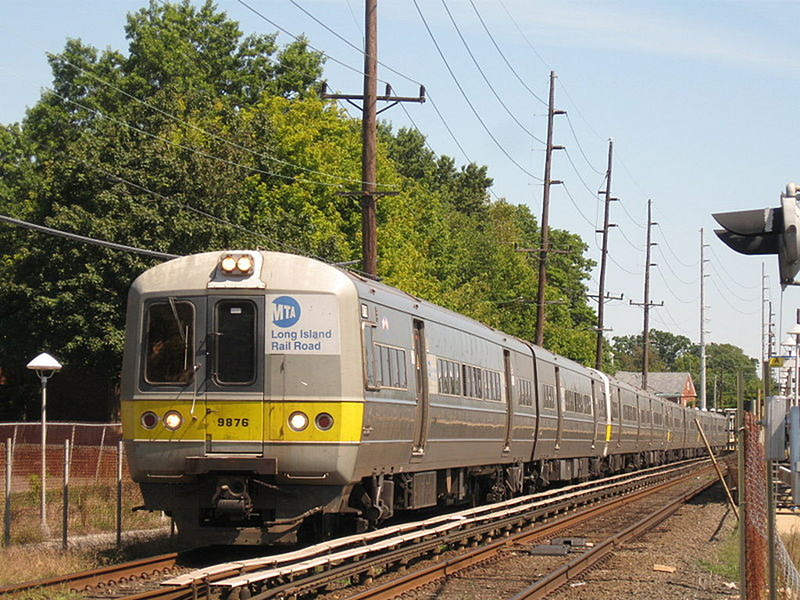
The LIRR’s electric fleet consists of 836 M7 and 170 M3 electric multiple-unit cars in married pairs, meaning each car needs the other one to operate, each containing its own engineer’s cab. The trainsets range from 6 to 12 cars long.
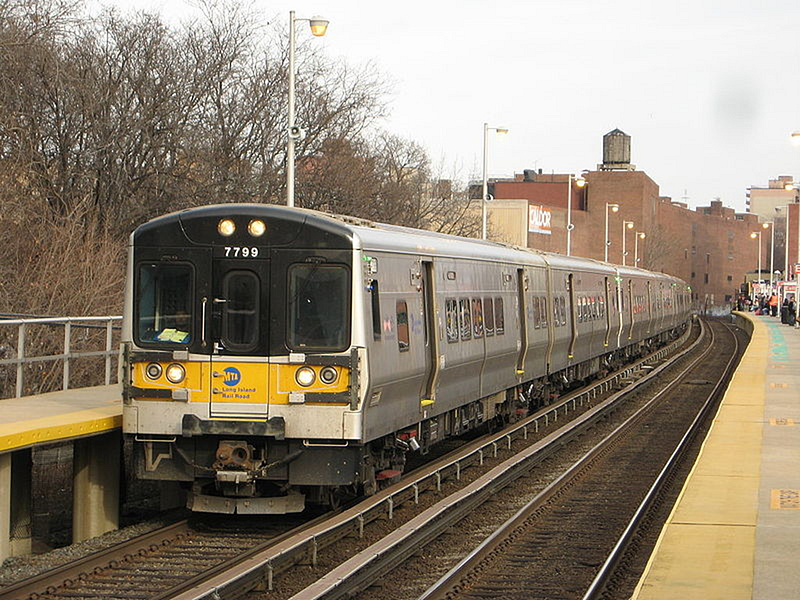
Description English: LIRR Port Washington Branch train, led by M7 #7799, enters the Flushing station. Author Adam E. Moreira. This file is licensed under the Creative Commons Attribution-Share Alike 3.0 Unported license. CC BY-SA 3.0 Deed | Attribution-Share Alike 3.0 Unported | Creative Commons File: Bombardier M7 7799 enters Flushing.jpg — Wikimedia Commons No changes made.
Description English: Long Island Rail Road train #2820, an eight-car train on the Far Rockaway Branch, departs the Cedarhurst Station en route to Far Rockaway. Author AEMoreira042281. This file is licensed under the Creative Commons Attribution-Share Alike 3.0 Unported license.CC BY-SA 3.0 Deed | Attribution-Share Alike 3.0 Unported | Creative Commons File: LIRR Train 2820 leaves Cedarhurst.jpg — Wikimedia Commons No changes made.

LIRR bought new M9 railcars from Kawasaki in 2013. A 2014 MTA forecast indicated that the LIRR would need 416 M9 railcars, 180 to replace the outdated M3 railcars, and 236 railcars for the additional passengers expected once the East Side Access project is complete. The first M9s entered revenue service on September 11, 2019.

Diesel and Dual-Mode Fleets

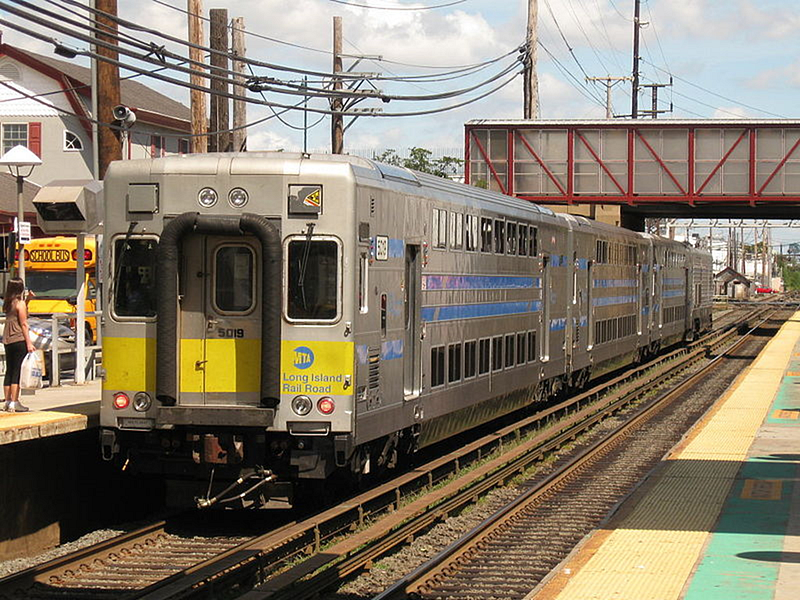
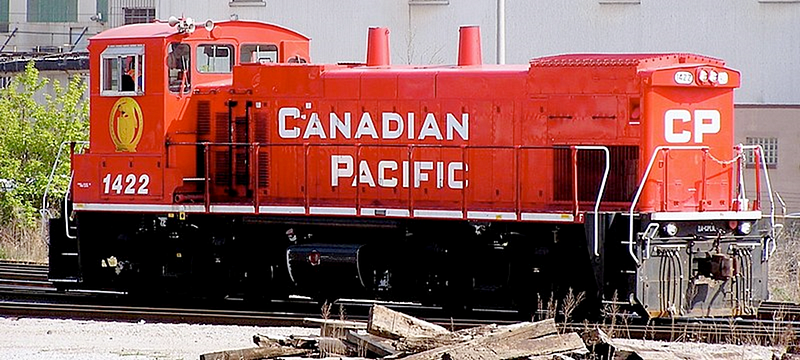
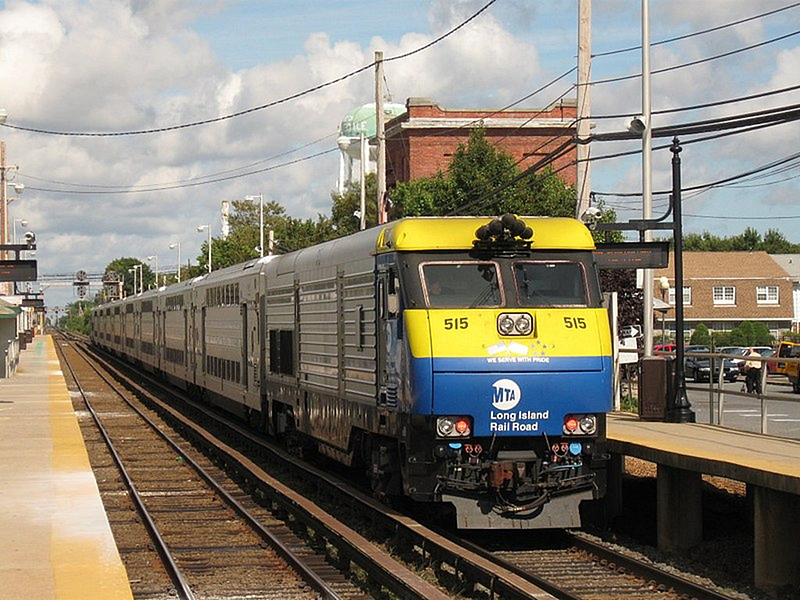
The LIRR uses 134 C3 bilevel coaches powered by 24 DE30AC diesel-electric and 20 DM30AC dual-mode locomotives. Most are used on non-electrified branches, including the Port Jefferson, Oyster Bay, Montauk, Central, and Greenport Branches. There are also 23 MP15AC locomotives, such as work trains and yard switchers.
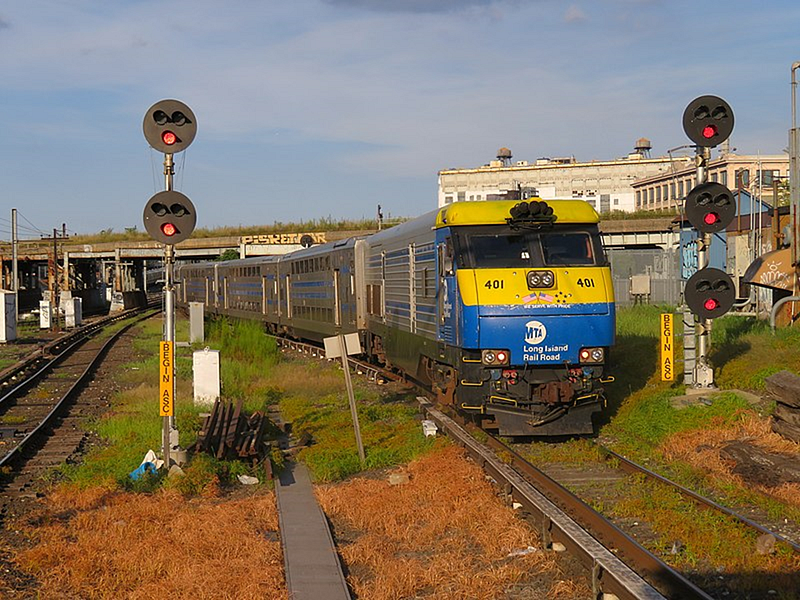
DE30AC Description English: A Port Jefferson-bound train leaving Hunterspoint Avenue station in September 2018. Author Pi.1415926535. This file is licensed under the Creative Commons Attribution-Share Alike 3.0 Unported license.CC BY-SA 3.0 Deed | Attribution-Share Alike 3.0 Unported | Creative Commons File: Eastbound train leaving Hunterspoint Avenue station, September 2018.JPG — Wikimedia Commons No changes made.
File: LIRR EMD DM30AC 515 pushing Train 8054. jpg. Description English: Long Island Rail Road #515 pushing Train 8054, a Ronkonkoma Branch train rerouted via Babylon and Central Branches due to construction at Queens Interlocking. Author AEMoreira042281. This file is licensed under the Creative Commons Attribution-Share Alike 3.0 Unported license.CC BY-SA 3.0 Deed | Attribution-Share Alike 3.0 Unported | Creative Commons File:LIRR EMD DM30AC 515 pushing Train 8054.jpg — Wikimedia Commons No changes made.
File: LIRR C3 5019 on Train 6506.jpg, Author AEMoreira042281. This file is licensed under the Creative Commons Attribution-Share Alike 3.0 Unported license.CC BY-SA 3.0 Deed | Attribution-Share Alike 3.0 Unported | Creative Commons File:LIRR C3 5019 on Train 6506.jpg — Wikimedia Commons No changes made.
File: Cp1422Mp15AcMilw2007.jpg. Description CP 1422 (nee Milw Road 486, Soo 1552) at Cutoff yard lead for CP’s Muskego yard in Milwaukee. Author Rrshooter. This file is licensed under the Creative Commons Attribution-Share Alike 4.0 International, 3.0 Unported, 2.5 Generic, 2.0 Generic, and 1.0 Generic license. CC BY-SA 4.0 Deed | Attribution-Share Alike 4.0 International | Creative Commons File: Cp1422Mp15AcMilw2007.jpg — Wikimedia Commons. No changes made.

Named Trains.

LIRR has served commuters for most of its existence. It has had numerous named trains. Some of its trains had seating that was all first-class seating.

They also have had parlor cars and full bar service. After World War II, there were few of those trains that existed. LIRR reused some of the train names during the 1950s and 1960s because the railroad expanded its east-end parlor car service with luxury coaches and Pullman cars from railroads that were discontinuing their passenger trains.

Current Named Train

  • Cannonball is a Friday-12-car train to Montauk running May through October, with two all-reserved parlor cars with full bar service. Since May 24, 2013, it has originated at Penn Station with a Sunday evening return from Montauk; the westward train stops at Jamaica. The two rear cars (“Hamptons Reserve Service”) have reserved seating and exclusive bar service.
  • The name is a nod to the Cannon Ball, the all-year train to Montauk from the 1890s until the 1970s. It carried parlor cars and standard-fare coaches and ran weekday afternoons from Long Island City, then from Penn Station until 1951, when DD1 (boxcab electric locomotive) operation and changing engines at Jamaica ceased.
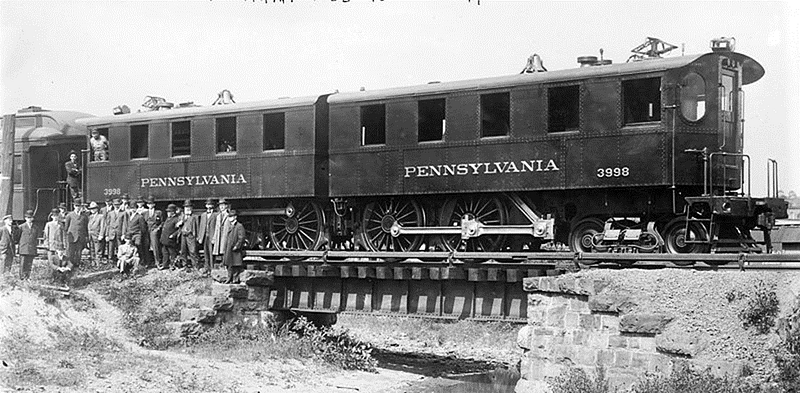
File: PRR DD1.jpg. Pennsylvania Railroad electric locomotive, class DD1. Photo at the Library of Congress’ Prints and Photographs collection. Public domain by age; LoC classification card states, “No known restrictions on publication.” This media file is in the public domain in the United States. This applies to U.S. works where the copyright has expired, often because its first publication occurred before January 1, 1928, and if not, due to lack of notice or renewal. File: PRR DD1.jpg — Wikimedia Commons Wikipedia:Public domain — Wikipedia No changes made.

Former Named Trains of LIRR

  • Fisherman’s Special (1932–1950s) from Long Island City to Canoe Place Station and Montauk via Jamaica, April through October, terminating at Canoe Place in April, extended to Montauk in May. She has served the Long Island fishing trade.
  • Peconic Bay Express/ Shinnecock Bay Express (1926–1950) from Long Island City to Greenport and Montauk, Saturday express to Greenport and Montauk. It was discontinued during World War II, though revived for a few seasons afterward.
  • Shelter Island Express (1901–1903, 1923–1942) from Long Island City to Greenport, a Friday-summer express connected to Shelter Island ferries.
  • Sunrise Special (1922–1942) ran during the summer, NY Penn to Montauk on Fridays and westbound Mondays. In the summer of 1926, it ran day-to-day — all parlor cars (no coaches) from 1932 to 1937.

This is the end of article six of an eight-article series on Long Island Rail Road. In this article, we looked at train crew responsibilities, control towers and centers, signals and safety systems, power transmission, electric fleet, diesel and dual-mode fleets, named trains, current named trains, and former named trains of LIRR.

All articles in the series will have the same title. The subtitles will also be similar, except each article will be numbered in its unique number. For example, this article is article six of an eight-article series; you will find the article number at the end of the subtitle. We hope that you enjoy reading this series of articles.

If you enjoyed reading it and are inclined to comment, we welcome you; providing your comment is constructive and helpful. Please consider joining Medium, and please join my email list. When I write something new, the system will notify you. My writing success depends on readers like you who appreciate and support my writing. Thanks so much for taking the time to read and help me.

Nonfiction
Productivity
Transportation
Travel
Illumination
Recommended from ReadMedium