
Music / Song Review
You Need to Listen to This Song Right Now #64
Heavy Rotation — I’ll Be You, The Replacements (Don’t Tell a Soul, 1989)
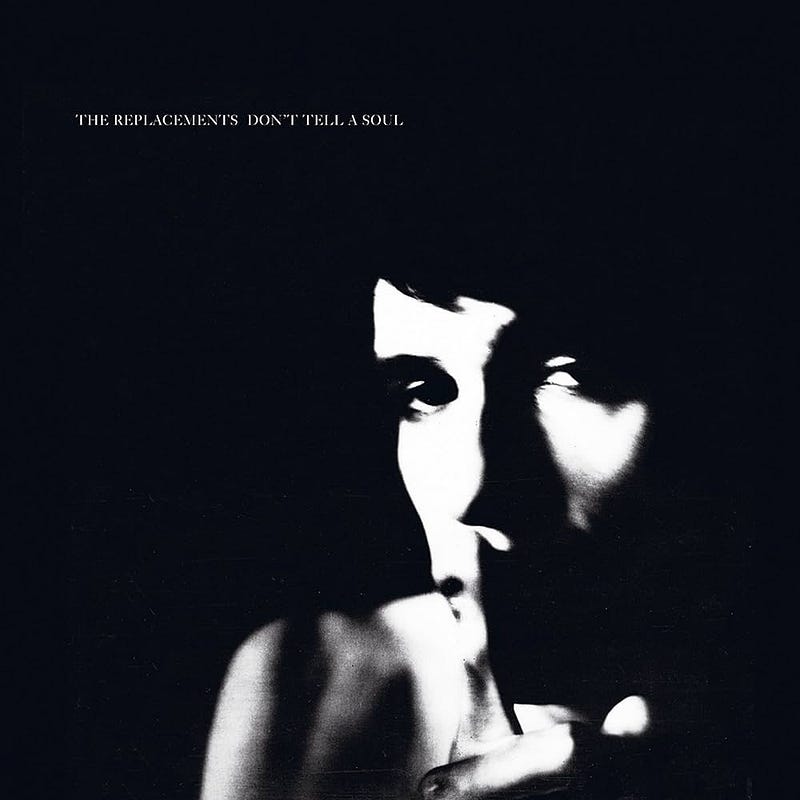
Incessant Airplay. That’s how they used to sell music, and heavy rotation was a music industry term for songs that, one way or another, got it. It referred to the large number of times a particular record was placed on turntables at radio stations. Until the 1980s, this was the only way to get new music into the ears and brains of listeners, so heavy rotation meant increased sales — good for record companies and artists alike.
Some people still spin records at home and let them play. Most don’t. However, the term still applies, just in a different way. Streaming services like Spotify sell subscriptions to listeners and then pay artists based on listens. At least, that’s the way we think it works.
For me, heavy rotation means a song that is in my head for some reason. Maybe for a moment, maybe for a day, maybe for longer. It’s a song that I come back to time and again, and it still feels just as good. This series of articles is dedicated to these songs.
My aim here is to highlight a particular song by a particular band or singer. It’s good to know a bit about the band, a bit about where the song fits into its history, and where the song fits into what was happening in music at that time. Then there’s the song itself. Who’s playing on it, what are the lyrics getting at, and why is it so good? How does it still occupy sonic space in our lives?
I’ll (try to) keep it short. It shouldn’t take you any longer to read this than the song itself. To that end, I put a YouTube video of the original recording at the top of the article so you can listen as you read. Or not. And because a song is often much different live than in the recording studio, I stick a live clip on at the end.
What song is in your head right now? Here’s the one that won’t leave mine today:
#64 — I’ll Be You, The Replacements (Don’t Tell a Soul, 1989)
They called it “College Rock” in the late 80s. As a genre, “Alternative” would have to wait a few more years to be invented by the music industry in the 1990s.
If you were into music outside of the mainstream in the late 80s — the stuff not getting played on the radio or only very late at night on the music video channels — then you probably were listening to music filed under this catch-all by the industry. They didn’t know where else to put it and weren’t sure how to make money off it.
Yet.
I had little idea what it was because I was not yet in college. But I knew that on the very last page of my issue of Rolling Stone magazine that I bought at the 7–11 every two weeks, I would skip past the other chart listings and go straight for the one titled College Rock. This must be the music the truly cool, in the know and therefore, in college, people were listening to.
Alternative came later. There was no Nirvana, no Pearl Jam, no Soundgarden. But week after week, there would be references to bands like REM, Hüsker Dü and the Pixies.
And there was another one that was mentioned constantly: the Replacements. Shambolic, all over the place, post-punk power pop from Minneapolis, led by Paul Westerberg, that sounded like it was made in someone’s garage.
By the time I came to them, six albums in, they were either on the verge of greatness or a drugs and alcohol-fueled implosion. Their chaotic performance on Saturday Night Live in 1986 caused them to be banned from the show permanently (along with Rage Against the Machine, Cypress Hill, and Elvis Costello, it has to be added).
All it did was gain them more fans.
A few years later, they were the first show I tried to sneak into with a fake ID. The bouncer at the door that night in 1991 wasn’t fooled, and I was turned away, in despondent disbelief.
I managed to punt my ticket onto someone else, but my grief was only heightened when, after I’d trudged back to my car and headed out of the parking lot, the four disheveled members of the ‘Mats (as their fans called them) walked right by us on their way to the show. I was too stunned to beg them for help, and they didn’t look like they’d have been all that interested anyway. I had missed my chance because they broke up for good soon after.
This song, I’ll Be You, comes from their fifth album, “Don’t Tell a Soul.” It is their highest — and as a matter of fact, only — charting single, and the album itself represents a real departure from the four that came before it. The DIY (do-it-yourself) in the basement ethos of previous albums was gone, replaced by a highly produced set of radio-friendly songs.
And what we get is three minutes and thirty seconds of pure late 80s power pop. A driving rhythm guitar and standard 4/4 bass and drums lead us to a trilling piano by Benmont Tench (from the Heartbreakers), which brings us into the first gravelly Westerberg vocal.
“If it’s a temporary lull
Why’m I bored right outta my skull?
Man I’m dressin’ sharp an’ feelin’ dull”
Disillusioned and desperate, the melancholy tune with uplifting music through major chords is not atypical of the time. People listening still had to leave feeling pretty good. The starting bad and ending even more anguished that others felt the same as you, that came later.
“A dream too tired to come true
Left a rebel without a clue
And I’m searching for something to do”
He’s pretty much over it, Westerberg. They’ve been at this for going on ten years, and the time for “it’s either going to happen or it isn’t” has already passed. They’ll give it one last go with this and another final album in 1990 — “All Shook Down” — but he’s had it.
“And I could purge my soul perhaps
For the imminent collapse
Oh yeah (Oh yeah),
I’ll tell you what we could do
You be me for a while
I’ll be you”
Will you trade places with me, and you can try to do what I do for a while, and I’ll do what you do and see if I like that better? Maybe when we switch back, you can tell me if I need to bother with what I’m doing anymore.
A chord and octave change gives him one last charge to the finish, but he still doesn’t know what’s next. “Won’t you tell me what I should do?”. There is urgency in the melancholy, but it’s all for not.
The Replacements would call it a decade after their sixth album in 1990. Paul Westerberg’s next act was to score the film “Singles” soundtrack in 1992 and add two solo songs. He’s still around and touring, and the Replacements even reformed briefly in 2015.
This song is one of their best, in my opinion, and perfectly captures the mood of the time…just before there was any money in doing that.
As I said, my hopes of ever seeing the Replacements were dashed at the door. But here they when it first came out in 1989
And during their reunion in 2015.
If you’ve made it this far, it will occur to you that if this is #64 in this series, then there must be 63 previous ones. Well, right you are, and here I will link access to the list of all of them, starting from the latest installment all the way down to the first!


