
Music
You Need to Listen to This Song Right Now #26
Heavy Rotation — Overkill, Men at Work (Cargo, 1983)
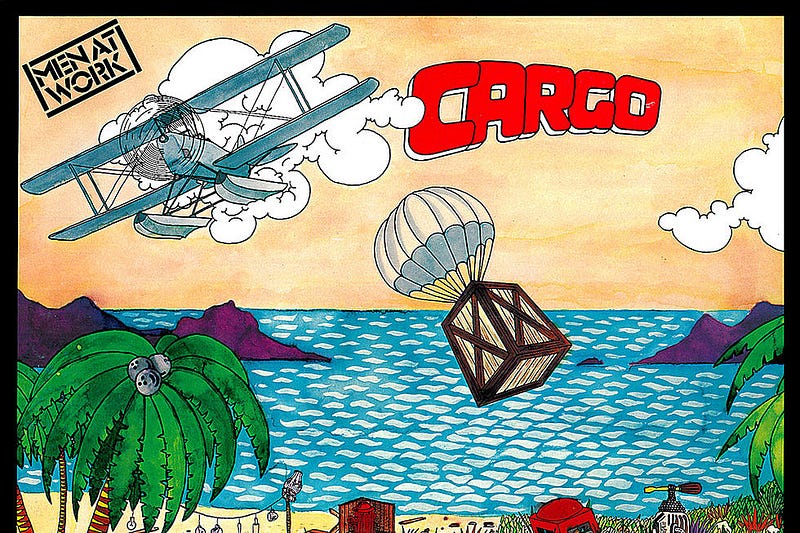
Heavy Rotation was a music industry term for songs that, one way or another got lots of airplay. It referred to the large amount of rotation that a particular record was given on turntables at radio stations. Since until the 1980s, this was the only way to get new music into the ears and brains of listeners, heavy rotation meant increased sales. These were good for record companies and artists alike.
Today, some of us still put records on at home and give them a spin. Most of us don’t. However, the term still applies, just in a different way. Streaming services like Spotify sell subscriptions to listeners and then pay artists based on listens. At least, that’s the way we think it works.
For me, heavy rotation means a song that is in my head for some reason. Maybe for a moment, maybe for a day, maybe for longer. It’s a song that you come back to from time to time and still feels just as good.
This series of articles is dedicated to these songs.
Here, I aim to highlight a particular song by a particular band or singer. We should know a bit about the band, a bit about where the song fits into its history, and where the song fits into what was happening in music at that time.
Then there’s the song itself. Who’s playing on it, what are the lyrics getting at, and why is it so good? How does it still occupy sonic space in our lives?
I’ll (try to) keep it short. It shouldn’t take you any longer to read this than the song itself. To that end, I’ll put a Youtube clip of the original recording at the top of the article so you can listen as you read. Or not. And because a song is often much different live than in the recording studio, I’ll stick a live clip on at the end.
What song is in your head right now? Here’s the one that won’t leave mine today:
#26 — Overkill, Men at Work (Cargo, 1983)
Anyone with even a passing understanding of or interest in popular music in the 1980s has heard “Down Under” by Men at Work. It is easily their biggest and most recognizable hit, and if I never hear it again, I will be just fine.
Men at Work were an Australian band fronted by Colin Hay that burned very brightly and briefly in the early 1980s, on the strength of their debut album, “Business as Usual,” which spawned the aforementioned monster hit and also the memorable “Who Can it Be Now?”
Their follow-up album, “Cargo,” gives us Overkill, a song about dealing with alienation and anxiety that is at the same time as bright and as dark as any other I know.
The band produced a third album in 1985, “Two Hearts,” and then promptly disappeared from the scene, disbanding in acrimony after a supporting tour. Colin Hay has gone on to have a long solo career.
When Overkill was released, the band had already reached worldwide fame. I’ve always wondered how a songwriter approaches a second album. They have their whole lives to gain the experience to write the first one and then typically have about 18 months to come up with the second.
Often, the sophomore work falls flat, and the band is never heard from again, consigned to “one-hit wonder” status. What happens in those 18 explosive months of what is usually constant touring, to say nothing of the fame, the money, the achieving of goals, the pressure on oneself, the walls constantly closing in, everybody wanting a piece — and what does it do to the creative energy that created the music in the first place?
I always felt that this song attempted to answer that question. The music itself is at turns melancholic yet hopeful. The lyrics, though, seem to be a bit darker, coming from a place of anticipation bordering on foreboding and anxiety that threatens to take over and yet can be dealt with and kept under control at the same time.
During the daytime, everything is ok, at least on the surface. It’s in the nighttime when the cracks start to appear, and the search is on for a bit of light to infiltrate them. Who among us can’t relate, even at times?
Things kick off in the introduction with a hint of the clarinet that will become central later in the song. Hay’s distinctive, plain-spoken lyric comes in quickly at 00:16
“I can’t get to sleep,
I think about the implications
Of diving in to deep
And possibly the complications
Especially at night,
I worry over situations”
He’s pulled an old trick out of his hat, choosing wording in the B line of the A/B couplets in the opening stanza that are easy-to-find rhymes. That, and the chugging drum beat and bass line, created the song's rhythm. The guitar plays the same role, filling in the blanks.
“Day after day, it reappears,” he sings, a bit more emotively. The 4 note bar of the clarinet returns as 00:47, just as plaintively, and it won’t be the last time we hear it.
“Night after night
My heartbeat shows the fear
Ghosts appear
And fade away”
Are the ghosts from his past coming back to haunt him again? If they fade away, does he know how to deal with them? Or are they things he is tormented by in his present?
In verse two at 1:07, the singer is determined to do something about the creeping anxieties he feels at night. He knows they are there, but he all knows that he can deal with them:
“Caught between the sheets,
Only brings exasperation.
Time to walk the streets,
Smell the desperation”
He knows he needs to get out of his own head and seek some distraction out of the house. “At least there’s pretty lights, though there’s little variation. It nullifies the night, from overkill”
That’s the key line right there: the night and its torments can be kept at bay, after all.
The second chorus and that inimitable clarinet at 1:35 are followed by the bridge at 1:59, and now a lead guitar comes in. I love this part from 1:59 to 2:26. The shimmering guitar reminds me of the smooth sound that I want to hear at golden hour, and the sun is going down, even though I know the night is coming, and I want that moment and sound to hang in the air for a bit.
At 2:40, the first verse is repeated, though an octave higher, pushing forward the urgency of the singer’s thoughts. He knows he’s in deep, but experience tells him that he “knows he’ll be alright; it’s just overkill.”
Hay repeats that “Ghosts appear and fade away” as if reassuring himself and, by extension, we, the listeners, that things are going to be ok.
In the end, thoughts come, and thoughts go. You may not want them, but you must acknowledge that they exist, even if you don’t accept them. Your own experience of letting them enter but then letting them leave just as quickly is your guide.
Here they are live on TV in 1983,
And then, 35 years later. If you like this song, and even if you don’t, I defy you not to let the goosebumps take over here.
If you have made it this far, it will occur to you that if this is #26 in this series, then there must be 25 previous ones. This is a correct assumption, and here I will link #25. At the bottom of it, you find a link to #24, and the bottom of it, you can — if you so choose — be taken to #23. This ingenious system that I thought up all by myself continues all the way to #1
I really do hope that you like what you have just read. If you want unlimited access to thousands of writers, consider a subscription to Medium. It will set you back $5 a month and if you use the link below, then I get a slice of that and will put it towards seeing a sunset on a beach in Australia one day with this song playing.


