
Music
You Need to Listen to This Song Right Now #38
Heavy Rotation — Turn It On Again, Genesis (Duke, 1980)
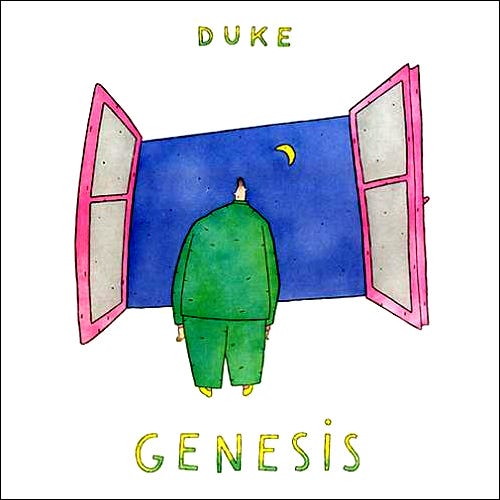
Heavy Rotation was a music industry term for songs that, one way or another got incessant airplay. It referred to the large amount of rotations that a particular record was given on turntables at radio stations. Since, until the 1980s, this was the only way to get new music into the ears and brains of listeners, heavy rotation meant increased sales. These were good for record companies and artists alike.
Today, some of us still put records on at home and give them a spin. Most of us don’t. However, the term still applies, just in a different way. Streaming services like Spotify sell subscriptions to listeners and then pay artists based on listens. At least, that’s the way we think it works.
For me, heavy rotation means a song that is in my head for some reason. Maybe for a moment, maybe for a day, maybe for longer. It’s a song that you come back to from time to time and still feels just as good.
This series of articles is dedicated to these songs.
Here, I aim to highlight a particular song by a particular band or singer. We should know a bit about the band, a bit about where the song fits into its history, and where the song fits into what was happening in music at that time. Then there’s the song itself. Who’s playing on it, what are the lyrics getting at and why is it so good? How does it still occupy sonic space in our lives?
I’ll (try to) keep it short. It shouldn’t take you any longer to read this than the song itself. To that end, I’ll put a Youtube clip of the original recording at the top of the article so you can listen as you read. Or not. And because a song is often much different live than in the recording studio, I’ll stick a live clip on at the end.
What song is in your head right now? Here’s the one that won’t leave mine today:
#38 — Turn It On Again, Genesis (Duke, 1980)
Prog rock. The term itself brings to mind complicated, not particularly radio-friendly, sometimes difficult to follow, sometimes way too long for one song, somewhat overwrought and over-intellectualized music from the 1970s.
Maybe that’s a bad rap. Maybe it’s not.
The prog stood for progressive. I think that means that bands such as Pink Floyd, Yes, Procol Harum and even Rush sought to build on the pop rock of the 60s and built on it by bringing in other sounds from other music and calling it progress. They fancied themselves as musicians’ musicians, and maybe that’s why that genre was never all that popular outside of the immediate following of such bands.
I can imagine the Pink Floyd fans in my legions of readers are losing their minds right now. I’m sure someone who knows more about this than I do will be beyond happy to set me straight.
Genesis was such a prog rock band and had recorded six albums when Peter Gabriel left in 1975 for the greener pastures of a solo career. Pastures that indeed turned out to be neon green for a while.
His departure probably could have been it, and not many people would have taken much notice of their demise. But when Phil Collins heroically stepped out from behind his drum kit and assumed lead singing duties on the seventh album, “Trick of the Tail” in 1976, things started to move in a different direction.
The rest was not yet history as they remained a prog rock/art rock/theatre rock band not without loyal adherents, but without a big breakthrough as yet, over the course of the next three albums.
The fourth album with Phil Collins at the helm, alongside Mike Rutherford's guitar and Tony Banks's keyboards, “Duke” in 1980 finally provided the song that would signify a change in music and presentation. A relatively straightforward but strangely difficult to dance to, rock number called “Turn it On Again.”
There are a few interesting points about the song, beginning with the fact that the guitar riff and the piano chords mirror each other. Additionally, the song is written in 13/8 time instead of the usual straight-ahead 4/4.
I don’t know enough about music even to begin to explain what that means.
A high hat, a staccato guitar string, and a repetitive bass provided by the synthesizers bring us in. Then the voice of Collins counts in the first guitar chord at 00:14. Two of those and then into an immediately recognizable riff. Collins’ also familiar drums come in at 00:30, and the song is off.
The lyrics of the song, written by Rutherford, are derived from a 1979 film called “Being There,” in which a man is raised on TV from a small child and, as an adult, knows nothing else outside of that world.
The song itself is a commentary about the line between TV and reality and how easily blurred it can become. Forty years later, one imagines that any form of social media could replace television in the lyrics as to how the idiocy of the masses is upon us.
Or perhaps, is just continuing.
Collins now, at 00:37, “All I need is a TV show / that, and a radio.” A simpleminded life for a simpleminded person. “I could show you / I could show you / Some of the people in my life.” The people he sees on TV are his world. “It’s driving me mad / it’s just another way of passing the day.”
He still has enough sense to know this isn’t good, but he has shrugged his shoulders and resigned himself to its pull. If he doesn’t, boredom will surely ensue.
One of the things I like about this song is the power, in terms of the soulfulness and the longing that it expresses in Phil Collins’ voice. Remember that this was before Genesis exploded a few years later, and his solo career is still some ways off. We haven’t yet heard “In the Air Tonight,” “Take Me Home,” “That’s All,” or even “Sussudio,” yet.
It shows up beautifully in the break at 1:13, “I get so lonely when she’s not there.” The TV has become his companion, and he doesn’t know what to do without it. But it’s not only his voice that we’ll remember, but his distinctive drumming style — heard most clearly in the fill at 1:33 — that brings us back to verse two. Those who remember “Easy Lover” that he did with Phillip Bailey will immediately spot the similarity.
“Do They Know it’s Christmas” is also Phil on drums, and the less said about that song, the better. But there he is at 1:38, chipping in with his sound. Anyway….
“You’re just another face
That I know from the TV show
I have known you for so very long
I feel you like a friend
Could you do anything for me?
Can I touch you for a while?
Can I meet you on another day?
And we could fly away”
TV and its unreal reality as life. It’s driving him mad.
The fade-out melody begins at 2:57 and leads us to the end. “I can see another face,” finishes Collins. Perhaps someone has finally pulled himself away from the TV then or the internet today.
From here, Genesis released “Abacab” in 1981, followed by their two biggest albums, a self-titled one in 1983 and “Invisible Touch” in 1986. There would be one more, 1991's “We Can’t Dance.” But by then, Collins’ solo career had also gotten as big as it would get.
At some point, I should probably mention Mike and the Mechanics. But this isn’t it.
Here they are, live in 1981 at the height of their powers.
If you have made it this far, it will occur to you that if this is #38 in this series, then there must be 37 previous ones. This is a correct assumption, and here I will link #37. At the bottom of it, you will find a link to #36; at the bottom of that, you can — if you so choose — be taken to #35. This ingenious system that I thought up all by myself continues all the way to #1.
I really do hope that you like what you have just read. If you want unlimited access to thousands of writers, consider a subscription to Medium. It will set you back $5 a month, and if you use the link below, then I get a slice of that. I’m going to buy this record. Just as soon as I get a record player.


