
You May Need a Tetanus Booster Only Every Thirty Years, According to New Research
At least 95 percent of you. But, even so, as an adult, you may not want to give up on the ten-year tetanus boosters yet.
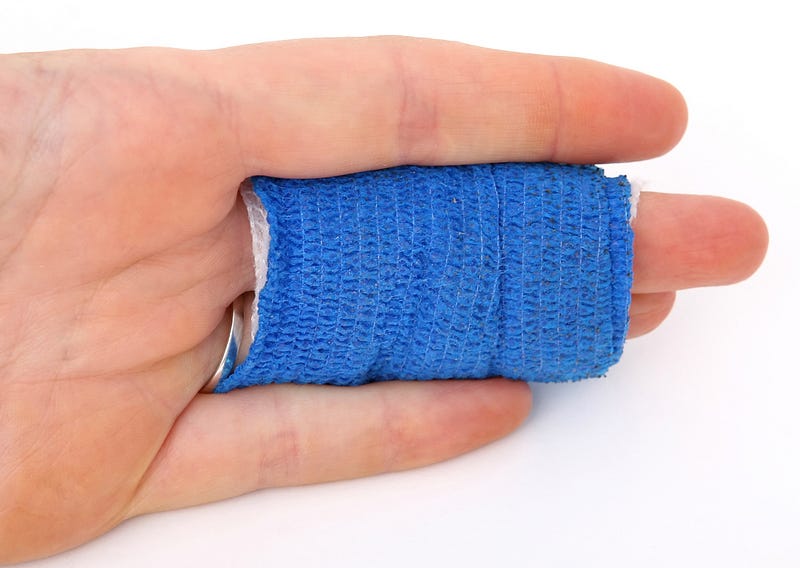
Two months ago, I hurt myself with a metal implement that might have been rusty, and once again, I worried that my tetanus immunization might not have been up to date. I’d had a tetanus shot in my thirties when I cut myself on the sharp-edged lid of a food can, but I couldn’t remember exactly when during that decade.
After checking online to check whether we need a tetanus shot every ten years or every five years (most websites said ten), I called to make an appointment with a medical provider and get that shot over and done with. As it happens, they were out of tetanus vaccines.
Weeks went by, and I forgot about this. But at the back of my mind, I kept thinking that people in the countryside often hurt themselves with really rusty implements, and they’re fine. I mean, how many stories of tetanus have you heard bandied about?
Of course, as I learned in my twenties from a biologist friend, the tetanus bacterium, Clostridium tetani, has little to do with rusted nails and other metal objects as such. I mean, it can be associated with rust when these implements are also dirty with soil, manure, or dust from them, but it’s not the rust that’s the telltale sign of a possible tetanus infection. In general, as the CDC says, the culprit is mostly soil rich in organic matter, especially in hot, humid climates.¹ It’s also found in the intestines and feces of animals and humans.²ᵃ ²ᵇ
Manure is included because, as I mentioned, this anaerobic bacterium lives in the intestines and feces of animals: dogs, cats, horses, sheep, cattle, and so on. (I don’t know about the other animals, but dogs and cats are usually resistant to it. Horses too.) But then why don’t dog and cat owners, not to mention farmers, get tetanus, I wondered? Maybe in the US, they get boosters, but I live in Romania, and people here only get a shot after a really bad cut. Sometimes it’s a soil-infested wound, but more often, it’s just a cut that involved rusted metal, of which there is plenty on farms, for instance (but not only there, of course).
Many people I know here in Romania have gone to the emergency room when they got a bleeding wound. The doctors treat all wounds carefully and, in the vast majority of cases, give you a tetanus booster — and, for some reason, from what I can tell, always when rust is involved. In general, however, a dirty wound can be contaminated with C. tetani.
Disclaimer: The information in this article is intended for general informational and educational purposes only. By using this article, you expressly agree that you do so at your sole risk. I am not a medical or health practitioner, and no part of this article, or the articles, websites, and products I mention and link to, is intended as professional medical or health advice and should not be considered as such. Consult with your doctor(s) about everything discussed in this article and about what’s best for you with regard to tetanus shots.
Getting tetanus can be horrible.
Here’s part of what the CDC “Pink Book” on Tetanus says.³ In 80% of the reported cases, people get the generalized form of this illness, which includes lockjaw, muscle stiffness in the neck that affects swallowing, and then convulsions in the abdominal muscles and other skeletal muscles, with spasms that repeat often and take up to minutes, for up to three or four weeks.
Symptoms also include fever, sweating, and elevated heart pressure and heart rate, and then there can be complications, which include aspiration pneumonia, pulmonary embolism, and even fractures.
When it’s not fatal (as it happens in 11% of the cases), the illness may take months to subside completely.
And getting the disease does not give a person immunity.
In the US, the disease is usually managed with tetanus immune globulin (TIG) and then with a tetanus shot. TIG, however, can’t fix everything because it can’t remove the tetanus toxin that has attached itself to nerve endings.
To make a long story short, I wondered about the number of cases since I have lived here and there, heard many life stories, read many books on contemporary life, and I’ve heard nothing about death from tetanus.
But then I’m living in a part of the world where the tetanus shot has been common after WWII, as it‘s been in the US, where it was commercially available in the current form in 1938 and then in the combined form known as DTP (Diphtheria, Tetanus, Pertussis) since 1948. I’ve also been reading too little literature from the world outside Europe and the Americas, and so I wasn’t aware how bad people have it elsewhere, in places like South Asia and South-Saharan Africa, when it came to tetanus.
Around the world, despite much improvement, things were dire in 1990, and they still don’t look good, many decades after this vaccine became available. True, the number of fatal cases dropped dramatically since 1990, when there were 275,379 confirmed deaths (it’s believed the current number is ten times as high), but in 2019 there were still 34,684 confirmed fatalities, 18,293 of them under the age of five.⁴ And the actual victims are, in turn, about ten times as many as the casualties because, as I mentioned, the illness caused by C. tetani is fatal in only 11% of the cases.
In contrast, in the US, since the 1970s, there were only 50–100 cases annually, according to the CDC,⁵ and if I understand correctly, these were cases of infection, not death from tetanus.
So things look good in the US. Those shots do what they’re supposed to do. (Of course, as with every vaccine, there are also precautions and contraindications for this one as well, but that’s another discussion.⁶)
But do these shots need to be ten years apart, or can they last longer? This thought came back to me now and then, and so one day, a few weeks after my February cut, I kept typing again and again: How often should you get a tetanus shot? And no matter how I phrased it (Should you get a tetanus shot every ten years / every five years? — I knew something about five years, too), I kept getting results after results about needing a booster every ten years after the initial shots received during childhood. To which the CDC added, “or after 5 years in the case of a severe or dirty wound or burn” (for adults receiving a booster dose of either Tdap or Td).⁷
I kept at it that day for more than two or three searches, knowing there should be more to it. I wasn’t willing to give up that easily that time because I’d been down that road every few years, wondering about that same thing! And then, finally, I hit gold on that same day: a 2016 study in the journal Clinical Infectious Diseases,⁸ reported in the news section of the OHSU (Oregon Health & Science University),⁹ that confirmed my initial suspicions that ten years may be overkill.
Read on, however, as this study has just made some things more complicated in terms of choosing between ten-year and thirty-year boosters.
Again, I am no doctor, and this is no medical advice, but here’s what the study concluded, or, rather, left up for discussion:
“Mathematical analysis of the magnitude and decay rate of antitoxin antibody responses predicts that 95% of the adult population remain protected for ≥30 years after vaccination.”¹⁰
When I read the report of the study in the news section of OHSU that day, there was no mention of this 95%, and I took the reported findings as good news. I thought that getting a booster at 30 and then at 60, as Prof. Mark K. Slifka suggested, sounded good. (Prof. Slifka is a co-author of the study and its public communicator for the news article.¹¹)
But things are more complicated, first and foremost because of that 95% but also for other reasons, which I didn’t latch on that first time because I was in a hurry and I wanted an answer, even if only a provisional one, to close my search for the time being and agree to decide when other scientists will pick up on these findings.
Here’s what gnaws at me. For one, this study was done on only 546 adults, which may not be enough.
Second, it was only one study.
Also, Prof. Slifka works at OHSU’s Oregon National Primate Research Center. After reading again the news article, where he is quoted, I did a double take at the study to make sure it was a study on adult humans, not adult primates.
Prof. Slifka mentions that some people, for instance, immigrants or older adults, may not have received at least three doses of tetanus, so they are “at highest risk for a fatal case of tetanus.”¹² Also, I’d add there may be many other people who, among themselves and their doctors, lost track of their number of tetanus immunizations. Maybe as kids, they didn’t get all the doses — the three childhood doses that Prof. Slifka and the CDC deem essential. So I disagree with Prof. Slifka here, if I may, where he says that even accounting for the people who may not have received at least three doses, the risk of dying from tetanus is “approximately 1 in 100 million”¹³ and say that the odds of not dying from tetanus in the US are that low because the vast majority of people did get those boosters. I thought that was obvious. Leave a 5% window in a large country like the US, and you may get lots of fatalities.
I also question the sample. It’s not clear from the study, at least not from the published paper, how many tetanus shots those people had received. Also, how representative of the general population was that sample?
Finally, again, the biggie: A thirty-year booster schedule for adults would leave 5% of people unprotected. That’s not good for something like tetanus.
I also don’t know how a load of infection works against the antibodies if this vaccine gets weaker over time. I know that if I got a bad wound or even a medium-bad one, I’d still want a tetanus shot.
Also, according to the CDC, a complete series of 3 doses in people aged 7 or older is “virtually 100%” effective.¹⁴ I assume the ten-year boosters offer the same efficacy. Why would I want then to get a booster as an adult only every thirty years and risk being among those five percent who are left unprotected against this awful illness?
I think it’s good that scientists are looking into this, but I believe (much) more research has to be done.
I hope this article has given you some food for thought. If you’d like to stay abreast of my new pieces on Medium, you can sign up for emails here.
But first, you may need to join Medium to be able to read them. If you do so with my referral link — Mira G. Eliodora — I’ll get a small commission at no extra cost to you. You’ll also get full access to every story on Medium and will get to support the writers you read most.
To a happier, healthier life,
Mira
References
1, 2a, 3, 5, 6. Tiwari, Tejpratap S.P., MD; Pedro L. Moro, MD, MPH; and Anna M. Acosta, MD. “Tetanus.” Centers for Disease Control and Prevention, August 2021. https://www.cdc.gov/vaccines/pubs/pinkbook/tetanus.html. Accessed 5 April 2023.
2b. “Tetanus Bacilli in the Human Intestine.” Journal of the American Medical Association, XLIX (18): 1531, 2 Nov. 1907. doi:10.1001/jama.1907.02530180049006, https://jamanetwork.com/journals/jama/article-abstract/445612. Accessed 5 April 2023.
4. Behrens, Hannah; Sophie Ochmann; Bernadeta Dadonaite; and Max Roser. “Tetanus.” Our World in Data. https://ourworldindata.org/tetanus. Accessed 5 April 2023.
7. “Tdap (Tetanus, Diphtheria, Pertussis) VIS” [Vaccine Information Statement]. Centers for Disease Control and Prevention, 6 August 2021. https://www.cdc.gov/vaccines/hcp/vis/vis-statements/tdap.html. Accessed 5 April 2023.
8, 10. Hammarlund, Erika; Archana Thomas; Elizabeth A. Poore; Ian J. Amanna; Abby E. Rynko; Motomi Mori; Zunqiu Chen; and Mark K. Slifka. “Durability of Vaccine-Induced Immunity Against Tetanus and Diphtheria Toxins: A Cross-sectional Analysis.” Clinical Infectious Diseases, 62(9): 1111–8, 1 May 2016 (online: 21 March 2016). https://doi.org/10.1093/cid/ciw066, https://academic.oup.com/cid/article/62/9/1111/1745278. Accessed 5 April 2023. Erratum in Clinical Infectious Diseases, 63(1): 150, 1 July 2016 (online: 10 June 2016). https://doi.org/10.1093/cid/ciw269, https://academic.oup.com/cid/article/63/1/150/1745586. Accessed 5 April 2023.
9, 11, 12, 13. “Study shows tetanus shots needed every 30 years, not every 10.” OHSU News [Oregon Health & Science University], 22 March 2016. https://news.ohsu.edu/2016/03/22/study-shows-tetanus-shots-needed-every-30-years-not-every-10. Accessed 5 April 2023.
14. “About Diphtheria, Pertussis, and Tetanus Vaccines.” Centers for Disease Control and Prevention. https://www.cdc.gov/vaccines/vpd/dtap-tdap-td/hcp/about-vaccine.html. Accessed 5 April 2023.