
You May Already Be A Winner
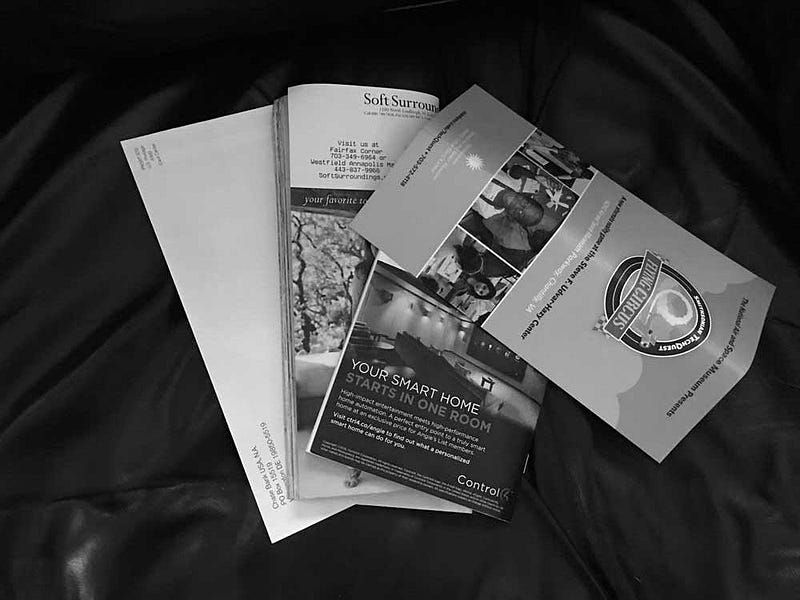
This culture must have had a lot of winners. Grace opens yet another musty-smelling letter proclaiming that the recipient might have already won a life-changing fortune. Millions of dollars! Just fill out the enclosed card and send it back, stupid! It’s that easy!
She finds it strange how many of these offers were never returned despite the promises of great wealth for almost no effort. Often, the envelopes waiting on her desk aren’t even opened. It’s up to her to slit the tops very carefully (preserving all writing and stamping on the outside) and review the contents. The messages are so enticing that she can barely resist the temptation to send back a card herself, just to see what would happen. But she won’t. Aside from the fact that she’d be fired for destroying vital artifacts, she knows that the sender no longer exists.
Instead, she places the documents in the scanner, watches the bright flash as they are converted into electronic files, and places the originals in a bulging green folder marked “WINNER.” Even if she gets dozens of the same item, they must be logged and scanned so they can be checked for regional variations.
Another pile of mail consists of labels that are printed with the recipient’s name and address and decorated with pictures of animals, flags, or crosses. These are always accompanied by letters soliciting donations for the organizations that made the labels. Someone must have gotten things backwards, Grace thinks; shouldn’t the recipient have sent the money before getting those?
These items are about as interesting as things ever get for Grace. Sometimes she envies Martin over in e-Archives. His department reviews whatever they can retrieve from electronic mail databases, and he works with the messages dubbed “Spam.” That name still baffles everyone. A tinned meat product named SPAM was commonly sold in grocery stores before the Event, but nobody has been able to figure out the connection between the meat product and the electronic messages beyond the basic idea that both were considered undesirable.
Some of the spam Martin retrieves makes Grace blush. It offers products she’d never need to use and describes what they’ll do for the user’s sex life in ways that have other archivists gathering around Martin’s station to howl with laughter, wondering aloud if penis size was a big problem for people back then.
The only thing Grace ever works with that gets that kind of reaction is the occasional catalogue from a place named “Victoria’s Secret.” Grace doesn’t know who Victoria was, but her secret apparently involved beautiful women posing in revealing and expensive underwear. Sometimes the head office has to issue stern warnings when these catalogues mysteriously vanish from the “VICTORIA” files.
But most of what she opens and scans isn’t very interesting. Banks apparently had great piles of money sitting around and were all too eager to offer it to anyone and everyone, but Grace can guess that none of that was as simple as the mailings make it sound.
Sometimes she wonders how so much of this stuff survived. Perhaps it was due to the sheer volume of it all. Maybe people kept it around because it offered great promise: Better bodies. Better homes. Better products. Better prices. Better churches. A better future.
A better future that never came.
Grace is about to finish up for the day when she notices an envelope that’s been caught between two piles of labels. It’s pastel pink, and the addresses are handwritten in loopy purple script. A sticker of a cartoon dog still seals the back flap. This isn’t the kind of thing she usually sees.
She’s supposed to reroute these to the “Personal Documents” group without opening them, but she can’t help herself. She’ll tell Pam she made a mistake, that she didn’t realize what she had until she’d already opened it. It happens.
She carefully slits the envelope open and pulls out a greeting card. A faint floral scent perfumes the paper. Purple and pink and blue balloons surround golden embossed words wishing the recipient the very happiest of birthdays. Inside, there’s a message written in purple ink:
“Happy birthday Mom. Sorry I couldn’t give you this in person, but we’ll get together next month. Miss you lots! Love you. Emily.”
Tears prickle Grace’s eyes; she pulls her glasses off and swipes the side of her hand over her face. Maybe it’s seeing a simple heartfelt message after months of wading through cynical advertising copy that got to her. Maybe it’s knowing that Emily’s mom never opened her daughter’s card.
Grace imagines writing back to Emily of the puppy stickers and the purple ink. “I’m so sorry your mother never saw your card. I hope you got to talk to your mom one last time. I hope you had a good life before everything happened.
“I hope you were a winner.”