
You Have the Power to Cause Pain
The surest way to guarantee you will is to imagine that you can’t.
I wondered if I’d heard her right.
“Butt-wipe.” That was what this woman had just called her preteen daughter, annoyed at her for getting injured on the playground.
Convinced my ears were functioning correctly, I turned quickly on my heel and left the room. I knew I should confront this flagrantly abusive language, but I also knew that I was likely just to aggravate the situation by allowing my own anger and disgust to be apparent, so I gave myself a moment to calm down before I sought the woman’s husband and attempted to explain the problem.
“Butt-wipe.” That was what she’d called her preteen daughter.
I don’t recall just what I said on that day 30 years ago, but I remember getting the impression he was more surprised by my reaction than by my report. He was a calm and gentle man, a good bit older than his wife. Her emotionality and her approach to parenting were nothing new to him. He said, “I’ll talk to her.” I think he did.
My head has cooled since then, but I don’t know if I would handle such a situation any better now. I’m still conflict-avoidant and uncomfortable with anger — mine or anybody else’s. And I still get furious inside when I see children being hurt.
But even then, I understood what made that mother willing to subject her child to such emotional abuse, because I’d seen the same phenomenon in clients I was working with in my psychology practice. It wasn’t just that she had no doubt gotten treated that way growing up, maybe even had the selfsame epithet thrown in her own face. No, the deeper problem was, she didn’t think her child cared what she said.
I’ve been retired a while now from psychology, but I still sometimes hear the same thing from my friends with teenage children. “They don’t care what I think. They don’t hear a word I say.”
Which of course precisely mimics what those children say about their parents.
Actually, both do hear what the other says, even when they act like they’re not listening. The posture is strategic, a defensive bluff. You must act tough, like nothing they say is affecting you, or they will know which words are finding targets in your psyche.
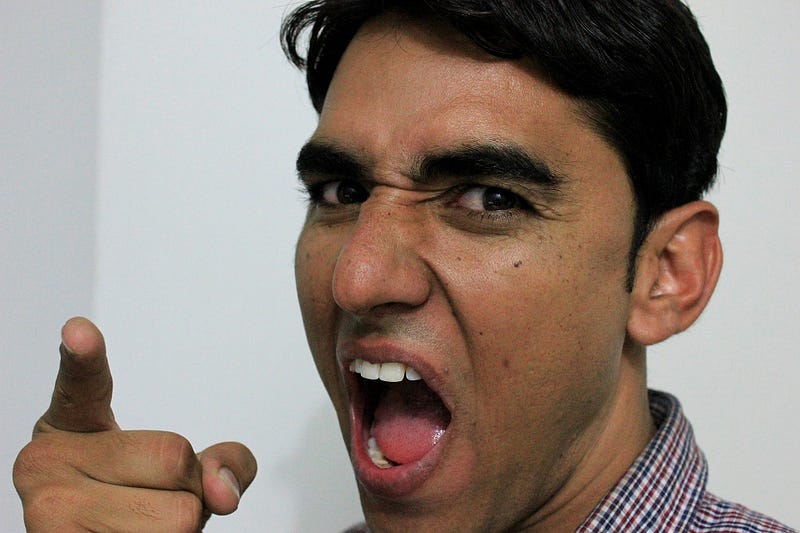
But when you act impervious, and the other needs to be heard, they’re going to keep on turning up the volume. Either literally, till they’re screaming in your face, or figuratively, escalating into ever stronger words and phrases, language chosen for its painful impact.
When you act impervious, they’re going to keep on turning up the volume.
When the confrontation has concluded, even if you managed to escape with your façade intact, the words hurled in an effort to break through your armor, launched like missiles by someone you love, have left you bruised or worse. You can’t help wondering within your heart of hearts, “Does my parent/sibling/child really think of me that way?”
When you grow up with abuse, you learn abusive scripts. You learn both roles — abuser and abusee — and you know which role you’d rather play. But you also learn that you will always be the helpless one, the one whose feelings never matter, so it just does not occur to you that you might ever be the one delivering the punishment.
Verbal/psychological abuse is far more common than physical, so common that we may not recognize it as abnormal. It wounds, though, wounds in places sticks and stones can never reach, especially when it comes from the important people in our lives. Children’s self-esteem is slow to heal, and when such injuries are chronic, may be permanently stunted.
You will always be the helpless one.
It’s especially hard to recognize abuse when we’re the ones who dish it out. After all, we’re just saying things that we ourselves have heard a thousand times, and we survived. (And why should my words matter? No one’s listening.) More to the point, we’ve become so used to being the receivers of demeaning words — and being helpless to prevent them — that we can’t imagine ever having power to hurt anybody else. Not that we would ever wish to, since we know how bad it feels.
And yet.
And yet, our children, if we listened patiently for long enough, might begin to tell us things about what they are suffering. Tell us things to break our hearts, because their sufferings are the same ones we went through, the ones we swore we would protect them from.
It isn’t just our children we endanger by refusing to believe that we could ever hurt another soul. No one close to us is safe from being stung by words we speak, because we feel so powerless, so sure no one will ever listen, hear, or care about what we might have to say.
So we say the words that come to mind most readily: bitter and sarcastic words reflecting our own sense of worthlessness and helplessness. Words that show our children how they make us feel like failures with their disrespect and disobedience. Words that show our partners how afraid we feel when they don’t pay attention to our needs. Words that show our friends the depth of our self-doubts when they refuse to take our side in every argument.
And we are genuinely shocked when any of those people tell us we have hurt their feelings. Don’t they know us? We’re the good guys. We would never wish a moment’s pain on anyone.
The worst abusers I have known or worked with were in every case well-meaning individuals who loved the people they were hurting. They couldn’t see the damage they were doing, since they couldn’t see their power, only everybody else’s. So they couldn’t understand why everyone they cared about avoided them.
A big man with a big voice. He’d never raise a hand against his wife or children, and he couldn’t fathom why they all would act afraid whenever he got angry. Sure he shouted; doesn’t everybody shout sometimes?
A little woman, generous with affirmations, quick with favors. She cared — cared desperately — about her family and friends, so why could they not understand her tearful outbursts only meant she was in pain? She didn’t really mean the things she said at times like that.
A dedicated teacher in his 60s, too small in stature to be threatening to anybody. His legendary wit once made him a popular personality at the high school, but he was burnt out now, just waiting for retirement, and he felt like no one listened anymore. Students dreaded the year they had to take his class, for his dark sarcasm could be devastating to the ones who gave what he considered stupid answers to his questions.
The people in your life are listening, even though they may not turn their heads in your direction. And if they care about you — which you must assume they do — they’re going to feel the impact of your words. If you love them, let that love come through in what you say and how you say it.
The world is full of dangers. Don’t be one of them.
.
.
More from Edward Robson, PhD:
The Sweetest Words in Any Language | by Edward Robson, PhD | ILLUMINATION-Curated | Medium
5 Reasons Dating is a Waste of Time | by Edward Robson, PhD | ILLUMINATION-Curated | Medium