
You Don’t Need to Hurt Others to be True to Yourself
“Brutal honesty” is not good enough a reason to create misery for others
You probably met this type: someone who talks bluntly, curtly, and tells everything “as is” (according to him or her), and bulldozes his or her way to a predetermined conclusion no matter what.
They sometimes call this “being brutally honest.”
Such characters carry their bloody executioner’s ax like a badge of honor, no matter what kind of wreckage they leave behind.
Make sure you’re not weaponizing your truth in the name of high morality.
My Mother’s Cheating Friend
Here is a true story from my late mother that left its imprint on me.
Once upon a time, we had a close family friend who was married but carrying out an affair on the side. Since the couple was close to our family, both the husband and the wife were my mother's intimate pals.
One day, the wife confronted my mother with the deadly question: “Is my husband having an affair?”
She added: “Because if he is, I’ll kill him even if I rot in prison for it.”
My mother was put on a tight spot.
Assuring herself that the wife was serious in her intention, my mom lied and denied that she knew anything about it. She, later on, confided to the man that his wife meant business and he’d better change his ways or else.
Eventually, the guy made good on his promise, ended the affair, the wife never knew that he ever cheated on her, and they lived happily thereafter, thanks to the fact that my mom refused to be “brutally honest.”
The story could’ve ended differently with more gore and pain for all. But the way it did end, it was a win-win for everyone.

Yet…
Yet, the episode bothered my sense of ethics even though I was still a young kid in middle-high school.
“You always tell me to tell the truth yet you lied to that woman. Why did you do that?” I asked my mother.
“There is nothing more precious than a person’s life,” my mother told me. “I lied because I was 100% convinced that she was going to kill him. I could not have lived with myself if I got a man killed just in the name of telling the truth. I just couldn’t do it.”
You may agree or disagree with my mother. But that was an exchange that left its mark on me since I cared a lot about what my mother believed in, and more importantly, how she behaved in a crisis like that.
It was one of my earliest lessons in complexity of life. I could sense that going through life would be a complicated back-and-forth tango over a bed of burning coals rather than an easy walk in the park.
Don't Create Fresh Trauma
For a lot of people “being true” to oneself becomes a license to trample over the wounds that many people carry. The “truth warriors” become a source of fresh trauma.
When you hurt others indiscriminately, such a principle (of telling the truth no matter what) may become another ugly way how an insensitive and careless Ego manifests and projects itself.
Where does being truthful stop and bullying begin? It’s a very fine line.
Weaponizing the Truth
You can almost hear this kind of person brag: “I’m superior because I always remain true to myself.”
“If you get hurt it’s not my problem since I’m being open and honest here” is another way they justify all the damage they cause to those around them.
Make sure you’re not weaponizing your truth in the name of superior morality.
What is Real Personal Strength?

If you keep defending your brutal ways by declaring “If you get hurt it’s not my problem”… is that a sign of real personal strength?
What is the difference between hurting someone by outright lies and hurting another by telling your version of the truth?
No difference since in both cases you are breaking the soul and spirit of a human being. The result is the same: you just take one more step to your isolation and loneliness and then perhaps wonder why your phone is not ringing.
Perhaps you are just too weak to sacrifice your untouchable “principles” in order to help someone or save a life.
Perhaps you are in “Pursuit of Happiness” at the cost of “Life” and “Liberty”?
Adam Sandler’s Truthful Professor
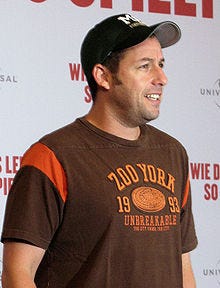
When actor Adam Sandler (the megastar of the critical hit Uncut Gems among others) was attending NYU, he had the misfortune of working with an acting professor who did not believe in his talent.
The NYU professor was one of those “brutally honest” types. He took out Sandler for a drink and gave him a piece of “honest” career advice: “Think about something else. Listen, you got heart, but you don’t have it. Choose another path.”
When years later, after becoming who he is today, Sandler met his professor at a party, the gracious and witty Sandler introduced him as “the only professor who bought me a beer.”
Most of the “truths” are usually nothing more than personal opinions that are proven to be false over time since everything changes and nothing remains the same.
Van Gogh’s Suffering in the Hands of Truth-Sayers
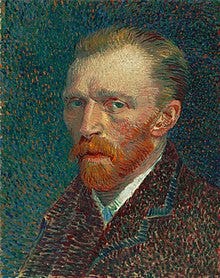
If you’ve read his heart-wrenching Letters you know how much Van Gogh has suffered in the hands of “truth sayers” all through his life.
With the exception of his brother Theo and Theo’s wife Johanna van Gogh-Bonger, no one believed in Vincent van Gogh and they thought it was their solemn duty to say that to his face. During the 10 short years (1880–1890) that he created all his masterpieces, he was told over and over again to quit painting and do something else.
In one memorable instance at the hospital in Arles where he was institutionalized during the last year of his life, Van Gogh meets a “truthful” priest who also tells him to do something else since his paintings are “ugly.” Imagine, looking back now with the benefit of hindsight, how wrong that tactless priest and all the other truth-sayers turned out to be.
The fact is, the belief in the worthlessness of Van Gogh’s paintings continued even after his death in 1890. At one point the family considered burning the 400-odd paintings and drawings that Vincent left behind. Today we owe the treasure of Van Gogh’s incredible art to his brother Theo’s widow Johanna who insisted on saving all his work since she was sure they would be priceless sometime in the future and time has proven her right.
Again, it’s worth repeating: what we hear as someone’s “honest truth” is usually nothing more than a personal opinion which, if you wait long enough, will turn out to be false.
How True is Your Truth?
Also, there is a larger epistemological issue of how we come to know the truth.
Let’s say you believe in your truth because you witnessed something in person. You were there and you actually saw what happened.
Still, I’d like to challenge you — how true is “your truth”?
How reliable your memory of the event is so that you cannot sit on it even to prevent a carnage?
An event has as many descriptions as its witnesses.
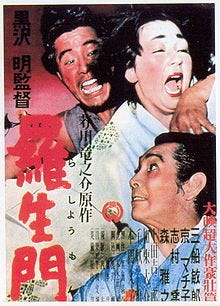
If you haven't watched Japanese master Akira Kurosawa's Rashomon I highly recommend it since this silver screen classic is all about the way the narration of an event changes according to the vantage point of the witnesses.
Witnessing is not Truth

Ask any police detective worth his or her salt and they’ll tell you how unreliable an “eye witness” can be. The academic literature is full of studies verifying how subjective, contradictory, and self-serving such accounts are (see the RESOURCES section at the end of this article).
When the notorious unreliability of witness reporting is such a well-established fact, with what kind of certainty can we defend our “truths” as inviolable, infallible, and sacrosanct?
Silence and Timing

I’d like to leave you with a practical method that always works when you find yourself in such an ethical bind: just keep your lips shut.
The alternative of not speaking “your truth” is not lying or fibbing. It’s keeping silent, at least for a while. Sometimes timing the truth makes all the difference in the world.
Sometimes timing the truth makes all the difference in the world.
If telling your truth right away is going to explode a bomb and cause massive collateral damage, you can always not say anything and wait for the storm clouds to pass over. And then gradually you can approach the issue kindly, in a way to address not only your own concerns but those of the others as well.
Great Advice by Hugh Prather on “Honoring Our Feelings”
Sometimes people defend “being brutally honest” as a way of “honoring” their feelings.
Here is a piece of excellent advice on that point by Hugh Prather from his Love and Courage:
“If ‘honoring our feelings’ is the goal, it’s also possible to beat pillows, scream into the wind, go for a run, or release our bodily tensions in some other harmless way.”

Don’t take the easy path.
Live a principled life but do no harm, don’t say the first thing that pops to your mind, and time your actions well.
That would be a life lived well while honoring the pain and predicament of the others.
— — — — — — — — — — — — — — —
RESOURCES: Academic studies on the unreliability of witnesses:
Hosch, H. M., Beck, E. L., & McIntyre, P. (1980). Influence of expert testimony regarding eyewitness accuracy on jury decisions. Law and Human Behavior, 4(4), 287–296. https://doi.org/10.1007/BF01040620
Loftus, E. F. (1980). Impact of expert psychological testimony on the unreliability of eyewitness identification. Journal of Applied Psychology, 65(1), 9–15. https://doi.org/10.1037/0021-9010.65.1.9
“Did Your Eyes Deceive You? Expert Psychological Testimony on the Unreliability of Eyewitness Identification,” by Fredric D. Woocher, Stanford Law Review, Vol. 29, №5 (May, 1977), pp. 969–1030 (62 pages)
Wixted, J. T., Mickes, L., Clark, S. E., Gronlund, S. D., & Roediger, H. L. III. (2015). Initial eyewitness confidence reliably predicts eyewitness identification accuracy. American Psychologist, 70(6), 515–526. https://doi.org/10.1037/a0039510


