avatarScott Stockdale

Free AI web copilot to create summaries, insights and extended knowledge, download it at here

3275

Abstract

ys you shouldn’t think about making money until you’ve put out one video a week for two years.</p><p id="e4fc"><i>Produce, improve, repeat.</i></p><h1 id="0d42">Step #2 — Up Your LinkedIn Game</h1><p id="f84d">You don’t have to post every day.</p><p id="f5df">You don’t even need to be active.</p><p id="2a23">By upping your game, I mean create a good-looking profile.</p><p id="a315">You know the drill. A quality headshot. A descriptive tagline. A list of experiences.</p><p id="b1c7">That sort of thing.</p><p id="2b86">It feels cringe to say this, but I’m going to say it anyway… <a href="https://www.linkedin.com/in/scott-stockdale/"><i>Look at my profile</i></a>. (Ick.) I’ve spent hours on LinkedIn, studying creators who’ve put together sweet-looking profiles.</p><p id="98ac">That’s not to say mine’s perfect — not by any means. If you have no idea where to start, though, follow my lead.</p><p id="2482">Here’s a summary of things to fix:</p><ul><li>Your headshot</li><li>Your banner image</li><li>Your tagline</li><li>Your URL</li><li>Your services (you can add these on your LinkedIn services page)</li></ul><figure id="8980"><img src="https://cdn-images-1.readmedium.com/v2/resize:fit:800/1*uHA36aN0NU2FBZTb65xBug.png"><figcaption></figcaption></figure><p id="83f5">Under your “Featured” section, include links to your best work.</p><p id="4a1e">One of these should be where you’re posting content. Others could be to personal projects or past work:</p><figure id="1cdf"><img src="https://cdn-images-1.readmedium.com/v2/resize:fit:800/1*3rRH0uZ0Vfyjzhxziw5IOg.png"><figcaption></figcaption></figure><p id="c7f3">Next, look at your “About” section.</p><p id="8507">Identify a problem, say how you help clients, and include recommendations. (More on this shortly).</p><p id="1add">If you’re a sucker for emojis, throw them in too. They help break up the text.</p><p id="d5b9">Also, make it clear you’re open to opportunities:</p><figure id="5436"><img src="https://cdn-images-1.readmedium.com/v2/resize:fit:800/1*zJQORbfUOkBO6Y9rFDbRMw.png"><figcaption></figcaption></figure><p id="3d2b">Recommendations. They’re great social proof, but they won’t come without asking.</p><p id="26ad">You have to go and get them.</p><p id="4b5c">If you haven’t worked with clients yet, consider asking friends. Past teachers are great too. They’re usually more than happy to give them (especially if you give one back).</p><p id="8b58">A few notes on this:</p><ol><li><b>Keep it short and sweet.</b> Acknowledge you’re asking for a favour.</li><li><b>Say why you want it. “</b>I’d like to attract more ___ opportunities, and a recommendation from you would be hugely beneficial!”</li><li><b>Give them an out. </b>“No worries if you can’t at this time.”</li></ol><p id="886d">Here’s an email I sent to one of my clients:</p><figure id="ec17"><img src="https://cdn-images-1.readmedium.com/v2/resize:fit:800/1*QRBD0emAtZfZpPor-FcJ_w.png"><figcaption></figcaption></figure><p id="f9e0">They responded back a couple of days later:</p><figure id="c3bb"><img src="https://cdn-images-1.readmedium.com/v2/resize:fit:800/1*2xoccsNvpxJvqP8hB5Je4w.png"><figcaption></figcaption></figure><figure id="ccca"><img src="https://cdn-images-1.readmedium.com/v2/resize:fit:800/1*purZNf4Gv-SWvPFrmsePeA

Options

.png"><figcaption></figcaption></figure><h1 id="a728">Step #3 — Jump on calls</h1><p id="43a0">When a potential client reaches out, jump on a call. This will help you understand what they’re looking for and how you can help.</p><p id="5c91">I told my first client that I hadn’t written for someone else before. I made it clear I was willing to learn, though, and I’ve been writing consistently for over a year.</p><p id="88ce">I also asked her lots of questions, such as when she’d want to start and the tone of voice she was looking for.</p><blockquote id="f10f"><p>“I like your newsletter. Write like that!”</p></blockquote><p id="a194">After 20 minutes, we agreed on actions.</p><p id="b310">She was going to email me examples of newsletters she’d written in the past. I was going to email her a proposal by the end of the week.</p><p id="bb92">The thing is, I hadn’t written one before.</p><p id="6cc6">However, I’d learned from other writers that this is the way to go. You can charge higher prices when you package things up.</p><p id="1882">I found a template online. I copied it. I then put together <a href="https://scottstockdale.co.uk/proposal">this ugly-looking Google doc</a>. I figured she wants to work with me for my writing skills — not my designs:</p><figure id="b428"><img src="https://cdn-images-1.readmedium.com/v2/resize:fit:800/0*o6ZpCoZCGKxpG9QF.png"><figcaption></figcaption></figure><p id="65d9">With pricing, I followed Michael Ellsworth’s advice: <i>charge your “happy price”</i>.</p><p id="1e5c">He recommends a series of gut checks.</p><p id="0b2a">For example, my first client wanted one blog post per month — 500 to 1000 words. I considered all the steps (writing, research, etc) and asked myself how long this would take.</p><p id="2053">Next, I considered an hourly rate that would make this worth my time.</p><p id="3d35">Slide up and feel the energetic shift. You want to go from “not worth my time” to “yeah, I’d do that”.</p><p id="c391">Here’s my <a href="https://scottstockdale.co.uk/proposal">proposal template</a> in case you’re interested.</p><h1 id="4dc0">Takeaways</h1><p id="fb0b">The hardest part of this strategy is the first step.</p><p id="b5a2"><i>You’ve got to have patience.</i></p><p id="999d">Follow it through, though, and the rewards can be great. You’ll attract clients. You’ll make money online. You’ll get to do more of what you love.</p><p id="02e4">The best part is you don’t need a website.</p><p id="8884">Here’s the TL;DR version of the strategy:</p><ul><li><b>Step #1: Consistently put out content on one platform for two years</b> — Do this whilst <a href="https://readmedium.com/getting-a-job-is-the-ultimate-lifehack-e6627241bdd6">working a job</a>. It’ll take the pressure off.</li><li><b>Step #2: Up your LinkedIn game</b> — It’s a goldmine out there. Fix your profile and let clients come to you.</li><li><b>Step #3: Jump on calls </b>— Learn their needs, set your price, and send a proposal. Most important of all? Keep it simple.</li></ul><blockquote id="89a7"><p><b>Want to ditch the 9–5? Get my free 19-page guide: <a href="https://scottstockdale.co.uk/quit">Everything I Did to Quit My 9–5 Job & Transition Into Profitable, Sustainable Solopreneuring</a> :)</b></p></blockquote></article></body>

You Don’t Need a Website to Make Money as a Freelancer

Follow these 3 steps instead

Photo by Domenico Loia on Unsplash

I was packing for New York when I got this message.

It made me smile:
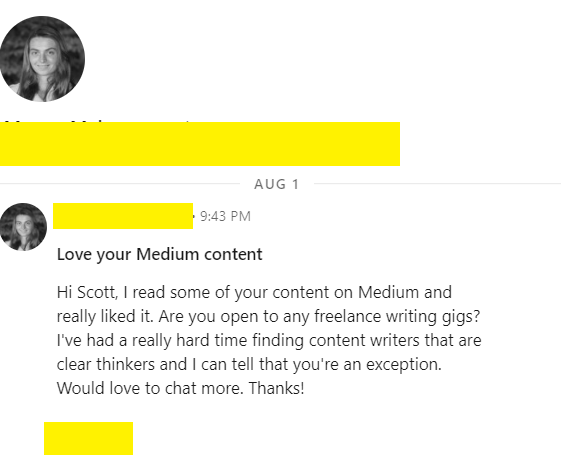
All screenshots taken by the author

We’re jumping on a call.

I’m confident she’ll become a client.

I have a “website” (it’s just a landing page), but it hasn’t hooked me any work. That’s not to say it won’t. There are successful freelancers who’ve turned their websites into money-making machines.

I just want to dispel the myth that you need a website to make money as a freelancer.

It’s simply not true.

I started freelancing eight months ago, and I haven’t pursued jobs (apart from one). They’ve come to me. Since then, I’ve made just under $3,000 from freelancing.

Now that I’ve quit my corporate job, I’m taking freelancing more seriously.

I’m aiming to make $5,000 a month by March 2023.

Here’s how you can make money as a freelancer (without a fancy website).
Step #1 — Consistently put out content on one platform for two years

Niharikaa is crushing it on Twitter.

Justin is a beast on LinkedIn.

Their formula is quite simple. Be consistent. Practice in public. Connect with others.

If you like videos, start with YouTube. Prefer audio? Launch a podcast. If words are your thing, write on Medium.

It doesn’t matter. All that matters is that you start.

Your first 100 pieces of content may suck. And that’s okay. You’ll be putting in the hours and improving your skills.

It’s not just me saying this. One of my favourite YouTubers, Ali Abdaal, preaches consistency.

Ali goes one step further. He says you shouldn’t think about making money until you’ve put out one video a week for two years.

Produce, improve, repeat.

Step #2 — Up Your LinkedIn Game

You don’t have to post every day.

You don’t even need to be active.

By upping your game, I mean create a good-looking profile.

You know the drill. A quality headshot. A descriptive tagline. A list of experiences.

That sort of thing.

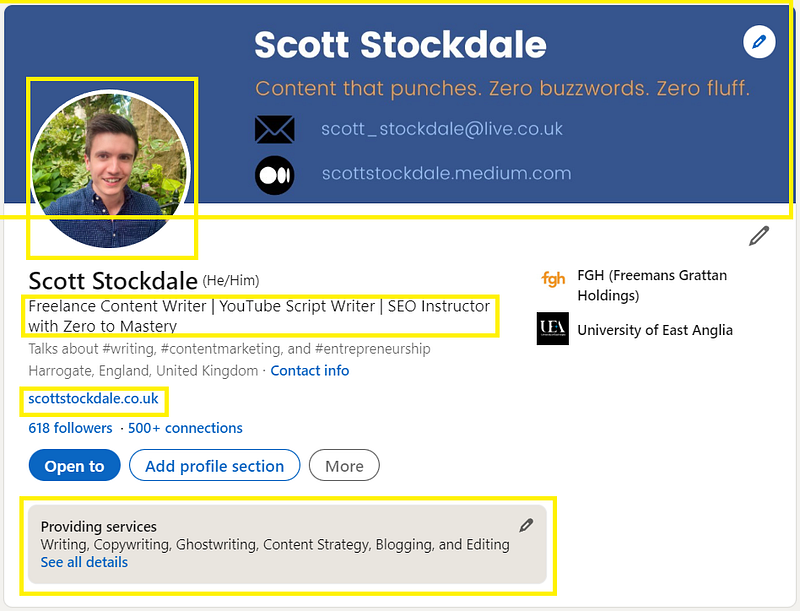
It feels cringe to say this, but I’m going to say it anyway… Look at my profile. (Ick.) I’ve spent hours on LinkedIn, studying creators who’ve put together sweet-looking profiles.

That’s not to say mine’s perfect — not by any means. If you have no idea where to start, though, follow my lead.

Here’s a summary of things to fix:

  • Your headshot
  • Your banner image
  • Your tagline
  • Your URL
  • Your services (you can add these on your LinkedIn services page)
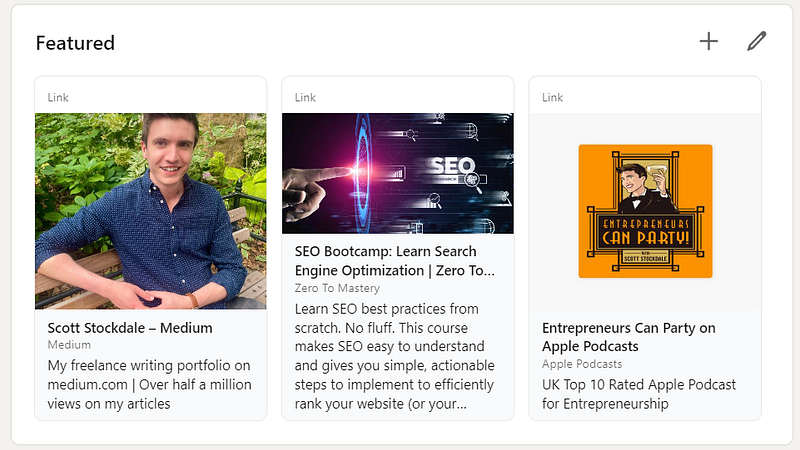
Under your “Featured” section, include links to your best work.

One of these should be where you’re posting content. Others could be to personal projects or past work:
Next, look at your “About” section.

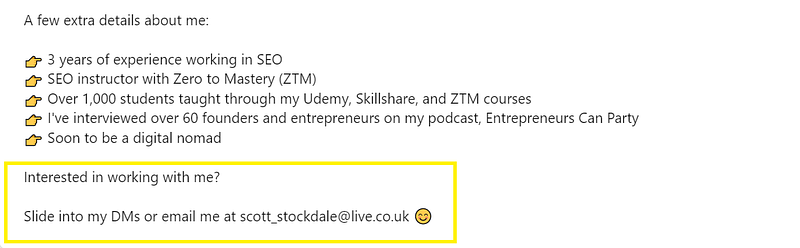
Identify a problem, say how you help clients, and include recommendations. (More on this shortly).

If you’re a sucker for emojis, throw them in too. They help break up the text.

Also, make it clear you’re open to opportunities:
Recommendations. They’re great social proof, but they won’t come without asking.

You have to go and get them.

If you haven’t worked with clients yet, consider asking friends. Past teachers are great too. They’re usually more than happy to give them (especially if you give one back).

A few notes on this:

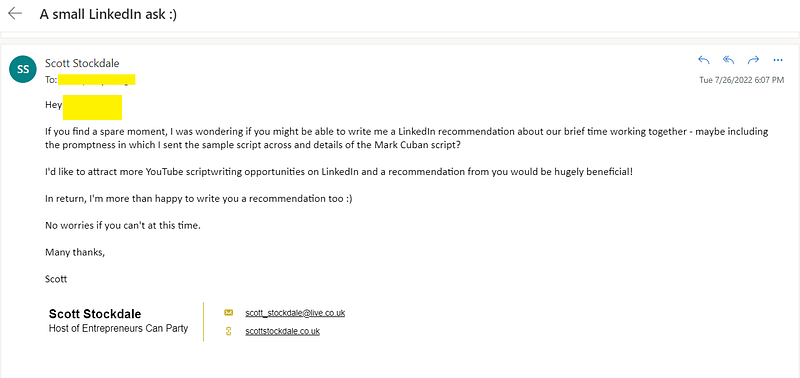
  1. Keep it short and sweet. Acknowledge you’re asking for a favour.
  2. Say why you want it. “I’d like to attract more ___ opportunities, and a recommendation from you would be hugely beneficial!”
  3. Give them an out. “No worries if you can’t at this time.”

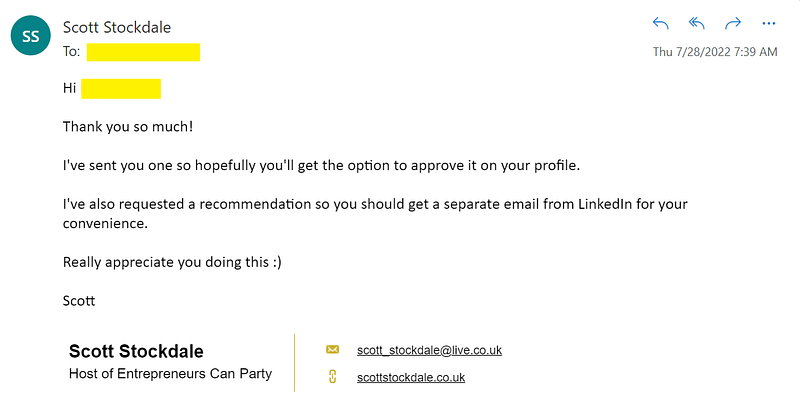
Here’s an email I sent to one of my clients:
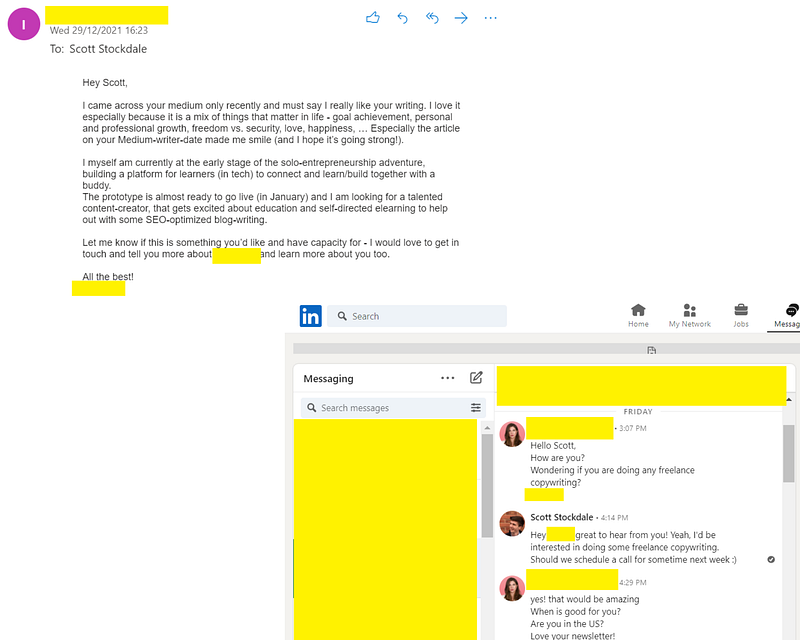
They responded back a couple of days later:

Step #3 — Jump on calls

When a potential client reaches out, jump on a call. This will help you understand what they’re looking for and how you can help.

I told my first client that I hadn’t written for someone else before. I made it clear I was willing to learn, though, and I’ve been writing consistently for over a year.

I also asked her lots of questions, such as when she’d want to start and the tone of voice she was looking for.

“I like your newsletter. Write like that!”

After 20 minutes, we agreed on actions.

She was going to email me examples of newsletters she’d written in the past. I was going to email her a proposal by the end of the week.

The thing is, I hadn’t written one before.

However, I’d learned from other writers that this is the way to go. You can charge higher prices when you package things up.

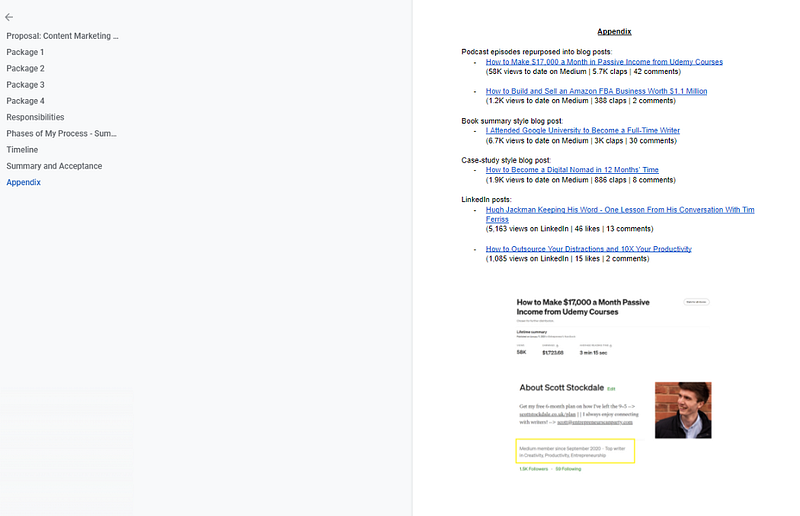
I found a template online. I copied it. I then put together this ugly-looking Google doc. I figured she wants to work with me for my writing skills — not my designs:
With pricing, I followed Michael Ellsworth’s advice: charge your “happy price”.

He recommends a series of gut checks.

For example, my first client wanted one blog post per month — 500 to 1000 words. I considered all the steps (writing, research, etc) and asked myself how long this would take.

Next, I considered an hourly rate that would make this worth my time.

Slide up and feel the energetic shift. You want to go from “not worth my time” to “yeah, I’d do that”.

Here’s my proposal template in case you’re interested.

Takeaways

The hardest part of this strategy is the first step.

You’ve got to have patience.

Follow it through, though, and the rewards can be great. You’ll attract clients. You’ll make money online. You’ll get to do more of what you love.

The best part is you don’t need a website.

Here’s the TL;DR version of the strategy:

  • Step #1: Consistently put out content on one platform for two years — Do this whilst working a job. It’ll take the pressure off.
  • Step #2: Up your LinkedIn game — It’s a goldmine out there. Fix your profile and let clients come to you.
  • Step #3: Jump on calls — Learn their needs, set your price, and send a proposal. Most important of all? Keep it simple.

Want to ditch the 9–5? Get my free 19-page guide: Everything I Did to Quit My 9–5 Job & Transition Into Profitable, Sustainable Solopreneuring :)

Freelancing
Making Money Online
Entrepreneurship
Money
Marketing
Recommended from ReadMedium