
INDIAN CULTURE | MUSIC
“You Don’t Know What it Really Means to Learn a Musical Instrument,” He Told Me
I had the opportunity to learn music “the Indian way” but I was far too western for that
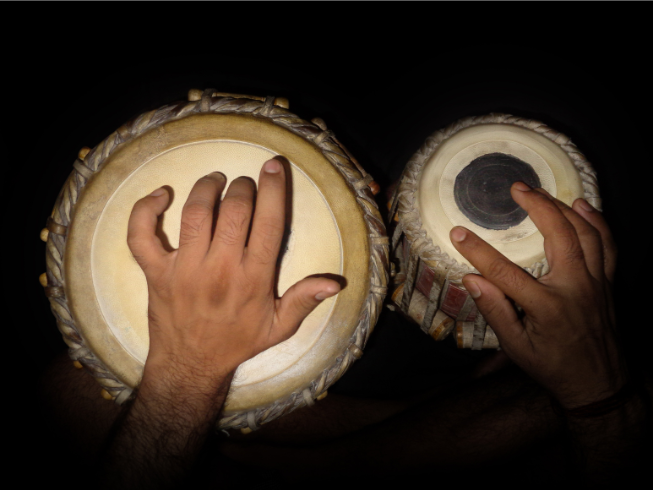
He seemed surprised that I had such good rhythm the first time I sat down and began playing Tabla.
He asked if I played any other instruments, to which I replied, “Yes, the flute,” and he declared I was a natural.
I wondered if dancing also counted — my younger days of excelling at ballet and my more recent days of dancing at clubs and gigs. But I didn’t dare to ask him. I didn’t know if perhaps the dancer caste fell below the musician caste in the Indian caste system, and I was quite happy to hold my current perceived place, adjacent to the revered caste of the musicians. Not a part of, for a westerner can never be within the caste system. In the eyes of some, a westerner is as low as an untouchable — a caste-less person at the very bottom of society.
But he didn’t treat me as one. He treated me with the respect that he treated anyone with a desire and a willingness to open themselves to learning the beautiful Indian art of music.
And thus, he welcomed me into his world of the music of Varanasi.
My Tabla teacher — or guru as all teachers are known — was the renowned Pandit Chhotelal Misra, professor at the Banaras Hindu University — Banaras being another, older, name for Varanasi — and highly regarded across the world. He had played on stages across the world, including in the USA, Canada, Europe and Japan.
There must have been thousands of Tabla teachers in Varanasi, all out to make a quick buck from the passing travellers who wanted to experience some Indian music classes for the few days they were staying. So it was incredible luck that I had met Jess, one of Chhotelal’s western students, the year before in Dharamkot, high up in the Himalayas. And it was even more incredible luck that I happened to bump into her on my first day in Varanasi, where I had come to finally spend time learning to play Tabla.
The first time I’d heard it and seen it played live — on my first trip to India three years earlier, when I was just eighteen — I had fallen in love with it and vowed to return especially to learn to play it myself.
It had taken a while, but finally, here I was.
Jess took me to meet Chhotelal and he welcomed me straight into his home.
There was no messing around with Chhotelal — he was a busy man with an endless stream of students coming to take their Tabla classes. He was firm, said it how it was, and moved quickly through the various combinations of ways of striking the Tabla and its accompanying bass drum, the Bayan.
From…
Dha-dhin-dhin-na Dha-dhin-dhin-na Ta-tin-tin-na Dha-dhin-dhin-na
To…
Dha-tira-kita-teka Taka-tira-kita-teka Dha-tira-kita-teka Dhin-na-kita-teka
And on and on it went.
The language of the Tabla is sacred in itself, like the repetition of a mantra that speaks to the higher musical powers. To speak it with the fluidity that a master player will tap it out is a truly admirable skill.
I had to practise every afternoon and then return the next morning for the following lesson. We moved quickly and I had the impression that was how it was with Chhotelal. If you couldn’t keep up with his speed, he would soon drop you from his classes. So I had no choice but to practise until my fingers ached.
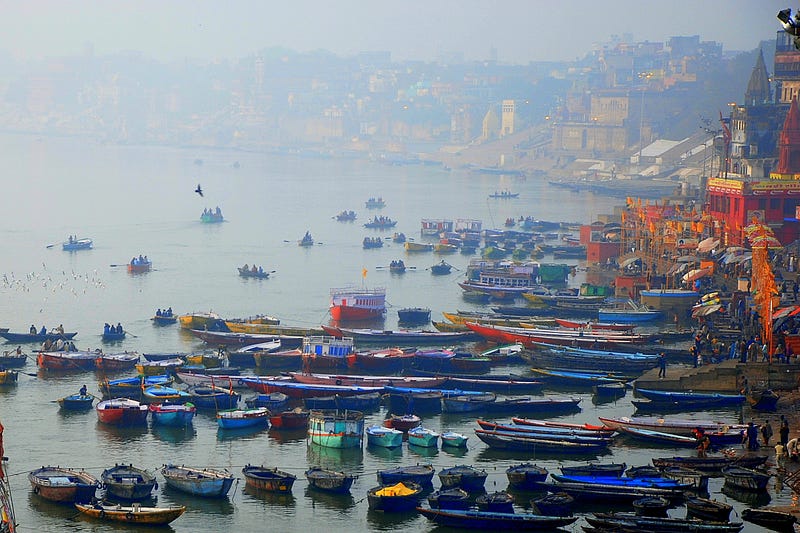
But I was happy. Renting an apartment in the village just beyond Assi Ghat — the northernmost steps leading down into the River Ganges — I had the space and freedom to play and play. And, each day, I would take a break mid-afternoon to wander down to the chai stall at Assi Ghat, where I could sit on the steps and warm myself in the afternoon sun, drinking hot, sweet, milky tea bursting with the flavours of ginger, cloves, and black pepper.
He handed me one of his books of Tabla rhythms. I flicked through it and realised the whole thing was in Hindi, a script I had no idea how to read.
I told him I couldn’t decipher any of it.
“That’s okay,” he said. “If you want to learn Tabla, you will also need to learn to read Hindi.”
Seeing the alarm on my face, he said to me, “You westerners don’t know what it means to really learn an instrument.
“I spent twelve years living with my Tabla guru,” he went on. “Twenty-four hours a day for twelve years straight. I didn’t just take lessons from him, I lived every moment of my life in his presence. That was the only way to absorb his brilliance.”
I gazed at him, speechless.
I imagined living with Chhotelal, day-in and day-out. Could I do it? I wanted to be able to do it but would I really want that? Here I was with the opportunity to learn this thing as it was supposed to be learnt. I had a means by which to earn, each summer, enough to live in Varanasi for a year. And besides, I hadn’t yet found what I really wanted to do as a career back in the west.
So what was stopping me from learning the proper way, the Indian way?
For two months, I lived this way in Varanasi; I practised every afternoon and attended my lesson with Chhotelal every morning. It was winter when I first arrived. As we went from winter into summer, the concert season began.
Chhotelal was one of the most respected men in all of Varanasi, for Varanasi was also known as the city of music, with the goddess Saraswati — known for her scholarly and musical attributes — as the deity most revered in the city.
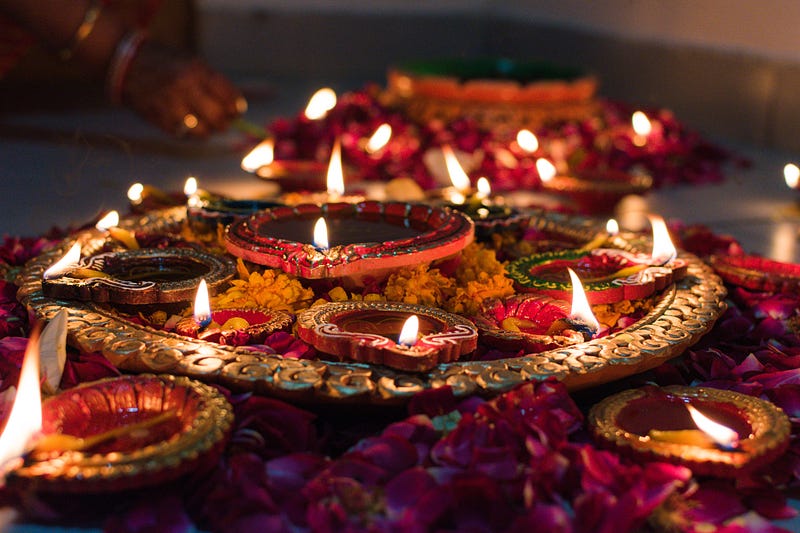
He invited me to many evening concerts, where high-up members of Varanasi society would gather, and the music would last for many hours into the night. He also invited me to the Saraswati Puja — the most important of all the rituals in Varanasi — at his own house. A huge honour in itself. This was the first time I met his wife and she was evidently delighted to be inviting people into her home for such an auspicious occasion.
Neither he nor his wife showed any discrimination that we western students had not been born into their society and nor were we born Hindus. He accepted all students who came to him, and he treated his students as members of his family. This was what his guru taught him, and it was how he, in turn taught others.
Chhotelal opened up doors for me that few western seekers of Tabla wisdom had the chance to even glimpse through. He gave me every opportunity to throw all caution, and life in the west, to the wind, but in the end I did what he knew I would do. Like all westerners, I eventually decided to leave.
My two months of bliss were followed by the inevitable sickness that few westerners are fortunate enough to escape. Had it simply passed in a few days, I may not have felt as I did, but repeated sickness got me down. After spending most of three weeks with intermittent vomiting, nausea, and fever, I took myself to a travel agent and begged for the first available sleeper train ticket across to the Rajasthani desert, in search of clearer air and cleaner food.
The travel agent told me I could go in a week’s time and I booked the ticket on the spot.
I went to say goodbye to Chhotelal. He told me I was welcome back any time, and that if I needed to stay with him, I was welcome.
I was more touched than he probably ever realised. I also promised that I would return.
But I never kept that promise.
The Tabla went back to being a fanciful whim that lasted a mere moment. After all, I was a footloose and free travelling spirit who was quickly distracted by finding other endeavours to pursue, and the Tabla remained something upon which I could still only tap out a small selection of compositions that Chhotelal had taught me.
Pandit Chhotelal Misra passed away in October, 2013. I still have the set of Tabla and Bayan I acquired from him.
I rarely play but it’s always a pleasure when I do. I play the flute more.
I kept his book for many years, perhaps to hold onto the belief that I would eventually go back. But I still can’t read Hindi script.
I am more grateful than he can ever have known to have met him and to have seen the humility with which he approached everything in life. And I am grateful to have seen first hand what is possible when one chooses to dedicate one’s life to learning.
If nothing else, he taught me that when music is in your soul, you need to keep working with it. Music is life and to play regularly, even just for yourself, will keep the spark alive.