
You Don’t Know Shi*t About Anything
And here’s why
The path you walk is not the best way. The name you cherish is not the real one.
The Tao te Ching is one of the oldest and most translated books in existence, surpassed only by the Bhagavad Gita and the Bible.
The tao that can be told is not the eternal Tao The name that can be named is not the eternal Name.
It was written in that period of astonishing flowering of wisdom, roughly five hundred years before Christ. Across the Eurasian world we were given Socrates and Plato, Lao Tzu and Confucius, the Upanishads and Buddha.
The Tao that can be trodden is not the enduring and unchanging Tao. The name that can be named is not the enduring and unchanging name.
Lao Tzu, the traditional author of the Tao te Ching, lived on the fifth of nine bends of the canal passing through the village of Chujen in eastern China. He left his job as keeper of the royal archives where he is reputed to have met and impressed Confucius who called him a dragon of thought, and in travelling west wrote the Tao te Ching, delivered it to a sage at the royal observatory in Loukuantai before continuing on and becoming lost to history.
The way you can go isn’t the real way. The name you can say isn’t the real name.
There are many editions and translations of the text. There is no definitive version, even in Chinese, and the English versions are widely divergent in tone, though not spirit. It seems if you think you have the true Tao, you don’t.
If you can talk about it, it ain’t Tao. If it has a name, it’s just another thing.
There are roughly 5 000 Chinese characters in the text, and it is full of rich, poetic, and puzzling verses:
Hollowed out, clay makes a pot. Where the pot’s not is where it’s useful.
The whole self-summarises in the first words of the first verse. If you think you have found the truth, you are wrong.
There’s more to this than philosophical dancing. It reflects the truth. Our brains are limited in capacity and power, and we simply cannot stuff the entire cosmos and how it operates into the space between our ears and behind our eyes. We must use a model — an abstract representation of reality — to make sense of existence.
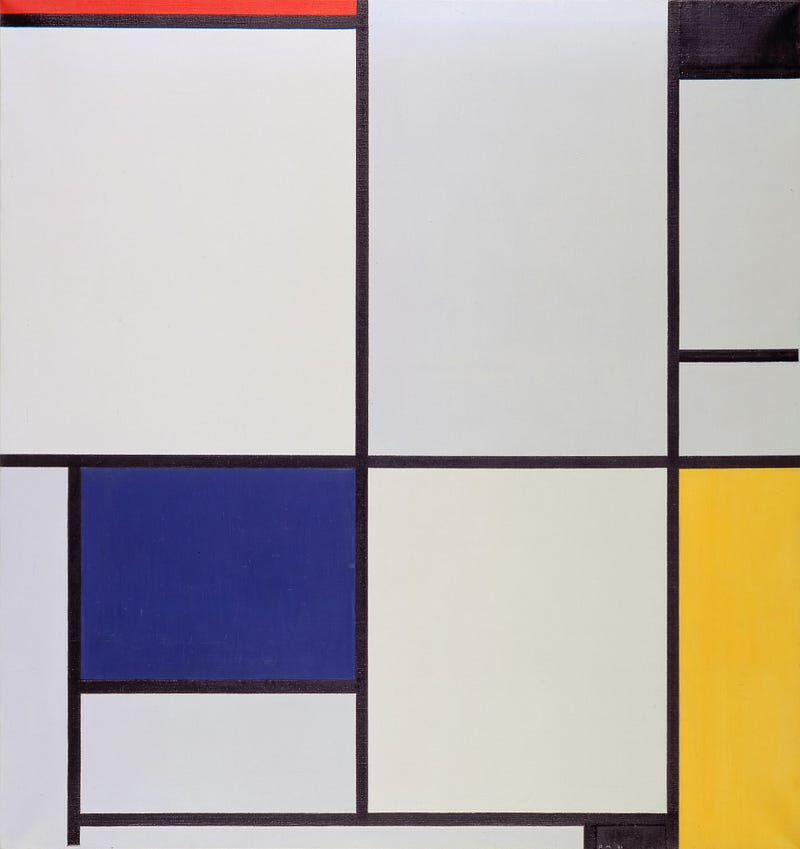
A photo, a movie, a hologram, a map, all these are subsets of reality, limited in time, space, texture, or some other dimension to allow us to gain some feeble grasp on the nature of the cosmos around us.
Our eyes do not perceive the whole spectrum. Our brains cannot make sense of all perception. We summarise, extrapolate, guess about what is real and what is not. Optical illusions exploit our weaknesses to make our brains believe what is not true or deny reality. Look at the green dot below and after a few moments, the yellow dots will wink out of existence!


The truth — subject to the caveats above, of course — is that we simply cannot handle the truth, the whole truth, and nothing but the truth.
I can cut a log simply by looking at it. I know it sounds hard to believe, but I saw it with my own eyes.
As human beings, we may have sharp eyes and other keen sense organs, but we are blind, deaf, unfeeling in many ways simply by the way our brains operate. We cannot be aware of everything, and we cannot be certain about what we think we know. True wisdom may simply be knowing that one does not know.
I am wiser than this man, for neither of us appears to know anything great and good; but he fancies he knows something, although he knows nothing; whereas I, as I do not know anything, so I do not fancy I do. In this trifling particular, then, I appear to be wiser than he, because I do not fancy I know what I do not know. — Socrates (Apology, 21d)
Certainly, there is a great deal of foolishness around from those who believe they know things. Don Trump, for example, had immense difficulty in admitting that he could be wrong in anything, and the wronger he was, the stronger his apparent belief.
Believing in the words of the ignorant is a recipe for disaster. Hundreds of thousands of Americans died because their country’s leader did not think a deadly plague was real.
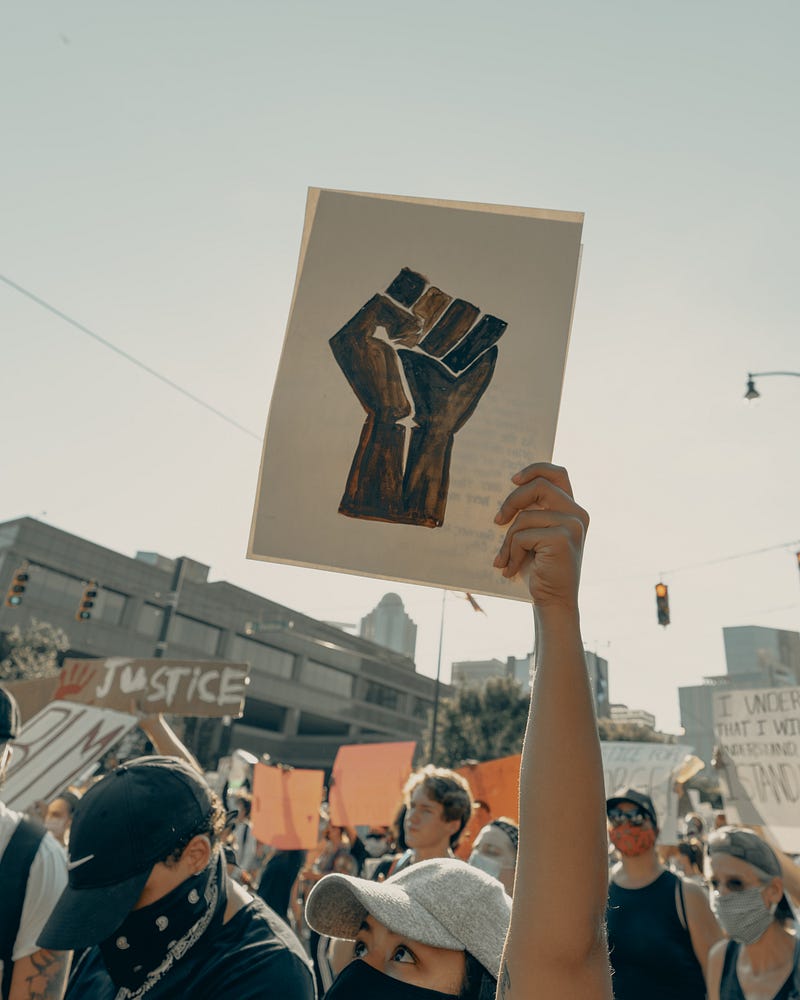
And in this year where Black and White Americans try to understand each other, the truth is that they understand only the thought models that they have created.
We see what we want to see, we understand what we want to understand. We do not see reality, and we do not know the truth. It is only when we open our eyes to a subject that we see something that is in plain view.
You ever take up a hobby or a new job and suddenly you are seeing rare birds in trees, or the signals given out by a drug dealer, or the way that taxi wheel covers are held on by zip ties? These things passed you by when you had no reason to notice, but when your brain has a need to see, the eyes will open.
There are none so blind as those who will not see. — Jonathan Swift, 1738
I won’t pretend that I know the truth about how Black Americans see a land where they can be executed on the street and White Americans see a land of freedom and justice.
What I do know is that I, a woman, can walk along the street and if I do not move out of the way for men, I will be knocked down by someone who simply cannot accept that a woman might not stand aside. It is a rare man who even notices this; their size and strength and perceived superiority make the situation one that their brain does not need to devote time and energy to deal with.
We all have our blind and thoughtless zones. It is a rare person who is able to see this in themselves.
So when I tell you that you don’t know shit about something, just pause to contemplate that I might be right, just as you might easily perceive my own ignorance on subjects where you know the full truth.
Britni
Quotations from the Tao te Ching by Ursula K Le Guin. Red Pine, DT Suzuki, James Legge, Ron Hogan.