
You Don’t Have To Be a Medium Superstar To Get More Story Views
Don’t disagree with me! I might like it!

Are you stuck wondering what to write about again?
Have you been scanning all the viral articles to try to find a topic people will really want to read?
Have you been wondering how long it will take before you write the infamous viral story?
Sometimes it takes a little controversy to get people talking about your writing.
My family and I love comedy. I wasn’t surprised when, one day, my husband showed me some videos of this comedian who did ventriloquism. You may have heard of him. His name is Jeff Dunham and he is absolutely hilarious. I sat there and watched, spellbound, as he made his dummies say the most controversial, ridiculous things. Dunham acted thoroughly shocked at all the naughty things they said, which made it even funnier.
I put this experience in the back of my mind and it wasn’t until I read this article that it all clicked in my head.
It introduces a story called the Dummy Template.
Basically, you can be the ventriloquist yourself and make the dummy character say all the controversial stuff while you act thoroughly shocked and appalled.
My mind finally made the connection between Jeff Dunham and writing.
It was brilliant.
So why can’t we have an article template that includes a Q&A with a controversial Dummy character?
There’s no reason not to, but you have to do it right.
I know what’s running through your mind right now.
This sounds pretty complicated. I’m not sure I can do this.
Hear me out! It’s simpler than you may think.
- Don’t make any judgments until you’ve read through the article and seen the template in action, then decide whether or not it’s something you can use.
This template may be write for you if…
- You want to write about a controversial topic, but soften the blow a little
- You want a fresh way of writing that’s different from your usual style
- You want to see if people really will read more controversial information
All of the screenshots in the article below are from a Dummy Template article that I recently wrote.
Check it out. I think you’ll like what you see.
Disclaimer: This article does not condone any type of hate speech or discrimination against people of any race/ethnicity/religion/gender, etc.
Table of Contents ∘ Headline · Subtitle · Image · Introduction · Body of the Article ∘ Subheaders · Conclusion ∘ More from this author · Resources
Headline
Use a headline formula to draft a headline, like in the link below.
Diaries of A Substitute: What Your Class Really Does When You’re Gone
- Choose one emotion to focus on
- Choose a pain point that the reader has
- Hint at a transformation that the reader can experience
- Make it short and direct, but with a tinge of curiosity
- Use a controversial statement and make the reader think, “ouch…”
Twist the knife. — Nick Wolny
Dummy Template [Example]: Intrigue the reader with a title like, Ernie Paycheck Has a Better Plan for Stimulating the Country, Wanna Hear It?
The process is the method of making people laugh at or take an interest in things they might otherwise be shocked by. — Melinda Crow
Subtitle
Use another headline formula from that handy link above.
- Clarifies the headline by adding more information in a longer sentence
- Tells a story and stimulates curiosity
Susan the Sassy Substitute tells all her juiciest secrets in this exclusive interview!
Image
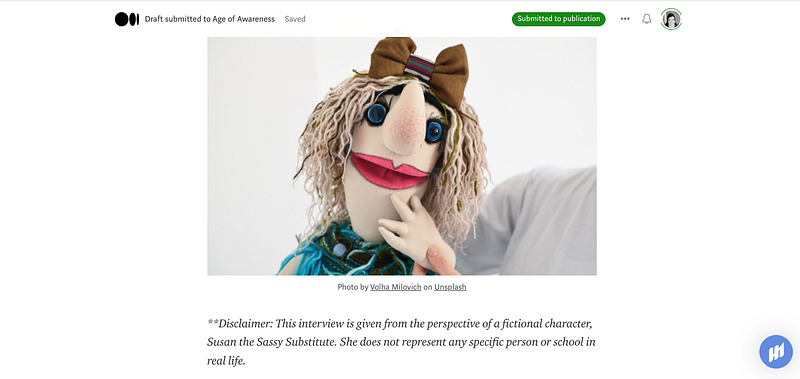
The image invokes the same emotion as in the headline. You could also include a Canva image that you’ve altered.
- The idea is to show the reader, as much as possible, an image of the dummy character. They want to be able to picture a person speaking, their accent, their clothing and hair. Make it real for them. You can even include a photo of a cartoon-style drawing or puppet (Melinda Crow).
Slide in a disclaimer in italics before your introductory paragraph or make it your entire intro. Either way will work to explain to the readers that they need to suspend reality for a few minutes.
Introduction
The first sentence is the hook.
Pick one of the following three options for the hook:
- Ask three questions in a row that make the readers mentally nod their heads
- List the Main Frustration in a very descriptive line that causes emotion, the dread of social rejection, frustration, or fear. Use the PAS Model — Problem, Agitation, Solution. This first line would be the Problem part of the Model.
- Or…write one line that stops people and makes them think (write it in bold letters).
Insert a short Quote that fits one line here.
The first paragraph tells a story that sucks you in.
- If you went with the Main Frustration for the first sentence, use this story as a chance to project out a sad future in which they never change and are always miserable.
- PAS Model — Problem, Agitation, Solution. This story would be the Agitation part of the Model.
- Or choose an emotion that goes with the topic and tell a story based on it
Check out this example below. It shows a 1st Sentence Hook, a story in the first paragraph that catches your attention and a Quote (I made the quote long instead of short in this one).
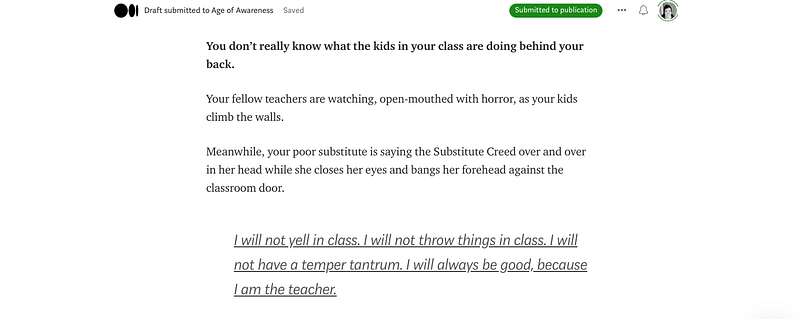
Insert a bold sentence here after that first paragraph. This sentence is going to summarize the controversial topic you’re going to discuss.
Examples: Is all the conversation in your industry the same boring drivel? Are you so tired of seeing the same five tips over and over again?
- Next, expound a little on the popular advice and really explain what you think it means. You’re still in the intro, so don’t make this too long. You can lengthen your ideas in the main body of the story.
- State the reader’s problem and deep desires as it relates to the popular advice. Get into their minds and say phrases like, “I know what you’re thinking”. It will draw them into agreement with you.
- Now give a new viewpoint (based on your expertise) of why you think that popular advice is stupid. Make sure you subtly throw in why you’re an expert about this. Did it happen to you? Have you studied it? It lends your story credibility to establish that you’re an expert in the first couple paragraphs.
- Consider the reader’s objections. Get into their head a little and list some reasons why they may be saying, “nuh uh, I think that’s wrong”.
Use some foreshadowing.
- Hint at the hope of a transformation with the solution to your problem. In the PAS Model this is the Solution part. Use language like “imagine how you look six months from now…”
- Other questions to include: Why should the reader read the entire story? What can they expect you to discuss? Is there anything special about this story that you can hint they should look out for? What extras are there at the end? These should all be dealt with in the intro part to give the ready a map and some curiosity.
Insert a transitional phrase here (see link below).
Body of the Article
Subheaders
Each Subhead should also be chosen from the Headline formula page. Make sure you ask a popular question or stir up an emotion.
Insert a quote directly under the header. The reader can then associate you with the person you quoted, increasing your credibility.
Insert a photo, graph, screenshot, canva creation or video here. I would suggest no more than one video per article. You don’t want to overdo it.
You also want one photo per page of text so that it breaks up the writing and gives people something nice to look at.
- The text under each subhead should be a mini-essay, with its own tiny intro, body, and conclusion.
Insert one bold sentence that packs a punch: a strong emotion, controversial phrase, or unforgettable statement.
The following section is based on ideas from Tom Fenske’s article below.
Choose one of the following as the next paragraph based on which header you’re on:
Header #1: What you want the reader to know — What does the reader absolutely need to know about this? How does it affect their fears of social rejection, frustrations, or promise of transformation? Go into the background behind the Popular Advice and why people believe it.
- This is also the place you can insert a Question and Answer session with your Dummy Character. Use the dummy to say the controversial parts and it will make it easier to write.
If you have experience or success with an unorthodox approach that would be surprising or controversial to readers, go against the grain. Strong opinion alone can be enough to set you apart, and readers appreciate a writer who isn’t afraid to stand up for what they believe in. — Nick Wolny
Header #2: What you want the reader to feel — Why you disagree, why you’re right and what you want the reader to feel
Header #3: What you want the reader to do — What can the reader do next now that they have multiple viewpoints? You can state it in a controversial way because it’s being spoken by the Dummy.
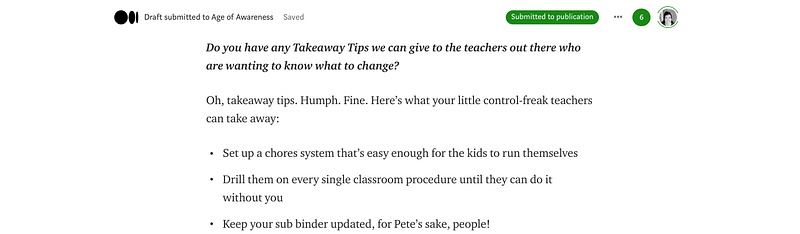
You could title it something like, “What to Do Instead”.
- You can do this part as a Listicle (as the dummy)
If you’re trying to be everything to everyone, is that really a point of view?
Insert three dots OR an extra space (for more white space to break up the text).
Address a reader objection or resistance (get into their heads to call them out on it, then smooth over their concerns).
- “Oh, Jessica, I could never do that!” (do it in italics like they were thinking that resistance statement.) It makes it feel like a conversation.
- Get into the reader’s head again. Use phrases such as, “I know you’re wondering…” and then state the reader’s fear outright.
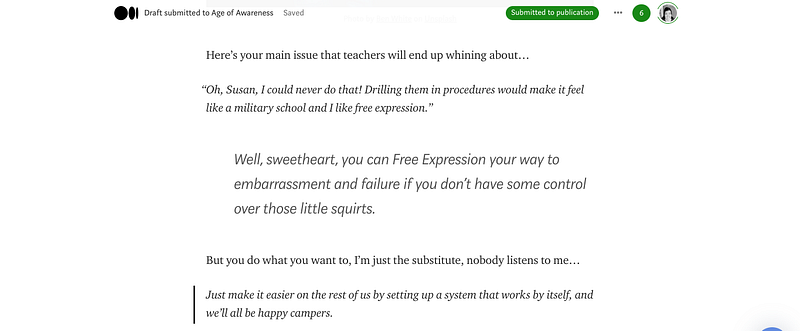
Include an italicized sentence.
Insert a mini-story or illustration here to show the reader the hope of transformation from your awesome solution.
Insert transitional phrase here.
Conclusion (Or Takeaway Tips)
Takeaway: Start off with one non-bulleted sentence (saying goodbye to the dummy), then change to bullets. (Or you can keep it in paragraph form.)
[Explain] how it’s better to have a sharp opinion that polarizes than a bland opinion no one cares about.
A branding expert once reminded me that great brands repel as well as attract.
- Use one sentence for each main point, ending on a positive note. Make it something that really makes them go wow…I will never forget this article and I want more!
- Insert a sense of urgency into the conclusion.
- The paragraph gives the reader a specific emotion, but eventually ends on a positive note and makes them a promise.
- Dummy Template: End with the dummy getting a line as you’re putting it away in the case. Remember the ventriloquist on TV? It’s always funny when the doll has the last word.


