
You Deserve a Total Bed Make-Over
Ten Ways that Replacing Your Sheets and Pillows Will Improve Your Life
“I can’t sleep any more. It’s too much like death.” — Cosmo Castorini in “Moonstruck”
We are all spending most of our time at home these days so I have to ask you: when’s the last time you replaced your pillows, bought new sheets or updated your bedspread?
I was in bed the other night, tossing and turning, when I had the sudden urge to use the restroom. Apparently when you hit your 50s, your nights become an endless series of bathroom trips.
Anyway, I looked down and realized I had my pillows folded over and bunched up like a bunch of rags. Frowning, I shook them out a bit and took a good look at them. My pillows were flat, misshapen and old.
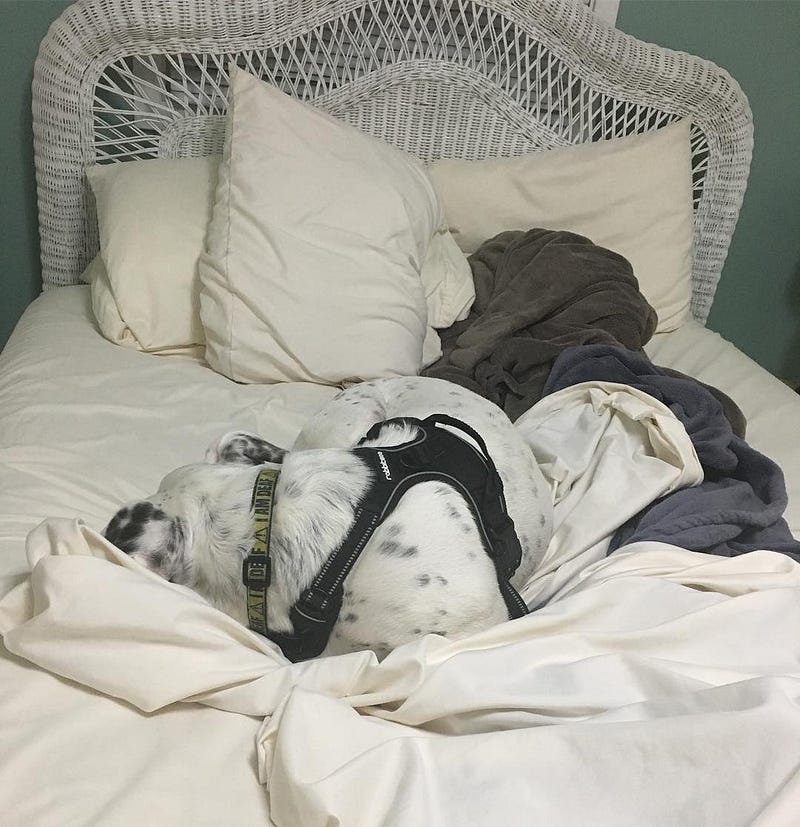
My sheets weren’t much better. They were faded and threadbare. Those poor sheets have seen a lot of hot flashes and snuggling dogs (don’t judge me). I have rags that look better than my sheets did.
I haven’t slept well since 1980, but even so, I wondered how much worse my sleep was because of my ratty old bedding. I often find myself inexplicably itchy and with sore muscles from sleeping wrong on my pillows.
Why does my bed look like it belongs to a broke college student? I wondered.
I couldn’t even remember the last time I replaced my bedding. In the past I have tended to just buy whatever is cheap and sturdy and keep it for a few years, or maybe a decade.
Honestly I don’t think about my bedding a lot.
When I do think about bedding, it’s usually because I’m in a nice hotel with high thread-count sheets and high quality pillows. Then I’m thinking how great it’d be to have that at home until I go home and forget all about it.
That night, I resolved to treat myself to new bedding.
I decided to start with pillows. But how to choose? There are approximately a million pillows, so I made a mental list of things that were important to me, like suitable for side sleepers, chemical free, hypoallergenic and not too hard or too soft. I wound up trying a few different types before I found pillows that are comfortable and supportive for my body.
Then I moved onto sheets. After some obsessive research I settled on some soft and stylish bamboo sheets that are both hypoallergenic and moisture wicking (hot flashes, remember?).
I got rid of any sheets, blankets or comforters that were ripped, faded, had a funky smell, or looked like they had followed me around since the 90s.
I didn’t go crazy, but I also did not go cheap. I only purchased items that checked off everything on my list. Everything I bought had consistently good reviews, was sustainable and hypoallergenic, and was mid-range in price. Oh, and they had to be visually appealing.
When my new bedding arrived, I felt surprisingly excited. It felt kind of decadent, like I was really treating myself, except there was no chocolate or alcohol involved. It made me wonder why I hadn’t bought new bedding a long time ago.
Experts say you should replace your pillows, sheets and bedding after about two years of use. An upgrade of your bedding has several important benefits, including:
- It’s an easy way to give your bedroom a decorating face lift, especially when you’re home all the time
- Improving sleep so you wake up more rested
- Alleviating neck or shoulder issues from broken down pillows
- Removing allergens like dust mites and dander
- Stimulating the “feel good” hormones that flood your brain when you feel indulged
- Reducing skin issues like acne, wrinkles or rosacea
- Minimizing night sweats or overheated sleeping
- Protecting your mattress so it lasts longer
- Supporting your head and neck may reduce snoring and sleep apnea
- Counteracting the scarcity mindset that many of us start adulthood with — it feels good to move past the days of goodwill sheets and hand-me-down pillows
Tonight when I lay in bed, it’ll be on my fluffy and comfortable new pillows and my soft and luxurious new sheets. I may even get a little bit of sleep — until I have to pee again.


