
You can’t Motivate People
Why good leadership is like tending to a campfire
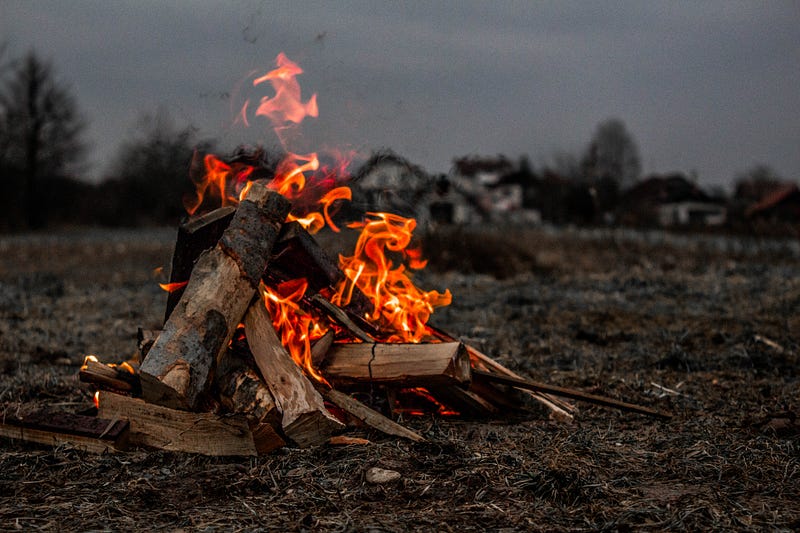
Sitting in a Clubhouse event this morning, I listened to a conversation around the topic of drive. The conversation was thought-provoking, lively, and highly relevant to anyone exploring drive or motivation personally, or in business. One of the questions that people kept coming back to is how to inspire drive in a team, an individual, or in oneself. Great suggestions were thrown around about how to inspire drive or motivation. None of them really answered the question: how do you motivate your team?
That’s because it’s a trick question. We can’t actually motivate other people, we all have to motivate ourselves. As a leader your role is not to push people; it is to create an environment where you, and your team have the space and tools to motivate themselves. It’s a lot like having a really good campfire.
Create an Optimal Space
So, how do you create an environment that inspires motivation and drive? (This isn’t about having kegs and ping-pong tables in the employee lounge.)
When you ready a space to have a successful bonfire, you look for a clear space without too much wind. Creating a space for motivation and drive you look for similar conditions: a clear space without too much ‘wind’ (or talking).
As a leader creating and holding space comes down to three simple factors: listening, asking questions, and being fully present for whatever comes up. This may sound super “easy” or “obvious”; in my experience, learning how to hold space for others can be extremely hard to do. We have to drop all agendas in that moment. It’s not about what you want, it’s about being present with the other person or group.
Have you ever been with a colleague, partner, or friend who is having a crisis? How do you react in that moment? For many of us, our reaction to someone we love experiencing a crisis can be selfish. We may want to talk them into feeling better, fix the problem for them, negate their experience by saying things like “well at least you have food to eat”, or we may stonewall them and just sit there because we don’t want to interact with an intense emotion.
In that moment, our friend, colleague, or loved one needs to have this uncomfortable experience. In that moment, our role is to simply be present, listen, and ask questions: to hold space. If they ask us for support or advice, then by all means, give it. If they don’t ask, let them handle it.
As a leader, this skill is very often overlooked. Management and leadership content focuses on ‘how to fix’ or ‘how to motivate’ teams and problems. We have to remember that each one of us is having our own experience. Intervening in other’s experiences as an uninvited guest disempowers people, which ultimately means that they are much less likely to find motivation to perform and contribute to the team.
Providing Kindling and Logs
So you’ve set the stage for empowerment and personal responsibility, now what?
In the Clubhouse conversation this morning, the question came about: how do I motivate a marketing team versus a sales team? It’s true that providing tools for different teams to stay motivated will look totally different.
The only way to know what tools your team needs is simply to ask and listen. Provide the tools your team asks for so they can stay motivated. Know that you might have to have a few resources for each team as well, as all the people who make up the “marketing team” are not necessarily cut from the same cloth.
In Joseph Campbell’s Hero’s journey model, he suggests that all humans are motivated by whatever makes them feel most alive. The thing that makes us feel most alive lights us up when we are doing it, and talking about it. It’s the warm flame in our bellies. In yoga, this is referred to as our tapas. Tapas is a Sanskrit word which roughly translates to “heat” or “discipline”. I like to think of it as the thing that keeps us moving.
So when we are exploring what motivates people, what keeps them moving, we can look for those moments of warmth or what literally “lights” them up. As a leader your role is to really get to know your team and to listen. When do you see your team members “get fired up”? When do they “bring the heat”? What kind of kindling can you provide to grow that fire?
Tending the Fire
Once the fire is going, it takes strong observation skills and a delicate hand to keep it going.
Putting on several giant logs could make the fire too hot to enjoy, if you don’t add any logs the fire begins to wither, and if you aren’t occasionally re-aligning the wood you may end up with an unproductive campfire. All of these scenarios can lead to one road: burn-out.
Burn-out is the great enemy of any intentional leader, and it can happen so quickly. One giant gust of change can enrage a fire that that ultimately turn into the destruction of several acres of land, or monumental impacts on your team and organization. While you can’t necessarily control the wind, you can make sure that you are prepared to deal with the impact of burn-out quickly and effectively.
Embodying the Role of Flame-keeper
One of the best ways to be a good leader is put these practices into play for yourself first. This way you can be conscious and aware of the campfires, or other flame-keepers, around you.
While you can’t necessarily motivate or light someone else’s fire; you can create an optimal space for controlled burning.