
You can do it!!! Top 5 resources to EASILY learn Deep Reinforcement Learning
One year ago, I knew almost nothing about this exciting area of research when I became aware of its awesome potential. Now, I am involved into 3 lines of research dealing with Deep Reinforcement Learning. How did I do this? I briefly explain in this medium article.

When I began my PhD on Bayesian optimization I had to learn about the topic reading related books and papers, what was really a hard process. Concretely, Bayesian optimization was a hard topic, and few resources talking about it were available online. However, it is exactly the opposite with Deep Reinforcement Learning. In particular, a lot of resources are available online. Ironically, it is necessary to provide not an exhaustive but a curated list to not waste the time in useless resources.
Top 5 Resources
I suggest you to learn in the following order, that also represents how good I consider the resource to learn about this exciting topic.
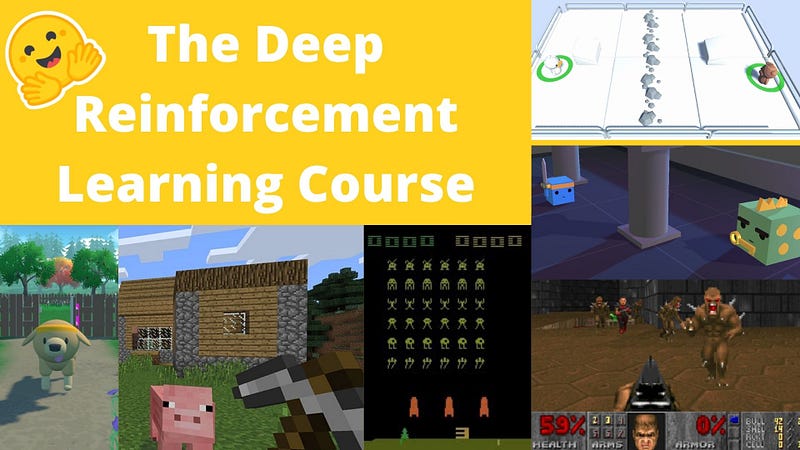
- Hugging Face Deep Reinforcement Learning course: Possibly the, believe me, best course I have ever taken. Amazing work by Thomas Simonini, you will learn simultaneously how to code and use DRL algorithms using StableBaselines3 and OpenAI Gymnasium environments and the theory behind Deep Reinforcement Learning. And it has been so much fun! The course includes leaderboards where you upload your agents and they compete in the environments with the agents of other players. Almost all the code are Jupyter Notebooks that can be uploaded to Google Colab. It is insanely challenging to enter the top 10 in the different environments. They also have a Discord channel where you can chat with the other students to discover how they have trained the policy of the agent. I honestly think that we do all have to learn about this course in order to make teaching fun, awesome content!
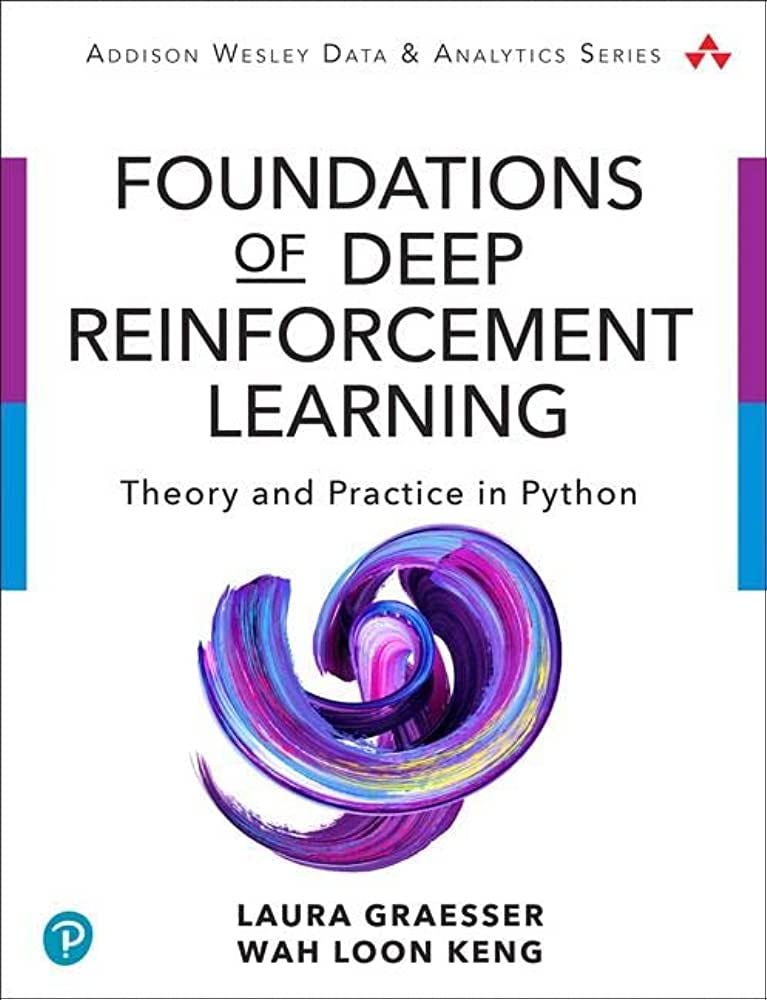
2. Foundations of Deep Reinforcement Learning: Theory and Practice in Python: I have included this book in this position because it has a critical advantage, it is very easy to read and you will learn a different tool, SLM Lab, that you can also use to train bots. The idea is to first complete the previous course and, then, you can start with this book. If you do this, then, you will be familiarized with all the current topics of Deep Reinforcement Learning.
3. Welcome to Spinning Up in Deep RL by OpenAI!. Now that you have get the main insights of Deep Reinforcement Learning and know several tools where you can implement new algorithms, it is the turn to learn how to enter this amazing research area. And this is introduced perfectly in this webpage by OpenAI. And with a lot of research topics available, such as key papers in DRL and useful benchmarks. Amazing resource!

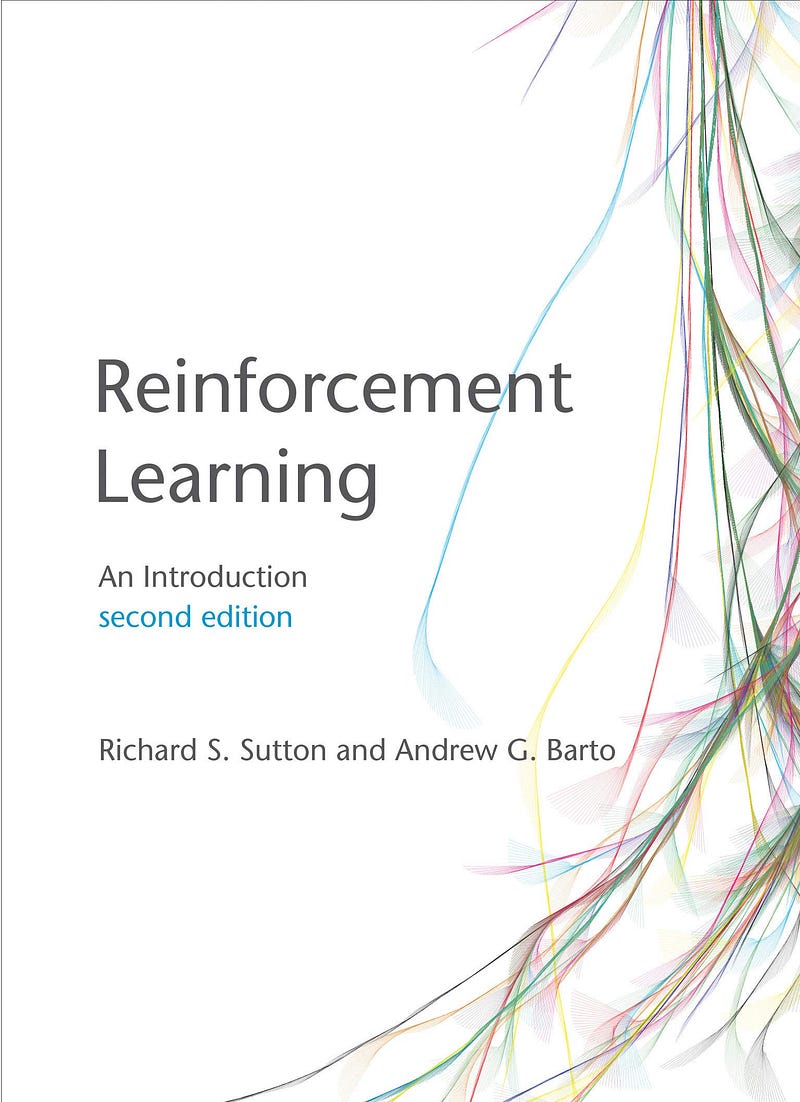
4. Reinforcement Learning book by Sutton and Barto. Not exactly DRL but, in this point, you will need some connections with other areas (and this book does that perfectly well with exciting chapters on psychology and neuroscience) and more formalism. I recommend you this book for you to not forget the foundations behind reinforcement learning, but it is an advanced, less practical but more theoretical book. However, it is a classic, and because of that, I think that you must read this if you are going to work in this area.
5. Li, Y. (2017). Deep reinforcement learning: An overview. arXiv preprint arXiv:1701.07274. Finally, you need to choose your research line, and need a broad view about what is being done in deep reinforcement learning. This survey paper is great at that. I recommend you to read it and then search for more recent research on your particular direction.
Lots of luck with the process!!! I am enjoying a lot this line of research mostly because it is very fun! Please leave me in the comments what do you think about this top and if you like these posts, subscribe!!!


