
You Can Be Anything with a Growth Mindset
Success against All Odds — Turned out the Odds were Only in Our Minds

A mindset is a set of assumptions, attitudes, or notions held by one or more people that reflects a person’s (or a group of people’s) world view and philosophy of life.
Our mindsets have a great impact on the decisions we make — when choosing careers; how we cope when things get hard; and our decisions on whether we should take risks.
I always knew the importance of discipline and hard work. But never had I imagined the power of mindsets. By simply changing how I think, I could actually change my life.
How You View Yourself Matters
Growing up, we tend to hear a lot of judgments and evaluations from our parents and teachers — “You are not good at sports”; “You have a gift in music”; “You have a bad memory”; “You are smart”. We love our parents and respect our teachers. Oftentimes, we never question what they say about us.
Our cognitive development is embedded in the social-cultural context (Lev Vygotsky Sociocultural Theory of learning). We internalize the language spoken to us and about us into our thoughts. We tend to internalize others’ opinions of us. Slowly, they became our own thoughts — “ I am not good at sports”; “I have a gift in music”; “I have a bad memory”; “I am smart”.
In my career as an educational researcher, I had the privilege to interact with many children and adolescents and analyze their choices of different academic and career paths.
A cruel truth revealed in research is that the reality repetitively proves Bourdieu’s theory of social reproduction — the children of engineers become engineers, the children of businessmen aspire to become bankers, and the children of waiters start waiting tables at a very young age.
“The educational system reproduces all the more perfectly the structure of the distribution of cultural capital among classes (and sections of a class) in that the culture which it transmits is closer to the dominant culture and that the mode of inculcation to which it has recourse is less removed from the mode of inculcation practiced by the family.” — Pierre Bourdieu, Cultural Reproduction and Social Reproduction, p. 493
According to Bourdieu, cultural capital is produced and reproduced through our social structure. In other words, cultural capital is an important currency in social reproduction. Cultural capital comes in three forms — embodied, objectified, and institutionalized. One important type of embodied cultural capital is how we view ourselves.
“Embodied cultural capital is the core of who we are and how we define ourselves. It is through this capital that an individual identifies their authentic self. Embodied cultural capital is derived from one’s life-long investment in education from all sources including community, family, and schooling.”
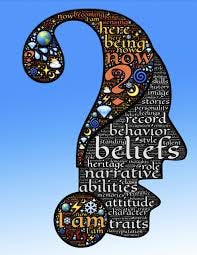
This important type of cultural capital takes in many forms, one of which is what we call — mindsets.
How we view ourselves matters. It reflects our values, determines our aspirations, and impacts the actions we take in life.
As a matter of fact, everyone can escape the loop of social reproduction by simply changing their mindset.
From a Fixed Mindset to a Growth Mindset — One Decision that Changed My Life
Dr. Carol Dweck studied the importance of mindsets to student motivation and achievements in the field of education. In her research, Dweck coined the terms fixed mindset and growth mindset to describe the underlying beliefs people have about learning and intelligence (Blackwell, Trzesniewski, & Dweck, 2007).
Fixed Mindsets
People with a fixed mindset see their qualities as fixed traits that cannot change. In other words, they see themselves being either good or bad at something based on their fixed inherited traits.
I grew up with fixed mindsets. In fact, most of us are raised with this type of mindset. Growing up, I was told by my parents —
“You are not flexible enough to dance.”
“You are not good at math.”
“You have a horrible memory.”
I wanted to do many things — painting, have a YouTube channel, be a writer, and many dreams I have had as a child.
But this is what I told myself —
“I am not a creative person.”
“English is not my first language, I have an accent.”
“I am a horrible writer. I got bad scores in my writing tests”
I thought that creativity and writing skills were something people are born with. I kept denying myself from trying, with the fear of any challenges and obstacles that might come in my way.
I lived with a fixed mindset for 22 years until I made a big decision against my entire family. That decision ended up proving I was wrong for my entire life. I, myself, was my own obstacle that prevented my success.
After graduating from college, I decided to come to America for graduate programs. This decision was not easy. The tuition was expensive. It was scary to pack my whole life into two suitcases and move to a completely foreign country.
My family was against it. My uncles and aunts took turns to have a “talk” with me about how much a financial burden it was; how I should find an easy stable job and marry an ordinary man; why I should not try to go down my counsin’s path of studying abroad because my cousin was smarter, richer, and more independent.
My mom never went to college. My mom’s marriage failed right after I was born. Because of that, I was deemed to a failure by a lot of my family members. Because of that, I had low expectations of myself. I saw myself as a normal student with no special talent. I thought I was going to reproduce my mom’s story as if it was written for me since I was born.
I was told to stay ordinary, to try things that are naturally easy for me, to take no risks.
I was accepted by the graduate program I applied to. The day I got my offer letter, I was thrilled, happy, and excited, but also nervous, hesitant, and scared.
My mom handed me her retirement money saved throughout her entire life.
“Just go.”
Deep down, I know, my mom wanted to prove them wrong.
I had to prove them wrong. I needed to show my family I was not a failure. I wanted to show them that I can be intelligent, confident, creative, and successful, through learning, networking, and hard work. I refuse the fixed traits imposed upon me and aspire to develop talents and skills that I may or may not have been born with.
Growth Mindsets
“Individuals who believe their talents can be developed (through hard work, good strategies, and input from others) have a growth mindset. They tend to achieve more than those with a more fixed mindset (those who believe their talents are innate gifts).” — Carol Dweck , Harvard Business Review
That one decision I made changed my life.
I felt the pressure of conquering all the obstacles — improve my English speaking and writing skill, building social networks in a completely foreign country, and making sense of everything that I had never experienced in my life.
I felt the pressure to research the unknowns, to acquire the skills in which I fell short, to seek mentors and help, to do things independently without previous experience.
Never had I ever thought I could be offered a fellowship to complete Ph.D. studies all for free.
Never had I ever believed I could publish in academic journals in English.
Never had I ever imagined obtaining an international dissertation grant.
I tried to prove “them” wrong, it turned out, I proved myself wrong.
It turned out, everything was possible. The Odds against my success were all in my mind. There is always a way to everything. You just need to find it
Yes, we are all born with different gifts and talents. Some people are born more creative than others. Some may develop writing skills at an earlier age than others. But it does not mean we cannot achieve the same results or accomplish the same goals. It may take me longer to familiarize myself, to learn, to practice. I may run into more challenges, more obstacles, and experience more failures. I may need to go out of my way to find mentors, to ask questions, to be embarrassed.
But still, anything is possible, through hard work, good strategies, and input from others. It all starts by simply changing your mindsets.
Cultivate a Growth Mindset and Take Actions — How to Change My Mindsets?
My own decision against my family was the turning point of my life. Not only did I successfully complete my Masters and Ph.D. degrees, I also repaid my mother her retirement savings, married an extraordinary man, and put down the first payment of my first house.
All I did was to push myself out of my comfort zone, change how I view myself and my potentials, and take actions with a growth mindset to my life.
Here is how you can do it too.
1. Set Your Intention — Why You Need a Change?
Intention refers to what one intends to do or bring about. Setting intention gives one’s actions a purpose.
If you want to change your mindsets, the first step is to set your intention — Why do you want to change your mindsets? Are you not happy with where you are in life? Do you want to grow vertically and achieve higher in the same strand? Or do you want to broaden your options, or even completely change your career path? Do you want to become a millionaire, or do you want to let go of the materialistic perspective of life?
“Setting an intention is activating a part of your receptivity. … If you know that you want to get somewhere, the power of setting an intention is going to help you get there.” — Kelsey Patel
In my own experience, my intention was simple — to achieve the things that my family said to be impossible for me. My intention was simply to prove them wrong and be successful enough to repay my mom’s retirement money.
Because of my intentions, I didn't quit when things got harder; when I felt writing was not for me; when I was sick, lonely, tired, and feeling stuck. Why things got hard, I remember why I started, why I chose the harder path, what I wanted to achieve. This motivates me to push myself harder and harder to grow. Just like that, one little success led to another, and this snowball of progress encouraged me to try more and never give up.
2. Be a Yes — Practice Self Affirmations
It is not easy to change the habit of thoughts. I was used to saying no to myself — “no, I am not good at that”; “no, that sounds too hard for me”; “no, I don’t see myself in this position”.
Sounds familiar? Because when we are nervous and scared, the most comfortable thing to do is to say no, to stop trying, and to deny the possibilities that may open new chapters in our lives.
Have you ever talked yourself out of a situation that may lead to a new opportunity, new relationship, and new development?
Instead, try using self-affirmation practices in daily lives — to use positive statements in our self-talk.
Be a “yes”.
Practice being a “yes”. Say it out aloud.
“Yes, I can try it.”
“Yes, I can learn and figure it out.”
“yes, I will be busy and it will be hard. But I can do it. If not, we will figure something out.”
Individuals are less likely to rationalize, deny, or resist threatening information in one domain if their sense of self-integrity is affirmed in another domain.
Vocalize your self-affirmations. Be a yes and try things out. If it does not work out, at least you know you have tried your best. At least you will not spend the rest of your life wondering “what if …” with regrets.
3. Take Actions
The only thing that significantly increases the probability of success is action.
A dream will never become reality without action. Your mindset should guide you to take small steps of action every day — spend 30 minutes per day learning a new skill; to contact three people per day for mentorship and social networking; to create one video per week to practice videography.
Practice does not make perfect, but it will definitely lead to improvement. You may not meet a famous mentor that magically makes you successful, but someone will notice the work you do, the progress you make, and help you somewhere along the journey.
You may not become an astronaut, an Olympic champion, a world-renowned musician, or the author of a New York Times Best Seller, but you could certainly become a scientist, an athletic, a pianist, a YouTuber, or a blogger. There may be social and physical limitations somewhere down the road, but don't limit your own potential before even trying it out.
Take actions. The best moment is now.
4. Be Resilient — When Odds are Against you, Use It to Your Advantage.
There are two big enemies to one’s success — the imaginary gate that prevents you from starting, and the temptations that seduce you to give up when it gets hard.
Be resilient. When odds are against you, use it to your advantage.
First, overcome the fear of failure, it helps you to prevent future greater failures. Learn lessons from our setbacks. Seek for help and feedback from others.
Second, control your emotions. It is normal to feel upset, angry, mad, and disappointed at times. But your actions should be generated from your brain, not your heart. Choose not to have your emotions to influence your actions. Instead, use your emotions as an energy source to push yourself through the difficult times. Laughing at me? I will prove you wrong!
Always look inwards first, before blaming the external factors. Yes, some people had it easy. Some of our peers have more parental support, higher social status, and start with more money in their pockets. But these are the external factors we cannot change. We cannot change where we come from, what we look like, and who our parents are. But we can change ourselves, develop skills, and build social networks. Thus, we are are stuck and not making progress, look inwards — how can I improve ourselves?
When odds are against you, consider them the high level of challenges for the bonus points. Statistically, it is easier for some people to success, for the social and cultural capitals they inherited since birth. However, imagine life is a game with different level of challenges, would it still be fun if you kept playing in level 1? Consider the odds against you as a challenging game you are playing. It is hard, but enjoy the journey of the challenging fun.


