
You Are What You Think You Are
The radical metaphysics of Neville Goddard’s first book
Although he died in relative obscurity in 1972, mystic Neville Goddard (1905–1972) now ranks among the 21st century’s most widely followed writers and lecturers in alternative spirituality.
Search results for the mononymous Neville’s talks number in the millions. His books, once relegated to literature tables at New Thought churches (and even then difficult to find) — populate countless editions which, along with an expanding catalogue of anthologies, amass yearly sales of hundreds of thousands in print, audio, and digital.
Across Neville’s vast range of lectures, which he freely permitted audience members to tape-record in a dawning age of portable technology — a foresight that secured his legacy in the online era — the teacher contended with unfailing simplicity and elegance that everything you see and experience is the out-picturing of your emotionalized thoughts and mental images.
“The only God,” the radical idealist told audiences, “is your own wonderful human imagination.”
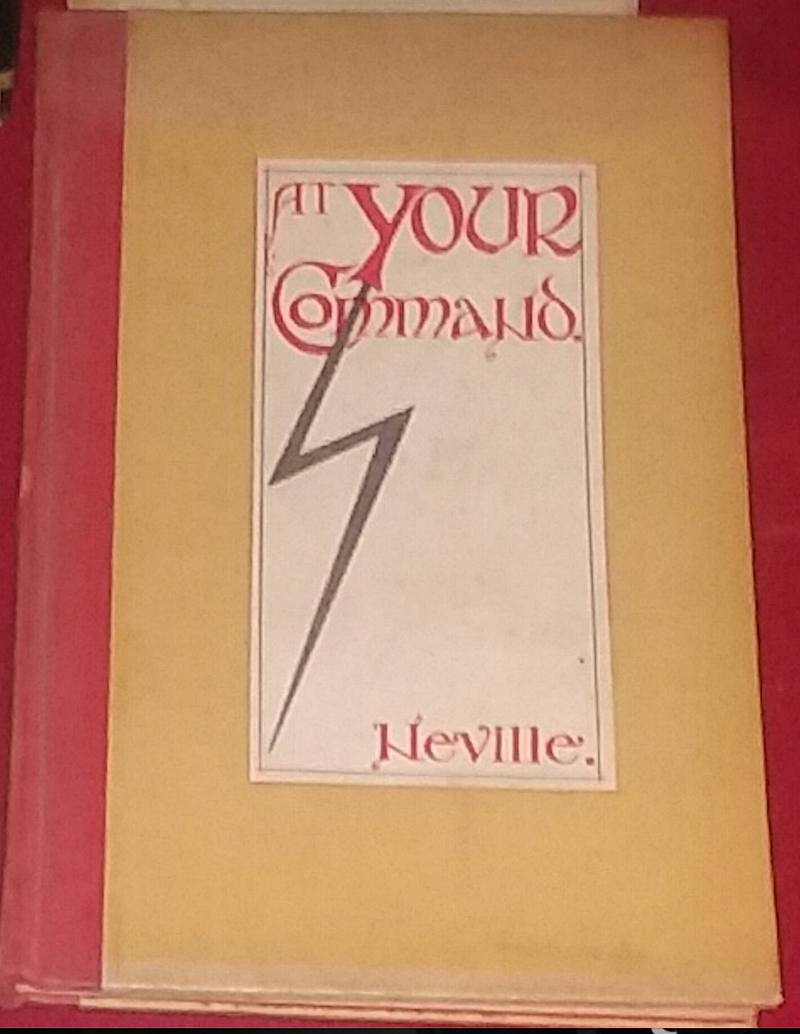
Neville’s literary career began in 1939 with his slender, evocative volume, At Your Command. It is not only the mystic’s first book but among his most elegant and powerful statements in a career that spanned more than ten volumes and thousands of lectures.
With disarming brevity, At Your Command presents Neville’s full-circle philosophy: Your imagination is the creative force called God in Scripture; the Bible itself is neither historical nor theological but rather a symbolic blueprint of the individual’s psychological development.
“Every man,” Neville said in 1967, “is destined to discover that Scripture is his autobiography.”
It is idealist philosophy taken to the razor’s edge, argued with jewel-like precision. However frequently Neville restated his basic premise, it always sounded fresh, reaching even repeat listeners or readers as though for the first time —a gift possessed by Ralph Waldo Emerson (1803–1882), Jiddu Krishnamurti (1895–1986), Vernon Howard (1918-1992), and few other modern spiritual voices.
ABritish native of Barbados, Neville first ventured to the U.S. at age seventeen to study theater. He had never been away from his island home. Although the graceful, angular youth found some success on screen and stage, he radically changed directions in the early 1930s when he said he began studying under a mysterious teacher named Abdullah, a turbaned black man of Jewish descent. They worked together in New York City for five years poring over Kabbalah, number symbolism, and Scripture.
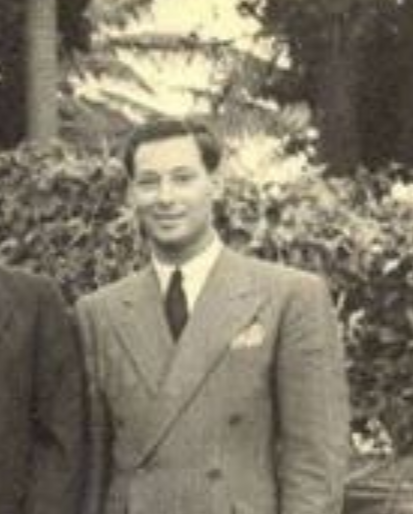
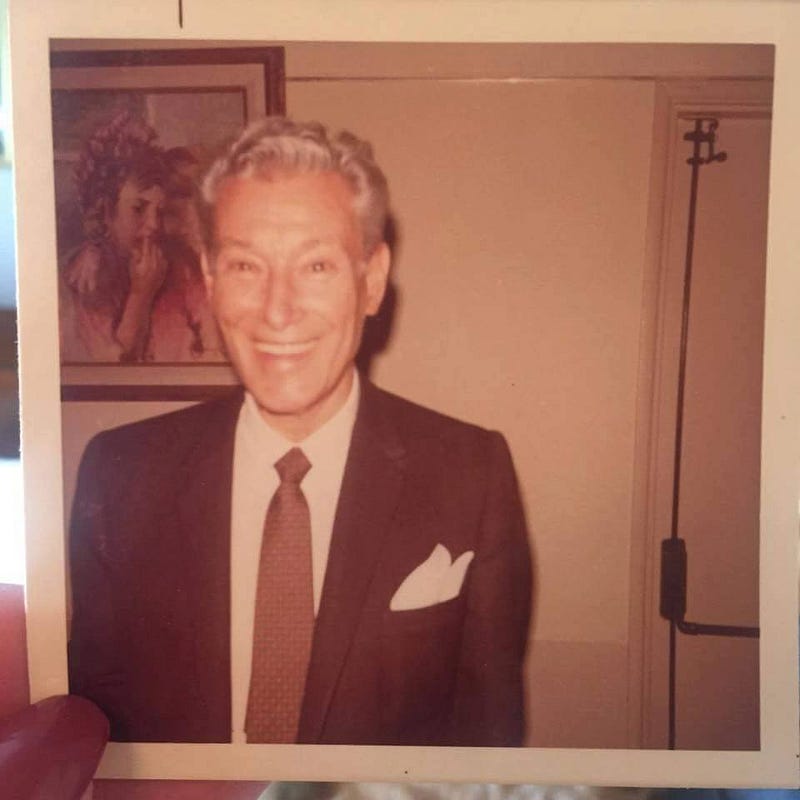
By early 1938, Neville quit his theatrical career altogether to dedicate himself to writing and lecturing on metaphysics. Although he won audiences on both coasts, by his death at age 67 in 1972 in West Hollywood, it was difficult to fathom that the Barbadian’s voice, persona, and ideas would resonate in future decades. Indeed, the Woodstock Generation showed little interest in the silver-maned, tailored man who spoke of the divinity of imagination.
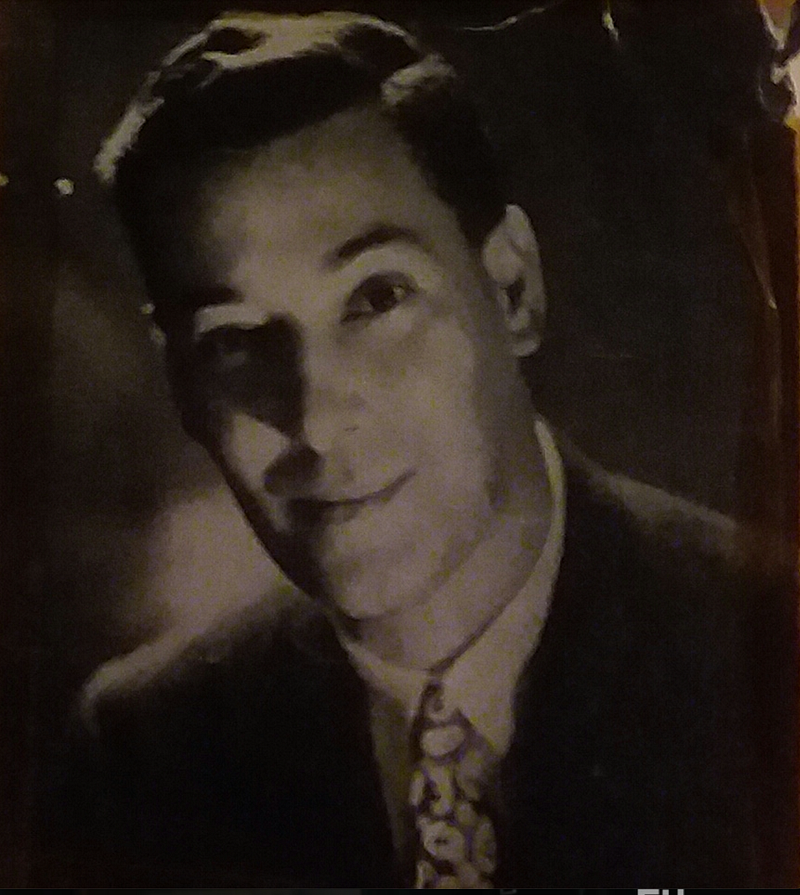
For all his newfound currency, few images survive of Neville — which is odd given his screen-idol looks and thespian background. At the top of this article appears a recently discovered one. It was shared with me by a correspondent in Maine who was friends with a deceased student of Neville’s.
In the early 1970s, shortly before the woman’s death, she gave my correspondent a box of Neville’s signed books along with her personal lecture notes. As he related, the Maine student would drive to New York City just to hear Neville speak. “Quite a distance to catch a lecture even today,” he wrote. “When she ran out of pages, she continued to take notes on her hotel’s stationary and the envelopes too.”
I can understand the Mainer’s dedication. I am often drawn to a teaching based on my perception of its purveyor’s character and gravitas. Something about Neville’s persona gripped me even before I heard his clipped Anglican accent or glimpsed his Romanesque image.
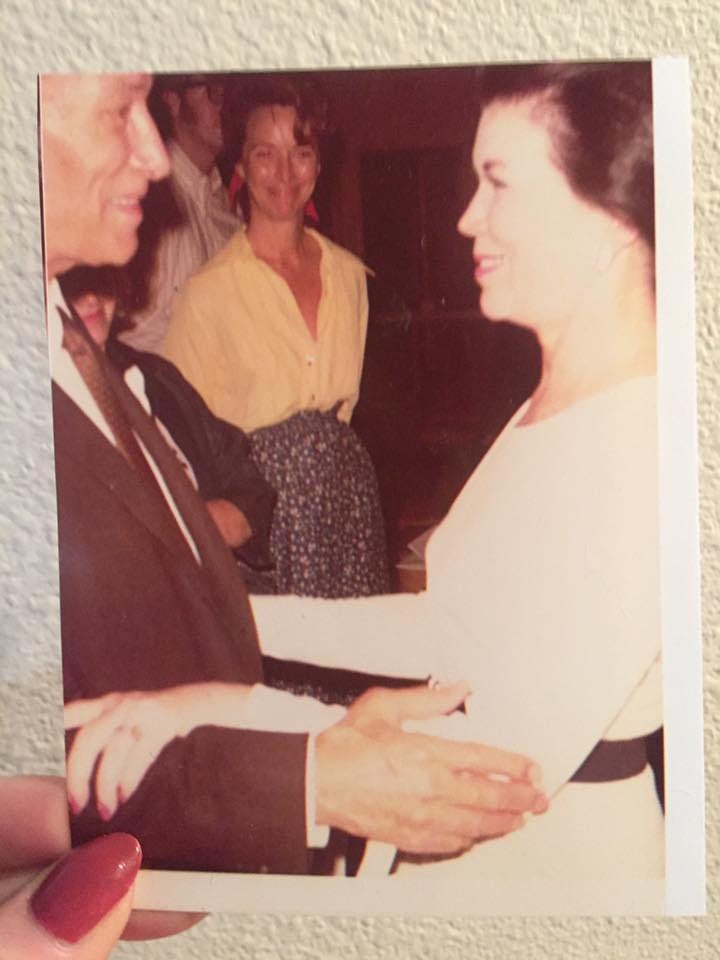
Neville, to me, conveyed personal seriousness intermingled with the most radical proposition I had ever heard: everything is ultimately rooted in you, as you are rooted in the infinite.
I initially wrote about Neville in early 2005 in an article for Science of Mind magazine titled “Searching for Neville Goddard.” It was the first journalistic portrait of the mystic since the 1940s. Even then, Neville remained a figure of opaqueness to most New Thoughters.
Just hearing Neville’s name filled me with intrigue. In summer 2003, I was interviewing major-league pitcher Barry Zito, who was then playing for the Oakland A’s. Barry’s blunt but idealistic father, Joe, had tutored his son in Neville’s work. The Cy Young Award-winner used Neville’s method of mental creativity in his training regimen. Pitching for the San Francisco Giants, Barry became the hero of the 2012 World Series.
Neville’s teaching that all of reality is self-created — that your mind is God the Creator — then formed a key part of the athlete’s system of self-development, which he inherited from both father and mother, Joe and Roberta, who ran their own metaphysical congregation in San Diego, Teaching of the Inner Christ Church.
Midway through our conversation, Barry paused and remarked, “You must really be into Neville.” I had no idea what he meant. The athlete was incredulous. Immediately following our talk, I sought out Neville’s 1966 book Resurrection, his last. Upon reading it, I was enthralled — and hooked ever after.
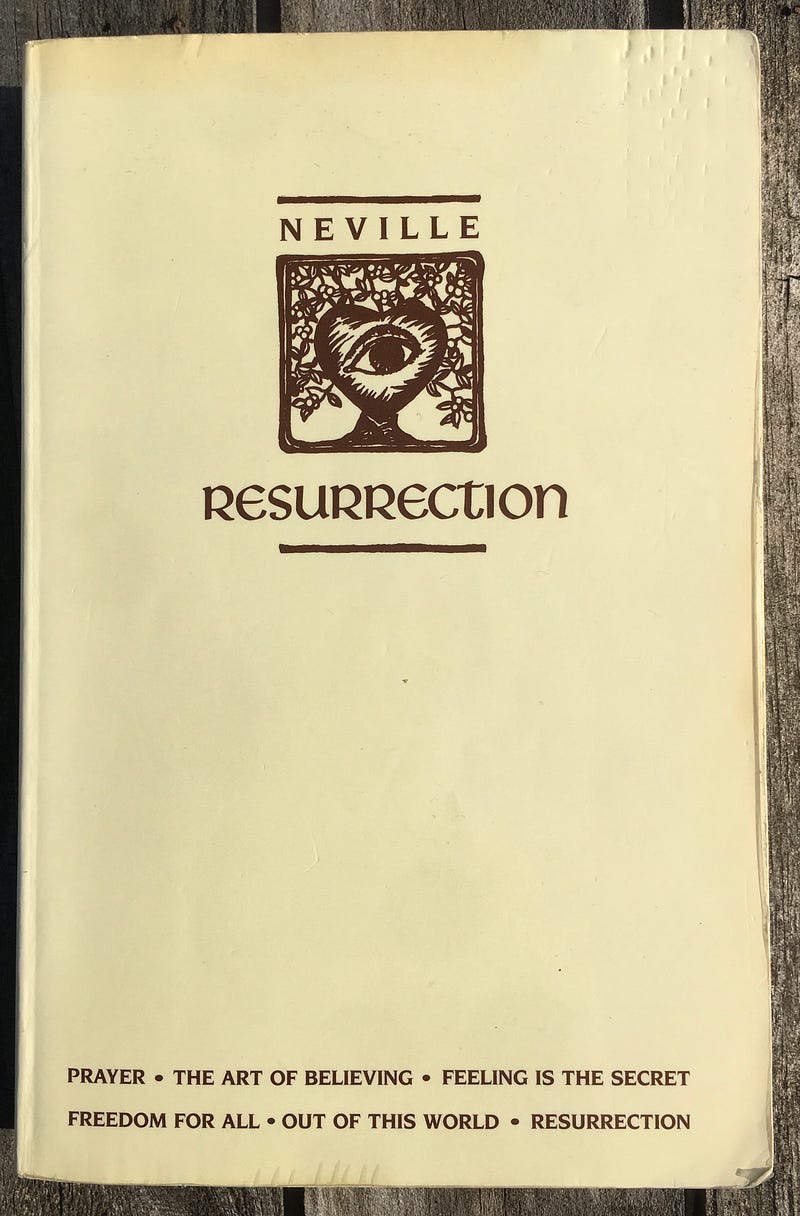
Neville’s books were then available only in nondescript editions with plain beige covers. They were issued from a single publisher in Los Angeles, DeVorss & Co. (At Your Command was not among them — it didn’t begin recirculating until Neville’s resurgence.) The covers were uniform in design, featuring title, author, and the intriguing insignia of an eye impressed on a heart impressed on a tree. Neville told a Los Angeles audience in 1948:
It is an eye imposed upon a heart which, in turn is imposed upon a tree laden with fruit, meaning that what you are conscious of, and accept as true, you are going to realize. As a man thinketh in his heart, so he is.
The austere editions, more suited to Cato the Elder than a dramatic mystic, inadvertently heightened the mystery around Neville. The volumes also opened a generation of readers — me included — to Neville’s ideas when virtually no other entry existed.
A final word about Barry Zito. After my article appeared, his father Joe instilled me with confidence in my writing, still a new endeavor. At my desk one morning, I heard that Joe Zito was on the phone. Knowing Joe’s glass-eating reputation, I lifted the receiver a little nervously. In drill-sergeant tones, the voice on the other end announced: “Mitch, you stick with this thing.” He meant writing. It was my first article after a long hiatus. I followed his exhortation. In a little over three years, I had my first book contract with Random House.
Neville and the Zitos (the teacher would’ve said all are one) set me on my path.
Although Neville wrote fuller works with greater metaphysical exposition, At Your Command remains the perfect user’s manual. What you experience, Neville told seekers, is not what you pray for but what matches your “awareness of being.” Clarified desire, properly directed, he said, catalyzes a new state:
For instance; if you were imprisoned no man would have to tell you that you should desire freedom. Freedom, or rather the desire of freedom would be automatic. So why look behind the four walls of your prison bars? Take your attention from being imprisoned and begin to feel yourself to be free. FEEL it to the point where it is natural — the very second you do so, those prison bars will dissolve. Apply this same principle to any problem.
Mere solipsism? The difference between a solipsist and an idealist is that the former burdens others to validate his self-image. Neville’s system is fiercely independent. Wishful thinking? Neville’s outlook evolved into what I consider the most elegant mystical analogue to quantum theory — and is increasingly recognized as such.
At Your Command is purposeful in its simplicity. The book’s overarching method, perhaps imported from Neville’s thespian career, is to always be on stage. Feel and occupy the life you wish to lead; immerse yourself within that life in your mental-emotive self or psyche.
Author and magician Alan Moore has spoken eloquently about the connection between fiction, language, and magic. Moore has mentioned — and I can affirm — that anyone who’s been writing for a while has a file of extraordinary coincidences in which experience follows story. I expect this holds true across the arts in general. Concepts of “make believe” are powerful in ways we may not suspect.
I have my differences with Neville’s ideas, which I explore in Daydream Believer. If I have any critique of Neville’s techniques, it is that I am unsure he realized how difficult it is for an individual to enter and sustain a feeling state contrary to dire circumstances or emotional duress.
Thought alone cannot produce emotion — emotion overpowers thought. Were thought or intention able to control passion, much less physicality, we would have no addictions, untoward outbursts, or depleting attachments. As a trained actor and dancer, Neville found it natural to summon different emotional states, similar to an accomplished Method Actor. Those abilities are unavailable to most everyday people (and certainly to me).
Resolution to this dilemma is private for every seeker. One possible workaround, which the teacher often referenced, involves using hypnagogia (not his term) — the state of cognizant pre-sleep or drowsy relaxation — to facilitate the feeling process. Hypnagogia naturally occurs twice daily: just prior to and following sleep. It is a period of hallucinatory sentience during which you are nonetheless capable of controlling attention. What’s more, your rational defenses are lowered. This may be considered “prime time” to visualize a desired end. (Hypnagogia is also a period of heightened extrasensory-perception (ESP) activity, as recorded in academic psychical research.)
Hypnagogia is not limited to sleeping and waking hours. In Neville’s telling, he entered this state daily at 3 p.m. following lunch — aided by a full bottle of wine. There is no prissiness in Neville’s system. Whether excessive consumption of alcohol also proved the teacher’s undoing is, however, a valid question.
Earlier I referenced the underestimated power of “make believe.” Another way of using Neville’s system is to adopt an inner state of theatrical or childlike play. Not childish, childlike: a state of internal wonder and pretending. Children excel at this. We grow embarrassed by this quality as we age, but Neville spoke ingenuously of walking the wintry streets of Manhattan imagining that he was in the treelined, tropical lanes of his native Barbados, boarding a ship to some desired destination, or in a location where he wanted to be.
In At Your Command, Neville cautioned against outlining or rationalizing how your wishes will arrive:
Your desires contain within themselves the plan of self-expression. So leave all judgments out of the picture and rise in consciousness to the level of your desire and make yourself one with it by claiming it to be so now.
Unfoldment, he wrote, occurs in “ways beyond knowing” — harmonious, natural, and fitting. In that vein, desires are neither to be feared nor conditioned:
The measurements of right and wrong belong to man alone. To life there is nothing right or wrong…Stop asking yourself whether you are worthy or unworthy to receive that which you desire. You, as man, did not create the desire. Your desires are ever fashioned within you because of what you now claim yourself to be.
When a man is hungry (without thinking), he automatically desires food. When imprisoned, he automatically desires freedom and so forth. Your desires contain within themselves the plan of self-expression…
The reason most of us fail to realize our desires is because we are constantly conditioning them. Do not condition your desire. Just accept it as it comes to you. Give thanks for it to the point that you are grateful for having already received it — then go about your way in peace…But, to be worried or concerned about the HOW of your desire maturing is to hold these fertile seeds in a mental grasp, and, therefore, never to have dropped them in the soil of confidence.
This relates to an observation by Krishnamurti, which is that when we ask how we really don’t want something. How is avoidancy. When the realness of desire exists, without conflict or contradiction, the means appear (albeit sometimes after an interval) as naturally as opening an umbrella in the rain. The hungry person desires food — not thoughts of food. This must be kept in mind when assuming your feeling state. And finally:
Recognition is the power that conjures in the world. Every state that you have ever recognized, you have embodied. That which you are recognizing as true of yourself today is that which you are experiencing.
Neville’s voice, even in this nascent work, summons us, finally, beyond all method, system, or rite. Above all, the teacher emphasized the literalness of a truth whispered in nearly every spiritual, therapeutic, and ethical philosophy: you are as your mind is.


