
You Are Not Required to Give Credence to Bad-Faith Arguments
When the other side only engages in bad faith, you’re better off saving your sanity
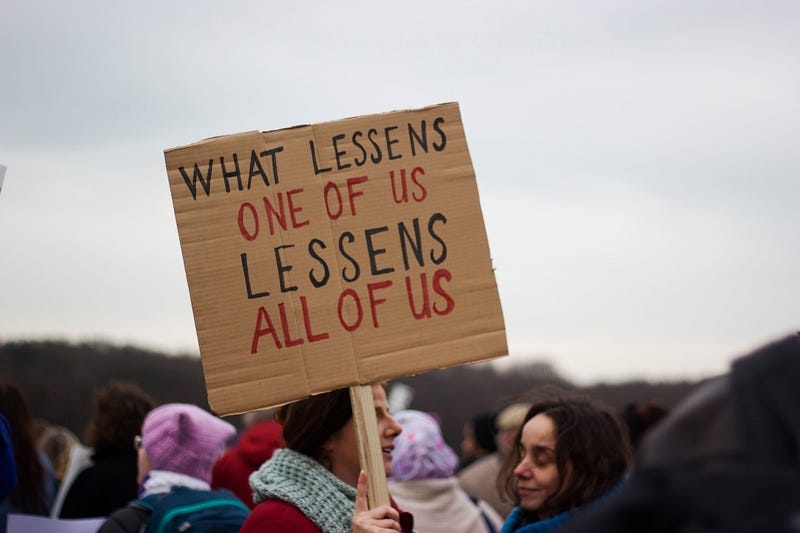
My wife came downstairs this morning after having spent a bit of time scrolling Facebook in bed. She was a bit unhappy.
Current events have impacted our household fairly strongly — we are both pretty liberal Bernie supporters, and the horrors of the current administration coupled with the current protests have wrecked us both. However, our social media feeds have only impacted us negatively as of late.
Today, she had seen a video posted, without comment, by an acquaintance. In the video, which she watched part of but could not finish, the narrator suggested that the Clintons and George Soros were secretly funding Antifa rioters to insert them into the protests for…some reason. The argument was a fairly classic batshit conspiracy theory, and she didn’t finish it.
She came away shaken and upset that someone in her circle had posted it. No comment was added, which deepened the mystery and concern. Did the poster really believe this tripe? Was it a means of informing her friends of the craziness of the current opposing theories? What the heck was the point of posting it at all?
While describing this to me, she commented that she felt obligated to read opposing arguments to stay informed. It frustrated me, as she was clearly upset by the video, but in our household, we do our research, and the drive to be informed of all sides can be both a boon and a downfall.
I have been trying to avoid such nonsense posted by people opposed to the BLM movement since I much prefer to keep a clear head than to listen to such drivel and get righteously angry at someone who doesn’t care. And, for me and a lot of people, that’s probably the best course of action.
I find my personality to be a strange mix of logic and emotion. I have a very cerebral approach to many things, and like to be informed of current events, scientific phenomena, writing minutia, and a dozen other topics. For me, logic and information rule the day, and I try to approach my work from an intellectual ground.
On the flip side, I am diagnosed with bipolar and take medications for it. While I don’t have huge manic upswings or depressive streaks, there is still room to swing in either direction, a compromise of my current meds. As a result, my emotions tend to run a little wild, and I find myself empathizing with so many hurt people and righteous causes.
The upshot is that I love intellectual debates but suck at them. Whenever I get emotionally invested in an argument, all logic falls away and I lose all my talking points and often also lose the argument because I don’t have witty comebacks. I also physically shake when I’m talking passionately about something I care about.
Internet debates are better for me since I can prepare my arguments better and in my own time, but callous comments still cut me to the bone, and I tend to take them personally and dwell on them for days. Honestly, if someone comments on one of my posts in a cutting, derisive way, I tend to just not read the whole comment because they’re trying to get to me and I don’t need to give them any of my headspace.
That, I think, is what often gets lost among the intellectuals in the current BLM movement — particularly intellectual white folks. We don’t need to be spending so much time cutting down arguments that are made in bad faith.
Hear me out.
The BLM movement will be seen by historians as the right side of history in the same way that the Civil Rights movement is. That is undeniable. There are no good arguments against it. Period.
Right now, the opposition to the BLM movement only has bad faith arguments and appeals to bigotry. Arguments that Martin Luther King Jr. wouldn’t approve of the present protests ignore history. Arguments that violence never solved anything also ignore history. Arguments that the country’s police forces and justice system are fair are provably false.
Then, we dive into conspiracy theories and pure racism. The revisionism that goes into arguments that the Confederate flag isn’t racist and the Civil War wasn’t about slavery is mind-boggling. Theories about a Deep State or some sort of liberal plan to create a new world order are absurdly dumb. Anything that Q-Anon and its followers say is pure baseless stupidity.
So, why do we give them so much weight? Why do we let them occupy so much of our brain capacity?
Don’t get me wrong, there is value in debunking them. Arguments in the comments section can be valuable to those on the sidelines. In particular, having white people stand up for the BLM movement and argue down these bullshit claims is helpful to BIPOC who have to deal with this every day and don’t have the emotional capacity to do it constantly. Simply seeing that they have allies can help bolster a person who might otherwise give up hope.
But, if you are an emotional or empathic person for whom these vicious, bad-faith arguments weigh heavily, you don’t have to give them any time, particularly and especially if you’re a BIPOC.
Opponents to the BLM movement have an army of expert trolls, led by the Tweeter-in-Chief, but so do we. In college, I was friends with a tech-savvy group that was fairly left-leaning and participated in a lot of activism and hacktivism. These were some of the more progressive 4-chan types that protested at Scientology temples and Westboro Baptist Church events. Members of the fabled Anonymous of old that doxxed racists and took down hate sites with DDoS attacks.
Many of these people are firing up their keyboards to support the movement. They grew up in the 90s and early 2000’s arguing in internet forums, and old habits die hard, especially when your target is racists and bigots.
Backing them up is an army of intellectuals, many of them Millennials who have been repeatedly hosed by the shittiness and bigotry of older generations and aren’t about to take any more of it. They spend their days on Twitter and Reddit, taking down racist arguments over and over in every forum imaginable.
They have the energy and patience to repeatedly tear down all of these bad-faith arguments with well-researched responses and witty insults. Moreover, they are often more tech-savvy than their opponents, wielding the powers of technology against their parents’ generation and their Fox News addiction.
To top it off, the leaders and supporters of the Civil Rights movement are now elders, having lived through this shit before. Many are offering advice to the new generations of protestors; others are knocking down the same arguments that they knocked down 60 years ago.
The point of all of this is this: if you feel obligated to read and watch opposing viewpoints to stay informed, even at the cost of your sanity, don’t. If the blatant lies and bigotry make you want to cry and scream, don’t seek them out due to some desire to remain balanced.
I will repeat what I said above: the opposition has no good arguments against this movement. Zero. There is no good, valid argument against this movement. You either support the movement in some way, shape, or form, or you acknowledge that you’re a racist piece of shit.
You cannot fight a bad-faith argument with a good-faith argument. It just doesn’t work. The best you can do is wade into the trenches and hope that the people who are sitting on the sidelines are encouraged or convinced.
And if that’s not your style, that’s fine. You are not obligated to harm your mental health by eating garbage.
That does not, however, release you from your duty. There are countless things that you can do to support the movement that don’t involve putting yourself into harm’s way, physically or mentally.
Donate to a bail fund. Put your dollars to work
Donate food, water, or medical supplies to the cause. Sew masks for the protestors. Contribute stuff.
Scout protest locations to identify dead-ends and narrow corridors. The police have demonstrated an aptitude for cornering and blocking off protestors so they can gas and pepper spray them. Drive around protest sites in the mornings and coordinate with protestors to mark no-go areas on a public document.
Monitor electronic communications. It is perfectly legal to own a police scanner. Get one, learn to use it, and coordinate police movements with protestors.
Get engaged in politics. Call your senators and representatives. Attend public government meetings and raise your voice. Vote, goddammit.
Educate yourself. Find good, valid sources of information about Civil Rights and the BLM movement and read them. There’s a lot of painful stuff there, but learning about history as it really happened is a good step in building a strong movement.
Support businesses owned by BIPOC. I’ve seen several lists going around. Show your support to the local community. Conversely, don’t support businesses that side with the cops. If you see a Blue Lives Matter flag in the window, turn yourself around and walk away.
Create things to support the movement. Write articles. Create art. Sew PPE. Make things that keep people hopeful.
Put up a lawn sign or flag. Show your community that you support BIPOC.
Message your BIPOC friends and check in on them. Be their emotional support. They’re probably going through hell right now.
Part of the movement is keeping up hope. If you repeatedly beat your head against a wall in the name of “staying informed,” you run the risk of brain damage. I cannot say this enough: there are no good arguments against the movement.
Instead, practice self-care. If reading the garbage that Trump and his supporters publish makes you sick, don’t do it and don’t feel bad about not doing it. The BLM movement has an army of warriors, both protestors and keyboard warriors, who will gladly step up and go toe-to-toe with the trolls and bigots. Don’t feel obligated to be one if it will harm you emotionally or mentally.
Find your role and fill it. If one of the above options doesn’t appeal to you, do some research for other ways to support the cause. This has been and will be a long battle, and we all have to keep up hope. Don’t actively harm yourself because you feel obligated. Bigots and racists don’t feel obligated to harm themselves by reading our arguments, why should you?
The first rule of self-care is that you shouldn’t set yourself on fire to keep others warm. Part of taking care of each other is taking care of ourselves.
That’s not to say that this will be comfortable. If you’re a white person, you should be feeling uncomfortable, even if you’re a strong ally. Whether we like it or not, we are part of the system that has created this protest.
However, by taking care of ourselves, we will have more capacity to fight the upcoming battles. We all have our part to play, and we all need to stay strong if we are to succeed.
So take care of yourself, play your part, and fight the good fight. Together, we will succeed.