
You are not a victim to the coronavirus.
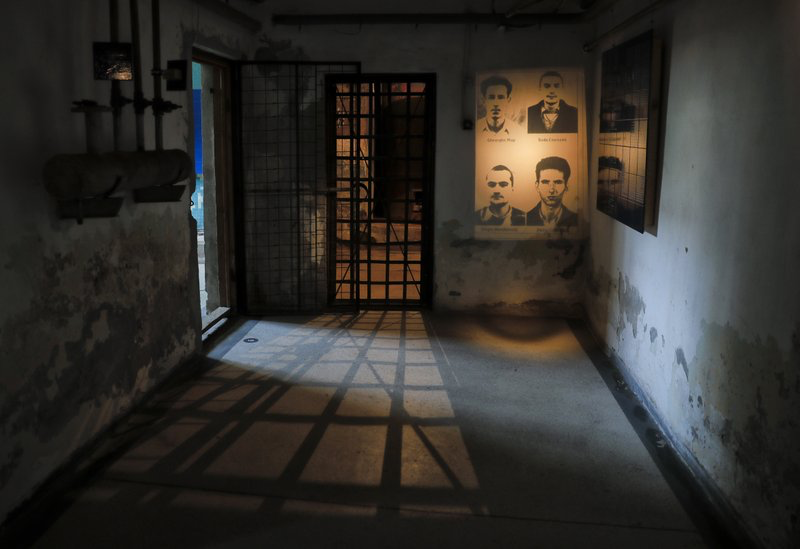
A Communist Prison in Romania — 1950’s
He watched, as one of his friends was tortured with red-hot iron pokers and knives, while helpless in his cell. When they were finished with that, starving rats were driven into his his friend’s cell and trapped inside. He could not rest because the moment he let his guard down, they attacked.
He and his friends were forced to stand for 2 weeks straight, with no rest. He watched as sons were murdered in front of fathers. Handcuffs were placed on his and his fellow prisoner’s wrists with nails poking through; and because of the coldness of the cells and shivering of their bodies, their wrists would be “torn by the nails”. Men were hung upside down for hours on ropes and beaten like piñatas.
The prisoners were put in refrigerator cells that were ice covered on the inside. They were thrown in to the cells with a prison doctor present so that they would be taken out just before they reached the point of death. Once thawed, they would be forced directly back into the frozen cells — they did this over and over again.
“All the Biblical descriptions of hell and the pains of Dante’s Inferno are nothing in comparison with the tortures of the Communist prisons.” pg 39 Tortured for Christ
Richard Wurmbrand grew up as an orphan, and was arrested in Romania for preaching and for helping the country’s citizens. He was imprisoned in these unthinkable conditions for 14 years. From the beginning of his life until the day he died, Reverend Richard Wurmbrand was the embodiment of the word victim.
However, in his book Tortured for Christ, he wrote these words: “I hate the Communist system, but I love the men. I hate the sin but I love the sinner. I love the Communists with all of my heart. Communists can kill Christians but they cannot kill their love toward even those who killed them. I have not the slightest bitterness or resentment against the Communists or my torturers.”
He was later released from prison, and would spend the rest of his life fighting for what he believed in and helping people across the world with his words and his actions. He had every right to remain a victim, but instead he chose to become a hero.
—
At some point in our lives, every one of us has the chance to stamp the word “victim” on our forehead and go about life with an entitlement that says that the world, or someone, owes us something because of what has happened to us. However, there is no man or woman in history who we revere, that claimed that title. The Tubmans, the Kings, the Grahams, the Mandelas and the Gandhis — they all chose a different identity, and did the best they could do with what they had in their hands. This doesn’t mean they weren’t victims to something, and this doesn’t negate the pain that was felt or the hardship that was endured — but these types of people prove that each of us have a choice. We can choose to complain, or we can choose to be effective.
Victims forfeit the power to change.
The power that each of us has lies within the choices that we make. The power that we have lies in the resources, attributes we possess that can add some sort of value to society as a whole; it lies hidden in the circumstances, no matter how great or terrible.
There is always something we can do. Sometimes the best thing we can do for the people around us is to take care of ourselves. Sometimes it’s to help a loved one or a stranger with resources or encouragement. Sometimes it’s the creativity we can release that lifts up, challenges or informs others of the truth. It’s the kindness we can show and the ability we have to persevere.
There’s always something we can do.
The moment that we blame an outside force, we put the power for any sort of change solely in that outside force’s hands. Blame forfeits the power to change a situation or rectify a problem, because our attention shifts to, “Someone else needs to fix it because there’s nothing I can do.”
You won’t control this virus. You won’t control the people around you. Good luck trying to control what people say on Twitter. You can’t control every outcome of every situation or the inevitability of hardship and death.
So, you may not be able to control these things, but you can use them. A focus on that which we can’t control renders us a helpless victim with nothing to offer. Attention toward what we can control, even in a seemingly hopeless situation, puts us back in the drivers seat and gives our minds the ability to look for solutions.
There’s always something we can do.
When our focus shifts away from media, gossip and helplessness and shifts toward the opportunities we have at our fingertips, we take the power back. It doesn’t matter whether or not you feel like what you can offer is big or small, significant or insignificant — it makes a difference.
Victims value comfort now over progress later.
The easiest thing to do in these times is to take the anxiety, the stress and the uncertainty and use it to tighten the grip that your unhealthy vices have on you in your life. Because a victim is powerless, and they can’t do anything about their situation, all they want to do is to ease the pain and feel better for a moment; they want to escape.
You’ve been resisting the urge to drink again when it destroyed you and your family before; but now the urge is back with a vengeance. The desire to sit in front of a screen and absorb toxic information is pulling at you every second of the day. The seductive voice of drugs seem to be shouting your name through the noise, no matter where you go. The habits that contributed to obesity or depression or anxiety, seem to be pulling you back more violently than ever before. Eugene Petersen calls this the “accelerating cost and the diminishing returns of those who pursue pleasure as a path toward joy.” You don’t have to fall back into the trap.
“One great lesson arose from all the beatings, tortures, and butchery of the Communists: that the Spirit is master of the body.” — Wurmbrand
Use this time to grow. Use this time to build resilience and prove to yourself that you have what it takes to do what you need to do when it counts the most. You have the space now to make the choices — this is something you can control. The small wins, every day, give you the confidence to tackle the greater struggles when they come along.
While being persecuted for his beliefs around 57 a.d., Paul “the Apostle” wrote, “No, I strike a blow to my body and make it my slave so that after I have preached to others, I myself will not be disqualified for the prize.”
If we can learn to seek progress and resilience over comfort in the every day tasks when comfort is readily available, we build the resilience necessary to be most effective in other times when life inevitably thrusts uncomfortably upon us.
‘You will be the same person in five years as you are today except for the people you meet and the books you read.’ — Charlie Jones
Put the habits in place — set up the necessary accountability so you are forced to stay strong when you’re feeling weak. Make progress. When we feel good about the progress we are making, we become more valuable to those around us.
Victims harm people.
“We are caught in an inescapable network of mutuality, tied in a single garment of destiny. Whatever affects one directly affects all indirectly.” MLK
A victim’s job is to accuse. To point fingers and blame. If the men and women who went through (and are still going through) the most heinous tortures imaginable in Communist prisons can choose to not blame their torturers, then we can choose not to point fingers now.
You may be scared for yourself or your family. You may have lost someone. You may feel like the pressure of it all is caving in around you. However, sitting idly by and not doing what we can do to help the problem, solidifies our positions as accomplices to it. Martin Luther King once said, “For evil to succeed, all it needs is for good men to do nothing.”
Right now we have an opportunity to expose our weaknesses as a country and build on our strengths. Right now we have the chance to be a light to those around us and to the rest of the world that’s un-ignorable, because the darkness is so deep.
“We must come to see that human progress never rolls in on wheels of inevitability. It comes through the tireless efforts and persistent work of men willing to be coworkers with God, and without this hard work time itself becomes an ally of the forces of social stagnation.” — MLK
JFK said, “Ask not what your country can do for you, but what you can do for your country.”, and if we would buy in to this idea, we would be more concerned with how we can be helpful to someone else, rather than worried about how much soft paper we have to wipe ourselves with. And a nation full of people who put their neighbor before themselves, especially in times of crisis, shows the world a glimpse of what Jesus did for each of us on the cross.
Suffering can produce bitterness, fear, hatred and lifelong pain. But if you let it, suffering can also produce perseverance, character and hope. If Reverend Richard Wurmbrand endured unimaginable pain and suffering, yet used those circumstances to become a hero, then we can certainly get through this together.
“Therefore, since we have been justified through faith, we have peace with God through our Lord Jesus Christ, through whom we have gained access by faith into this grace in which we now stand. And we boast in the hope of the glory of God. Not only so, but we also glory in our sufferings, because we know that suffering produces perseverance; perseverance, character; and character, hope. And hope does not put us to shame, because God’s love has been poured out into our hearts through the Holy Spirit, who has been given to us.” — Paul the Apostle