You Are Brushing Your Teeth Wrong Your Whole life!
I got shocked when I kept a close eye on my husband while brushing his teeth as he was satisfied by brushing and told me it’s all that I know!
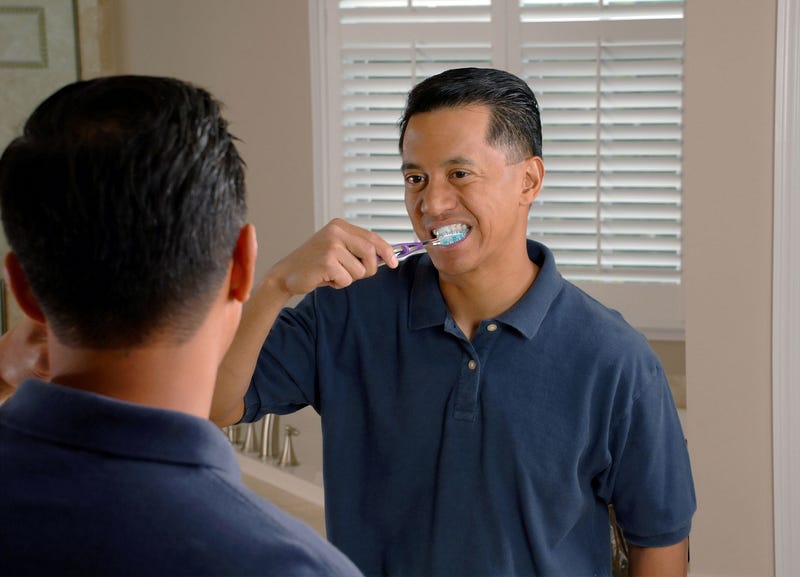
Here is a questionnaire to determine how good you are in brushing
1. Do you brush your teeth before sleeping?
2. Do you use an electric or manual toothbrush?
3. Is your brush soft?
4. Do you use specific toothpaste?
5. Do you help your child in brushing his/her teeth?
6. Do you think you should use mouthwash?
7. Do you use your dental floss before or after brushing?
If your answers mostly Yes, then you are in a good position!
If your answer mostly No, then you need to pay attention to the following:
Do you brush your teeth before sleeping?
Brush your teeth 2 times for about 2 minutes the last thing at night before you go to bed that’s the most important
It doesn’t matter whether you use an electric or manual toothbrush.
They’re both equally good, as long as you brush all the surfaces of all your teeth and you use fluoride toothpaste.
Do you use an electric or manual toothbrush?.is your brush soft?
For most adults, a manual toothbrush with a small head and a compact, angled arrangement of long and short round-end bristles are fine. Medium or soft bristles are best for most people.
If you’re using an electric brush, one with an oscillating or rotating head may work better than a manual toothbrush. But make sure you thoroughly clean your teeth at least twice a day is more important than the type of brush you use.
Do you use specific toothpaste?
It’s important to use a toothpaste with the right concentration of fluoride.
Check the packaging to find out how much fluoride each brand contains.
Adults should use a toothpaste that contains at least 1,350 parts per million (ppm) fluoride.
Children aged 7 and more don’t need to use special children’s toothpaste. they can use family toothpaste, as long as it contains 1,350 to 1,500ppm fluoride. Children aged 6 and under who don’t have tooth decay can use a lower-strength children’s toothpaste, but make sure it contains at least 1,000ppm fluoride.
How much toothpaste to use?
Children under the age of 3 should use just a smear of toothpaste. Children aged 3 to 6 years should use a pea-sized blob of toothpaste. Make sure children don’t lick or eat toothpaste from the tube.
Do you help your child in brushing his/her teeth?
Children need to be helped or supervised brushing their teeth until they’re at least 7 years old.
From brushing their first tooth to their first trip to the dentist, here’s how to take care of your children’s teeth.
A regular teeth-cleaning routine is essential for good dental health. Follow these tips and you can help keep your kids’ teeth decay-free.
Toothbrushing tips
It’s important to use fluoride toothpaste, as this helps prevent and control tooth decay.
Children aged up to 3 years
Start brushing your baby’s teeth as soon as the first milk tooth breaks through (usually at around 6 months, but it can be earlier or later).
Parents or carers should brush or supervise toothbrushing.
Brush teeth twice daily for about 2 minutes with fluoride toothpaste.
Brush last thing at night before bed and on 1 other occasion.
Use children’s fluoride toothpaste containing no less than 1,000ppm of fluoride (check label) or family toothpaste containing between 1,350ppm and 1,500ppm fluoride.
Use only a smear of toothpaste.
Make sure children don’t eat or lick toothpaste from the tube.
Children aged 3 to 6 years
Brush at least twice daily for about 2 minutes with fluoride toothpaste.
Brush last thing at night before bed and at least on 1 other occasion.
Brushing should be supervised by a parent or carer.
Use children’s fluoride toothpaste containing no less than 1,000ppm of fluoride (check label) or family toothpaste containing between 1,350ppm and 1,500ppm fluoride.
Use only a pea-sized amount of toothpaste.
Spit out after brushing and don’t rinse — if you rinse, the fluoride won’t work as well
Children aged 7 and over
Brush at least twice daily for about 2 minutes with fluoride toothpaste.
Brush last thing at night before bed and at least on 1 other occasion.
Use fluoride toothpaste containing between 1,350ppm and 1,500ppm of fluoride (check label).
Spit out after brushing and don’t rinse — if you rinse, the fluoride won’t work as well.
Children aged 7 and over should be able to brush their teeth, but it’s still a good idea to watch them make sure they brush properly and for about 2 minutes.
How to help children brush their teeth properly?
Guide your child’s hand so they can feel the correct movement.
Use a mirror to help your child see exactly where the brush is cleaning their teeth.
Make tooth brushing as fun as possible by using an egg timer to time it for about 2 minutes. You could also try the Brush DJ timer app listed on our Apps Library.
Don’t let children run around with a toothbrush in their mouth, as they may have an accident and hurt themselves. Don’t rinse with water straight after toothbrushing
Do you think you should use mouthwash?
Using a mouthwash that contains fluoride can help prevent tooth decay, but don’t use mouthwash (even a fluoride one) straight after brushing your teeth or it’ll wash away the concentrated fluoride in the toothpaste left on your teeth.
Choose a different time to use mouthwash, such as after lunch.
Don’t eat or drink for 30 minutes after using a fluoride mouthwash.
Do you use your dental floss before or after brushing?
Flossing isn’t just for dislodging food wedged between your teeth.
Regular flossing may also reduce gum disease and bad breath by removing plaque that forms along the gum line.
It’s best to floss before brushing your teeth.
Take 12 to 18 inches (30 to 45cm) of floss or dental tape and grasp it so you have a couple of inches of floss taut between your hands.
Slip the floss or dental tape between the teeth and into the area between your teeth and gums, as far as it’ll go.
Floss with 8 to 10 strokes, up and down between each tooth, to dislodge food and plaque.
How to use interdental brushes?
You can use interdental brushes or single-tufted brushes instead of flossing, especially if there are gaps between your teeth.
The brush should fit snugly between the teeth.
Never use toothpicks to remove trapped food from between your teeth as you may damage your gums, which could lead to an infection.
In conclusion, The best way to brush your teeth is :
Making sure you brush all the surfaces of all your teeth, which should take about 2 minutes.
Remember to brush the inside surfaces, outside surfaces, and the chewing surfaces of your teeth.
After brushing, spit out any excess toothpaste.
Don’t rinse your mouth immediately after brushing, as it’ll wash away the concentrated fluoride in the remaining toothpaste.
This dilutes it and reduces its preventative effects.


