
You Are Being Manipulated
And you don’t even know it!

Persuasion is ethical. Manipulation is not.
Our behaviors are influenced by persuasion. Certain businesses and people take the act of persuasion too far — that’s when it becomes manipulative.
Let’s first cover the basics.
Persuasion is — influencing your audience into something that they need or want to have.
Manipulation is — influencing your audience into something that you want them to have.
If you’re a parent, you may have walked the fine line of persuasion vs manipulation several times, when trying to feed your child.
Let’s look at some real world scenarios where it is a fine line. Can you identify which one feels ethical vs not?
1. Rides at Theme Park Leading to Souvenir Shops
Theme parks such as Disneyland, Universal Studios, and likes employ a neat technique to sell souvenirs and gifts.

Almost all their rides exit into a nice little (or big) souvenir shop with beautiful displays and affordable prices.
Have you impulsively purchased a small relic after experiencing the thrilling Indiana Jones ride at Disneyland? How about some magical confiscated goods from the World of Harry Potter — for your child?
Since there’s no other way to exit from these rides, do you think this is manipulative? Or a smart execution of persuasion?
(Please highlight the above line to share your views :))
2. Subliminal Cuts in Movies
James Vicary invented subliminal marketing in 1957.

James inserted splices of slogans “Drink Coca Cola” and “Eat popcorn” throughout a movie. These splices went by too fast for a conscious perception. The naked eye didn’t see them, but the subconscious mind registered them!
As a result, the sales of popcorn and Coke increased — by 18.1% and 57.7% respectively. Controversies followed, and he finally regretted having done this. Read this BBC report.
I first learned about this concept when I watched an episode of Columbo: Double Exposure — where a motivational research specialist uses this technique to commit a murder.
I can’t help but admire the brilliant idea, even though the usage can be termed as manipulative. What do you think?
(Highlight and comment?)
3. In-App Purchases
$0.99 Extra Moves — Candy Crush Saga.

Hmm, should I wait and accumulate some free ‘gold’ that I can use to purchase a ‘boost’ of extra moves. Or should I just purchase the boost already — after all it’s just 99 cents!
Most gaming companies have mastered this technique of seducing you with some freebies and giving you just enough challenge — to lure you in their world.
A world of cheap super powers and boosts that you don’t feel guilty buying. After all, it gives you bragging rights about reaching a certain level.
But soon enough, when you add it all up, you realize you have spent a good 20 dollars, without the equivalent adrenaline and feeling of accomplishment.
Few companies however trick you into believing you’re getting something cool for free. And you realize that it is not until you buy something or upgrade, you will have what they advertised.
You can read my article on the unethical side of business:
Thoughts?
4. Online Advertisements
They follow you everywhere.
Do a product search on Google or buy something on Amazon. The same product ad will start following you everywhere — Facebook, Instagram, and other places you visit.
Some websites go too far. They “control” your behavior by not allowing to ignore or skip the ad — they make the action buttons really tiny or invisible for you to get rid of them.
And then when you click on something, there are too many redirects — leading to more popup ads and browser windows that are completely irrelevant from your original interest.
What do you think about this behavior?
5. Subscribe / Unsubscribe
Why is it so hard to break a relationship with something you subscribe to?

Some subscriptions are for life. It’s impossible to get rid of them.
Have you ever signed up on a job portal to receive notifications on jobs that might interest you? And did you start getting emails that are beyond the job notifications you signed up for?
You would think it would be as easy as clicking an unsubscribe button somewhere, right? You wish!
What they show is a huge list of checkboxes with unsubscribe options. And you think to yourself — when did I ever agree to all this?
Even when you’re ready to click ‘unsubscribe from all’, some sites use confirm shaming to influence your behavior and make you stay subscribed. What a world we live in — of forced loyalty!
(Highlight and comment?)
6. Grocery Checkout
Somewhat similar to #1.
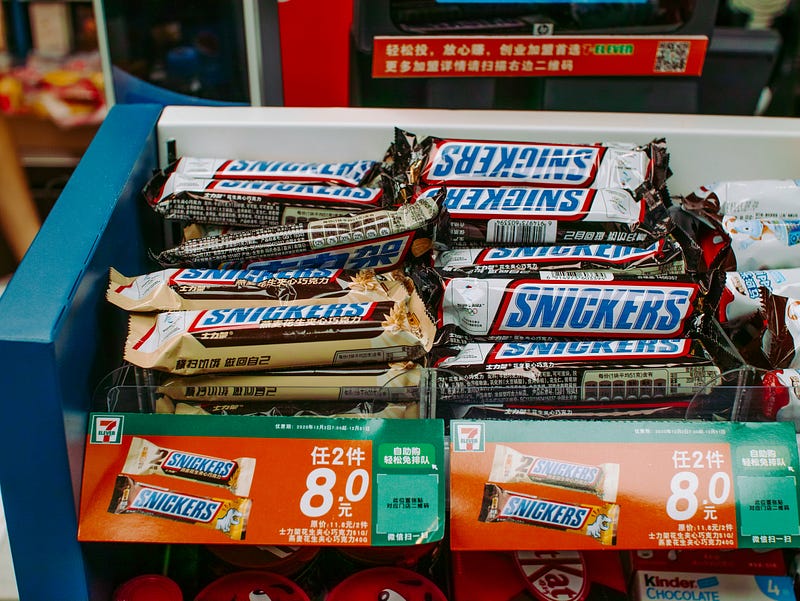
Imagine yourself at the checkout lane of your favorite grocery store. As you wait in line, a bunch of goodies — candies, magazines, bite-size snacks — are staring at you! Inviting to make an additional purchase.. just a few cents more.
I have added my share of Wriggleys and Kinder Joys just to kill the boredom. Sometimes it feels like a trap :)
Some mom-and-pop stores actually place specific items on display that they want to sell or get rid of sooner. And they claim zero inventory if you ask them about a brand that you want.
Thus you’re tricked into purchasing a brand that you actually didn’t want to, but it favors the shop owner.
Have you experienced something like this?
Closing thoughts..
Persuasion is a great marketing technique that is used by merchants and businesses to influence their audiences’ purchasing behaviors. But there is a fine line between a strong persuasion and sheer manipulation.
One is ethical and brings good user experience and loyalty. The other only brings detachment and disgust.
If you have any views or experiences to share on the manipulative way of things, please do so .. in the comments section.
Copyright © 2022 Vishal Mehta. All Rights Reserved.
You can have unlimited access to articles from me (subscribe here) and all the other wonderful writers on Medium, by signing up for a membership. The cost is $5 per month. This would directly support me and there’s no extra cost for you!


