
You Are Always Writing With Mirrors
A lesson on self-reflection from a teacher of writing
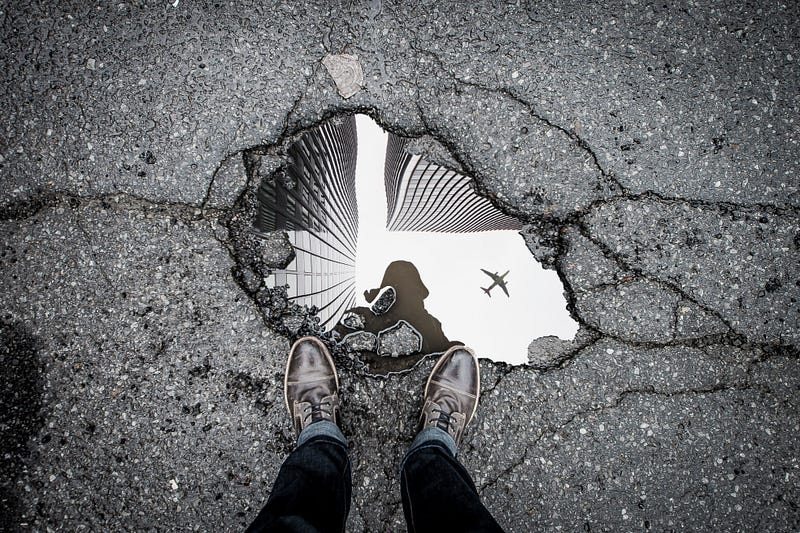
As a teacher, I believe that one of the most important elements of writing is self-reflection. When we write, especially as children, it comes from the raw image of how we see ourselves, an inner mirror crafted by the images surrounding us. This mirror provides insight into who we are, and how we came to be in that moment. It defines our purpose, it establishes our identity, and it warps our reality.
To write well, many writers have been told to write what they know — to be, as Jay Coles would say, “unflinchingly” themselves — but in reality, the inner mirror we craft attempts to hide the self, protecting us from reality the same way a good book shields us from the troubles of our day-to-day lives.
When we read, we hide beneath the carefully crafted wording of another mind, see through another’s eyes, and relate to another’s hardships. In this way, we share our humanity. But it is our writing, our voice, that finally allows us to see through the mirror and into this true sense of self.
If you want to understand who you are and why you act the way you do, then you must reflect on your past with some measure of objectivity, and then you must peel back the layers that you find. Similarly, if you want to understand why you write about the things you write about, then you must look at your own reflection —in other words, you must look at the you that exists between the lines.
They say the eyes are the window to the soul, but writing is what nearly strips us bare. Your writing tells your readers so much about who you are and what you have gone through. Whether hidden in metaphor or layered in facts, you are burned like a brand into your creative work. And the farther you look back into your writing life, the easier it is to see.
Here’s an example:
When I was in elementary school, I started writing a book called Stepping on Light. The title came from the literal act of stepping on the lights reflected on the tile floor of a shopping center.
Looking back, I didn’t realize that staring at the floor had become a habit, that I avoided eye contact with others because I was afraid of conflict, of being seen, and because — when my mother shook her fist and looked at me under layers of divorce-based aggression — the only thing I wanted to do was to hide. And so I did. I buried myself in my writing.
The book was about a young girl who had died, unknowingly and returned home only to be rejected by her loved ones once they realized her body was rotting. The girl would go off on a journey to find a solution to her post-mortem afflictions until she would eventually find a stairwell to heaven and “step on light” all the way up to the afterlife.
I never finished the book, abandoning it for stories of vampires and witches as I grew older, but as an adult, I can see the reflections of my childhood environment coming into play alongside that forgotten tale.
I was seven years old when my parents got divorced. I felt abandoned, and I created a world in which the one authority figure who saw me every day had vanished because I was afraid of looking into her eyes. That was the inside of my mirror. I lived in this shadow, and I often sat alone on a bench away from the playground, pretending to be an author while the other kids played tag in the sun.
My confidant was a girl rotting in an alternate universe — a character that could not feel physical pain, even when she peeled off her own rotting flesh. She was lonely, and she was disturbing, and she was me, fighting against my reality. I protected myself with these mirrors. The wholeness that was my family had died, and I expected whatever was left to rot, to turn to dust, and to blow away — freeing me into a better life, without attachment to anyone in the physical world.
I can see this young writer. I can see past the reflection, through the mirror, and into the raw reality, and I know — as an adult — the meaning behind those choices. But that little girl didn’t know.
And as a teacher of writing, I wonder. How many mirrors have been carefully crafted in the new generation of writers? How many reflections have been molded from the images of the world outside of us all? And how can we see through that shield, when there will always be a strong reluctance to share the shadows that hide us in this overly lit world?
Well, in some not so simple ways, the answer lies in self-reflection. We must learn from ourselves and we must learn from each other by seeing through the lives reflected in the written word. We are all a part of our stories.
And we are always writing with mirrors.
It is not enough to self-reflect if you cannot learn from the reflection. The mirror may be thin in memory — it may be rusted and worn around the edges — but it is real, and it is yours and yours alone. Your experiences make you who you are. Don’t forget them. Don’t forget anything.
Write with intention, and reflect deeply. Look back at your work. Reread the journal entries, the stories, the blog posts from days and years past, and you will learn about yourself in a way that allows you to grow and move forward. But most importantly, write knowing that you are putting a part of your identity on the page.
Writing allows you to take risks, to reveal your inner self even when you still feel as if you are raw and bleeding. Don’t wait until you can’t feel the scars.
And remember that in the end, your readers are not just readers. They are your audience, and they are human.
Even if your mirror cracks, someone will always be there to listen.
If you would like to support this teacher’s writing endeavors, consider joining Medium. Your subscription will directly support her and others like her while unlocking every article on the platform.


