
Yes, True DEI is Dying
Equity and inclusion cannot operate within a colonized mindset
Real diversity, equity and inclusion is dead, or at the least, is dying.
I mean, genuine inclusion and equity will not survive in a whitewashed world where colonized mindsets continue to reign supreme — even in spaces that are predominantly Black and Brown, because yes, internalized oppression and the crave for the white gaze and white acceptance is real, and real dangerous.
It’s especially harmful when folk who claim to engage in DEI work focus intently on centering the dominant narrative and appeasing whiteness under the guise of DEI.
And it’s not always the big acts that tell the story. It’s often the small, seemingly inconspicous acts that are waved off as minutiae.
In my role as a former DEI professional, I’ve seen it far too often and I could no longer tolerate it.
Excluding BIPOC from their Own Stories to Appease the White Gaze
I recently walked away from my job as an equity and inclusion lead for a local government institution after repeatedly seeing this happen in the most nauseating of ways.
One of the last straws for me: the decision by city leadership to hold what was meant to be a community-centered event connecting Black people living in one of the city’s public housing communities to their ancestral history (and thusly to a sense of cultural identity and self-empowerment) in a — wait for it — historically white-led and historically racist museum located ten miles away from the public housing community and not on the city busline.
Let me say that again — city officials chose to hold an event where the genealogical histories of Black public housing families would be revealed in a space outside of their own neighborhood and instead hold it inside the walls of a white museum that historically excluded Black people and their stories.
To make matters worse, city officials had informed public housing residents about the initiative only two days before the event, allowing them no time to become aware of the event and plan to attend. And to make matters worse, city officials spent thousands of dollars on several charter buses to take public housing residents to the museum, again, after making them aware only two days prior to the event. This adds to the facade of truly caring about the community. “Why, there’s no access issue,” they’d say. “We provided buses,” they’d say.
More empty gestures and meaningless window dressing under the guise of DEI.
So, what did this look like? On the day of the event, the nine public housing families who were at the center of the genealogical research showed up to hear their family history, however, the audience was not filled with their neighbors who upon learning of their histories would be inspired to also take the step to connect to their family and cultural roots.
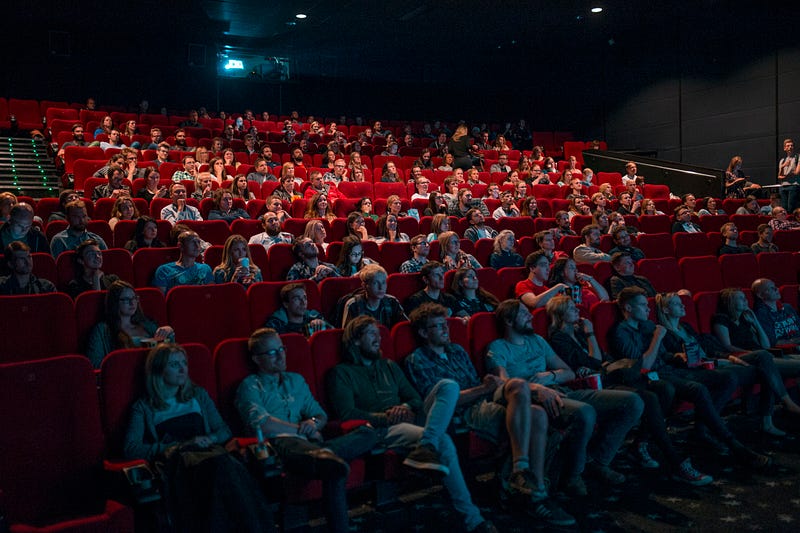
Instead, the audience was filled with white people and upper class Black folk who very much likely already have access to such genealogical resources and connections. One public housing resident — one — rode the bus to the event. Four charter buses and one rider from the community.
The only conclusion I was left with was that city officials with decision-making power had exploited the public housing residents and used the nine families to put on a show for white folk and the elite.
Sadly, it’s like they really didn’t want the other public housing residents outside of the nine families there in the first place. They simply wanted to appease and put on a feel good, song and dance performance for white institutions, at the expense of the public housing residents.
This was an example of the continued marginalization of a community based on intersecting identities of race, social and economic status, and a reprehensible affront to the ancestors.
Leaders and DEI Professionals Must Stop Operating with a Colonized Mindset
I was excited to create new ways of doing things that centered the city’s most historically marginalized, overlooked and underserved communities.
So, when I became involved in what I saw as an effort to help build cultural identity amongts African American residents and communities through a genealogical initiative where residents would be connected to their ancestral history, I was stoked.
I strongly believe that when we know who we are and are connected to the strength, beauty, wisdom and richness of our cultural and familial heritage, there is nothing that we can’t do or overcome. We free ourselves from the colonized mindset. We walk with our shoulders back, our head held high. We correct people who feel comfortable mispronouncing our name.
I’m very familiar with the feeling. After my experience visiting Africa for the first time while in my late 20s and meeting my grandfather, grandmothers, aunts, uncles, cousins and others, I was a force to be reckoned with. I mean, the act of stepping foot on the soil of the Motherland is a spiritual, emotional and life-changing one in and of itself. Add to that actually knowing your roots, the country and culture and peoples from whence you came and on whose shoulders you stand — that is immeasurably powerful.
So, I was elated that my team would be working not only with Black residents to connect them to their own familial and cultural roots as a source of self identity and community empowerment, but that we would be working with a small group of individuals and families from a local public housing community. To me, this meant opening up a space of access to this knowledge and then creating a space where the participating nine residents would have their ancestral history shared with their neighbors in an effort to inspire other community members to engage in their own journey to connect with their ancestral and familial roots.
However, the decision to have the reveal event at an institution that operated in the past as a historically white establishment that dismissed and diminished Black life, history and narrative was appalling.
Their excuse: the city was helping the museum become more inclusive.
I say hogwash. The city’s obligation for this particular event was to ensure untethered access for the publich housing residents and foster community connection. It was not the city’s responsibility to help a historically racist institution become more inclusive. What transpired was that the histories of the family were put on display as part of a museum spectator event, versus the event being an intentional, communal space where residents could share their historical narratives to inform, connect with, inspire and empower other community members, their neighbors, in a deep, profound way.
It appeared that real community impact was sacrificed and the residents exploited.
Having it at the white-led museum and away from the community from which the participants come, was, to me, a perpetuation of the colonization of the Black narrative and experience.
This was an example of institutions and leaders lacking intention and intellectual vigor, and continuing the oppression of Black and Brown people.
And it may seem small, but it also created unnecessary and seemingly self-imposed barriers that we had to attempt to overcome, including the inability to utilize a Black-owned cupcake vendor because the museum had a restrictive vendor list.
I fought from the beginning for the city to hold the reveal event within the public housing community, where the nearly 800 households in the public housing community would have access and could be empowered. For us to meet them where they are.
When I realized that only one person from that entire community of nearly 3,000 residents had shown up due to a lack of access, I realized that the city had gravely failed them. And that my voice had been ignored.
Believe it or not, one thing worked out. See, before I knew that the event would take place at the particular museum, I’d invited drummers to conduct African drumming and a traditional priest to conduct libations at the ceremony. The drumming and pouring of libations would help manifest a powerful metaphysical space connecting the participants to the ancestors. The sacred pouring of libations is a spiritual act with history deeply rooted in African culture. It opens up a portal for our ancestors to join us in the space as an act of reverence to them. I thought it would be beyond powerful for a room filled with hundreds of Black public housing residents seeking to connect with their roots.
On the day of the event, the drummers showed up and engaged in beautiful cultural drumming. The person who I’d hoped would open up the portal to our ancestors through the sacred pouring of libations, however, was unavailable on the day of the event. After realizing the event location that was decided upon, I was grateful they were not available and breathed a sigh of relief.
My supervisor, however, during a post-event convo with me days later where I told her very directly that we had missed the mark with utilizing the event to connect with residents, commented to me that the event could have benefited, entertainment wise, from the pouring of libations.
I was floored. The idea that the sacred ceremonial act of libations would be diminished and relegated to merely a performance piece, a theatrical showing to entertain audience members confirmed the city’s intention with this.
My response to my supervisor: it would have been an affront to invite the ancestors into that space, which was more like spectatorship than true community connection. I told her that the fact that there was no one available to conduct libations given the event location was indeed the work of the ancestors.
Soonafter, the ancestors guided me out of that space. I made the decision that I would not lose myself in my employer’s false pursuit of inclusion and equity and refused to be a part of the exploitation of a community that already suffers from historical harms and burdens.
We must not let the perpetuation of oppressive systems continue to happen under the guise of DEI. This goes for everyone, as my supervisor was a Black woman, reflective of the fact that we must all release ourselves from the bondage of a colonized mindset.
Here are a few tips for public and private leaders and administrators who allegedly have DEI practitioners on their teams.
Tip #1
If your DEI practitioner pushes and challenges you to focus on how historically marginalized groups will be negatively impacted by organizational policies and practices, LISTEN. Don’t tell your DEI practitioner that they push and challenge too much, or inquire if they are ‘being a team player’. They are doing their job. If you perceive their pushing and challenging of you/your organization to do better by the people you purport to serve as problematic, then your alleged DEI effort is just a facade. Window dressing. Disingenuous. Fake.
Tip #2
Your DEI person is supposed to speak up and out to prevent you and your organization from perpetuating the status quo, racism, ableism, etc. DEI is not about appeasing organizational leaders or acquiescing to ensure your comfort. Her job is to challenge the norm and change systems.
Tip #3
True DEI practitioners, especially in public organizations, work for the public, not for government leaders. They may work within your organization, however, they are public servants. Not yes women or yes men. *Note “TRUE” DEI practitioners.
Tip #4
If your DEI practitioner is excluded from meetings or conversations because they will check you and others when necessary to keep ya’ll equity-minded, you need to not only rethink why you have such a practitioner in the first place, but, more importantly, deeply interrogate what is happening in those meetings that would offend the spirit of a true, community-centered DEI person. What are y’all really doing?
Tip #5
If your DEI practitioner is not doing the above mentioned (pushing, challenging the norm, speaking up and out to change systems) then you should probably rename that role. They are clearly not doing the job of true DEI work, feel disempowered or they are only there to maintain your comfort.
Tip #6
Never put politics over people. Do what is right…what is moral…what is humane. Not what is popular or politically expedient or what keeps you and your institution comfortable. Have a heart. Operate with compassion.
Tip #7
God is always watching.


