Yes, It is Always About Race with Black People and Here’s One Example Why
To be a Negro in this country and to be relatively conscious is to be in a rage almost all of the time. — James Baldwin
When you never have to think of your race, people who think about theirs all of the time will seem mad… not mad as in angry, but mad as in crazy. Those people will eventually turn their ire toward you for never thinking about your race and for dismissing their repeated requests asking you to do so. For these people, everything is always about race because, for them, everything is literally always about race. Everything is about race for you, too, but your race has been so neatly constructed to the point you never have to think about yours and so you can’t see this. Or, at least you can pretend you don’t see this.
Here’s a small, but meaningful example of what I’m talking about…
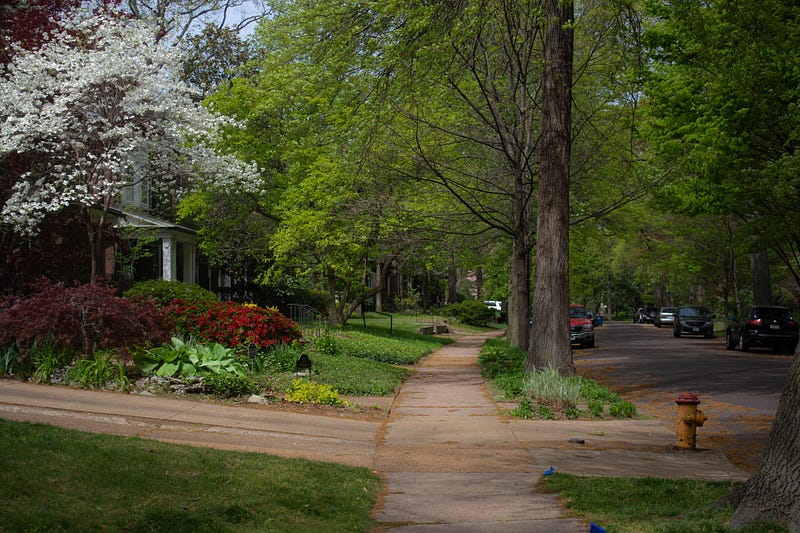
In my immediate neighborhood are lots of green and open spaces, but there are few actual sidewalks favorable to casual strolling. Now, I love long walks. For me, walking is not just exercise, but a way to nurture my inner peace, solve problems, balance my energy and all that good stuff. I also live in a predominately White, Conservative neighborhood. There are just enough Black people and folks of color to feel comfortable and everyone is mostly friendly, but it’s still a remarkably White community. This matters to my story since, during the lockdowns when more people were afternoon strolling, my walks turned into constant reminders of race and space to the point that I now use a treadmill at home and rarely walk my beautiful neighborhood anymore.
Black people already know where this story is going while most White people reading this have no clue. **deep sigh**
Let me backtrack a little to help you catch up. There was a time in this country when Black people had to move off of the sidewalk to allow a White person to pass. Age or gender didn’t matter. If the person was White they had the right of way and a Black person was expected to step into the gutter to show themselves inferior and the White passerby superior. The consequences for not ceding the way for a White person could result in a beating, an arrest a lynching or all of the above. I did not live through this, but my mother, my grandmother and all of my elders did and so I was educated about this part of American history at home.
Although I was aware of the history, it wasn’t until I was an adult that it began to mean something to me, personally. Years ago, while walking down a random street with my husband, he observed that I always moved out of the way whenever a White person was approaching from the opposite direction and I didn’t automatically do the same for everyone else. Without even realizing it, I’d somehow trained myself to defer to Whiteness despite being taught in childhood about why this was wrong. It was then that I began to notice the times when I felt it was expected that I’d move (which is a lot, unfortunately).
So, today, when I walk the half-mile stretch consisting of one narrow sidewalk closest to my home and a White person is on the sidewalk approaching from the opposite direction, there’s always a question of, “What do I do?”. While many of you who are considered to be White know this feeling just from being human and living in cities, because of who I am and my people’s history and, quite frankly, your people’s history and some of their present day attitudes, this is often a race-based question for me.
On this particular sidewalk, there’s barely room enough for both of us, so the polite person in me wants to step off the curb and allow the person to pass. But the person in me who doesn’t worship Whiteness goes to war with that polite person and tells her, “Girl, you better not even think about it!” Maybe it’s ancestral energy, but it’s always a battle between the two sides of myself. Now, sometimes the polite person wins, but seldom before assessing the approaching person’s demeanor. Are they advancing like they expect me to move out of their way? Are they at least trying to move to one side of the path as though preparing for me to pass? I’m always calculating several feet ahead of time and I only do this with White people. Why? History.
What always makes these encounters worse is when the White person coming my way looks me in the eye as though they’re determined not to make any adjustments to accommodate me. I often smile and nod, but many don’t return the smile and either glare or will look right past me as though I’m not there. In those moments, I’m wondering if they’re remembering history, too. Or maybe they are still dealing with a present-day idea that since I am Black and a woman, I should move out of their way. There’s no peace in those walks, only memories of the pain my forebears had to endure when they had no choice as I do.
Now, I do move for children (unlike White people of yesteryear, I would never want to see a child step into the street so I can pass). I also move for people with pets, teens on skateboards and people visibly older than me. But with most everyone else, it sometimes becomes a game of chicken and I don’t always win. Some people, especially White men who glare defiantly as they approach, I don’t feel safe pushing it with. Those are the worst times when I feel bad energy brewing inside myself and emanating from certain passerby. It’s this feeling you know when you are Black and can see it in the face of one who wants to dominate or cause an issue if you don’t allow them to. Encounters like this have the opposite effect of why I went on the walk in the first place and this is why I now hop on my treadmill at home. I don’t need that kind of tension in my life when I’m trying to exercise or unwind.
That’s just one small example of the things Black people think about that White people probably seldom do. It would be nice for White people to be mindful of the racial implications and scars we carry even as they relate to simple acts like walking down the street, yet I find that few are.
If you are a White person reading this, tell us, is this something you would have ever imagined going through a Black person’s head while sharing a sidewalk? You haven’t had to think about this sort of thing, but we have.
There are so many instances in our daily lives where we have to think about race while you don’t. This is because systemic White supremacy has invaded every area of our lives — education, politics, finance, housing, healthcare — it is always an issue because history makes us second guess even the smallest things others don’t even notice. It would be nice to consider this before you next ask, “Why is everything always about race with you guys?”.