
Yes! I Talk to My Kitties
You can’t train your kitties if you don’t talk to them
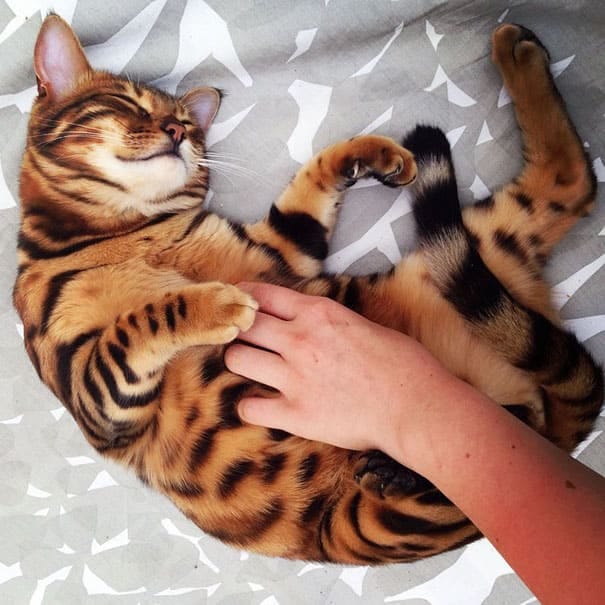
Any kitty owner will understand cat language if they pay attention to their cat. The more significant issue is that your language is understandable to your kitty- both in the content of specific keywords and the tone of voice.
We, who own & love cats, must consider cat communications as endearing, understandable messages of close friends.
My kitties show love, fear, curiosity & even ignore me by their body language. I know when they want food or to cuddle, play, sleep, or be left alone.
Attention seeking by rubbing against me, loving head-bunting, purring, kneading, meowing, licking, & grooming are communications pet parents need to understand before attempting to train the cat.
Yes, your cat has something to say about training if you wish to coexist with them. There is no question; you must learn to hear what your cat is saying to attain your cat's desired behavior.
The Awesome thing about cats is they act how they feel. We need to learn to listen and read their body language.
My pride and joy are three tabbies; Sam, the yellow tom, Marcie, Sam’s sister, a calico, and Skippy, a six-month-old disabled tuxedo girl.
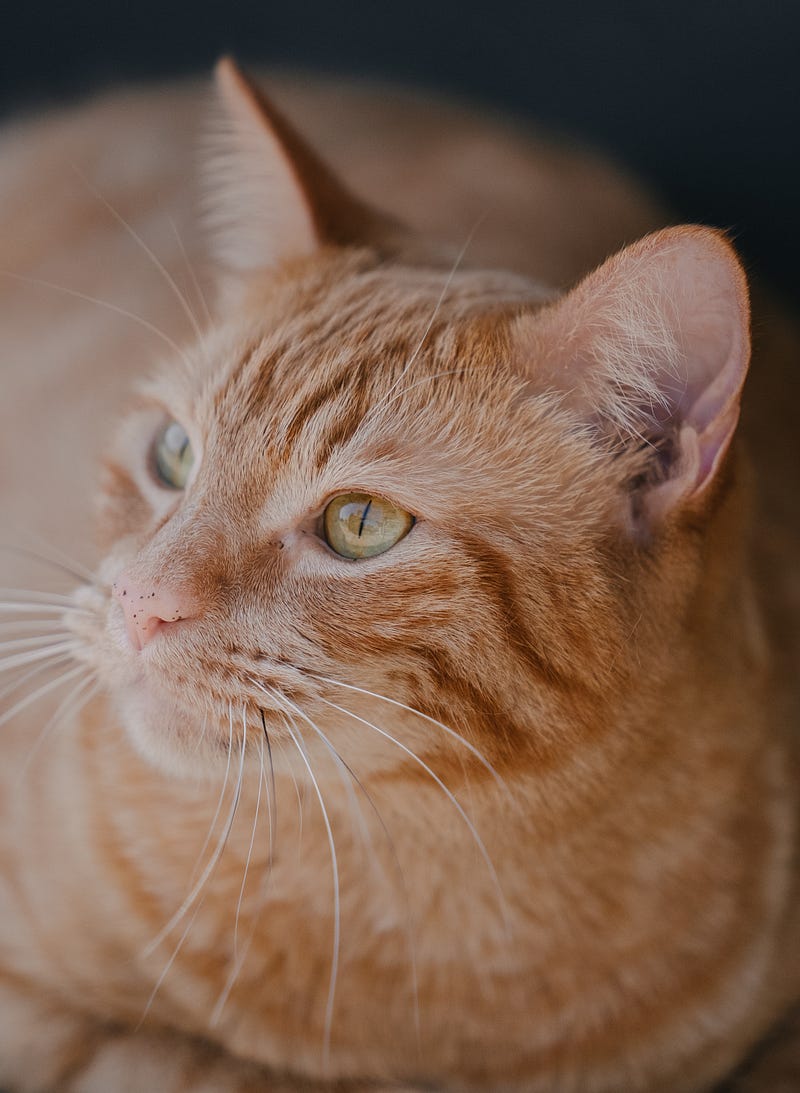
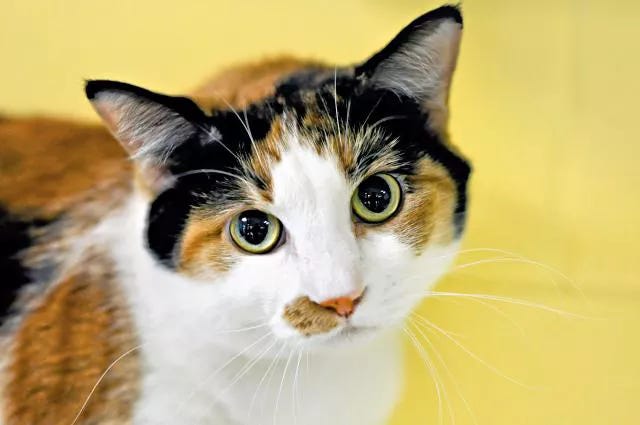
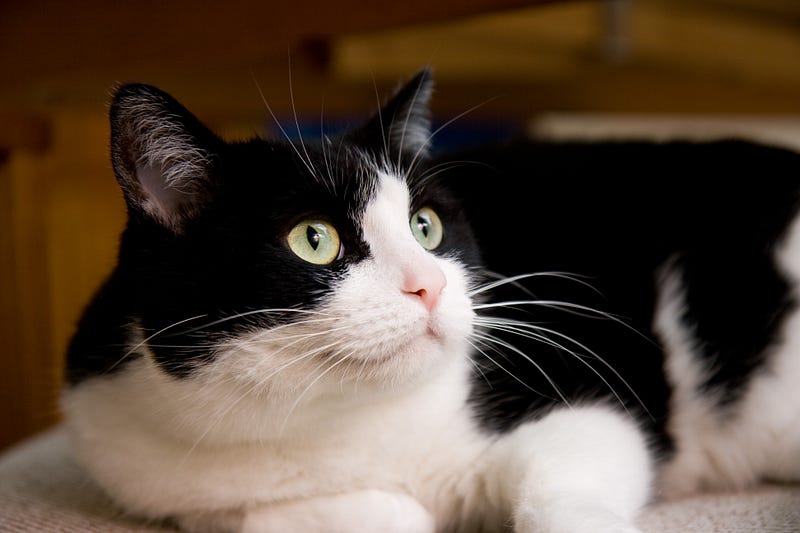
Certain cat communications are universal. But every cat has a unique, adorable way of communicating. Sam is very vocal. He head-butts a lot when you talk to him. Skippy licks & smells around everything. Marci stares at you, emits soft meows & puts her front paws on my knees.
When your talk to your kitties, pay attention to their body language, facial expression, voice sounds, & tail activity. Their response is endearing.
Routine conversations with your cat become meaningful to them. Cats love the familiar habits, and they will respond to your chatter & directions.
Debra Pirotin DVM, in her book; The Complete Guide to intelligent cat training, writes;
‘if you treat your cat without giving it the dignity and respect of your conversation, you will soon have a taciturn, sulky, people-avoiding cat. If you communicate with your cat as if he/she were a sentient creature with a capacity to understand, love, hear, you, and respond — you will have the king or queen of cats, the friend of friends in your life. Cat training has much to do with understanding your cat’s moods and needs through mutual communication.’
Feline Body Language & Voice Sounds:
- The cat whose tail becomes busy is not feeling peaceful.
2. A humped, arched back, fluffy tail & fur is standard for saying, “I am furious.”
3.Tongue Talk; frantic self-licking, ears splayed back may imply nervousness. Sam displays this behavior when I admonish him. It may be guilt or embarrassment.
Slow self-licks occur with self-grooming. Skippy grooms Sam often. I get an affectionate lick after brushing Marci when she hops on my lap. The cats’ shared, or self-licks, are signs of contented, happy cats.
4. Head Talk; Head nuzzling & rubbing against your hands or body, says, “I love & trust you.”
5.Tail Talk is a well-known model of expression; A tail held high shows confidence. He may be happy & excited. Cat parents may have different interpretations.
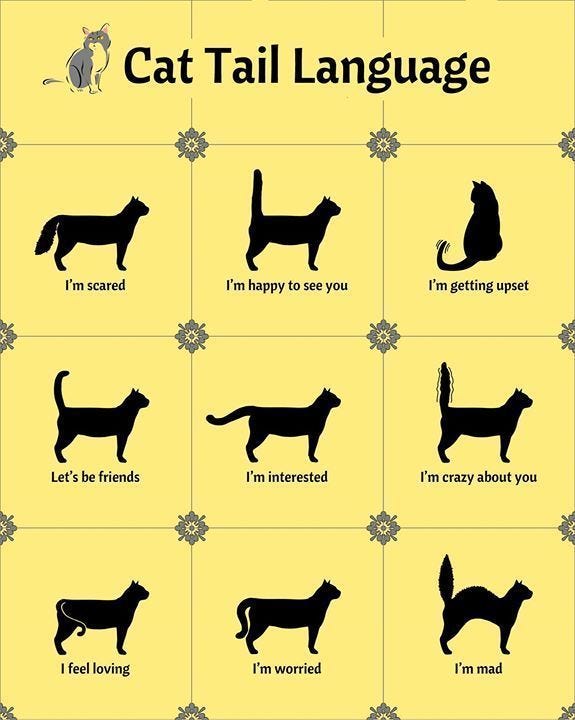
A half-mast tail shows a feeling of unhappiness or apprehension. With a drooping tail, the cat is unhappy, afraid, or worried. An active twitching, lashing back & forth tail means; “back-off, leave me alone.”
The bushy, fluffed, straight-up tail means anger associated with an attack. The back will hump in readiness for a fight. When the tail dips between the legs, the cat is afraid of something.
6. Ear Talk; ears alert & straight up, kitty is ready for fun or affection. (An excellent time to train.)
Ears flat out sideways, the cat feels nervous & listens to noises it hears. Ears pulled down is a warning to keep away. The cat feels defensive.
7. Eye Talk; eyes wide open & looking straight at you. Kitty is interested in what you are saying. You got his/her attention.
Eyes, partly closed; kitty is sleepy or wary. Eye pupils in slits, kitty is confident and territorial. Bug-eyed round pupils show fear. Their eyes may wink & blink when asking for a treat.
There is a grayish membrane within the bottom of the cat’s eye that remains stationary. The membrane becomes visible when the cat is ill. I have noticed this membrane appears when I pet Marci on my lap, but she is not sick.
8. Paw Talk; Paw kneading means contentment. Paw nagging is asking for attention or a snack. Paw hugs are the most endearing sign that your kitty loves you. Paw blows; paws & claws are the defense weapon the cat employs when attacked.
9.Posture Talk; A cat is elegant; head up, back level & straight, relaxed & alert. The sideways stance, arched back is a sign of fear. An angry, brave cat will face a foe with a frontal stance.
Relaxed kitties tend to roll over & lie on their backs, inviting their owner to tickle their belly. It is a sign of love & trust.
10. Nose Talk; when a kitty rubs its nose or mouth across your face, it is a sign of love.
Voice communication; Purring is a sign of great contentment. Some cats will purr when they are in pain. ( I heard this from my Vet.)
A cat in heat will yowl. A mother cat will growl to protect her kittens if threatened.
Meowing is attention-seeking.
Chirring is a twirly meow, heard when mamma catcalls her kittens.
The mating call is like a deep murmur from the female cat when she is ready for a mate.
My kitties have marked me as part of their territory. They know when I open their door, we will greet and chatter while they sit in front of their bowls. They wait and will eat once the food is in all three bowls. (I trained them with a clicker.)
I know from the experience of caring for my kitties that they understand & respond to keywords. Sometimes a response is inconsistent, but I expect that as they are different from dogs. Therefore compromises are in order with cat training.
My kitties are my buddies, and yes, we have conversations and play fetch games too. Having three kitties is an advantage as they are companions for each other as well.